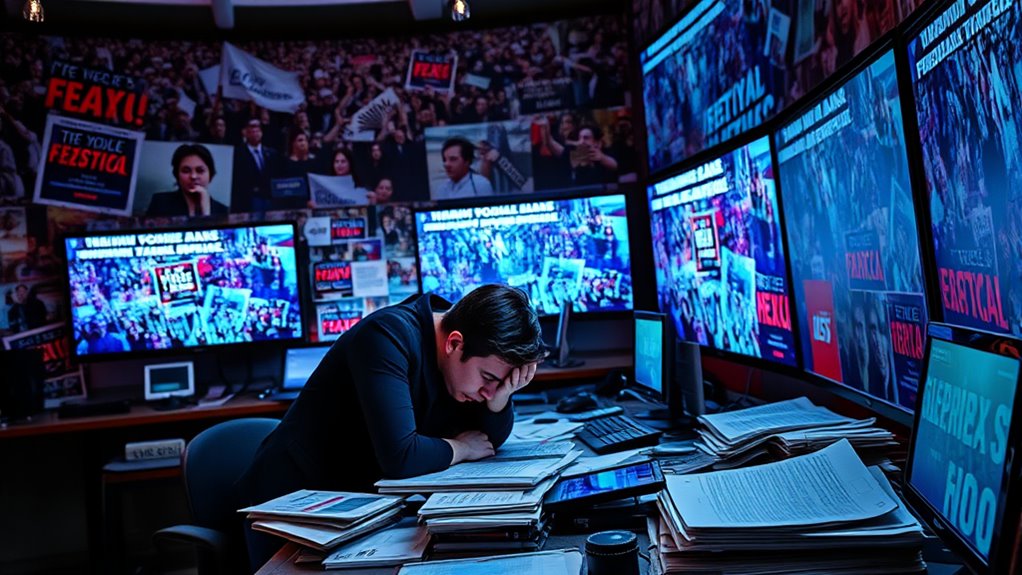

Moral panic is a social process where media sensationalism fuels fears about perceived threats, often leading you to overreact or stigmatize certain groups. Media tends to highlight dangers with dramatic stories, making issues seem more urgent than they really are. As societal anxiety grows, reactions can become excessive, creating cycles that repeat as new concerns emerge. If you want to better understand how media shapes these fears and their patterns, there’s more to uncover.

Turn your wind-down time into listening time
- Thousands of audiobooks, podcasts and originals
- Listen on your phone, tablet or Echo — also offline
- Cancel anytime
Key Takeaways
- Moral panic involves media-driven societal fears that exaggerate threats, leading to overreaction and social stigmatization.
- Media sensationalism prioritizes dramatic stories, amplifying public concern beyond actual risks.
- Societal anxiety spreads rapidly through repeated media coverage, influencing public perception and policy responses.
- Moral panic cycles involve initial overreaction, waning coverage, and eventual acknowledgment of overstatement.
- AI tools can monitor media patterns and public sentiment to identify and understand the emergence and spread of moral panics.
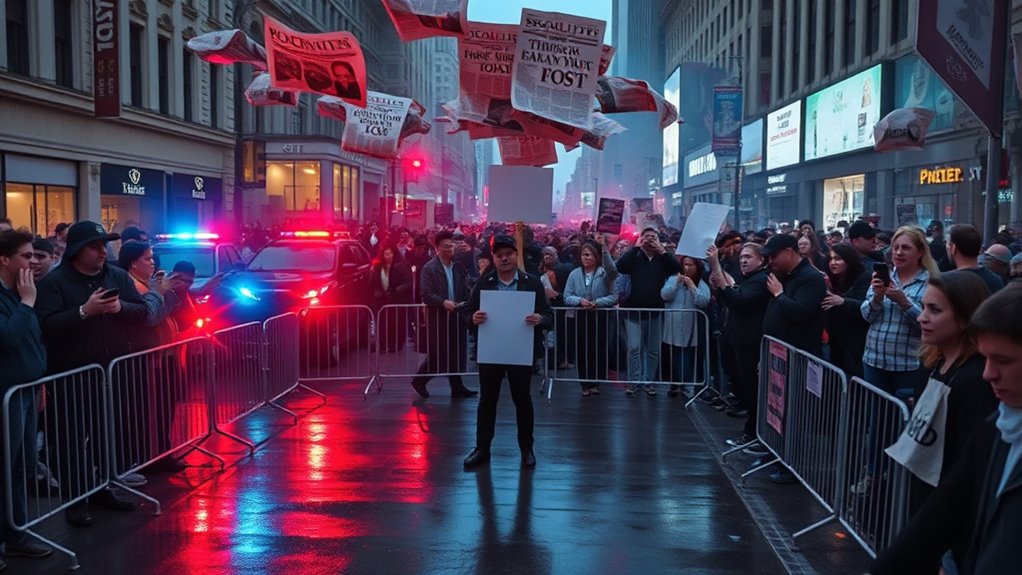
Have you ever wondered why society suddenly becomes obsessed with certain issues, often blowing them out of proportion? It’s a question that gets to the heart of what’s known as moral panic—a phenomenon fueled by media sensationalism and societal anxiety. When the media highlights a particular problem, it doesn’t just inform; it amplifies. Sensational headlines and dramatic stories catch your eye, shaping public perception and stirring up fears that might not be entirely justified. This kind of media coverage can escalate a manageable concern into a widespread panic, creating a sense that society is under immediate threat.
As you observe this process, you realize that media sensationalism plays a pivotal role. Journalists and outlets often prioritize eye-catching stories over nuanced reporting, emphasizing danger and urgency. They frame issues in a way that heightens public worry, even when the actual risks are minimal or exaggerated. This sensationalism feeds societal anxiety—a collective feeling of fear and unease that spreads rapidly, especially in a connected world where news travels fast. When people see repeated stories about, say, youth violence or moral decay, they start believing these issues are more prevalent than they really are. This perception fuels panic and creates pressure for authorities and lawmakers to act swiftly, often with laws or policies that may be more symbolic than effective.
What’s interesting is how cycles of moral panic tend to repeat themselves over time. Once society becomes alarmed, there’s a rush to “solve” the problem, which can lead to overreach or the stigmatization of certain groups. Then, as the panic subsides—sometimes after media coverage wanes or new issues emerge—people look back and realize the danger was overstated. Yet, the cycle then begins anew, with fresh issues capturing media attention and societal concern. This pattern demonstrates that moral panics are not just about the issues themselves but about how media shape collective fears and anxieties.
Additionally, the use of AI analytics tools can help monitor the emergence and spread of these moral panics by analyzing patterns in media coverage and public sentiment, allowing for more informed responses. You can see how these cycles influence public policy and social attitudes, often leading to moral judgments and social stigmatization. The media’s role in perpetuating moral panic underscores how powerful storytelling can be in shaping societal norms and fears. Understanding this cycle helps you recognize when societal anxiety is being manipulated or exaggerated, encouraging a more critical view of the headlines and stories that dominate your news feed. Recognizing the mechanics behind moral panic allows you to question whether the fear is justified or inflated by media sensationalism, giving you better insight into the real scope of societal issues.
As an affiliate, we earn on qualifying purchases.
Frequently Asked Questions
How Does Moral Panic Influence Public Policy Decisions?
Moral panic influences your public policy decisions by shaping public perception, prompting policymakers to respond quickly. When society perceives a threat as urgent, it often leads to policy shifts aimed at addressing concerns, sometimes disproportionately. This heightened sense of danger can result in stricter laws or regulations, even if the actual threat is minimal. As a result, public perception drives policy changes that reflect society’s fears rather than balanced assessments.
What Role Does Social Media Play in Modern Moral Panics?
Social media acts like a wildfire, fueling modern moral panics through viral spread and emotional amplification. You’ll notice how quickly concerns escalate, driven by shared posts and sensational headlines. This rapid, unchecked spread stirs public fears and influences opinions in real-time. As a result, social media becomes a powerful tool that amplifies moral panic, making it more intense and widespread than ever before, often shaping policies and perceptions instantly.
Are Certain Groups More Targeted During Moral Panics?
Yes, during moral panics, certain groups often become more targeted due to societal bias and stereotypes. You might notice that marginalized communities, minorities, or specific social groups face disproportionate scrutiny or blame. This group targeting reflects underlying prejudices and can escalate societal fear. Media amplifies these biases, making it easier to scapegoat particular groups, even when evidence doesn’t fully support such accusations.
How Do Moral Panics Vary Across Different Cultures?
You’ll notice that moral panics vary across cultures because societal perceptions differ due to cultural differences. What triggers concern in one society might not in another, as each culture has unique values and norms. These differences influence how groups or issues are targeted, with some societies focusing on moral threats that align with their beliefs. Understanding these cultural nuances helps explain why moral panics aren’t uniform worldwide.
Can Moral Panics Have Long-Term Societal Impacts?
Yes, moral panics can have long-term societal impacts. They often influence social cohesion by creating divisions or uniting groups around shared fears. Over time, they become part of cultural memory, shaping attitudes and policies. You might find that these panics leave lasting impressions, affecting how society perceives certain issues and guiding future responses, often reinforcing or challenging existing social norms.
media sensationalism analysis tools
As an affiliate, we earn on qualifying purchases.
As an affiliate, we earn on qualifying purchases.
Conclusion
So, as you reflect on moral panics, it’s no surprise how media stories often align with societal fears, almost as if the universe conspires to keep us on edge. These cycles seem to appear just when you least expect, fueling panic and shaping perceptions. Coincidences blur the line between real danger and sensationalism, reminding you to stay critical. In this whirlwind of media-driven hysteria, awareness becomes your best defense against falling for the next moral panic.
public sentiment monitoring software
As an affiliate, we earn on qualifying purchases.
As an affiliate, we earn on qualifying purchases.
As an affiliate, we earn on qualifying purchases.
Columbus Day / Indigenous Peoples' Day Picks
long weekend sales
As an affiliate, we earn on qualifying purchases.