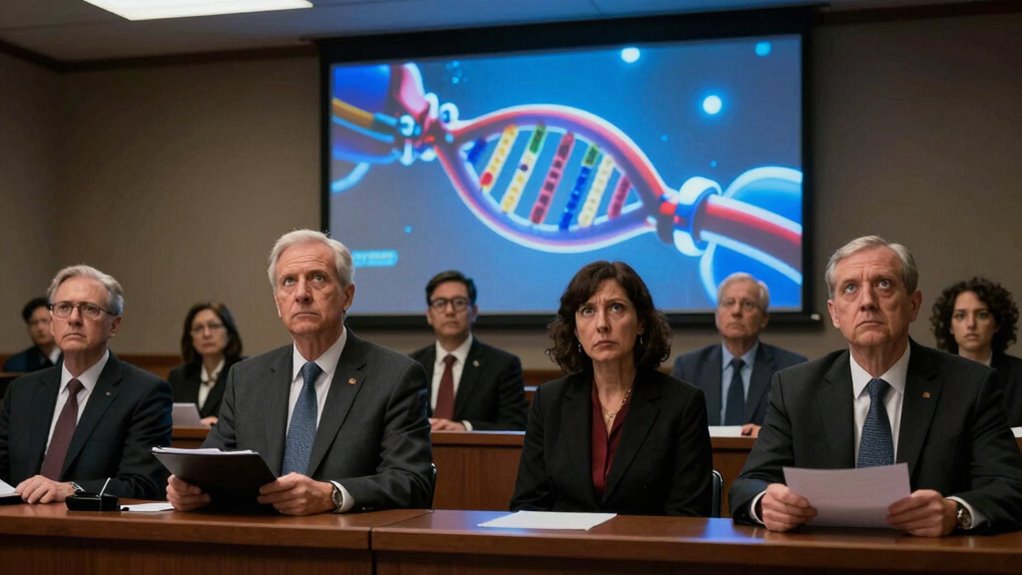

The CSI Effect influences how juries expect forensic evidence to be conclusive, often leading to overconfidence in scientific proof and demanding high-tech results in trials. TV shows like “CSI” depict forensic science as quick, infallible, and central to solving cases, which distorts real-world perceptions. This can impact courtroom dynamics, with jurors sometimes delaying verdicts or favoring cases with flashy forensic evidence. To understand how this media influence shapes justice, there’s more to explore below.

Turn your wind-down time into listening time
- Thousands of audiobooks, podcasts and originals
- Listen on your phone, tablet or Echo — also offline
- Cancel anytime
Key Takeaways
- Crime TV shows create inflated jury expectations for conclusive forensic evidence, influencing perceptions of guilt and innocence.
- The CSI Effect leads jurors to overestimate forensic science’s infallibility and demand high-tech proof in real trials.
- Jurors influenced by TV may scrutinize forensic evidence more intensely, affecting verdicts and courtroom dynamics.
- Strategies like expert testimony and jury education help counteract misconceptions caused by crime TV portrayals.
- The CSI Effect impacts legal proceedings by shaping public and jury perceptions, potentially skewing justice outcomes.
As an affiliate, we earn on qualifying purchases.
What Is the CSI Effect and How Did It Start?

The CSI Effect refers to how crime television shows like “CSI: Crime Scene Investigation” have influenced public perceptions of forensic science and the justice system. You might think forensic science is always precise and quick because of the show’s portrayal, but reality is more complex. This media influence shapes how jurors view evidence and the role of forensic psychology in investigations. It started as viewers became captivated by detailed crime scene analysis and suspect profiling, leading to higher expectations for scientific evidence in real trials. The portrayal of forensic experts as almost infallible professionals fuels these perceptions. Over time, these shows have created a skewed understanding of criminal investigations, making the public—and even jurors—believe that forensic science can solve cases instantly and definitively. Additionally, the perceived infallibility of forensic evidence can lead jurors to give undue weight to forensic testimony, sometimes overshadowing other critical evidence. This phenomenon can also contribute to confirmation bias, where jurors favor forensic evidence that supports their initial beliefs and dismiss evidence that contradicts it. Moreover, the emphasis on forensic science in entertainment can lead to overconfidence in scientific methods, causing jurors to assume that all forensic techniques are infallible and universally reliable. This overconfidence in forensic techniques can result in misplaced trust in forensic results, impacting case outcomes and judicial fairness.
jury education forensic evidence
As an affiliate, we earn on qualifying purchases.
As an affiliate, we earn on qualifying purchases.
How Crime TV Shows Shape Juror Expectations for Evidence

You might expect clear, conclusive forensic evidence in every case, thanks to what you see on TV. However, jurors often overestimate how certain scientific methods are and assume evidence is foolproof. This can influence your decision-making, making you place more weight on forensic proof than is realistically justified. Understanding the accuracy of forensic methods can help set more realistic expectations about evidence in real trials.
Expectation of Forensic Evidence
Because crime TV shows frequently depict forensic evidence as the key to solving cases, jurors often come into trials expecting to see clear, compelling scientific proof. This creates forensic misconceptions, leading to inflated evidence expectations. You might assume that DNA matches or fingerprint analysis will definitively prove guilt or innocence, just as shown on TV. However, real forensic evidence isn’t always so straightforward; it can be ambiguous or inconclusive. These heightened expectations can pressure judges and attorneys, who must manage jurors’ beliefs that science will resolve every doubt. As a result, jurors may undervalue other types of evidence or overlook the complexities and limitations of forensic science, skewing their perceptions of what constitutes sufficient proof.
Overestimating Scientific Certainty
Crime TV shows often portray forensic science as infallible, leading jurors to believe that scientific evidence provides absolute certainty. This overconfidence fuels forensic misconceptions, where you assume that a match or result conclusively proves guilt or innocence. However, real forensic evidence involves uncertainty and potential errors, which TV often downplays. This mismatch causes evidence skepticism to diminish, making you less receptive to nuanced findings. To understand this better, consider the table below:
| Myth | Reality | Impact on Jurors |
|---|---|---|
| Forensics are infallible | Forensic science has limitations | Overconfidence in evidence |
| Scientific certainty is absolute | Evidence involves probabilities | Reduced skepticism |
| All matches confirm guilt | Matches can be coincidental or flawed | Overestimation of certainty |
| Forensic experts always correct | Human error can occur | Overreliance on science |
This misperception can distort your judgment, skewing the decision-making process. Additionally, understanding the limitations of forensic methods can help mitigate unwarranted confidence in evidence.
Impact on Jury Decision-Making
Television crime shows often influence how jurors interpret evidence by creating heightened expectations for scientific certainty. This can lead to decision bias, where jurors favor evidence that aligns with TV portrayals, even if it’s unrealistic or insufficient. Such bias might cause jurors to dismiss credible testimony or overlook alternative explanations, believing that forensic evidence should always lead to a clear verdict. Jurors may also develop misconceptions about the accuracy of forensic techniques, expecting them to provide immediate and definitive answers. Jury bias can also be heightened when jurors assume that investigators and experts should have immediate, conclusive results like those seen on TV. As a result, jurors may become more skeptical of circumstantial evidence or less patient with complex cases. Additionally, the CSI effect can cause jurors to place undue confidence in forensic evidence over other types of proof. This phenomenon may also encourage overreliance on forensic evidence, which can distort jury perceptions and impact verdicts. Ultimately, this impacts decision-making, often skewing verdicts and undermining the fairness of real trials.
As an affiliate, we earn on qualifying purchases.
How the CSI Effect Influences Jury Decisions

The CSI Effect has a significant impact on how juries evaluate evidence and make decisions in the courtroom. It often fuels jury biases, leading jurors to expect highly visual, clear-cut evidence like forensic images and DNA results. This expectation can lead to an overreliance on forensic evidence, sometimes at the expense of other important case details. As a result, jurors may:
- Overvalue forensic evidence compared to witness testimony
- Demand more scientific proof before convicting
- Discount credible but less vivid evidence
- Expect prosecutors to present high-tech proof
These expectations can skew decision-making, causing jurors to favor cases with flashy forensic results and overlook important context or alternative explanations. Your preconceived notions shaped by TV dramas can unintentionally alter how you interpret real evidence during trial deliberations. Additionally, understanding the role of creative storytelling in legal presentations can help clarify how narratives influence jury perceptions beyond just forensic evidence. Recognizing how psychological biases are influenced by media portrayals can further explain the challenges faced by legal professionals in managing jury expectations. Moreover, the media portrayal of forensic science often amplifies these misconceptions, reinforcing unrealistic expectations among jurors. The influence of visual evidence in popular media further enhances these skewed perceptions, impacting jury decision-making processes.
forensic evidence presentation tools
As an affiliate, we earn on qualifying purchases.
As an affiliate, we earn on qualifying purchases.
Challenges for Lawyers Caused by the CSI Effect

As a lawyer, you face the challenge of managing jurors who expect highly technical evidence like TV shows portray. Jurors often come with unrealistic expectations about the evidence needed to prove guilt, making your job harder. Additionally, they scrutinize every detail more closely, which can lead to increased pressure during trial proceedings. Understanding pool terminology and related concepts can help you better explain complex evidence and counter misconceptions. Recognizing how evidence presentation influences juror perceptions can be a vital part of your legal strategy. Furthermore, awareness of air quality considerations such as noise and environmental factors can impact jurors’ ability to focus and process information effectively, which is crucial when presenting detailed or technical evidence. Being aware of auditory processing challenges faced by jurors can also assist in tailoring your communication effectively.
Unrealistic Evidence Expectations
Because of the CSI effect, jurors often arrive with inflated expectations about the strength and type of evidence needed to establish guilt, making it challenging for you to present cases relying on traditional proof. They may expect clear, high-tech forensic evidence and view any absence of such as insufficient. This leads to forensic skepticism and increases the risk of evidence misinterpretation. You might find yourself needing to explain the limitations of forensic methods or defend evidence that seems inadequate to jurors accustomed to TV’s dramatized portrayals.
- Expect detailed forensic reports to be scrutinized as definitive proof
- Underestimate the value of circumstantial or less glamorous evidence
- Overvalue high-tech evidence over simpler, reliable proof
- Struggle to convince jurors that absence of certain evidence isn’t proof of innocence
Additionally, jurors influenced by television dramas may have difficulty understanding the limitations of forensic science, which can further complicate case presentations.
Increased Jury Scrutiny
Jurors influenced by the CSI effect tend to scrutinize evidence more intensely, expecting high-tech forensic proof in every case. They often question forensic accuracy, demanding detailed, scientifically proven results before trusting evidence. This heightened scrutiny puts pressure on attorneys to present flawless, compelling forensic data, which isn’t always feasible. Media influence plays a significant role, shaping expectations and making jurors more skeptical of traditional evidence if it doesn’t meet TV standards. As a result, lawyers face increased challenges in convincing juries, who now demand certainty and precision. This shift demands that legal teams adapt their strategies, emphasizing forensic clarity and accuracy to meet the elevated standards set by media-driven perceptions. Additionally, the availability of vetted evidence options can help attorneys better meet these heightened expectations. Recognizing the importance of forensic validation can further assist legal professionals in aligning their case presentations with juror expectations. Ultimately, the CSI effect creates a more critical jury environment, complicating trial proceedings, and understanding scientific reliability is key to addressing these challenges effectively. Furthermore, some jurisdictions are exploring specialized forensic training for jurors to better understand scientific evidence, which could influence future trial dynamics.
Real-World Court Cases Affected by the CSI Effect

Real-world court cases have increasingly reflected the influence of the CSI effect, with jurors often expecting forensic evidence to be as conclusive and dramatic as what they see on television. This leads to jury bias, where the absence of flashy forensic proof can unfairly sway opinions. Jurors may perceive weaker evidence as insufficient or doubt the credibility of testimonies without high-tech backing. Cases have shown that:
- Jurors demand DNA evidence even when circumstantial evidence suffices
- Convictions are delayed due to unreasonable forensic expectations
- Prosecutors feel pressured to present more elaborate forensic proof
- Defense attorneys argue that lack of dramatic evidence weakens the case
These shifts reveal how the CSI effect alters evidence perception and impacts trial outcomes.
How Lawyers Can Counteract the CSI Effect in Court

To effectively counteract the CSI effect in court, you must proactively address jurors’ inflated expectations about forensic evidence. Conducting mock trials can help you understand how jurors perceive forensic testimony and identify misconceptions. Use these sessions to practice jury persuasion by clarifying the limitations of forensic evidence and emphasizing other essential case elements. During actual trials, present forensic evidence realistically, avoiding overconfidence or dramatization. Highlight how forensic results fit within the broader context of your case, reinforcing the importance of witness testimony, alibis, and circumstantial evidence. By managing expectations and guiding jurors through the evidence’s true significance, you increase your chances of fair verdicts, even when jurors arrive with TV-influenced assumptions about the power of forensic science. Incorporating easy document management techniques can also help attorneys organize and present complex forensic data more effectively, ensuring clarity and professionalism. Understanding the vulnerabilities in cybersecurity related to digital evidence storage can further protect sensitive case information from potential breaches.
How the CSI Effect Is Changing Forensic Evidence Presentation

The CSI effect has substantially transformed how forensic evidence is presented in courtrooms, prompting prosecutors and defense attorneys to adapt their strategies. Visual evidence now plays a vital role in convincing juries, often requiring clearer, more compelling displays. Forensic techniques are being showcased with greater emphasis to meet these heightened expectations. You might notice:
- High-resolution images and videos that vividly illustrate key evidence
- Interactive digital displays that help jurors understand complex forensic methods
- Expert testimony emphasizing advanced forensic techniques to validate evidence
- Clearer explanations of how forensic evidence links suspects to crimes
This shift compels legal teams to focus on making forensic evidence more accessible and persuasive, aligning with TV portrayals while ensuring scientific accuracy. The goal is to meet jury expectations shaped by media influence and enhance conviction strength.
Can Better Jury Education Reduce the CSI Effect?
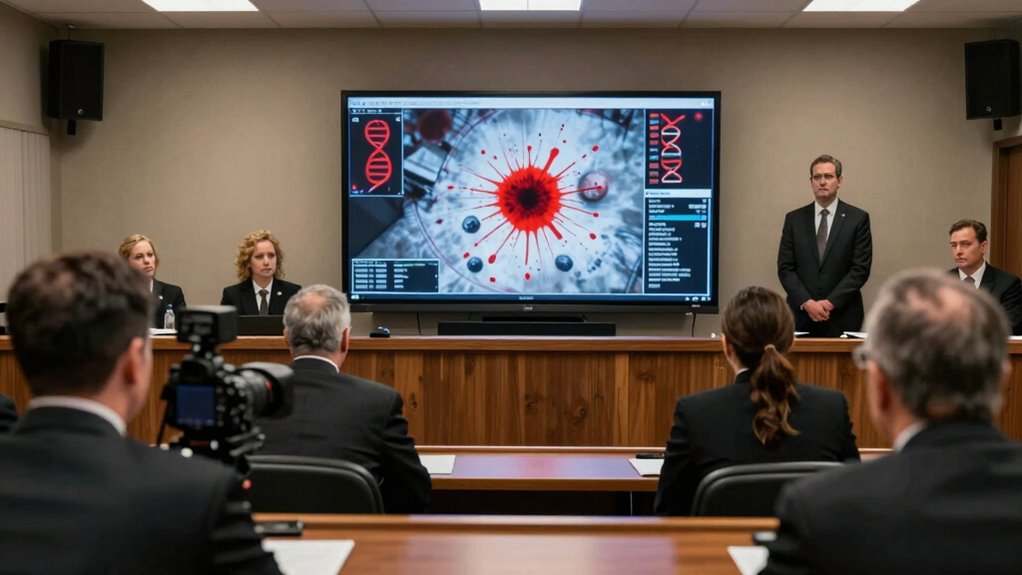
Improving jury education about forensic science can considerably reduce the influence of the CSI effect. Effective jury training helps you better understand complex evidence, preventing misconceptions from TV shows from skewing your judgment. When jurors receive clear guidance on forensic methods and limitations, they develop improved evidence comprehension. This reduces the tendency to expect sensationalized or overly conclusive results, making your evaluations more grounded in reality. Courts can implement pre-trial tutorials or simplified guides that highlight the difference between entertainment and actual forensic science. By strengthening your knowledge, you become less susceptible to TV-driven expectations and more capable of appraising evidence objectively. Ultimately, better jury education fosters fairer trials and improves the integrity of the justice process.
The Future of Crime TV and Its Impact on Justice

As crime television continues to evolve with advances in technology and storytelling, its influence on public perception and the justice system is likely to grow. Future crime shows may push for more realistic portrayals, prompting discussions on legal reforms to align TV realism with actual courtroom procedures. This could lead to:
- Greater transparency in legal processes
- Increased pressure for accurate portrayals
- Changes in jury expectations based on TV narratives
- Enhanced public understanding of justice issues
As a viewer, you’ll notice shows that aim for more authenticity, shaping your expectations of real trials. These developments might encourage lawmakers and media creators to prioritize TV realism, balancing entertainment with responsible representation. The ongoing evolution of crime TV will continue to impact how justice is perceived and administered.
Frequently Asked Questions
How Does the CSI Effect Vary Across Different Types of Crimes?
You notice that forensic influence varies across crime types, with the CSI effect being stronger in complex cases like homicides or sexual assaults. For these, jurors expect clear forensic evidence, often influenced by TV portrayals. In contrast, for simpler crimes like theft, the effect diminishes as jurors rely less on forensic evidence and more on witness testimony. Crime type profoundly shapes how the CSI effect impacts jury expectations.
Are There Demographic Factors Influencing Susceptibility to the CSI Effect?
You might find that demographic disparities and cultural influences shape your susceptibility to the CSI effect. Younger jurors, those with higher education, and viewers of crime dramas tend to be more influenced. Remember, “you are what you think,” so your background and cultural context can either heighten or lessen your expectations for forensic evidence. These factors create a lens through which you interpret trial evidence, making some more prone to CSI-inspired misconceptions.
What Role Do Social Media and Online Forums Play in Shaping Jury Expectations?
Social media influence and online forum discussions considerably shape your jury expectations by spreading detailed opinions and sensationalized crime stories. When you engage with or consume this content, it can lead you to expect more scientific evidence or advanced forensic techniques, similar to TV shows. This exposure may bias your perception of real cases, making you more critical of traditional evidence or suspecting misconduct, ultimately impacting your judgment during trials.
How Do Prosecutors Leverage the CSI Effect to Their Advantage?
Prosecutors seize the CSI effect like a spotlight, highlighting forensic photography and DNA evidence to sway jurors. They emphasize the reliability and scientific rigor of these methods, making complex evidence seem crystal clear. By showcasing compelling forensic visuals and expert testimonies, they paint a picture of irrefutable proof, nudging jurors to lean towards conviction. This strategic approach turns the courtroom into a stage where science becomes your strongest advocate.
Can the CSI Effect Lead to Wrongful Convictions or Acquittals?
Yes, the CSI effect can lead to wrongful convictions or acquittals. When jurors believe forensic evidence is infallible, they may accept forensic misinterpretations or trust expert witness bias, even if the evidence is weak or flawed. This heightened expectation can cause jurors to convict unjustly or dismiss strong defenses, ultimately undermining trial fairness and risking wrongful outcomes based on TV-influenced perceptions.
Conclusion
As you watch crime shows, remember they often dramatize reality. While they can boost interest in forensics, they also shape false expectations among jurors. The CSI effect isn’t just fiction—it’s altering courtroom dynamics and challenging lawyers. By understanding this influence, you can better navigate the justice system and advocate for fair trials. Ultimately, questioning the truth behind TV’s portrayal helps make certain that real justice isn’t overshadowed by entertainment.
Fall Picks
fall essentials
As an affiliate, we earn on qualifying purchases.