
TL;DR
Thorsten Meyer AI has introduced World Model Readiness, an early diagnostic meant to test whether operators are prepared for AI systems that predict outcomes and act. The source frames the product as a readiness tool, not a world-model builder, and says many organizations remain better prepared for chatbots than for action-capable AI.
Thorsten Meyer AI has introduced World Model Readiness, an early-stage diagnostic designed to test whether organizations are prepared for AI systems that predict consequences and act, rather than only generate text. The announcement matters because the source argues that world models are moving from research attention toward practical planning, robotics, simulation, and operational use, while many businesses still run on processes built for AI that only suggests.
The product is described as a diagnostic, not a model-building tool. According to the source material, World Model Readiness is meant to show where a person, team, or operation stands on several readiness factors: data beyond text, process representation, oversight for systems that act, provider-agnostic infrastructure, and risk literacy around calibration and the gap between models and reality.
The source frames the core shift as a move from large language models that describe to world models that predict the next state of an environment. In that framing, the central question is no longer only whether an organization has adopted a chatbot, but whether it could safely use an AI system that anticipates what may happen after a decision or action.
The material also makes clear that the product is at a positioning stage. It does not claim to certify readiness, predict business outcomes, or offer technical advice. Its value, according to Thorsten Meyer AI, depends on whether its questions accurately separate practical gaps from market hype.
World Model Readiness — are you ready for AI that acts?
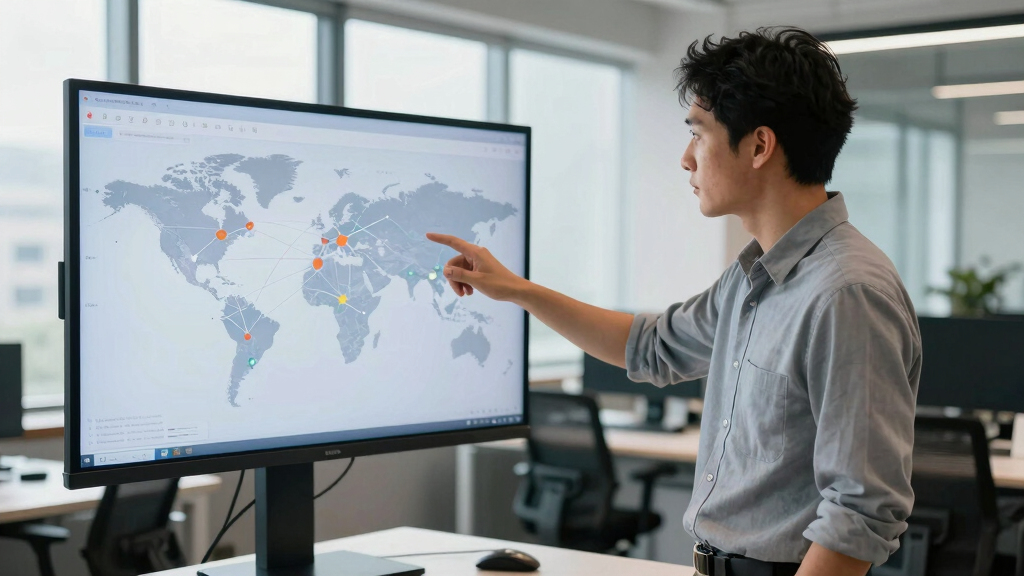
LLMs describe. World models predict and act. The next AI shift isn’t “have we adopted a chatbot” — it’s whether you’d know what to do with a model that anticipates consequences.
Independent commentary, produced with AI assistance under human editorial oversight. The views are the author’s own and may change. World Model Readiness is an early, positioning-stage diagnostic — an assessment framework, not a prediction, guarantee, or technical advice; its conclusions depend on the framework’s assumptions. “World models” are an emerging, rapidly-evolving area of AI; statements about the field reflect publicly reported developments as of mid-2026 and may quickly date. References to companies, labs, and products describe public reporting and imply no affiliation, endorsement, or verification. Product, model, and company names are trademarks of their respective owners.
Action-Capable AI Tests Operators
For readers, the key issue is operational readiness. If AI systems begin to plan, simulate, or act across business processes, organizations may need different data pipelines, supervision rules, audit trails, and failure controls than they use for text-generation tools.
The source argues that many operations are still prepared for AI that suggests options, not AI that can influence what happens next. That distinction affects compliance teams, product leaders, infrastructure planners, and executives deciding whether to rely on new model types from a single vendor or keep systems portable across providers.
The announcement also reflects a broader market debate. World models are being promoted as a possible next phase in AI, but the source cautions that the field is early and uneven. The diagnostic is presented as a way to measure readiness without treating every demonstration as proof that the technology is ready for broad deployment.

ANCEL AD310 Classic Enhanced Universal OBD II Scanner Car Engine Fault Code Reader CAN Diagnostic Scan Tool, Read and Clear Error Codes for 1996 or Newer OBD2 Protocol Vehicle (Black)
- Diagnoses Check Engine Light: Easily identify cause of check engine light
- Clear Diagnostic Codes: Read and erase trouble codes quickly
- Live Data & Freeze Frame: View real-time data and snapshot info
As an affiliate, we earn on qualifying purchases.
As an affiliate, we earn on qualifying purchases.
Labs Race Toward World Models
The source cites several public AI developments as evidence that world models have become a serious research and product direction. It says Yann LeCun, a long-running critic of language-model-only paths to human-level intelligence, left Meta in late 2025 to found Advanced Machine Intelligence, known as AMI Labs, with reported fundraising on the order of $1 billion.
The material also points to Google DeepMind’s Genie 3, introduced in August 2025, as a system that generates interactive 3D worlds from prompts, and to Meta’s V-JEPA 2 as a video-trained world model aimed at robotics. It names Fei-Fei Li’s World Labs, Nvidia, Waymo, and other companies as part of the same broad push.
Thorsten Meyer AI places World Model Readiness inside a wider operator portfolio of 18 products. In the Built in Public series, this release is described as Day 18 of 19, with the following entry expected to name the thesis behind the full set.

Agentic Software Engineering: Building Reliable Software with AI Agents, Specs, and Human Oversight
As an affiliate, we earn on qualifying purchases.
As an affiliate, we earn on qualifying purchases.
Readiness Claims Remain Early
Several details remain unclear from the source material. It does not provide a public scoring method, pricing, release date, user case studies, or evidence that the diagnostic has been validated across organizations.
Claims about the wider world-model market are also presented through the source’s reading of public reporting. The article does not independently verify the status of every named company program, and the source itself says statements about the field reflect public developments as of mid-2026 and may date quickly.
It is also unclear how soon world models will move from controlled demos and research settings into dependable, regulated operational use. The source says many gains remain strongest in games and simulated environments, while real-world deployment still raises questions about oversight, calibration, safety, and accountability.

Duogalia Fusion Splicer AI-9 Toolbox Kit with Auto Focus & 6 Motor Core Alignment Fiber Fusion Splicer 5S Automatic FTTH Fiber Optical Welding Splicing
- Fast Splicing and Heating: Splices in 5 seconds, heats in 15 seconds
- High-Precision Core Alignment: Automatic focus with six motors for accuracy
- Integrated Power Meter: Measures optical power from -50 to +26 dBm
As an affiliate, we earn on qualifying purchases.
As an affiliate, we earn on qualifying purchases.
Portfolio Thesis Comes Next
The next stated step in the Built in Public series is Day 19, when Thorsten Meyer AI says it will name the thesis beneath all 18 products in the operator portfolio.
For World Model Readiness, the next meaningful milestones would be more concrete product details: the diagnostic questions, how results are scored, what kinds of organizations it is built for, and how it handles evidence from real operations. In the wider AI market, readers should watch whether world-model systems move beyond demos into reliable tools for robotics, simulation, planning, and business process control.

Project Management Tools (AI for Risks)
As an affiliate, we earn on qualifying purchases.
As an affiliate, we earn on qualifying purchases.
Key Questions
What is World Model Readiness?
World Model Readiness is an early diagnostic from Thorsten Meyer AI. It is described as a tool for identifying whether an operation is prepared for AI systems that predict consequences and act, rather than only produce text.
Does the diagnostic build world models?
No. The source says it is a readiness mirror and not a model-building product. Its purpose is to identify gaps in data, process design, oversight, infrastructure, and risk literacy.
Why are world models getting attention now?
The source points to public work by major AI labs and companies, including Google DeepMind, Meta, World Labs, Nvidia, Waymo, and AMI Labs. It frames these efforts as signs that AI development is moving beyond text prediction toward systems that model changing environments.
What is confirmed about the product?
Confirmed from the source material: Thorsten Meyer AI has positioned World Model Readiness as the Diagnostic node in its Built in Public portfolio, and it describes the product as early-stage. The source does not provide deployment results, pricing, or a validated scoring system.
What should organizations watch next?
Organizations should look for proof that world-model tools can work reliably outside demos, and for readiness frameworks that explain how action-capable AI will be supervised, audited, and integrated without locking teams into one provider.
Source: Thorsten Meyer AI






![I Made Tinnitus My Friend, Then It Disappeared [Video]](https://thedarkpsychology.com/wp-content/uploads/2026/08/i-made-tinnitus-my-friend-then-it-disappeared-video-featured-260x140.jpg)