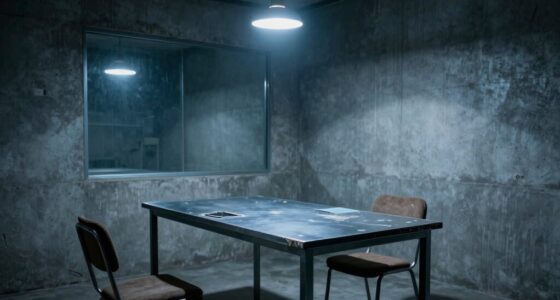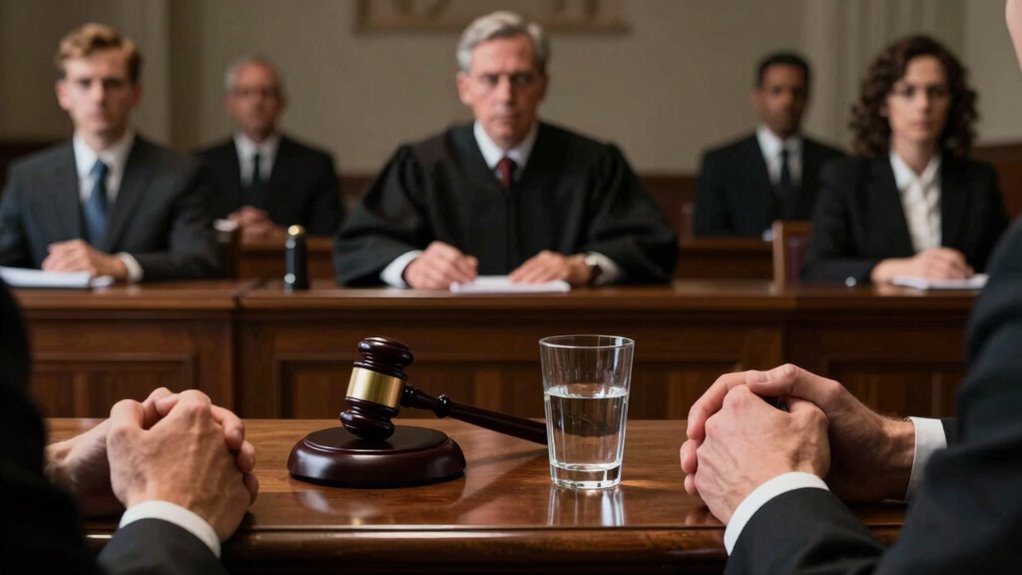

In criminal cases, false certainty happens when your memories or judgments seem confident but are actually flawed. Our brains easily distort memories over time, influenced by emotions, new info, and suggestions. Cognitive biases like confirmation bias and anchoring bias make you see patterns and details that support initial beliefs, even if they’re wrong. This can lead to overconfidence, risking wrongful accusations or convictions. If you’re curious, you’ll discover how understanding these psychological traps can help protect justice.

Turn your wind-down time into listening time
- Thousands of audiobooks, podcasts and originals
- Listen on your phone, tablet or Echo — also offline
- Cancel anytime
Key Takeaways
- Memory distortions can create false confidence in eyewitness testimony, leading to wrongful convictions.
- Cognitive biases like confirmation and anchoring bias reinforce false certainty despite contradictory evidence.
- Ambiguous situations are often misinterpreted due to attribution bias, skewing judgment toward initial assumptions.
- Confidence in memories and judgments often does not correlate with actual accuracy, increasing investigative risks.
- Recognizing psychological pitfalls encourages critical evaluation and reduces reliance on flawed memories in legal processes.
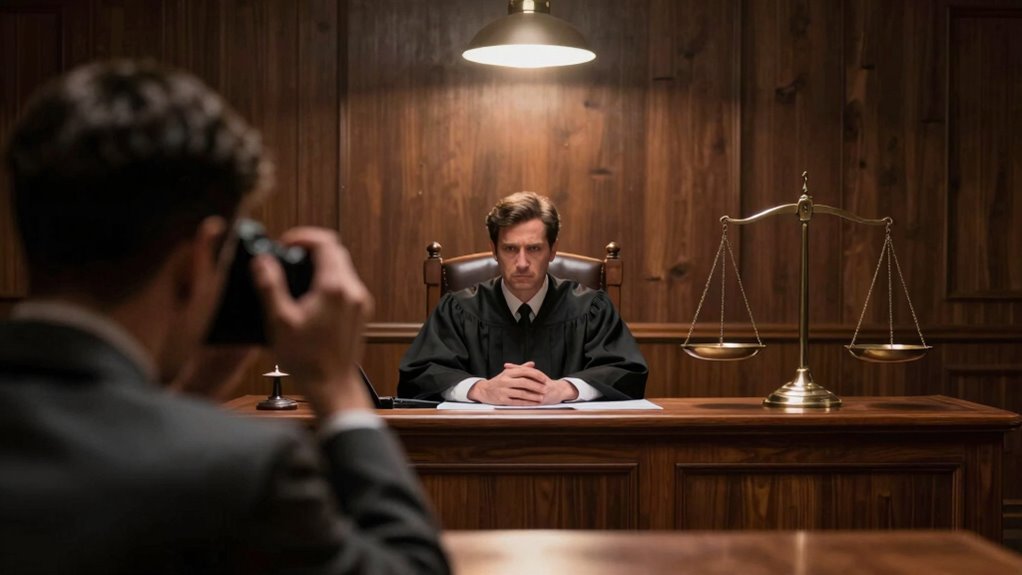
In criminal cases, the confidence of witnesses, investigators, and jurors can sometimes be misleading, leading to what psychologists call false certainty. This phenomenon occurs when people become convinced of the accuracy of their memories or judgments, even when evidence suggests otherwise. You might think that confidence equates to correctness, but psychological research shows that it often doesn’t. Memory distortion plays a significant role here. When you recall an event, your brain doesn’t produce a perfect record. Instead, memories can be reshaped by new information, emotions, or even suggestions from others. Over time, these distortions become integrated into your recollection, making you believe in a version of events that might not be entirely accurate. This creates a false sense of certainty in your memory, which can be mistakenly trusted in court. Memory distortion is a well-documented phenomenon that highlights the fallibility of human recollection.
Memory distortions can create false certainty, leading to misplaced trust in inaccurate recollections during criminal investigations.
Cognitive biases further fuel this false certainty. These are mental shortcuts or errors in thinking that lead you to make flawed judgments. For example, confirmation bias causes you to focus on evidence that supports your existing beliefs while ignoring contradicting facts. If a witness has a preconceived notion about a suspect’s guilt, they might unconsciously emphasize details that reinforce that belief and dismiss evidence that points elsewhere. Similarly, the anchoring bias can cause you to rely too heavily on initial impressions, even when new, contradictory information becomes available. These biases distort your perception of the case, making your certainty seem more justified than it actually is.
You also tend to interpret ambiguous situations in ways that support your initial assumptions, a phenomenon known as attribution bias. This can lead investigators or jurors to see patterns or connections that aren’t really there. As a result, even when conflicting evidence arises, your confidence in the original narrative remains strong. This persistent certainty can blind you to alternative explanations or evidence that might exonerate the accused, which is dangerous in the justice system.
Understanding the influence of memory distortion and cognitive biases helps explain why false certainty is so pervasive in criminal cases. It’s not about deliberate deception but about how your brain processes and interprets information. Recognizing these psychological pitfalls can make you more cautious about the confidence you place in your memories and judgments. It’s a reminder that, in the pursuit of justice, questioning your certainty and remaining open to new evidence is crucial. Otherwise, you risk trusting flawed memories and biased perceptions, which could lead to wrongful convictions or overlooking the truth altogether.
eyewitness memory accuracy test kit
As an affiliate, we earn on qualifying purchases.
As an affiliate, we earn on qualifying purchases.
Frequently Asked Questions
How Does False Certainty Influence Jury Decision-Making?
False certainty influences your jury decision-making by making you trust perceived expertise and overestimate the strength of evidence. When jurors see a confident witness or attorney, you might develop a confidence bias, believing their testimony is more credible. This illusion of certainty can lead you to overlook uncertainties or conflicting evidence, increasing the risk of wrongful convictions. Your reliance on perceived certainty shapes your judgment more than the actual facts.
Can False Certainty Lead to Wrongful Convictions?
Yes, false certainty can lead to wrongful convictions. You might trust your memory, but memory distortion can cause you to misremember details, creating a false sense of certainty. Cognitive bias, like confirmation bias, can reinforce wrong beliefs, making you overlook evidence that contradicts your assumptions. This unwarranted confidence can cause you to dismiss doubt, increasing the risk of convicting innocent individuals based on flawed perceptions.
What Psychological Traits Increase Susceptibility to False Certainty?
You’re more susceptible to false certainty if you have strong cognitive biases like confirmation bias, which makes you favor information that supports your beliefs. Emotional biases, such as overconfidence or stress, also heighten this risk. These psychological traits cause you to overlook evidence, cling to initial impressions, and ignore uncertainties, leading you to be overly sure of your judgments—even when they’re wrong.
How Do Law Enforcement Biases Contribute to False Certainty?
Imagine Sherlock Holmes himself, but even he’s influenced by forensic bias and confirmation pressure. Law enforcement biases lead investigators to focus on evidence supporting their initial theories, often ignoring contradictory clues. This confirmation pressure creates false certainty, making them believe they’ve identified the culprit prematurely. Such biases distort objective judgment, increasing the risk of wrongful convictions. Your role is to be aware of these pitfalls to prevent unjust outcomes.
Are There Effective Methods to Reduce False Certainty in Courts?
Yes, you can reduce false certainty in courts through methods like expert testimony that clarifies complex evidence and counters biases. Additionally, ensuring jury persuasion involves providing balanced information and highlighting uncertainties, helping jurors avoid overconfidence. By integrating expert insights and emphasizing the tentative nature of evidence, you improve decision-making accuracy, ultimately fostering fairer outcomes and lessening the risk of wrongful convictions driven by misplaced certainty.
cognitive bias training for legal professionals
As an affiliate, we earn on qualifying purchases.
As an affiliate, we earn on qualifying purchases.
Conclusion
Remember, certainty isn’t always truth. In criminal cases, false confidence can lead you astray, making you overlook doubt and evidence. Trust your instincts, but also question them—don’t let false certainty cloud your judgment. As the saying goes, “Look before you leap.” Staying aware of psychological biases helps you navigate complex situations more wisely, ensuring justice isn’t compromised by overconfidence. Keep an open mind, and always seek the truth beyond surface certainty.
memory distortion simulation game
As an affiliate, we earn on qualifying purchases.
As an affiliate, we earn on qualifying purchases.
judicial decision-making psychology book
As an affiliate, we earn on qualifying purchases.
As an affiliate, we earn on qualifying purchases.
Halloween Picks
halloween
As an affiliate, we earn on qualifying purchases.