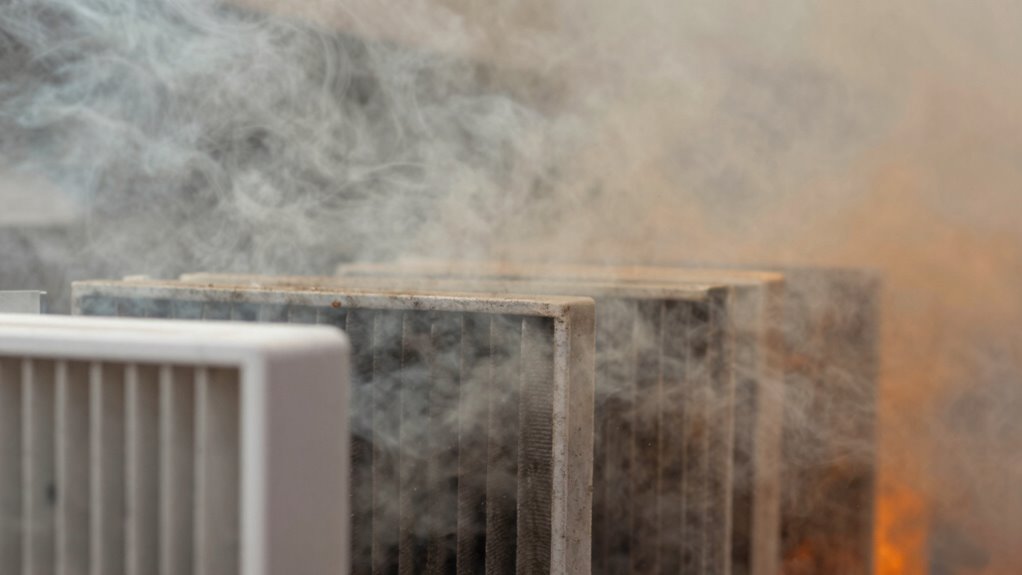

When choosing filters during wildfire season, check labels carefully. MERV ratings indicate how well a filter traps small particles, with 13 or higher better for smoke. HEPA filters remove nearly all particles down to 0.3 microns, but don’t eliminate gases alone. For VOCs and odors, look for activated carbon or similar materials. Understanding these labels helps you pick the right filtration tools to improve indoor air quality—you’ll find out more if you keep exploring.

Turn your wind-down time into listening time
- Thousands of audiobooks, podcasts and originals
- Listen on your phone, tablet or Echo — also offline
- Cancel anytime
Key Takeaways
- MERV ratings indicate a filter’s ability to trap small particles; higher ratings (13+) are better against wildfire smoke.
- HEPA filters remove 99.97% of airborne particles but do not absorb gases or VOCs alone.
- Activated carbon filters effectively adsorb VOCs and odors, often included with HEPA for comprehensive protection.
- Labels specifying “VOC removal” or “odor control” indicate filters contain activated carbon or similar materials.
- Regular filter replacement and maintenance are essential for sustained indoor air quality during wildfire events.
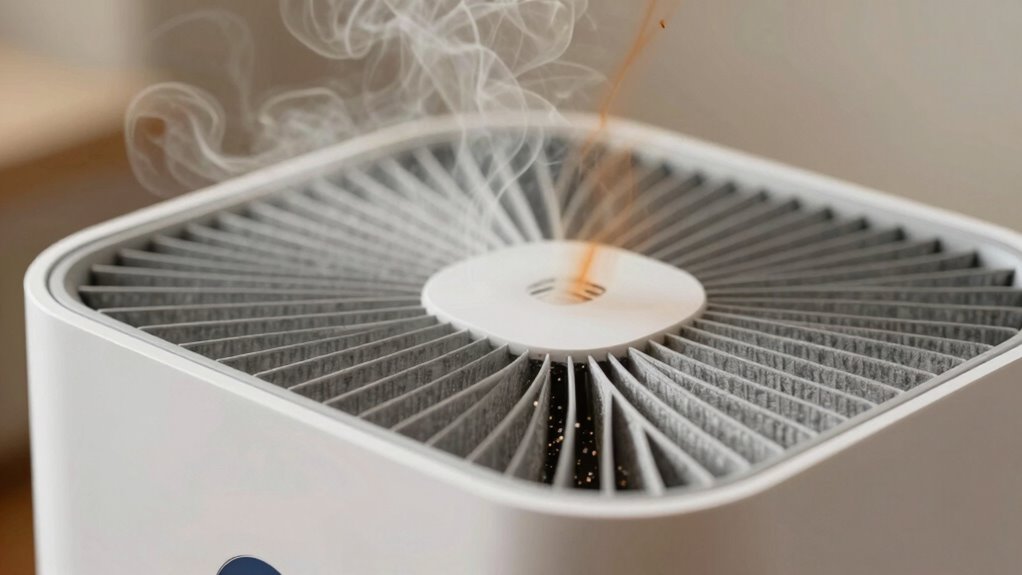
When wildfire smoke fills the air, it’s not just the visible haze you should worry about—volatile organic compounds (VOCs) and other harmful pollutants also pose serious health risks. These tiny particles and gases can infiltrate your home, degrading indoor air quality and impacting your health. To protect yourself, you rely on air filters, but understanding what their labels mean is essential. Many filters claim to be capable of removing smoke, VOCs, and other pollutants, yet not all are equally effective. Knowing how to interpret these labels helps you choose the right filter and maintain it properly for best indoor air quality.
Filter labels often include ratings like MERV (Minimum Efficiency Reporting Value), HEPA, or activated carbon. A higher MERV rating generally indicates better filtration of small particles, including smoke particles and some VOCs. For example, filters rated 13 or above can trap finer particles associated with wildfire smoke, but they may require more frequent replacement to stay effective. HEPA filters, which are rated to remove at least 99.97% of airborne particles down to 0.3 microns, are particularly good at capturing smoke particles, greatly improving indoor air quality during wildfire season. However, they typically don’t absorb gases or VOCs unless combined with activated carbon or other sorbents. Effective filtration materials are key to ensuring your system removes both particles and gases efficiently.
Higher MERV ratings and HEPA filters effectively capture wildfire smoke particles, but may need frequent replacement.
Activated carbon filters are specifically designed to adsorb VOCs and odors. When shopping for filters, look for those that combine HEPA with activated carbon, especially if wildfire smoke is a concern. Labels that specify “VOC removal” or “odor control” indicate the presence of activated carbon or similar materials. But keep in mind, these filters need regular maintenance. Over time, the activated carbon becomes saturated and loses its ability to adsorb gases, requiring replacement to keep your indoor air safe. Regular filter maintenance isn’t just about changing filters on schedule; it’s about making sure your home continues to be a barrier against harmful pollutants. Additionally, understanding the effectiveness of filtration materials can help you select the most suitable filter for wildfire smoke and VOCs. Proper filtration techniques can also enhance the overall air quality in your home and prolong the lifespan of your filters. Using proper filtration techniques ensures you maximize your indoor air quality while minimizing the risk of exposure. Properly selecting filters based on their filter ratings can significantly impact how well your indoor environment remains protected.
You should also pay attention to the manufacturer’s recommendations for filter replacement and check your indoor air quality regularly. During wildfire events, consider upgrading your filtration system or increasing filter change frequency to maintain good indoor air quality. Proper filter maintenance and choosing the right labels on filters ensure you’re effectively reducing smoke, VOCs, and other pollutants. This way, you can breathe easier and protect your health even when outdoor air quality is compromised. Understanding what filter labels mean empowers you to make smarter choices, keeping your indoor environment safer amidst wildfire threats.
HEPA air purifier for wildfire smoke
As an affiliate, we earn on qualifying purchases.
As an affiliate, we earn on qualifying purchases.
Frequently Asked Questions
How Often Should I Replace Air Filters During Wildfire Season?
You should replace your air filters every 1 to 2 months during wildfire season. Regular filter maintenance helps maintain peak air quality and guarantees your HVAC system works efficiently. If you notice dust buildup or reduced airflow, change the filter sooner. Using high-efficiency filters can also improve air quality. Keep an eye on your filters and replace them promptly to protect your indoor air and stay comfortable during smoky days.
Do All Air Filters Effectively Remove Wildfire Smoke?
Not all air filters are equal—think of them as shields with varying strengths. Many filters don’t effectively remove wildfire smoke because their efficiency depends on smoke particle size. HEPA filters, for instance, excel at trapping tiny particles, making them your best bet. Lower-rated filters might let harmful particles slip through, so choose one with high air filter efficiency to guarantee your indoor air stays safe during wildfires.
Are There Health Risks From VOCS Even With Filter Use?
Yes, there are VOC health risks even with filter use. While high-efficiency filters improve filter efficacy, they can’t eliminate all VOCs, especially if ventilation is poor or if VOC levels are high. You should continue to ventilate spaces and avoid sources of VOCs to reduce health risks. Proper filter maintenance is essential, but combining filtration with good air quality practices offers the best protection against VOC exposure.
Can Indoor Plants Reduce Wildfire Smoke and VOC Levels?
Indoor plants can help with plant detox and foliage purification, but they won’t considerably reduce wildfire smoke or VOC levels on their own. While certain plants like spider plants or peace lilies can absorb some pollutants, their overall impact is limited. To effectively improve indoor air quality during wildfires, combine plants with proper ventilation and air purifiers. Relying solely on houseplants won’t provide enough protection against wildfire smoke and VOCs.
What Are the Best Filtration Options for Allergy Sufferers During Wildfires?
During wildfires, your best filtration option is a high-efficiency air purifier with advanced technology like HEPA filters that trap tiny particles. You should also prioritize regular filter maintenance to keep it working at peak performance. These purifiers can make your home feel like a fortress against allergens, providing relief and peace of mind. Keep the filters clean and replace them as recommended to guarantee maximum protection during smoky seasons.
activated carbon filter for VOC removal
As an affiliate, we earn on qualifying purchases.
As an affiliate, we earn on qualifying purchases.
Conclusion
Now that you know what those labels really mean, you’re armed with the truth about wildfire smoke, VOCs, and filters. Think of your air quality as a fortress—each label a shield, protecting you from invisible invaders. When you choose wisely, you’re building a barrier of safety around your home and health. So, don’t just read the labels—decode them, and breathe easy knowing you’ve taken control of your environment’s hidden threats.
high MERV rated air filter for smoke
As an affiliate, we earn on qualifying purchases.
As an affiliate, we earn on qualifying purchases.
As an affiliate, we earn on qualifying purchases.
Evergreen bestsellers Picks
bestsellers
As an affiliate, we earn on qualifying purchases.



![I Made Tinnitus My Friend, Then It Disappeared [Video]](https://thedarkpsychology.com/wp-content/uploads/2026/08/i-made-tinnitus-my-friend-then-it-disappeared-video-featured-560x300.jpg)