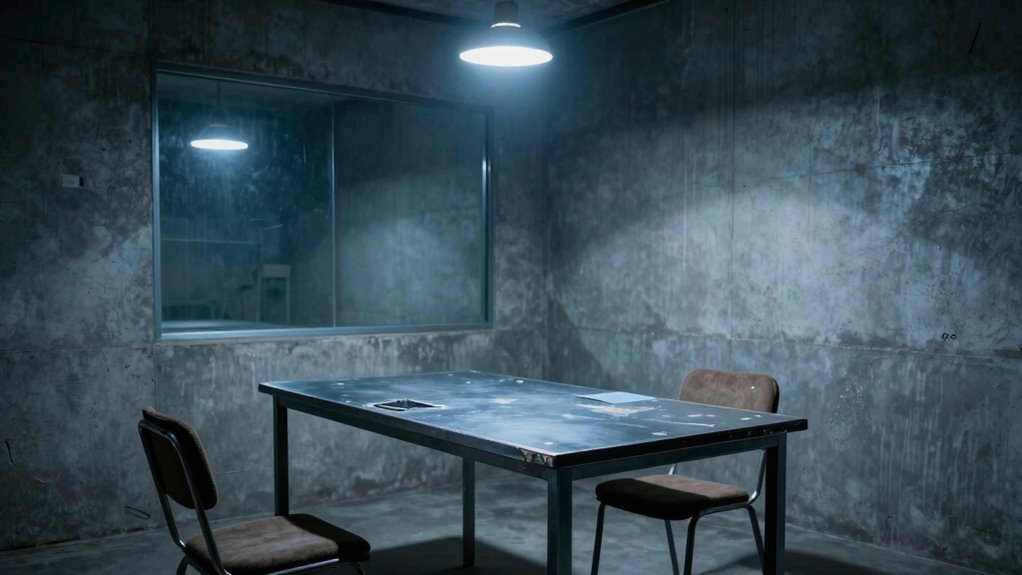

Designing an interrogation room with careful attention to environment can markedly influence compliance, trust, and honesty. Factors like acoustics, lighting, and colors shape how suspects perceive space and how they respond. A well-organized layout and calming colors foster openness, while soundproofing ensures privacy. Ethical considerations guide creating a respectful, non-coercive atmosphere. Understanding how these elements work together gives you powerful tools—explore further to optimize your space effectively.

Turn your wind-down time into listening time
- Thousands of audiobooks, podcasts and originals
- Listen on your phone, tablet or Echo — also offline
- Cancel anytime
Key Takeaways
- Well-designed interrogation environments enhance trust and cooperation by promoting privacy, calmness, and reducing stress.
- Acoustic control and soundproofing improve communication clarity and prevent external distractions, fostering compliance.
- Lighting and color schemes influence emotional states, with soft lighting and calming colors reducing anxiety and encouraging honesty.
- Room layout and furniture choices can minimize intimidation, promote openness, and support a balanced power dynamic.
- Incorporating modern technology and visual symmetry creates a professional atmosphere that enhances perceived fairness and compliance.
Popular right now

Bose QuietComfort 45 SE Wireless Noise-Cancelling Over-Ear Headphones

De'Longhi Stilosa Compact Manual Espresso Machine with Milk Frother

Bose QuietComfort Wireless Noise-Cancelling Headphones, Cypress Green
As an affiliate, we earn on qualifying purchases.
Why Does Environment Matter in Interrogation Room Design?
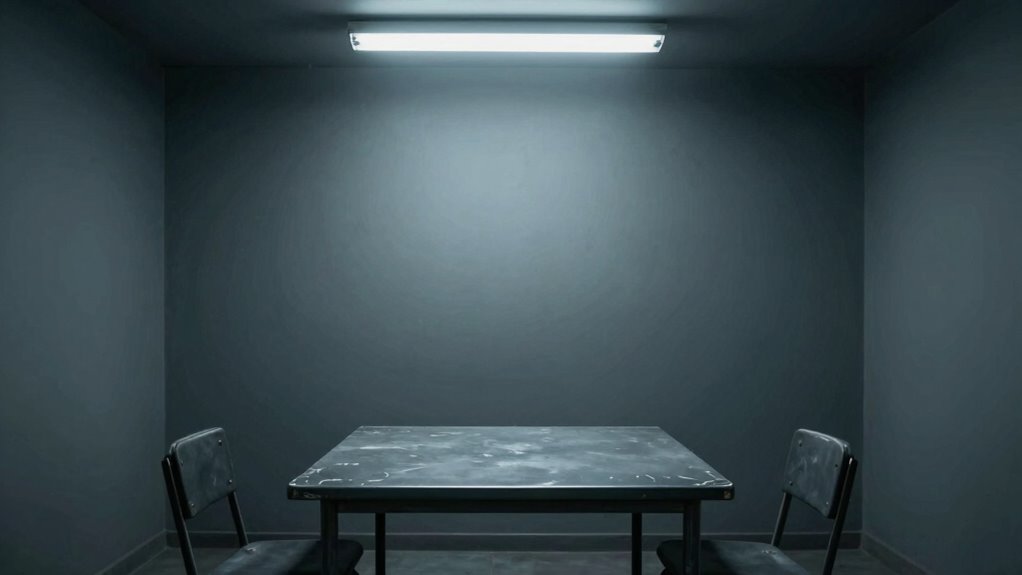
Have you ever wondered how the environment of an interrogation room influences its effectiveness? Environment plays a vital role, especially through interrogation room acoustics, which affects sound clarity and noise levels. Poor acoustics can lead to misunderstandings or increased tension, making suspects feel more stressed or defensive. Environmental psychology explains how the physical space impacts behavior and perception; a well-designed room can promote cooperation, reduce anxiety, and foster trust. Elements like soundproofing, lighting, and room layout aren’t just aesthetic choices—they shape the mental state of everyone involved. When the environment is carefully considered, it creates a setting where communication feels more natural and controlled, ultimately improving the chances of a successful interrogation. Additionally, understanding interrogation room acoustics can help optimize the environment to better influence compliance and cooperation, as acoustic design directly impacts how effectively information is exchanged. Proper acoustics and soundproofing can minimize external noise distractions, further enhancing communication and focus within the room. Recognizing the importance of Environmental psychology can lead to more effective interrogation strategies by shaping the physical setting to support desired behaviors. Creating an environment with natural lighting can also positively influence mood and openness during interviews, leading to better outcomes.
What Are the Key Elements of a Comfortable and Effective Interrogation Space?

Creating a comfortable and effective interrogation space requires careful attention to key elements that influence the environment. First, ensure the room’s layout promotes openness and minimizes intimidation, boosting interrogation comfort. Use neutral colors and simple furniture to create a calming atmosphere, reducing stress and defensiveness. Soundproofing is essential; it prevents distractions and maintains privacy, reinforcing the environment’s influence on cooperation. Temperature control also matters—neither too hot nor too cold—to keep suspects focused. Clear signage and minimal clutter help maintain a professional setting, fostering trust. Finally, comfortable seating and appropriate spacing encourage open communication. When these elements are thoughtfully integrated, the environment positively influences suspect behavior, increasing the likelihood of voluntary cooperation and effective information gathering. Incorporating soundproofing methods can significantly enhance the overall environment’s effectiveness.
How Does Lighting Influence Suspect Behavior and Cooperation?
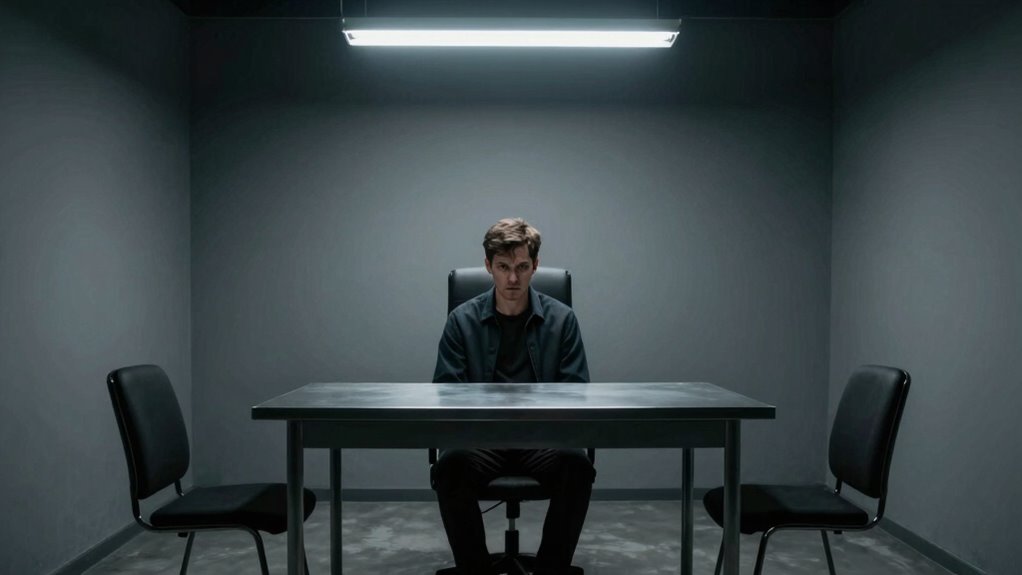
Lighting plays a essential role in shaping suspect behavior and cooperation within an interrogation room. The right lighting can influence how comfortable or intimidated a suspect feels, affecting their willingness to engage. Mood lighting, which uses softer or warmer tones, can reduce stress and encourage openness, making suspects more likely to establish suspect eye contact. Conversely, harsh or cold lighting may increase discomfort, leading suspects to withdraw or become defensive. Proper lighting subtly guides the suspect’s emotional state, promoting cooperation without overt pressure. You want to create an environment where suspects feel safe enough to communicate honestly. By carefully controlling lighting, you can foster a more productive interrogation, encouraging suspects to make eye contact and share information more freely.
How Do Room Layout and Furniture Shape Responses?
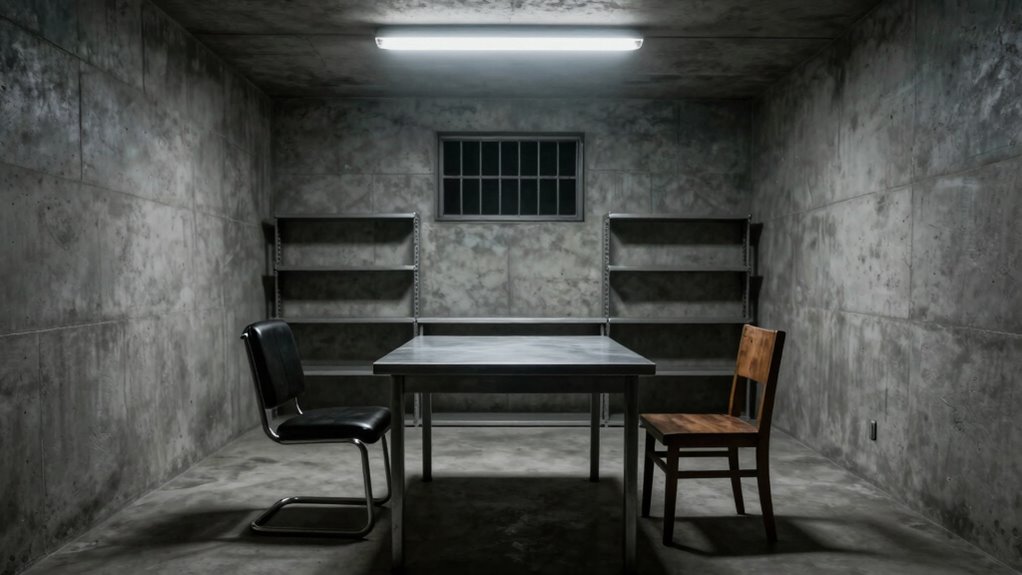
The arrangement of room layout and furniture can substantially influence how suspects respond during interrogation. Thoughtful furniture arrangement and appropriate room dimensions create an environment that can foster cooperation or defensiveness. For example, a circular layout encourages eye contact and equality, reducing perceived authority gaps. Conversely, a rectangular setup with the suspect at one end can evoke dominance. Consider the table below, which illustrates how different furniture arrangements impact responses:
| Arrangement Type | Impact on Suspect Response |
|---|---|
| Circular | Promotes openness and equality |
| U-shaped | Encourages engagement, reduces defensiveness |
| Rectangular | Can evoke dominance or submission |
| L-shaped | Creates a sense of separation, may increase defensiveness |
| Freeform | Flexible, adaptable to various responses |
Room dimensions should complement furniture choices, avoiding cramped or overly spacious environments that could influence behavior. Additionally, room size plays a critical role in shaping how suspects perceive the environment, with appropriately scaled spaces fostering comfort and cooperation. Properly scaled rooms help reduce anxiety and promote a more productive dialogue. Moreover, the lighting within the room can significantly impact mood and responsiveness, influencing the overall effectiveness of the interrogation environment. Incorporating modern technology such as adjustable lighting can further optimize the environment for better outcomes.
How Can Color Psychology Encourage Cooperation?
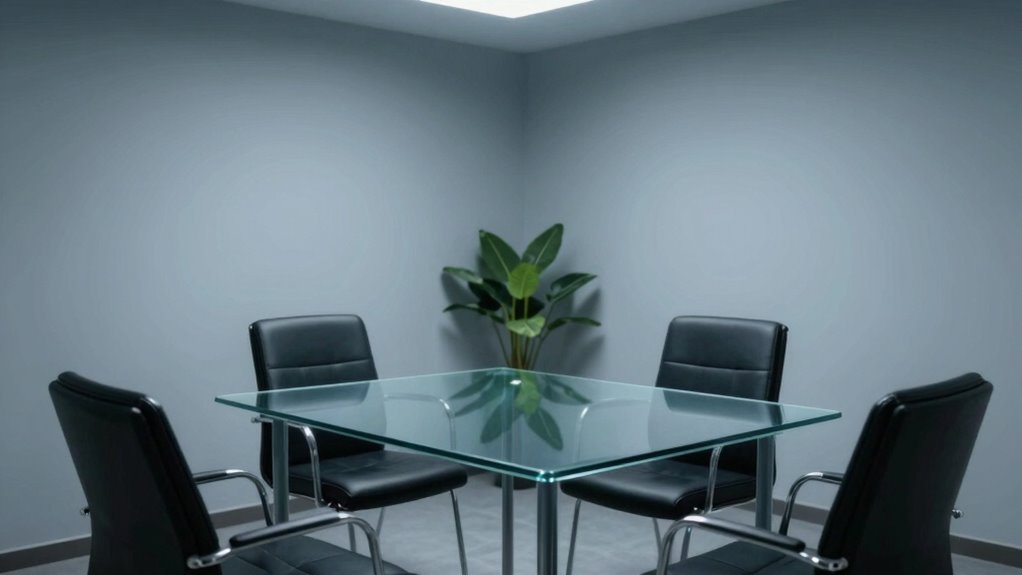
Colors can evoke strong emotional responses that influence cooperation in an interrogation room. Using calming shades helps reduce anxiety and makes subjects more willing to communicate openly. By choosing the right colors, you can create an environment that encourages cooperation and positive engagement. Incorporating environmental considerations into the design can further enhance the effectiveness of the space. Additionally, understanding color psychology can help in selecting hues that promote trust and openness. Considering halal standards in the environment, such as avoiding non-halal symbols or colors associated with certain non-halal items, can also foster a sense of respect and comfort for diverse individuals. Furthermore, aligning the environment with regulatory guidelines ensures ethical standards are maintained, supporting compliance and trust. Recognizing cultural symbols and their meanings can also help in designing spaces that are respectful and inclusive for all parties involved.
Colors Evoke Emotional Responses
Since different hues can influence emotions, selecting the right colors for an interrogation room can foster a cooperative atmosphere. Color symbolism plays a key role in shaping perceptions and responses, as certain shades carry specific emotional resonance. For example, blue often symbolizes trust and calmness, encouraging openness and reducing defensiveness. Green can evoke feelings of balance and reassurance, helping subjects feel more at ease. On the other hand, harsh reds may trigger agitation or aggression, hindering cooperation. By understanding how colors influence emotional responses, you can create an environment that subtly guides behavior. The goal is to choose hues that promote trust, reduce anxiety, and foster honest communication, ultimately increasing the likelihood of positive engagement during the interrogation. Additionally, awareness of color psychology in Gold IRA Markets can inform decisions about the environment to ensure a calming and trustworthy setting. Incorporating psychological principles such as environmental cues and emotional responses into room design can further enhance the effectiveness of the environment in eliciting cooperation. Recognizing the impact of environmental cues allows for deliberate adjustments that reinforce a sense of safety and openness. Moreover, understanding the science behind color psychology can help tailor the environment to influence specific emotional states conducive to cooperation.
Calming Shades Reduce Anxiety
Using calming shades in an interrogation room can considerably reduce anxiety and help subjects feel more at ease. This approach leverages color therapy and environmental psychology principles to foster cooperation. Soft blues, greens, and muted earth tones promote relaxation and trust. These colors can lower cortisol levels, making individuals less defensive. Incorporating calming shades also:
- Minimizes feelings of threat or hostility
- Encourages openness and honesty
- Creates a controlled, neutral environment
- Reduces physiological stress responses
- Enhances overall comfort during questioning
- Proper ventilation considerations can further improve environmental comfort and reduce stress levels. Additionally, understanding how environmental psychology influences behavior can help optimize room design for better compliance. Recognizing the importance of monitoring social media for giveaways and contests can also be utilized to inform best practices in creating reassuring environments that foster cooperation. Maintaining good indoor air quality by managing air circulation can further support a calming atmosphere and reduce anxiety during interactions.
How Do Sound and Acoustics Create the Right Atmosphere?
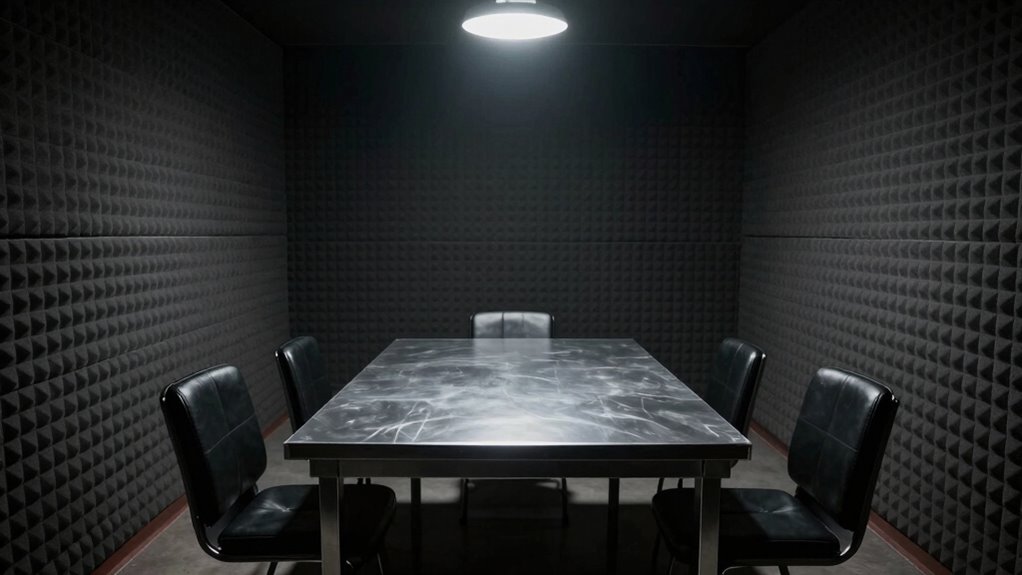
Sound and acoustics play a crucial role in shaping the atmosphere of an interrogation room, influencing both the mood and the behavior of those inside. Proper soundproofing techniques ensure external noise doesn’t interfere, helping maintain focus and control. By minimizing distractions, you create a calm, controlled environment that encourages cooperation. Acoustic panel placement is essential; strategically positioning panels helps absorb sound reflections, reducing echo and sharp noises that could escalate tension. This quiet, contained space fosters a sense of privacy and safety, making subjects feel less defensive. When sound and acoustics are optimized, you establish an environment where communication is clearer, and compliance is more likely. Effective sound management techniques, such as the use of specialized materials and targeted placement, further enhance this environment. This attention to auditory detail ultimately supports your goal of effective and respectful interrogation.
How to Minimize Distractions and Keep the Focus During Interrogation?

To keep the focus during an interrogation, you need to control environmental distractions like noise and interruptions. Arranging the interview room layout thoughtfully helps minimize visual and physical disruptions. By paying attention to these details, you create a space that promotes concentration and reduces unnecessary interruptions. Incorporating environmental design principles can further enhance the effectiveness of the space.
Control Environmental Distractions
Environmental distractions can considerably undermine the effectiveness of an interrogation by diverting attention and reducing focus. To guarantee these distractions, you must minimize sensory overload and environmental noise. Reduce visual clutter and ensure the room has neutral colors to avoid overstimulation. Use soundproofing materials to block outside noise, creating a quieter environment. Limit interruptions by silencing devices and controlling visitor access. Maintain consistent lighting that’s neither too harsh nor dim.
- Install soundproof panels or curtains
- Use soft, neutral-colored decor
- Silence phones and notifications
- Restrict access during interviews
- Adjust lighting to prevent glare or dimness
Optimize Interview Room Layout
A well-structured interview room layout plays a key role in maintaining focus and minimizing distractions during interrogation. Position the table and chairs to promote eye contact and reduce unnecessary movement. Keep windows away from direct sightlines to prevent outside distractions and ensure consistent airflow patterns. Optimize airflow by designing ventilation systems that circulate air quietly and efficiently, preventing drafts or stuffiness that could divert attention. Place air vents strategically to avoid drafts near the suspect or interviewer, helping maintain comfort and concentration. Keep clutter minimal and ensure lighting is steady and non-intrusive. By thoughtfully arranging furniture and controlling airflow, you create an environment that keeps focus laser-sharp and distraction-free throughout the interrogation.
What Ethical Considerations Should Guide Interrogation Room Design?
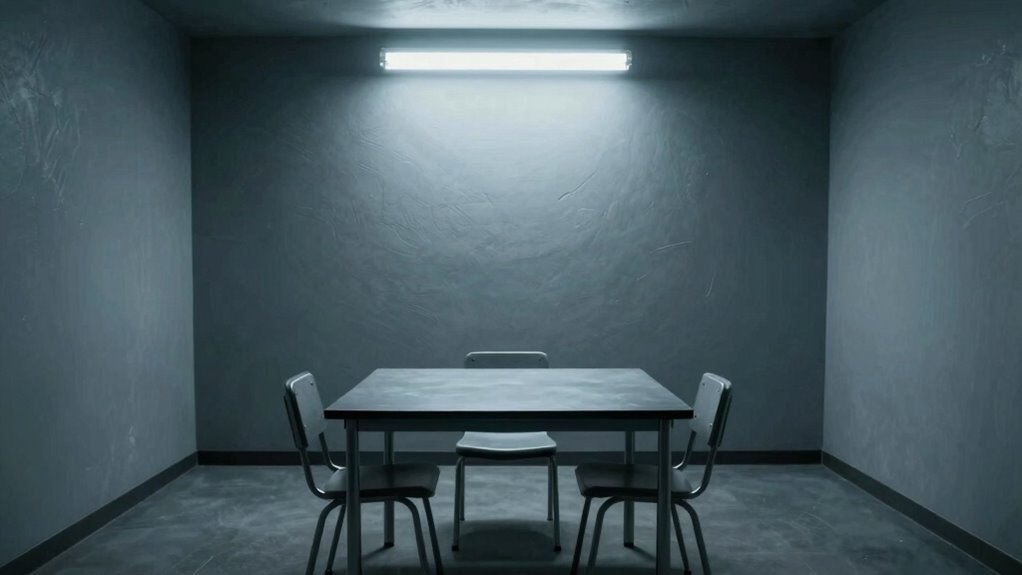
Designing interrogation rooms requires careful attention to ethical principles that prioritize respect for individuals’ rights and dignity. You must address privacy concerns, ensuring detainees feel safe and secure. Cultural sensitivity is also essential; avoid design elements that could cause discomfort or misunderstandings across different backgrounds. Consider the impact of room features on psychological well-being, avoiding intimidation or coercion. Maintain transparency in design choices to foster trust and fairness. Key ethical considerations include:
Design interrogation rooms that respect dignity, ensure privacy, and promote fairness across diverse cultural backgrounds.
- Respecting privacy and confidentiality
- Avoiding environments that induce undue stress
- Incorporating cultural awareness in decor and layout
- Ensuring transparency and fairness in design
- Prioritizing the dignity of all individuals involved
How Do Traditional and Modern Interrogation Rooms Compare?
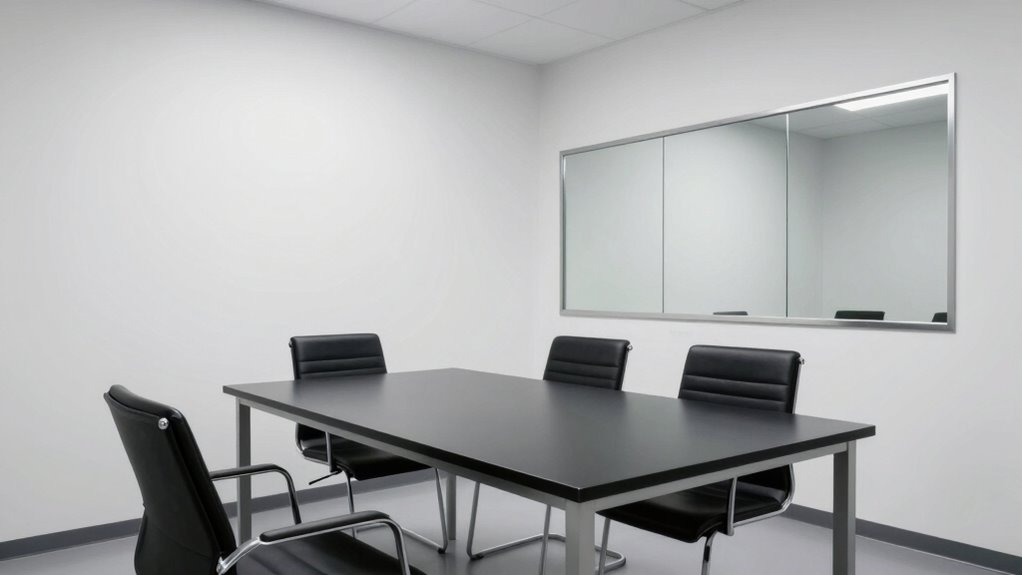
Traditional interrogation rooms often rely on minimal technology and straightforward layouts, focusing on control and observation. Modern rooms, meanwhile, incorporate advanced tech, more inviting aesthetics, and layouts designed to reduce stress. Considering these differences helps you understand how design choices impact psychological comfort and effectiveness.
Technological Integration Levels
Have you ever wondered how the technological features of interrogation rooms have evolved over time? Modern rooms now incorporate advanced tools that enhance effectiveness and accuracy. You might find biometric monitoring systems tracking physiological responses, providing real-time data on stress levels. Virtual reality setups are used to simulate scenarios, helping assess responses in controlled environments. Compared to traditional rooms, which relied solely on observation and verbal cues, these innovations add layers of objectivity.
- Biometric sensors measure heart rate, skin conductance, and respiration
- Virtual reality creates immersive interrogation scenarios
- Digital recording ensures precise documentation
- AI-driven analytics interpret behavioral patterns
- Integrated communication systems streamline the interrogation process
These technological integration levels profoundly influence interrogation dynamics and outcomes.
Room Aesthetics and Layout
Modern interrogation rooms often feature sleek, minimalistic aesthetics that promote focus and control, contrasting sharply with the more utilitarian and sometimes intimidating layouts of traditional spaces. These modern designs emphasize visual symmetry, creating a balanced environment that reduces distractions and fosters a sense of order. The careful attention to spatial proportions ensures the room feels neither cramped nor overly spacious, helping to maintain a controlled atmosphere. Traditional rooms often relied on cluttered or rigid arrangements, which could evoke discomfort or hostility. In contrast, modern layouts prioritize clean lines and open spaces, making it easier for officers to observe and interact without visual chaos. This deliberate aesthetic approach influences the psychological environment, subtly guiding compliance through design rather than intimidation.
Psychological Impact Factors
The psychological impact of interrogation room design heavily influences how suspects and officers behave during questioning. Traditional rooms often create high environmental stress through stark lighting and confined spaces, intensifying feelings of sensory deprivation and discomfort. Modern rooms, by contrast, aim to reduce stress with softer lighting and more open layouts, promoting cooperation. You should consider how sensory deprivation can lead to feelings of isolation, impacting a suspect’s responses. Environmental stressors like noise or harsh visuals can heighten suspicion or resistance.
- Sensory deprivation heightens feelings of vulnerability
- Environmental stress increases anxiety and resistance
- Modern designs minimize sensory overload
- Traditional rooms amplify discomfort and mistrust
- Both designs influence compliance through psychological pressure
What Practical Tips Help You Set Up an Effective Interrogation Environment?
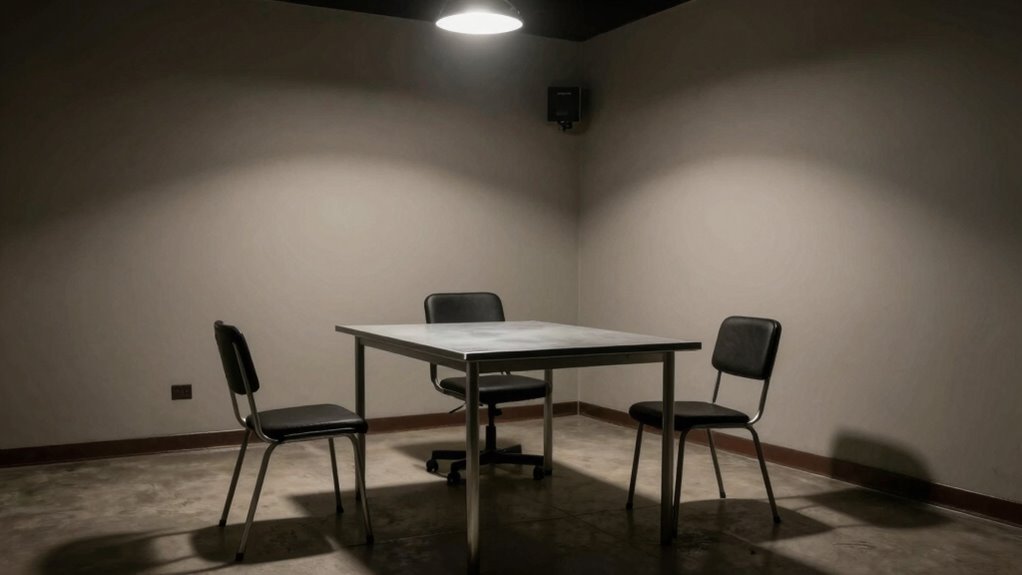
Creating an effective interrogation environment begins with carefully selecting a quiet, neutral space that minimizes distractions and maintains confidentiality. Prioritize interrogation room privacy by ensuring soundproofing and secure entry points, preventing eavesdropping. Use equipment placement strategies to keep essential tools within reach while avoiding clutter that can distract or intimidate. Position cameras and recording devices discreetly to preserve a sense of control and professionalism. Keep the table and chairs arranged to foster open communication without intimidation—aim for a balanced setup that encourages cooperation. Lighting should be soft yet sufficient, avoiding glare or harsh brightness. By focusing on privacy and strategic equipment placement, you create a space that promotes trust, reduces stress, and facilitates effective dialogue.
Frequently Asked Questions
How Does Room Temperature Impact Suspect Cooperation During Interrogation?
You’ll find that room temperature substantially impacts suspect cooperation during interrogation. When the environment offers psychological comfort through a well-regulated temperature, suspects tend to stay calmer and more receptive. Environmental psychology shows that extremes—either too hot or too cold—can cause discomfort, resistance, or agitation, reducing compliance. By maintaining a balanced temperature, you create a space that encourages cooperation and fosters a more productive interrogation.
What Impact Does Ventilation Have on the Interrogation Environment?
Good ventilation improves the interrogation environment by enhancing air circulation, which helps prevent stuffiness and reduces discomfort. It also aids in scent control, making the room less stuffy and more neutral, which can help suspects stay calmer and more cooperative. Proper airflow keeps the space fresh, minimizes odors, and creates a more controlled environment, ultimately encouraging cooperation and reducing stress during the interrogation process.
Can Artwork or Visual Elements Influence Suspect Responses?
Artwork and visual elements can substantially influence your suspect’s responses by providing psychological cues and creating visual distractions. When you carefully select calming or neutral images, you help reduce defensiveness and encourage openness. Conversely, distracting or provocative visuals can heighten anxiety or confusion, making suspects more likely to comply. By understanding these visual cues and distractions, you can subtly guide responses and foster a more cooperative interrogation environment.
How Does Privacy Level Affect Suspect Willingness to Cooperate?
You’ll find that higher privacy levels boost suspect willingness to cooperate. Privacy barriers and soundproofing techniques help create a secure environment, making suspects feel less exposed and more comfortable sharing information. When they sense their privacy is protected, they tend to open up more, increasing compliance. Ensuring these elements are in place can markedly improve the effectiveness of an interrogation by fostering trust and reducing anxiety.
What Role Does Technological Integration Play in Modern Interrogation Rooms?
Technological integration enhances modern interrogation rooms by providing advanced tools and security systems that improve effectiveness. You can use technological tools like recording devices and lie detection systems to gather accurate information, while security systems ensure safety and control. These technologies streamline the process, increase reliability, and help maintain a secure environment, ultimately encouraging suspects to cooperate more openly. Embracing these innovations makes interrogation more efficient and effective.
Conclusion
Think of your interrogation room as a carefully crafted garden. When you design it thoughtfully, it cultivates cooperation and honesty, guiding responses like gentle sunshine nurtures growth. By paying attention to environment, lighting, layout, and ethics, you create a space where trust blossoms rather than weeds of resistance take hold. With these elements in harmony, you turn the room into a fertile ground for truth to flourish, making your questioning more effective and ethical.