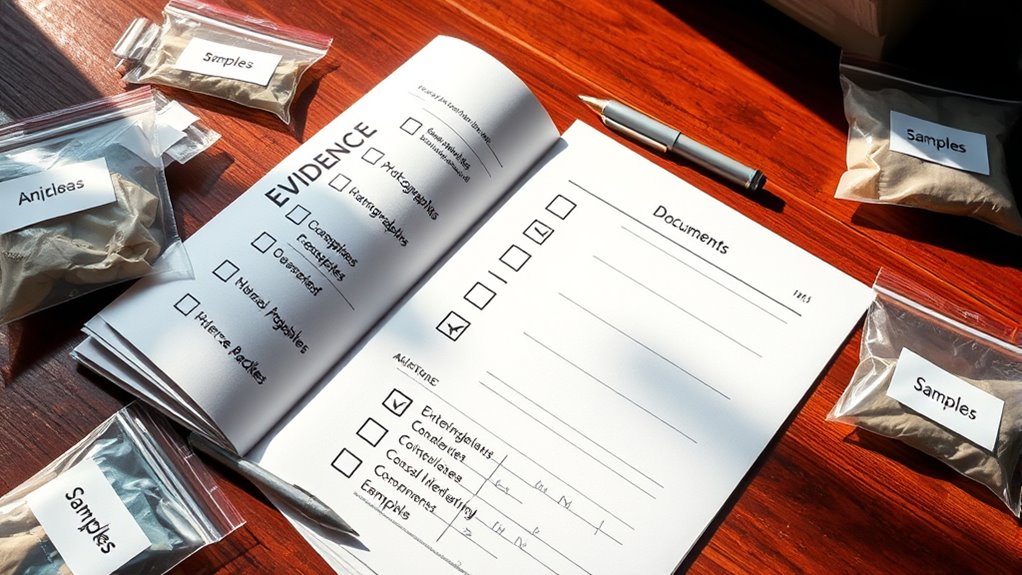

To create a strong evidence packet, gather all relevant documents like affidavits, photos, reports, receipts, and correspondence. Organize everything logically with clear labels, captions, and references to make it easy to follow. Guarantee all items meet submission guidelines and are up-to-date, complete, and legible. Double-check no pages are missing, and keep copies for your records. Keep learning more about effective documentation techniques to strengthen your case further.
Key Takeaways
- Organize all related documents logically with clear labels, captions, and a table of contents if needed.
- Include all supporting evidence such as affidavits, photos, reports, receipts, and correspondence.
- Verify that all documents are current, complete, and properly formatted according to guidelines.
- Reference each document within the packet to clarify its relevance and importance.
- Prepare a master list of all items with descriptions, ensure proper file naming, and keep copies for records.

Are you confident that your evidence packet is complete and well-organized? Ensuring your packet is thorough and easy to navigate is vital for a smooth review process. The foundation of a strong evidence packet lies in impeccable document organization. Organize your documents logically, grouping related items together, and label everything clearly. Use tabs, dividers, or a table of contents to make it easy for reviewers to find specific pieces of evidence quickly. Proper document organization not only demonstrates professionalism but also helps prevent overlooked or misplaced items, which could delay your case. Familiarize yourself with the submission guidelines provided by the reviewing authority. These guidelines often specify the required formats, paper sizes, font styles, and file types, so adhering strictly to these rules shows your attention to detail and respect for the process. Double-check the submission guidelines before assembling your packet to make it certain you’re including all necessary components and following the specified procedures. Paying attention to the expiration of documents can prevent delays caused by outdated information. When it comes to the actual documents, include everything that supports your case clearly and thoroughly. This might include affidavits, photographs, official reports, receipts, or correspondence. Make sure each document is legible, properly labeled, and referenced within your packet. For example, if you’re submitting a photograph, include a caption explaining what it depicts and its relevance to your case. Consistency in labeling and referencing helps reviewers understand the significance of each item without confusion. Keep a master list of all submitted documents, noting their descriptions and locations within the packet. This list acts as your checklist and can be invaluable if you need to verify that all required evidence is included. Pay special attention to the submission guidelines regarding formatting. Some authorities require documents to be scanned in specific resolutions or submitted as PDFs, while others might prefer physical copies in a particular order. Follow these instructions meticulously. If digital submission is involved, ensure your files are named systematically, making it easier for reviewers to locate and verify each piece of evidence. Additionally, confirm that your entire packet is complete before submitting—missing pages or documents can undermine your case. Finally, keep copies of everything you submit. Whether digital or physical, having duplicates ensures that you have backup evidence if needed later. By focusing on document organization and strictly following submission guidelines, you’ll present a professional, thorough evidence packet that’s easier to review, increasing your chances of a favorable outcome.
Frequently Asked Questions
How Do I Organize Digital Evidence Effectively?
You should start by implementing a clear digital file management system, using folders and naming conventions that make electronic evidence organization straightforward. Always back up files regularly and keep track of metadata for each piece of evidence. Use consistent labels and chronological order to locate files easily. This approach guarantees efficient access and maintains the integrity of digital evidence, minimizing the risk of losing or misplacing essential information.
What Are Common Mistakes to Avoid in Compiling an Evidence Packet?
You should avoid common mistakes like overlooking admissibility concerns and making documentation errors. Make certain all evidence is properly labeled, complete, and relevant to prevent issues in court. Double-check that your documentation is accurate and organized, as sloppy records can weaken your case. Avoid mixing unrelated evidence and missing vital details. Being thorough and precise helps prevent challenges to your packet’s credibility and admissibility, strengthening your overall presentation.
Are There Specific Legal Requirements for Evidence Documentation?
Yes, there are specific legal requirements for evidence documentation. You must guarantee evidence authenticity by accurately describing and preserving the items, following documentation standards to maintain a clear chain of custody. Proper labeling, detailed records, and secure storage are essential. By adhering to these standards, you help establish credibility and ensure your evidence remains admissible in court, reducing the risk of challenges or dismissal.
How Long Should I Retain Evidence Packets After Case Closure?
You should retain evidence packets for at least the duration required by your agency’s policies and legal standards, often several years after case closure. During this time, maintain a clear chain of custody and proper evidence storage to guarantee integrity. After the retention period, securely dispose of the evidence, but always verify specific legal or departmental guidelines to avoid potential issues with evidence handling or future legal needs.
Can Evidence Packet Checklists Vary by Case Type?
Ironically, evidence packet checklists don’t follow a one-size-fits-all approach. You should expect evidence packet customization based on case-specific documentation, as each case type demands different details. While some standard elements remain, tailoring checklists guarantees you include relevant information, making your case stronger. This adaptability helps prevent overlooking essential evidence, emphasizing that even in organized processes, flexibility is key to managing the unique requirements of every case.
Conclusion
By carefully assembling your evidence packet, you guarantee your case is presented with clarity and professionalism. Think of this checklist as your trusted guide, subtly guiding you toward a polished submission. When every detail is thoughtfully included, it reflects your dedication and meticulousness. Ultimately, this thorough approach gently elevates your chances, allowing your case to speak confidently on its own. Trust in the process, and let your organized effort quietly make the strongest impression.