
To stop feeling the need to ask permission for your needs, try the Permission Slip Exercise. This practice encourages you to recognize your right to prioritize yourself without guilt and to trust your instincts. By granting yourself permission daily, you build confidence, set boundaries, and gain emotional independence. Overcoming doubts or resistance is key, and you’ll discover real-life ways to apply this tool. Keep exploring how this simple step can transform your relationship with your needs.
Key Takeaways
- The exercise encourages recognizing and granting yourself internal permission to prioritize needs without seeking external validation.
- It helps identify and overcome inner resistance, such as guilt or self-doubt, that blocks authentic self-expression.
- By practicing self-permission, you reclaim personal boundaries and build confidence in asserting your needs confidently.
- The exercise shifts mindset from dependency on approval to trusting your instincts and making autonomous decisions.
- Regularly applying the permission slip fosters emotional independence, self-trust, and a healthier, guilt-free approach to needs.
Self Empowerment & Weekly Affirmations Journal
As an affiliate, we earn on qualifying purchases.
As an affiliate, we earn on qualifying purchases.
Why Do We Constantly Feel the Need to Ask Permission for Our Needs?

Have you ever wondered why you often feel the need to seek permission before taking care of your needs? It usually stems from a lack of self-awareness and emotional independence. When you’re not fully aware of your feelings and boundaries, you might rely on others’ approval to validate your choices. Over time, this habit creates a pattern where you doubt your own judgment and hesitate to prioritize yourself. You may believe your needs are less important or fear rejection if you assert yourself. Developing self-awareness helps you recognize your worth and understand that your needs are valid. Building emotional independence allows you to trust yourself, reduce the urge to seek permission, and empower you to act in alignment with your true desires. Cultivating an inner guidance connection can further support you in trusting your instincts and making authentic decisions. Strengthening your self-trust is crucial for breaking free from this cycle and confidently honoring your needs. Recognizing the role of self-doubt in this process can help you address underlying fears and build resilience. Gaining self-knowledge can provide clarity about your needs and priorities, making it easier to act without external validation. Understanding the importance of self-awareness can lead to more authentic self-expression and healthier boundaries.

The Set Boundaries Workbook: Practical Exercises for Understanding Your Needs and Setting Healthy Limits
As an affiliate, we earn on qualifying purchases.
As an affiliate, we earn on qualifying purchases.
What Is the Permission Slip Exercise and How Can It Help?

The Permission Slip Exercise helps you recognize and reclaim your personal boundaries by giving yourself permission to say yes or no. It encourages you to understand the importance of honoring your needs without guilt or hesitation. This practice empowers you to take control and set clearer limits in your life. Embracing your unique style and wellness journey can further support your growth and self-awareness. Recognizing boundaries and limits can improve your overall sleep environment, making it easier to create a space conducive to rest. Incorporating this exercise into your routine can foster a sense of inner resilience, aligned with Stoic principles of virtue and self-control. Developing a healthy self-awareness is essential for building confidence in asserting your needs and boundaries. This process can also help you stay grounded amidst external pressures, supporting your ability to maintain emotional balance in various situations.
Understanding the Permission Slip Concept
Understanding the permission slip concept can be a powerful tool for gaining clarity and control over your decisions. It’s about recognizing that you give yourself permission to prioritize your needs and feelings, instead of relying on others’ approval. This exercise enhances your self-awareness by helping you identify when you’re neglecting your boundaries or suppressing your true needs. When you see the permission slip as your personal license to act in your best interest, it removes guilt and hesitation. You learn to trust your instincts and set boundaries confidently. Ultimately, it’s a reminder that you don’t need external validation to honor your needs—your permission is enough. This awareness turns your internal dialogue into a supportive, empowering tool for healthier decision-making. Incorporating techniques like self-awareness can further deepen your understanding of your needs and foster more confident choices, especially when you recognize the importance of internal validation in cultivating self-trust. Developing emotional resilience can also strengthen your ability to honor your needs without seeking external approval.
Empowering Personal Boundaries
Building on the idea that your internal permission matters more than external approval, the permission slip exercise empowers you to set and uphold personal boundaries confidently. When you give yourself permission, you take control of boundary setting instead of relying on others’ reactions. This process boosts your self-empowerment, making it easier to say no or express your needs without guilt. By actively affirming your right to boundaries, you reinforce your self-respect and create healthier relationships. The exercise helps you recognize that boundaries are a form of self-care, not selfishness. As you practice, you’ll notice increased confidence in asserting your limits, which strengthens your sense of autonomy. Recognizing personal boundaries as a vital part of safety and well-being, you can better protect yourself in everyday situations. Understanding the importance of self-advocacy further enhances your ability to maintain boundaries confidently. Engaging in this exercise regularly cultivates a mindset of self-trust, allowing you to honor your needs consistently. When you embrace the concept of boundaries as self-care, you reinforce their importance in your overall well-being. This ongoing practice helps solidify your understanding that setting boundaries is an essential component of emotional health, enabling you to live authentically and maintain boundaries that honor your well-being.
Daily Positive Affirmation Cards for Kids, Mindfulness Activities, Confidence Building, Growth Mindset, Positive Attitude, 54 Glossy cards in hard storage box, Loved by teachers, parents, & therapists
💙 INSPIRE CONFIDENCE IN YOUR CHILD – Featuring 54 affirmations paired with action challenges, these cards empower children…
As an affiliate, we earn on qualifying purchases.
As an affiliate, we earn on qualifying purchases.
Understanding the Psychology Behind Granting Yourself Permission

Granting yourself permission often involves more than just making a conscious decision; it taps into deep-seated beliefs and emotional patterns. These roots can create self-esteem barriers that make accepting your needs feel uncomfortable. Emotional dependency on others’ approval can also block your progress. To understand this psychology, consider these key factors:
- Uncovering Self-Esteem Barriers: Recognize how negative beliefs about yourself hinder permission-giving. Sometimes, these beliefs are reinforced by piercings-Body that symbolize your self-acceptance or rejection of societal standards. Additionally, these barriers are often rooted in self-esteem issues that stem from past experiences and societal conditioning. Fresh insights highlight how local reviews emphasize the importance of self-worth in overcoming these barriers.
- Addressing Emotional Dependency: Break free from relying on others’ validation to justify your needs.
- Challenging Inner Narratives: Reframe inner voice that labels your needs as selfish or unworthy.
- Understanding how Vetted – Perfect Fit Living can support your journey toward self-acceptance and permission.

Allura & Arcia 52 Stress Less & Self Care Cards – Mindfulness & Meditation Exercises – Anxiety Relief & Relaxation
52 EASY EXERCISES FOR EVERYONE: This unique Self Care Deck contains 52 extremely effective exercises for mindfulness, meditation,…
As an affiliate, we earn on qualifying purchases.
As an affiliate, we earn on qualifying purchases.
How to Practice the Permission Slip Exercise Every Day

Practicing the Permission Slip Exercise daily helps reinforce your ability to recognize and honor your needs, even when old beliefs or reliance on others’ approval try to hold you back. Each day, take a moment to identify what you truly need and give yourself permission to feel it. This consistent practice enhances your decision-making clarity, making it easier to distinguish between genuine needs and external influences. Incorporating emotional resilience techniques can further support you in handling discomfort or guilt that might come up. Water-based stress relief practices, such as deep breathing or relaxing in a bath, can also help ground you during this process. Developing a personal boundary awareness is essential for maintaining your emotional well-being. Keep a journal or set reminders to encourage this habit. Over time, it becomes natural to grant yourself permission without hesitation, empowering you to prioritize your well-being and trust your inner voice more confidently.
Common Challenges When Using the Permission Slip Technique and How to Overcome Them
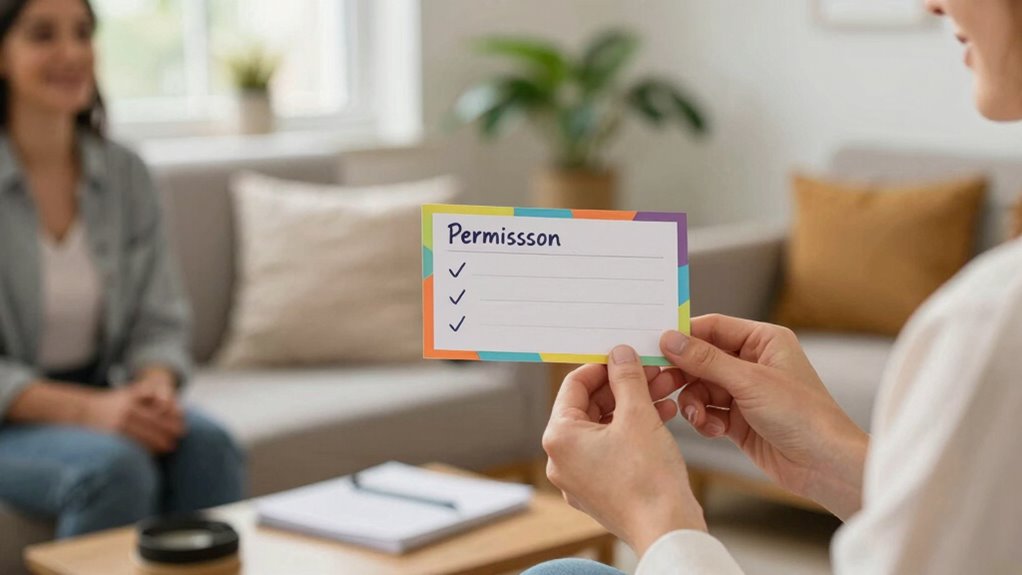
Many people face inner resistance when starting the permission slip exercise, making it hard to fully embrace your needs. Reframing challenges as opportunities helps you shift perspective and stay motivated. Cultivating self-compassion allows you to be kind to yourself during setbacks and keeps you moving forward.
Recognizing Inner Resistance
Recognizing inner resistance is a crucial step when using the Permission Slip technique, as it often manifests as subtle doubts or feelings of discomfort that can block your progress. This resistance may stem from inner conflict or emotional barriers that keep you from fully accepting your needs. To identify these, look for:
- Feelings of guilt or shame when considering your needs
- A sense of hesitation or hesitation to act on your desires
- Persistent doubts about your right to prioritize yourself
These signs indicate that your mind is resisting change. Acknowledging this resistance allows you to address the emotional barriers and inner conflict that hold you back, making it easier to move forward with self-acceptance and permission.
Reframing Needs as Opportunities
Reframing your needs as opportunities can be challenging when using the Permission Slip technique, especially if you’re accustomed to viewing your desires as obstacles or sources of guilt. It requires shifting your perspective from seeing needs as demands to recognizing them as chances for growth and self-care. Boundary setting plays a key role here—you’re learning to honor your needs without overextending or feeling guilty. Developing emotional independence helps you see your needs as valid and essential, not burdensome. Instead of questioning if you “should” or “shouldn’t,” view needs as opportunities to connect with yourself and build resilience. This mindset empowers you to embrace your needs confidently, seeing them as gateways to a more authentic and fulfilled life.
Cultivating Self-Compassion
As you work to reframe your needs as opportunities, cultivating self-compassion can present its own set of challenges. You might struggle with:
- Negative self-talk that undermines your efforts, making self-compassion feel out of reach.
- Guilt or shame when prioritizing your needs, harming your emotional resilience.
- Impatience with the process, expecting quick results instead of appreciating gradual growth.
To overcome these hurdles, remind yourself that practicing self-compassion is key to building emotional resilience. Be gentle in your self-talk, acknowledge your feelings without judgment, and recognize that cultivating self-compassion takes time. This compassionate approach helps you embrace your needs, making it easier to sustain the permission slip exercise and foster genuine self-understanding.
Real-Life Examples of Applying Self-Permission in Different Situations

Have you ever hesitated to pursue something because you felt you didn’t have permission? Applying self-permission can transform your approach in various situations. For example, setting boundaries at work shows assertiveness, prioritizing your self-care without guilt. You might also decide to take a mental health day, honoring your needs without asking anyone’s approval. Here’s a quick look at different scenarios:
| Situation | Self-Permission Action |
|---|---|
| Saying no to extra work | Assertively decline to protect your time |
| Taking a personal day | Prioritize self-care without feeling guilty |
| Expressing your needs in relationships | Communicate assertively to ensure your needs are met |
| Choosing a hobby for yourself | Give yourself permission to enjoy activities that energize you |
How Living Without Asking for Permission Benefits Your Emotional Freedom

By embracing self-permission in everyday decisions, you begin to break free from the constant need for external approval. This fosters self assertion and builds emotional independence, essential for true freedom. When you live without asking for permission, you:
- Trust your instincts and make choices aligned with your values.
- Reduce reliance on others’ validation, strengthening your confidence.
- Experience greater inner peace, as you no longer seek approval to feel justified.
Living this way allows you to reclaim ownership of your emotions and choices. You’re no longer tethered to external judgments, which empowers you to act authentically. This shift enhances your emotional freedom, helping you develop resilience and a stronger sense of self. Ultimately, it creates a life where your needs and boundaries are valid, simply because you say so.
Tips for Maintaining Self-Permission and Building Emotional Autonomy

Building and maintaining self-permission requires intentional effort and consistent practice. To strengthen your self-trust development, start by acknowledging your needs without guilt or hesitation. Practice making decisions based on your authentic desires, trusting your judgment. Celebrate small wins to reinforce emotional independence, showing yourself you can rely on your inner guidance. Set healthy boundaries that support your autonomy, and remind yourself that your needs are valid. Regularly reflect on your progress, adjusting as needed to stay aligned with your authentic self. Cultivating self-permission isn’t a one-time event; it’s an ongoing process that builds resilience and confidence. Over time, you’ll find it easier to trust your instincts and honor your needs without seeking external approval.
Frequently Asked Questions
How Can I Identify When I’M Genuinely Permitted to Meet My Needs?
You’re genuinely permitted to meet your needs when you develop self-awareness and recognize your emotional boundaries. Pay attention to your feelings—if you feel neglected, uncomfortable, or resentful, it’s a sign your needs aren’t being met. Trust yourself to identify these signals without guilt. When you understand what’s okay for you emotionally, you’ll naturally feel more confident in asserting your needs and respecting your boundaries.
What Are Common Signs I’M Struggling to Grant Myself Permission?
Remember, “you are your own worst critic.” If you notice self doubt patterns or emotional blocks stopping you from prioritizing your needs, you’re struggling to grant yourself permission. Signs include avoiding self-care, feeling guilty when taking breaks, or dismissing your feelings as unimportant. These reactions reveal internal resistance, making it hard to trust yourself. Recognize these signs and challenge them, knowing you deserve to meet your needs without guilt or hesitation.
How Does Guilt Influence My Ability to Self-Permission?
Guilt often creates emotional barriers that make it hard for you to grant yourself permission, as you might feel unworthy or selfish. This guilt can blur your self-worth boundaries, causing you to prioritize others’ needs over your own. When guilt takes hold, it’s harder to recognize your right to meet your needs without shame. Overcoming this requires challenging those emotional barriers and reaffirming your self-worth boundaries.
Can the Permission Slip Exercise Improve My Relationships?
Yes, the permission slip exercise can improve your relationships by enhancing your boundaries setting and emotional independence. When you give yourself permission to acknowledge your needs, you communicate more clearly and confidently. This reduces misunderstandings and fosters mutual respect. As you become more emotionally independent, you rely less on others for validation, creating healthier, more balanced relationships built on honesty and self-awareness.
What Are Quick Mental Exercises to Reinforce Self-Permission Daily?
Did you know that just five minutes of affirmation practice can boost your confidence? To reinforce self-permission daily, start with quick journaling prompts like “I allow myself to feel” or “I deserve to prioritize my needs.” Combine this with short affirmation exercises, repeating empowering phrases aloud. These simple mental exercises help you claim your space, build confidence, and remind yourself that your needs are valid every day.
Conclusion
By practicing the permission slip exercise, you reclaim your power and embrace your needs without guilt. Did you know that 80% of people report feeling more confident after just a week of self-permission? When you stop asking for approval, you foster emotional independence and genuine self-trust. Keep practicing daily, and you’ll notice how your confidence and freedom grow—making it easier to live authentically and assertively every day.