
TL;DR
A late-June 2026 market snapshot says memory and storage costs are reshaping high-end PC and workstation buying. HP has told investors memory rose to about 35% of PC materials cost, while retail buyers without bulk contracts face the sharpest exposure.
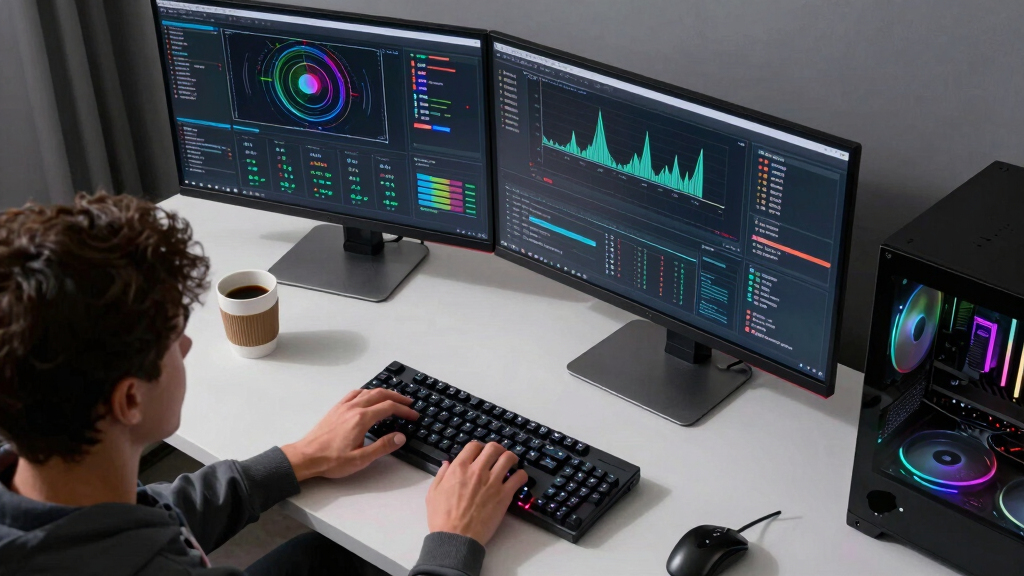
High-end PC and workstation buyers are facing a new cost shock as RAM and SSD prices take up a far larger share of system budgets, according to a late-June 2026 market snapshot from Thorsten Meyer AI and earlier disclosures from HP. The shift matters because builders and small teams buying parts at retail may now pay more than some OEM or prebuilt buyers with bulk supply contracts.
HP told investors during its Q1 2026 earnings cycle that memory had risen from 15% to 18% of a PC’s materials cost to about 35%, a change also reported by Tom’s Hardware. For buyers, the change means RAM and storage are no longer small add-ons at the end of a parts list.
The Thorsten Meyer AI snapshot put a 32GB DDR5 kit at about $369 in one late-June comparison, roughly level with the GPU in the same build. It said premium systems that were around $2,000 a year earlier could now land between $2,800 and $4,500, with memory and storage driving much of the increase.
The pressure is sharper for workstations, where buyers often need 96GB or 128GB DDR5 RDIMMs. The source material says those high-capacity modules are among the hardest-hit parts because they sit close to server memory lines that suppliers are prioritizing for AI and data-center demand. A projection cited in the material says 64GB DDR5 RDIMMs could cost twice as much by the end of 2026 as they did in early 2025.
The high-end PC & workstation tax
If you build your own machines or spec your team’s workstations, you’re the most exposed buyer in this market — no hedge, no bulk contract, just a parts cart and a number you used to ignore, now the biggest line on the invoice.
OEMs buy on bulk contracts and hold hedged stock; you pay the spot price on the day. The DIY builder is now the most exposed buyer in the chain — and the prebuilt is sometimes cheaper. Price it before you commit.
96GB & 128GB DDR5 RDIMMs are the scarcest, closest to the server memory makers prioritize. 64GB RDIMM could cost 2× by end-2026 vs early 2025. The parts that define a workstation are the ones squeezed hardest.
The squeeze didn’t just raise prices — it inverted the value system of high-end building. Buy big, buy early, build it yourself: each enthusiast virtue is now a way to overpay. Discipline beats ambition in 2026 — right-size hard, buy deliberately, lean on bundles, treat the prebuilt as a real price check. You can’t avoid the AI tax levied a layer up in the fabs; you can refuse to pay more of it than the job needs. Next: Cloud’s Hidden Memory Bill.
DIY Savings Are No Longer Assured
The change weakens a long-standing assumption for PC enthusiasts and small professional teams: building a machine yourself no longer reliably means paying less. Large OEMs can rely on bulk contracts, earlier inventory and negotiated supply, while a retail buyer pays the price available on the day of purchase.
That can affect creators, engineers, developers and local AI users who need high memory capacity for CAD, rendering, data work or on-device models. The so-called workstation tax is not a government levy; it is a market cost created by scarcity in the parts that define many high-end systems.

Crucial 32GB DDR5 RAM Kit (2x16GB), 5600MHz (or 5200MHz or 4800MHz) Laptop Memory 262-Pin SODIMM, Compatible with Intel Core and AMD Ryzen 7000, Black – CT2K16G56C46S5
Boosts System Performance: 32GB DDR5 RAM laptop memory kit (2x16GB) that operates at 5600MHz, 5200MHz, or 4800MHz to…
As an affiliate, we earn on qualifying purchases.
As an affiliate, we earn on qualifying purchases.
AI Demand Repriced PC Memory
The current pressure follows a wider 2026 memory squeeze tied to AI infrastructure demand. Memory makers have been directing more output toward high-bandwidth memory and server-class products, leaving consumer and workstation buyers exposed to tighter retail supply.
HP said it had taken steps such as long-term supply agreements, new supplier qualification and strategic inventory positions. Those steps help large manufacturers manage risk, but they do not directly protect a buyer assembling one custom PC from a retail cart.
Recent coverage from Tom’s Hardware also cited Lenovo comments at ISC 2026 warning that low memory prices may not return soon. That supports the source material’s broader point: memory pricing has become a central factor in system planning, not a minor line item.
“Memory had gone from 15–18% of a PC’s bill of materials to about 35%.”
— HP, Q1 2026 earnings disclosures
high capacity DDR5 RDIMM 128GB
As an affiliate, we earn on qualifying purchases.
As an affiliate, we earn on qualifying purchases.
Price Relief Still Has No Date
It is still unclear how long retail DDR5 and RDIMM prices will stay elevated, how much regional pricing will vary, and whether new supply will reach consumers before AI infrastructure demand absorbs it. The source material says prices were point-in-time in late June 2026 and fast-moving.
It is also not settled when a prebuilt workstation will beat a custom build on price. That depends on configuration, warranty, memory capacity, retailer stock and how much an OEM’s contracted inventory shields the buyer.
NVMe SSD for high-end PC
As an affiliate, we earn on qualifying purchases.
As an affiliate, we earn on qualifying purchases.
Buyers Recheck Builds Before Ordering
The next step for buyers is practical: compare a complete prebuilt quote against the custom parts list before ordering, then right-size memory instead of buying extra capacity by habit. The source material recommends CPU and board bundles, staged upgrades and reusing parts that still meet the job.
For the market, the next signals will come from PC-maker earnings, DRAM contract pricing, workstation module availability and retailer listings through the second half of 2026. The next article in the Thorsten Meyer AI series is set to examine cloud memory costs.
gaming and workstation SSD
As an affiliate, we earn on qualifying purchases.
As an affiliate, we earn on qualifying purchases.
Key Questions
Is the high-end PC and workstation tax an actual tax?
No. The phrase describes a market-driven cost increase, not a government charge. It refers to higher RAM and SSD costs hitting high-end builders and workstation buyers.
Why are DIY builders more exposed?
DIY buyers usually buy one kit at retail and pay the current market price. Large OEMs may have bulk contracts, older inventory and more room to spread cost increases across shipments.
Are workstations affected more than gaming PCs?
Often, yes. Workstations use higher-capacity memory, including RDIMMs such as 96GB and 128GB modules, which the source material says are among the tightest parts of the market.
Should buyers stop building their own PCs?
Not necessarily. A custom build still offers control, repairability and parts choice. The changed advice is to price a comparable prebuilt before buying parts, because DIY no longer always wins on cost.
What should buyers watch next?
Watch DDR5 retail prices, RDIMM availability, OEM earnings comments and bundle discounts. Buyers planning high-memory systems should recheck prices close to purchase because listings can change quickly.
Source: Thorsten Meyer AI