

Clever Fox Mental Health and Anxiety Journal with CBT Prompts is my best overall pick for readers who want structured reflection, while Out of Your Mind stands out for a lower-pressure mix of journaling and coloring, and 5 Minutes a Day Mental Health Journal suits brief daily check-ins. The main tradeoff is between a repeatable routine and prompts that offer more variety or creative distraction. Some journals focus on CBT-style thought work; others are geared toward teens, daily encouragement, or short entries. The right fit depends on how much writing feels manageable and which approach you’re most likely to return to. Read on for the full breakdown and guidance on choosing among all 12 options.
Key Takeaways
- Clever Fox Mental Health and Anxiety Journal with CBT Prompts leads because its CBT focus gives structured reflection a central role rather than treating it as one feature among many.
- Out of Your Mind offers a distinct alternative for readers who want coloring alongside writing, while 5 Minutes a Day emphasizes short, routine-friendly entries.
- The two Clever Fox entries share a brand and CBT focus, so buyers should compare their specific format and presentation rather than assuming the titles represent entirely different methods.
- The lineup serves different audiences: the teenage-girl workbook is age-specific, while several titles address anxiety more broadly for adults.
- A journal’s central method matters more than the number of features: trackers, coloring pages, mindfulness prompts, and CBT exercises suit different preferences and writing habits.
| Mental Health & Anxiety Journal, 91 Days Mood Tracker for Mindfulness, Self Care & Stress Relief, Guided CBT Journal with Coloring Pages & Dream Diary |  | Best for Variety | Format: Day-to-day calendar | Calendar type: Monthly | Program length: 91 days | VIEW LATEST PRICE | See Our Full Breakdown |
| Anxiety Journal for Teenage Girls: A Self-Guided Workbook to Help Manage Stress |  | Best for Teenage Girls | Product type: Self-guided workbook | Target audience: Teenage girls | Focus: Managing anxiety and stress | VIEW LATEST PRICE | See Our Full Breakdown |
| Out of Your Mind: A Journal and Coloring Book to Distract Your Anxious Mind |  | Best for Creative Distraction | Format: Journal and coloring book | Series: Anxiety Journaling and Coloring Series | Stated focus: Distraction and soothing for an anxious mind | VIEW LATEST PRICE | See Our Full Breakdown |
| Worry for Nothing Guided Anxiety Journal |  | Best for Structured CBT Practice | Brand: Four Progress | Format: Hardcover journal | Color: Black | VIEW LATEST PRICE | See Our Full Breakdown |
| JUBTIC Guided Anxiety Journal, CBT Mental Health Journal, Pink, A5 |  | Best for a Portable CBT Routine | Brand: JUBTIC | Format: Notebook | Paper size: A5 | VIEW LATEST PRICE | See Our Full Breakdown |
| Guided Anxiety Journal for Women & Men – CBT & Mindfulness Prompts for Mental Wellness |  | Best for On-the-Go CBT and Mindfulness | Pages: 91 | Cover material: Linen fabric | Methods: CBT techniques and mindfulness prompts | VIEW LATEST PRICE | See Our Full Breakdown |
| Clever Fox Mental Health and Anxiety Journal with CBT Prompts, A5, Purple |  | Best for Guided CBT Structure | Size: A5 (5.8 × 8.3 inches) | Cover: Eco-leather hardcover | Paper weight: 120 gsm | VIEW LATEST PRICE | See Our Full Breakdown |
| Clever Fox Mental Health & Anxiety Journal with CBT Prompts |  | Best for a Discreet, Polished Journal | Size: A5 (5.8 × 8.3 inches) | Color: Lavender | Cover material: Eco-leather | VIEW LATEST PRICE | See Our Full Breakdown |
| No Worries: A Guided Journal to Help You Calm Anxiety, Relieve Stress, and Practice Positive Thinking Each Day |  | Best for Daily Positive Reflection | Format: Guided journal | Stated focus: Calming anxiety and relieving stress | Practice: Daily positive thinking and self-care | VIEW LATEST PRICE | See Our Full Breakdown |
| 5 MINUTES A DAY Mental Health Journal, 91-Day Guided Journal, Pink |  | Best for Short Daily Check-Ins | Journal duration: 91 days | Daily time framing: 5 minutes a day | Color: Pink | VIEW LATEST PRICE | See Our Full Breakdown |
| Goodbye, Anxiety: A Guided Journal for Overcoming Worry | 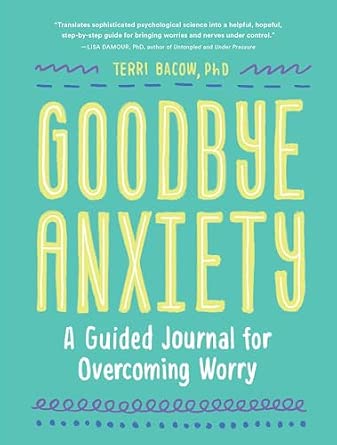 | Best for Structured CBT Reflection | Format: Guided journal | Topic: Anxiety, worry, and stress management | Approach: Prompts based on Cognitive Behavioral Therapy (CBT) | VIEW LATEST PRICE | See Our Full Breakdown |
| One Day Closer to Calm: A Daily Guided Journal for Living with Anxiety |  | Best for a Day-by-Day Calm Practice | Format: Daily guided journal | Topic: Anxiety management | Intended focus: Reflecting on life with anxiety and seeking calm | VIEW LATEST PRICE | See Our Full Breakdown |
| guided journals for anxiety | Format | Dimensions |
|---|---|---|
| Mental Health & Anxiety Journa | Day-to-day calendar | 8.4 x 5.8 inches |
| Anxiety Journal for Teenage Gi | — | — |
| Out of Your Mind: A Journal an | Journal and coloring book | Not specified in the supplied product data |
| Worry for Nothing Guided Anxie | Hardcover journal | 5-7/8 x 8-1/4 inches |
| JUBTIC Guided Anxiety Journal | Notebook | 8.5 x 5.8 x 0.69 inches |
| Guided Anxiety Journal for Wom | — | Not specified |
| Clever Fox Mental Health and A | — | — |
| Clever Fox Mental Health & Anx | — | — |
| No Worries: A Guided Journal t | Guided journal | Not specified |
| 5 MINUTES A DAY Mental Health | — | — |
| Goodbye | Guided journal | — |
| One Day Closer to Calm: A Dail | Daily guided journal | — |
More Details on Our Top Picks
Mental Health & Anxiety Journal, 91 Days Mood Tracker for Mindfulness, Self Care & Stress Relief, Guided CBT Journal with Coloring Pages & Dream Diary
This journal earns its place for readers who want more than written reflection: its 91-day structure pairs prompts and mood tracking with coloring pages and a dream diary. That range gives you different ways to engage on days when writing about worries feels like too much, while the three-month span offers a defined routine rather than an open-ended commitment. Compared with Worry for Nothing Guided Anxiety Journal, which centers on repeated CBT worksheets, this one puts more weight on creative activities and tracking alongside guided reflection. That breadth is also its tradeoff: the supplied details do not specify exactly how its CBT exercises are organized, and the 91-day limit may feel short if you want a continuing journal. Its binding type is also unspecified, so long-term durability is harder to judge from the product data.
Pros:- Combines prompts and mood tracking with coloring and a dream diary, offering options for different journaling moods.
- A 91-day program provides a defined three-month routine.
- A5 size is suited to desk use or carrying in a bag.
- Linen cover gives the journal a more substantial feel than a basic paper-covered workbook.
Cons:- The supplied product details do not explain the specific CBT approach or the sequence of exercises.
- The 91-day format may not suit people who want one ongoing journal.
- Binding type is unspecified, making durability difficult to assess.
Best for: People who want a time-limited anxiety journaling routine with mood tracking, creative prompts, and coloring as alternatives to writing.
Not ideal for: Buyers seeking a clearly described, worksheet-by-worksheet CBT method or a journal intended to continue beyond three months.
- Format:Day-to-day calendar
- Calendar type:Monthly
- Program length:91 days
- Paper size:A5
- Dimensions:8.4 x 5.8 inches
- Weight:0.42 kg
- Cover material:Linen
- Features:Coloring pages, dream diary, mood tracker, and prompts
Our verdict“Choose this if varied activities help you stick with journaling; choose Worry for Nothing instead if you want a more clearly defined series of CBT worksheets.”
Anxiety Journal for Teenage Girls: A Self-Guided Workbook to Help Manage Stress
The clearest reason to choose this workbook is its specific audience: it is presented as a self-guided journal for teenage girls managing anxiety and stress. That focus may feel more relevant to a teen looking for an age-directed workbook than the adult-targeted JUBTIC Guided Anxiety Journal, whose product details describe CBT habits and a more grown-up notebook format. But the information supplied here stops at the title and short description. It does not establish the workbook’s prompts, layout, length, or whether it uses a particular anxiety-management method, so I would not pick it based on assumptions about its contents. Compared with Out of Your Mind, which explicitly combines coloring and journaling, this option’s distinctive advantage is its teen-girl focus rather than a documented activity mix. That makes it a more targeted possibility, but a less predictable choice for anyone who needs to know exactly what exercises are included.
Pros:- Explicitly aimed at teenage girls rather than a broad adult audience.
- Described as self-guided, which may suit a teen who wants to work independently.
- Focuses on both stress and anxiety management.
- Workbook framing suggests an activity-led format rather than an unstructured blank journal.
Cons:- The supplied details do not identify its methods, prompts, or specific exercises.
- No format, dimensions, materials, or page-count information is provided.
- Its audience focus may make it a poor fit for adults or teens outside the stated target group.
Best for: Teenage girls who want a self-guided workbook explicitly aimed at managing stress and anxiety.
Not ideal for: Adults, teens seeking a specified CBT or mindfulness program, or buyers who need details about prompts, format, and workbook length before choosing.
- Product type:Self-guided workbook
- Target audience:Teenage girls
- Focus:Managing anxiety and stress
- Guidance:Self-guided
- Format details:Not specified in the supplied product data
- Page count:Not specified in the supplied product data
Our verdict“Consider this for a teenage girl who wants an age-focused self-guided workbook, but choose a better-documented option if the exercise format matters to you.”
Out of Your Mind: A Journal and Coloring Book to Distract Your Anxious Mind
Out of Your Mind is the creative option in this group: it pairs journaling prompts with coloring, aiming to give an anxious mind something structured to do beyond writing through worries. That makes it a different fit from Worry for Nothing Guided Anxiety Journal, whose 60 worksheets are described as CBT-based reflection on worries and automatic thoughts. Here, the stated appeal is distraction and a creative outlet, not a documented sequence of thought-reframing worksheets. That distinction matters if direct examination of anxious thoughts feels unhelpful in the moment. The tradeoff is limited product detail: the supplied information does not list page count, dimensions, paper, or the types of prompts and coloring activities. Compared with the broader Mental Health & Anxiety Journal, it also has no stated mood tracker or dream diary, so buyers wanting several tracking tools may prefer that more varied format.
Pros:- Combines journaling prompts and coloring in one book.
- The stated purpose is to distract and soothe an anxious mind.
- Offers a creative alternative to worksheet-led reflection.
- Part of the Anxiety Journaling and Coloring Series.
Cons:- The supplied data does not specify page count, dimensions, paper, or binding.
- The prompt structure and amount of coloring content are not described.
- No mood tracker or other tracking tool is listed in the product details.
Best for: People who prefer alternating between short written prompts and coloring when anxiety makes sustained reflection difficult.
Not ideal for: Buyers who want a clearly specified CBT worksheet plan, mood tracking, or detailed information about paper and book dimensions.
- Format:Journal and coloring book
- Series:Anxiety Journaling and Coloring Series
- Stated focus:Distraction and soothing for an anxious mind
- Activities:Journaling prompts and coloring
- ASIN:0593538382
- Dimensions:Not specified in the supplied product data
- Page count:Not specified in the supplied product data
Our verdict“Pick this for a creative, distraction-oriented alternative to CBT worksheets, but choose the 91-day Mental Health & Anxiety Journal if you also want mood tracking and a dream diary.”
Worry for Nothing Guided Anxiety Journal
This is the most clearly worksheet-led choice here: its 60 two-page CBT worksheets guide readers to track worries, spot triggers, and examine automatic thoughts. The discreet black hardcover and portable dimensions make it easier to keep a regular practice private or take it along, while 100 gsm paper gives the writing pages a sturdier specification than products in this roundup with no paper details listed. Compared with Out of Your Mind, which uses coloring as a way to redirect attention, Worry for Nothing asks for more direct written reflection. That can suit someone ready to work through thought patterns, but it also means the repeated worksheet structure may become monotonous. The approach depends on writing and consistent use, so it is less suited to buyers who want short creative activities or a journal with several different tracking tools, like the 91-day Mental Health & Anxiety Journal.
Pros:- 60 two-page CBT worksheets provide a defined structure for examining worries and thoughts.
- Instructions and mindful tips accompany the worksheets.
- Black hardcover keeps the appearance discreet in shared settings.
- Portable size and 100 gsm paper are specified.
Cons:- Repeated worksheet prompts may feel monotonous over time.
- The method relies on writing and regular participation.
- Its focused worksheet approach offers less activity variety than journals that include coloring or other creative elements.
Best for: Adults who want a portable, discreet journal with a repeatable CBT worksheet structure for examining worries and triggers.
Not ideal for: People who prefer creative distraction over written thought analysis, or who are unlikely to keep up with recurring worksheets.
- Brand:Four Progress
- Format:Hardcover journal
- Color:Black
- Dimensions:5-7/8 x 8-1/4 inches
- Weight:9.9 ounces
- Paper weight:100 gsm
- Worksheets:60 two-page CBT worksheets
- Model:IV100
Our verdict“Choose Worry for Nothing if you want recurring CBT worksheets in a discreet portable book; opt for Out of Your Mind if creative distraction feels more approachable.”
JUBTIC Guided Anxiety Journal, CBT Mental Health Journal, Pink, A5
The JUBTIC journal pairs CBT-based anxiety prompts with a practical A5 notebook setup: three ribbon bookmarks, a pen loop, and an elastic closure make it easier to keep the journal organized and ready to use. Its 100 gsm FSC-certified paper and linen hardcover also give buyers more construction detail than the teen workbook listing, whose format and materials are not supplied. Compared with Worry for Nothing Guided Anxiety Journal, JUBTIC is described as helping identify triggers and reframe negative thoughts, but its specific exercise count and sequence are not provided; Worry for Nothing is the clearer choice for a defined set of 60 worksheets. JUBTIC’s compact format may suit a regular on-the-go routine, though its page count is unspecified and the CBT work may feel repetitive to readers who want coloring, mood tracking, or more varied activities.
Pros:- CBT principles are intended to help identify triggers and reframe negative thoughts.
- A5 linen hardcover format is described as compact and travel-friendly.
- 100 gsm FSC-certified paper is specified.
- Three ribbon bookmarks, a pen loop, and an elastic closure support regular use and organization.
Cons:- Page count is not specified, making the journal’s capacity unclear.
- The exercise sequence and number of prompts are not provided.
- Repeated CBT exercises may feel monotonous to some users.
Best for: Adults who want a compact, well-equipped journal for a repeatable CBT reflection habit at home or on the go.
Not ideal for: Buyers who need a stated page count or a fully described worksheet sequence, or who prefer creative prompts and varied activities over repeated CBT reflection.
- Brand:JUBTIC
- Format:Notebook
- Paper size:A5
- Dimensions:8.5 x 5.8 x 0.69 inches
- Cover material:Linen
- Color:Pink
- Paper weight:100 gsm
- Certification:FSC Certified
- Target audience:Adults
Our verdict“Choose JUBTIC for a portable adult CBT journal with useful built-in accessories, but pick Worry for Nothing if you want a stated worksheet count and clearer exercise structure.”
Guided Anxiety Journal for Women & Men – CBT & Mindfulness Prompts for Mental Wellness
This journal pairs CBT prompts with mindfulness exercises, giving readers two approaches: examining anxious thoughts and pausing to notice the present moment. That mix makes it a flexible daily companion, while its linen cover, elastic closure, ribbon bookmark, and pen loop support carrying it between home, work, or appointments. Compared with Clever Fox’s A5 journal, it offers a similar emphasis on CBT but adds mindfulness explicitly in the product description; Clever Fox provides more concrete details about its paper and included guide. The tradeoff here is limited product information: page count is 91, but dimensions and the depth of its exercises are unspecified. I’d choose it for portability and a simple paired-method approach, not for buyers who need a clearly mapped workbook or detailed format specifications.
Pros:- Combines CBT techniques and mindfulness prompts for more than one style of anxiety reflection.
- Compact design is described as suitable for home and on-the-go use.
- Linen cover, pen loop, elastic closure, ribbon bookmark, and back pocket support regular carry and use.
- Ninety-one pages provide a defined journal length.
Cons:- Dimensions are not provided, so buyers cannot verify how easily it will fit a particular bag.
- The available description gives little detail about prompt structure or additional mental wellness tools.
Best for: Adults who want a portable journal combining thought-reframing prompts with mindfulness practice for everyday anxiety.
Not ideal for: Buyers who need a stated page size, a detailed description of the exercise sequence, or substantial workbook tools before choosing.
- Pages:91
- Cover material:Linen fabric
- Methods:CBT techniques and mindfulness prompts
- Closure:Elastic closure
- Writing accessories:Pen loop and ribbon bookmark
- Storage:Back pocket
- Dimensions:Not specified
Our verdict“Choose this journal if you want portable CBT and mindfulness prompts together, and skip it if precise size and workbook details matter to you.”
Clever Fox Mental Health and Anxiety Journal with CBT Prompts, A5, Purple
For readers who want anxiety prompts organized around a clear CBT purpose, this Clever Fox journal focuses on identifying triggers and emotions, building coping strategies, and reframing negative thoughts. Its A5 format is more clearly specified than the Guided Anxiety Journal for Women & Men, so buyers can better judge how it will fit a desk or bag. The 120 gsm paper, hardcover, pen loop, and elastic closure give it a more structured feel, while the included guide and stickers add orientation and a bit of personalization. The main tradeoff is that guided exercises deliver value through repeated use: this is less suited to someone who wants occasional, open-ended writing. Compared with the more general daily focus of No Worries, its CBT framing is the stronger match for readers ready to work through thought patterns consistently.
Pros:- Prompts address triggers, emotions, coping strategies, and negative thought reframing.
- A5 dimensions make the journal’s footprint clear before purchase.
- Thick 120 gsm paper and a hardcover support a more substantial writing format.
- Includes a user guide, stickers, pen loop, and elastic closure.
Cons:- The guided approach calls for regular journaling to work through its exercises.
- A hardcover A5 journal is less adaptable than a flexible, softcover notebook.
Best for: Adults who want a structured CBT journal with prompts for tracing triggers, practicing coping strategies, and reframing anxious thoughts.
Not ideal for: People who journal only sporadically or prefer blank pages and open-ended reflection over guided exercises.
- Size:A5 (5.8 × 8.3 inches)
- Cover:Eco-leather hardcover
- Paper weight:120 gsm
- Color:Purple
- Prompts:CBT prompts for anxiety
- Included:User guide and stickers
- Features:Pen loop and elastic closure
Our verdict“Pick this Clever Fox edition if you want a clearly sized, structured CBT workbook and are prepared to use its prompts regularly.”
Clever Fox Mental Health & Anxiety Journal with CBT Prompts
This lavender Clever Fox edition suits readers who want CBT exercises in a discreet A5 hardcover that looks more like a conventional notebook than a conspicuous workbook. Its prompts aim to help identify anxiety triggers and move from negative thoughts toward more balanced perspectives. The 120 gsm paper and included user guide and stickers give it a more finished package than No Worries, whose supplied details emphasize daily positive thinking but do not specify materials or extras. Compared with the purple Clever Fox version, the listed core format and paper weight are much the same, so the choice is primarily color and listing details rather than a different therapeutic approach. One meaningful limitation is the unspecified page count; the hardcover can also feel less flexible to write in on the go.
Pros:- CBT prompts focus on recognizing triggers and reframing negative thoughts.
- A5 hardcover has a discreet appearance for use in public settings.
- 120 gsm paper offers a substantial writing surface.
- Includes a user guide and stickers.
Cons:- The provided product details do not state a page count.
- Hardcover construction is less flexible than a softcover when writing away from a desk.
- Compared with the purple Clever Fox edition, the listed format and core features offer little functional distinction.
Best for: Adults who want CBT-based anxiety prompts in a discreet, lavender A5 hardcover with a user guide.
Not ideal for: Buyers who need a confirmed page count or want a flexible cover that bends easily for travel writing.
- Size:A5 (5.8 × 8.3 inches)
- Color:Lavender
- Cover material:Eco-leather
- Cover format:Hardcover
- Paper weight:120 gsm
- Prompts:CBT prompts for anxiety
- Included:User guide and stickers
Our verdict“Choose this edition for its discreet lavender look and CBT focus, but prefer another option if page count or flexible binding is a priority.”
No Worries: A Guided Journal to Help You Calm Anxiety, Relieve Stress, and Practice Positive Thinking Each Day
No Worries is the most straightforward pick here for readers who want a journal framed around daily positive thinking and stress relief, rather than a clearly stated CBT program. That simpler promise may feel more approachable than the trigger analysis and thought-reframing focus of either Clever Fox journal. It is presented as a guided journal for calming anxiety and practicing self-care, but the supplied product details do not identify its page count, binding, format, or specific prompt types. That makes it harder to compare practical usability with the 91-page Guided Anxiety Journal for Women & Men or the specified A5 Clever Fox editions. I’d shortlist it when the daily positive-thinking focus is what you want; I’d pass if you need to know exactly how long the journal lasts or what each exercise asks you to do.
Pros:- Its stated purpose directly centers on calming anxiety and relieving stress.
- Daily positive-thinking practice offers a simpler focus than the CBT prompts in the Clever Fox journals.
- The guided format is intended to support regular self-care reflection.
Cons:- The available product data does not specify page count, size, or binding.
- Prompt structure and specific exercises are not described, making it difficult to judge how guided the experience is.
- No materials or practical features are listed for comparison with journals that specify paper and accessories.
Best for: Readers seeking a daily guided practice centered on positive thinking, self-care, and stress relief rather than explicitly described CBT exercises.
Not ideal for: Buyers who need confirmed dimensions, page count, materials, or a defined CBT-based prompt structure.
- Format:Guided journal
- Stated focus:Calming anxiety and relieving stress
- Practice:Daily positive thinking and self-care
- Page count:Not specified
- Dimensions:Not specified
- Cover material:Not specified
Our verdict“Choose No Worries for a daily positive-thinking focus, but favor a better-documented option if you want defined CBT exercises or format details.”
5 MINUTES A DAY Mental Health Journal, 91-Day Guided Journal, Pink
This journal’s clearest advantage is its 91-day format and focus on tracking mood, habits, and feelings. That makes it a sensible choice for someone who wants brief, repeatable check-ins or a record to bring into therapy, rather than the more explicitly CBT-led work in the Clever Fox journals. Its five-minutes-a-day framing points toward a manageable routine, though the product details do not specify the exact prompts, page layout, or materials. Compared with No Worries, it gives a defined duration and names tracking as a use; compared with the compact Guided Anxiety Journal for Women & Men, it has less information about carry-friendly construction. The tradeoff is that a fixed 91-day run may not cover longer-term journaling, and buyers wanting a detailed anxiety workbook may find the described feature set too basic.
Pros:- The 91-day structure gives daily reflection a clear starting point and endpoint.
- Mood, habit, and feelings tracking can help create a record for personal reflection or therapy sessions.
- The five-minutes-a-day framing is suited to readers seeking a brief routine.
- Designed for adult mental health management.
Cons:- The fixed 91-day length may require a new journal to continue beyond the stated period.
- The supplied details do not explain the prompt sequence or page layout.
- Materials, dimensions, and binding are not specified, limiting comparison of physical features.
Best for: Adults who want a short daily routine for tracking mood, habits, and feelings, including notes that may support therapy conversations.
Not ideal for: People seeking a long-term journal, explicit CBT exercises, or detailed information about the page layout and physical construction.
- Journal duration:91 days
- Daily time framing:5 minutes a day
- Color:Pink
- Target audience:Adults
- Recommended use:Mental health management
- Tracking focus:Mood, habits, and feelings
- Model year:2023
Our verdict“Choose this journal for brief, trackable daily check-ins over three months, but look elsewhere for a detailed CBT workbook or a specified long-term format.”
Goodbye, Anxiety: A Guided Journal for Overcoming Worry
Goodbye, Anxiety stands out for readers who want anxiety journaling shaped by Cognitive Behavioral Therapy (CBT), rather than reflection alone. Its structured prompts and exercises are intended to help users examine worries, manage stress, and make space for self-care. Compared with One Day Closer to Calm, which is framed around a daily path toward calm, this journal has a clearer therapeutic-method focus; that can help readers looking for a more directed way to engage with anxious thoughts. The tradeoff is that the available information does not describe its prompts, layout, or pacing, so I can’t tell how much guidance each entry provides. Its daily-reflection approach may also feel like a chore for someone who prefers occasional, open-ended writing.
Pros:- Uses prompts based on CBT techniques
- Pairs anxiety and stress management with self-care reflection
- Offers a structured alternative to open-ended journaling
Cons:- Available information does not detail the prompts, layout, or length
- Daily reflection may be hard to sustain for people with limited time or energy
- The product description does not establish whether exercises suit a particular anxiety concern
Best for: Adults who want regular, CBT-informed writing prompts to examine worry and build a self-care routine.
Not ideal for: Readers seeking a clearly described page layout, flexible occasional journaling, or a workbook with confirmed prompt examples.
- Format:Guided journal
- Topic:Anxiety, worry, and stress management
- Approach:Prompts based on Cognitive Behavioral Therapy (CBT)
- Activities:Daily reflections and exercises
- Additional focus:Self-care and mental health awareness
- ASIN:1632173905
Our verdict“Choose this if you want a structured, CBT-oriented journaling approach and are comfortable not knowing the exact prompt format before buying.”
One Day Closer to Calm: A Daily Guided Journal for Living with Anxiety
One Day Closer to Calm is framed around building a daily reflection habit while living with anxiety, making it a different fit from Goodbye, Anxiety and its explicitly CBT-based exercises. The day-by-day premise may appeal to someone who wants a steady moment to reflect and focus on calm, rather than a journal whose described approach centers on a particular therapeutic method. The tradeoff is limited product detail: the available description suggests daily prompts and monthly reflection, but does not confirm their content or explain the layout. That makes it harder to judge how much direction the journal offers or whether its routine is flexible. I’d shortlist it for its calm-centered framing, not for a specific set of verified techniques.
Pros:- Centers reflection on living with anxiety rather than promising a quick fix
- Daily format can support a regular journaling routine
- Calm-focused framing offers a clear theme for reflection
Cons:- Available information does not describe the prompts or page layout
- Monthly reflection is suggested but not confirmed in the product details
- No specific therapeutic method is identified
Best for: People who want a daily journaling ritual focused on reflecting on anxiety and finding moments of calm.
Not ideal for: Buyers who need confirmed CBT exercises, sample prompts, or detailed information about the journal’s layout before choosing.
- Format:Daily guided journal
- Topic:Anxiety management
- Intended focus:Reflecting on life with anxiety and seeking calm
- Suggested cadence:Daily
- Monthly reflection:Suggested by the description; details not provided
- ASIN:B0DPHVF1SL
Our verdict“Pick this for a calm-focused daily reflection habit, but choose Goodbye, Anxiety if an explicitly CBT-based approach matters more.”

How We Picked
I ranked these journals by how clearly their prompts and format serve someone seeking support with anxiety. I gave greater weight to a recognizable approach, such as CBT-based thought work or a defined daily routine, and to whether the stated format gives readers a clear reason to choose it over a blank notebook. I also considered audience fit, the effort a routine may demand, and whether the journal offers an alternative to writing alone, such as coloring or mood tracking.
The order reflects how broadly useful and clearly differentiated each option appears from its described focus, not a claim that a journal treats anxiety or suits every reader. The CBT-centered Clever Fox journal takes the lead for structured reflection; options with narrower audiences or more specific formats rank lower for general use but may be the better match for particular readers. Because several titles offer overlapping prompts, I treat distinct audience, routine, and activity as meaningful differences rather than assuming more features automatically make a stronger choice.
| guided journals for anxiety | Format |
|---|---|
| Mental Health & Anxiety Journa | Day-to-day calendar |
| Anxiety Journal for Teenage Gi | — |
| Out of Your Mind: A Journal an | Journal and coloring book |
| Worry for Nothing Guided Anxie | Hardcover journal |
| JUBTIC Guided Anxiety Journal | Notebook |
| Guided Anxiety Journal for Wom | — |
| Clever Fox Mental Health and A | — |
| Clever Fox Mental Health & Anx | — |
| No Worries: A Guided Journal t | Guided journal |
| 5 MINUTES A DAY Mental Health | — |
| Goodbye | Guided journal |
| One Day Closer to Calm: A Dail | Daily guided journal |
Factors to Consider When Choosing Guided Journals For Anxiety
Before choosing among these guided journals for anxiety, decide what you want the journal to help you do: examine anxious thoughts, keep a steady check-in habit, or shift attention through a creative activity. The best match is the one whose method and workload feel approachable on an ordinary day, not just when motivation is high.
Choose a Prompt Style You’ll Actually Use
CBT-style prompts invite you to notice a thought, examine it, and reflect on another perspective; that structure can be appealing if open-ended writing feels hard to start. Mindfulness and positive-thinking prompts take a different route, emphasizing awareness or daily reflection rather than a step-by-step examination of thoughts. Coloring-based journals add an activity that can break up writing, but may offer less space for people who want to explore an issue in depth. A common mistake is choosing the method that sounds most ambitious instead of the one that feels comfortable to repeat. Read sample pages or the prompt description when available, and choose based on the kind of engagement you want.
Match the Routine to Your Available Time
A daily journal can help create a familiar check-in, but a demanding routine may become another task to feel behind on. Short-format journals such as a five-minute approach may suit brief entries, while a longer guided workbook can give more room for reflection. These formats are not interchangeable: a quick entry can support consistency, but may not leave space for a detailed thought exercise. Avoid assuming that a daily title means every day must be completed in sequence. Look for a format you can use flexibly, including on days when you have little time or energy.
Look for the Right Audience and Tone
A journal written for teenage girls may use an audience-specific tone and examples that feel more relevant to that reader than a general adult journal. Broadly worded titles may be easier to share across readers, but their prompts may not speak to a particular age group or situation. Tone matters because prompts that feel patronizing, overly cheerful, or too clinical can make a journal harder to return to. If you’re buying for someone else, consider whether they would prefer a private self-guided format or a journal that invites discussion with a trusted person. Check the intended audience and sample language rather than relying on the cover alone.
Decide Whether You Want One Tool or Several
Some journals combine elements such as mood tracking, CBT prompts, coloring, self-care reflection, or a dream diary. That range can suit readers who like switching activities, but several features do not guarantee that any one activity gets enough space. A more focused journal may be easier to understand and use consistently, while a multi-feature format can feel less repetitive. Think about what you would reach for on a difficult day: a tracker, a thought prompt, or a non-writing activity. Choose breadth for variety, not simply because a longer feature list looks more useful.
Treat Journaling as a Personal Support, Not a Clinical Substitute
A guided journal can offer a private structure for reflection, but it cannot diagnose anxiety or replace individualized care. CBT-inspired prompts may encourage thought examination, yet a self-guided workbook is not the same as working with a trained professional. If writing about worries tends to intensify distress, you can pause, skip a prompt, or choose a gentler activity rather than forcing yourself to continue. Readers dealing with persistent or severe anxiety may want to discuss support options with a qualified clinician. Choose a journal as one tool in a broader support plan, not as a promise of a particular outcome.
Frequently Asked Questions
Which type of anxiety journal should I choose if I don’t know where to start?
Start with the format that asks the least of you while still giving you a useful prompt. A short daily structure may feel easier to begin than open-ended pages, while a CBT-focused journal may suit you if you want more direction for examining thoughts. If writing feels like a barrier, a journal that includes coloring can offer another way to engage. You don’t need to commit to a method for life; a few sample prompts can help you see whether the tone feels comfortable. Pick an approach you can imagine using on a routine day, not only during a burst of motivation.
Are CBT-style journals different from mindfulness journals?
They generally emphasize different kinds of reflection. CBT-style prompts often guide you to identify a thought and examine it, while mindfulness prompts tend to focus on noticing feelings or experiences without immediately analyzing them. Some journals combine methods, but the balance can vary, so check the stated prompt focus before choosing. Neither approach is automatically better for every reader or every moment. If analyzing thoughts feels tiring, a gentler check-in may fit better; if you want a clear sequence for reflection, CBT prompts may be more appealing.
Is a five-minute journal enough for anxiety support?
A short journal can be enough for a brief daily check-in, especially if a longer routine would be difficult to maintain. Its limits are equally relevant: concise entries may leave less room to unpack a complicated worry or follow a detailed thought exercise. You can use a short-format journal as a starting habit and add longer reflection only when it feels useful. Avoid treating the time label as a deadline or a measure of how well you are doing. The useful question is whether the prompt helps you reflect without making the routine feel burdensome.
Should I buy a journal designed for a specific age group?
Audience-specific wording can make prompts feel more relatable, which may matter for a teen who would find an adult-oriented journal too formal or generic. A general journal may be a better fit if the reader wants a less age-specific tone or expects to share it with different people. For a gift, look at sample language and the level of personal disclosure the prompts invite. The title alone cannot tell you whether the voice will feel comfortable to the intended reader. If possible, let the user choose between a few styles rather than assuming which one will suit them.
What should I do if journaling makes my anxiety feel stronger?
Pause the prompt rather than pushing through it; a journal should not require you to keep writing when the activity feels unhelpful. You might try a shorter check-in, a non-writing activity, or a different prompt style, and return only if it feels manageable. Notice whether certain topics or formats reliably leave you more distressed, since that can help you decide what to avoid. A self-guided journal is not a replacement for personalized mental health support. If anxiety is persistent, severe, or interfering with daily life, consider speaking with a qualified clinician.
Conclusion
For most readers seeking a clear, structured starting point, I’d choose Clever Fox Mental Health and Anxiety Journal with CBT Prompts as the best overall option. For best value, I’d look to Worry for Nothing Guided Anxiety Journal as a focused, straightforward alternative; for a premium-style pick, consider Goodbye, Anxiety for readers who want a dedicated guided journal centered on overcoming worry. Beginners who want a brief daily habit may prefer 5 Minutes a Day Mental Health Journal, while someone who finds writing alone unappealing may be better served by Out of Your Mind and its coloring component. For a younger reader, the teenage-girl workbook offers the most audience-specific fit. Match the choice to the method and routine the reader is most likely to use, and treat any journal as a personal reflection tool rather than clinical care.