
TL;DR

Turn your wind-down time into listening time
- Thousands of audiobooks, podcasts and originals
- Listen on your phone, tablet or Echo — also offline
- Cancel anytime
A Swedish study following 2,993 adults aged 60 and older for 16 years found that greater greenery within 100 meters of home was associated with a 20% lower risk of developing dementia. The observational study cannot establish that greenery prevents dementia; the association was stronger for women and weaker for vegetation farther from home.
A 16-year study of 2,993 older adults in Stockholm found that people living amid more greenery close to home had a 20% lower risk of developing dementia over time, according to research published in Alzheimer’s & Dementia. The finding is an association, not proof that vegetation prevents dementia, but researchers say it adds evidence relevant to how residential areas are planned.
The study drew participants aged 60 and older from the population-based SNAC-K study in Stockholm. During the 16 years of follow-up, 477 participants developed dementia. Researchers assessed vegetation near participants’ homes using satellite images and geographic information systems, measuring areas within 100, 250 and 500 meters. They also monitored participants’ cognitive health through repeated assessments.
The association was strongest for greenery within 100 meters of home and weaker at greater distances. Researchers also reported that the link between greenery and lower dementia risk was more pronounced among women. The analysis accounted for factors including age, education, socioeconomic circumstances, lifestyle, air pollution, traffic noise and proximity to water.
The findings were reported by researchers from Stockholm University and Karolinska Institute. The paper, led by Cecilia Stenfors, is titled “Precision residential greenspace, urban environmental exposures, and incident dementia among older adults in Sweden: A 16-year cohort study.”
Why Nearby Green Space Matters
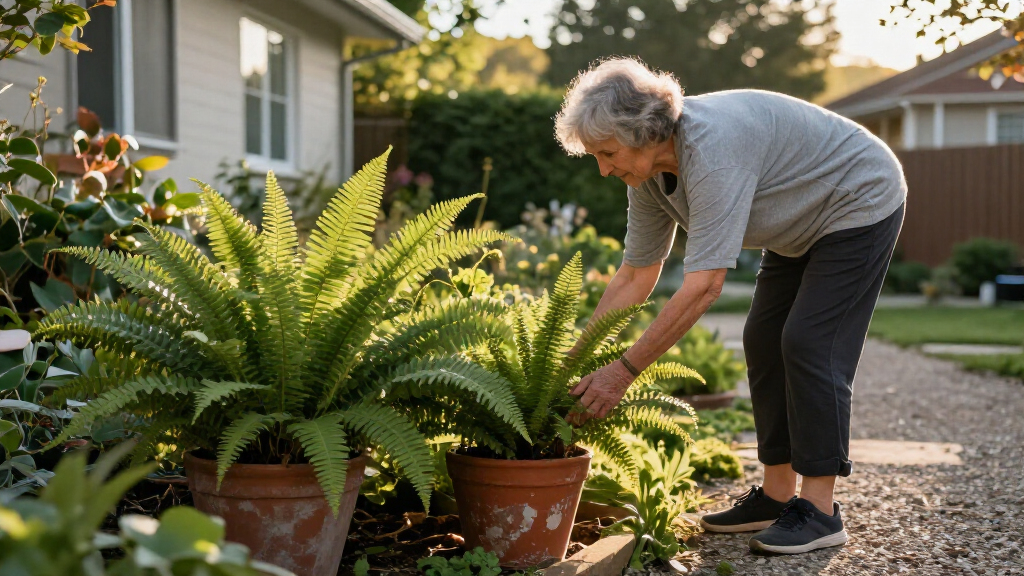
The results point to the immediate home environment—not only access to large parks or natural areas—as a potential part of the discussion about healthy ageing in cities. Trees, gardens, green courtyards and planted streets may be available in places where residents have limited access to larger natural areas. The study does not show that adding vegetation will lower an individual’s dementia risk, but it gives urban planners a population-level finding to weigh alongside other evidence.
The researchers describe several possible pathways, rather than establishing a mechanism. Green surroundings may support psychological restoration, lower stress and better well-being, and may make it easier to spend time outdoors, be physically active or connect socially. Vegetation can also help address urban conditions such as heat, air pollution and traffic noise. These are possible explanations and broader environmental benefits, not outcomes proven to account for the dementia association in this study.
For residents and policymakers, the practical implication is measured: preserving existing vegetation and creating accessible, usable green spaces could support a range of public and environmental goals. The study adds a dementia-related association to that case, while leaving open whether the greenery itself, or other factors linked with greener neighborhoods, explains the observed difference.
indoor houseplants for dementia prevention
As an affiliate, we earn on qualifying purchases.
As an affiliate, we earn on qualifying purchases.
How Researchers Measured Greenery
The paper is a longitudinal cohort study, which follows a group over time to examine how exposures relate to later outcomes. Researchers mapped vegetation around each participant’s residence annually and compared those measurements with records of cognitive health and dementia development. The distance-based approach let the team compare the association for greenery close to home with that for vegetation farther away.
Earlier and ongoing research cited by the study has linked residential greenery with other measures of health, including sleep, mental health and life satisfaction, as well as lower use of antidepressant medication. The authors also point to potential effects on activity and social contact. Those findings provide context for possible pathways, but they do not establish why the dementia association appeared in this cohort.
The study was published in Alzheimer’s & Dementia under DOI 10.1002/alz.71835. Its evidence comes from older adults living in Stockholm, so the result should not automatically be treated as a measure of risk for every population or type of urban environment.
““This is nature that forms part of the everyday home environment. Such environments may be particularly important when we spend more time at home.””
— Cecilia Stenfors, associate professor of psychology at Stockholm University and the study’s first author
outdoor gardening kits for seniors
As an affiliate, we earn on qualifying purchases.
As an affiliate, we earn on qualifying purchases.
What the Study Cannot Establish
Because the study is observational, it cannot show that nearby greenery caused the lower dementia risk. The researchers adjusted for several demographic, lifestyle and environmental factors, but those adjustments do not rule out every possible source of bias or confounding. People living near vegetation may differ in ways not fully captured by the analysis.
The reported 20% figure describes the association in this study; it is not a guarantee of an individual’s outcome or a claim that planting trees will reduce dementia cases by that amount. The supplied report does not give details needed to interpret an individual’s absolute risk difference. It also does not establish which kinds of vegetation, how much greenery, or what level of access might matter most.
The stronger association reported among women also needs careful interpretation. The study summary does not provide enough information to determine why the relationship differed by sex or how precise that difference was. Further research would be needed to test whether the pattern applies in other cities and populations.
As an affiliate, we earn on qualifying purchases.
Research and Planning Implications
The published study provides evidence for researchers and city planners to consider, but it does not announce a specific policy change or a clinical recommendation. Future studies could test whether similar patterns appear in different settings and examine more directly how residents use nearby green spaces, as well as which environmental or social pathways might explain the association.
For planning, the authors’ stated direction is to protect existing vegetation and create green places that are accessible and usable to people with different needs and abilities. Whether such changes affect dementia rates remains unconfirmed. People should not treat residential greenery as a proven way to prevent dementia or as a substitute for professional medical advice.
As an affiliate, we earn on qualifying purchases.
Key Questions
What did the study find?
In a 16-year study of 2,993 adults aged 60 and older in Stockholm, greater greenery close to home was associated with a 20% lower risk of developing dementia. The strongest association was for vegetation within 100 meters.
Does this prove that greenery prevents dementia?
No. The research followed people and found an association; it did not test whether adding greenery prevents dementia. Other factors may help explain the result.
How many participants developed dementia?
477 participants developed dementia during the 16-year follow-up, according to the study report.
Was the association the same for everyone?
The researchers reported that the association was more pronounced among women, but the available study summary does not explain why or provide enough detail to assess the difference fully.
What should cities take from the findings?
The researchers say the findings support considering nearby green space in urban planning, including protecting vegetation and creating accessible green environments. The study does not show that a particular planning change will lower dementia rates.
Source: rss
Halloween Picks
halloween
As an affiliate, we earn on qualifying purchases.