

Repeated exposure to true crime stories gradually makes you see danger everywhere, increasing your anxiety and hyper-alertness. You start associating normal environments with threats, which leads to cautious or even suspicious behaviors. Media sensationalism amplifies this effect by distorting crime risks and maintaining your fear. As your mind seeks out similar stories, your perception of safety deteriorates further. If you keep exploring, you’ll uncover ways to protect your mental well-being and regain a balanced outlook.
Key Takeaways
- Repeated true crime exposure heightens awareness of danger, leading to increased anxiety and hyper-vigilance in daily environments.
- Sensationalized media stories distort perceptions, making risks seem more prevalent and imminent than they actually are.
- Continuous exposure fosters associations between normal settings and threats, altering perceptions of safety over time.
- The cognitive feedback loop intensifies fears, reinforcing feelings of vulnerability and paranoia.
- These effects can cause individuals to avoid certain places or activities, limiting their experiences and sense of security.
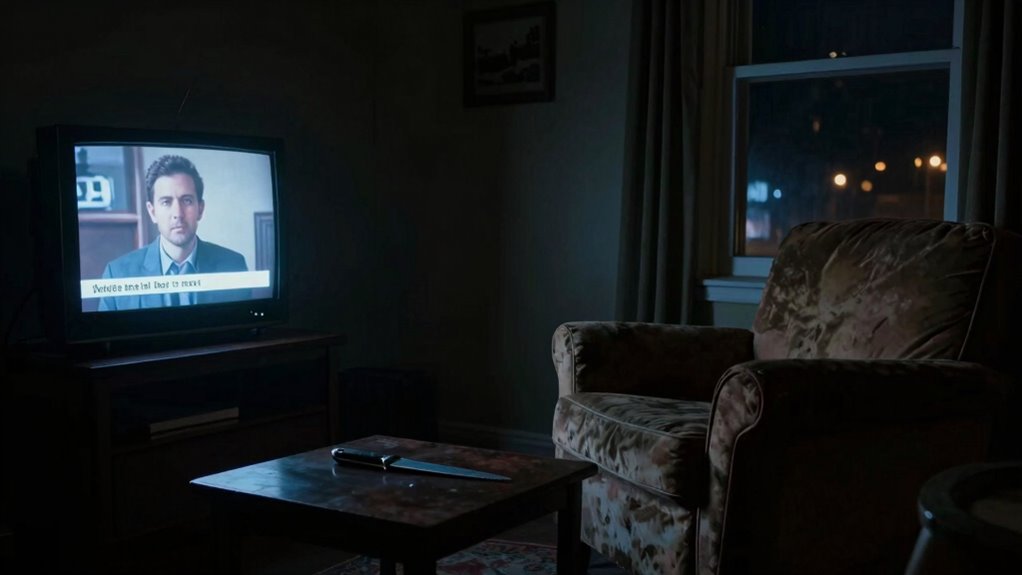
If you constantly watch true crime stories, you might not realize how much they can influence your perception of safety. Repeated exposure to such content can create a psychological impact that subtly shifts how you view the world around you. You may start to see danger lurking everywhere, even in places that previously felt safe. This isn’t just about feeling uneasy; it’s a real shift in your mental state, often driven by the repetitive nature of these stories. When you consume true crime obsessively, your brain begins to associate everyday environments with threat, making you hyper-alert and anxious.
Constant true crime viewing can subtly alter your perception of safety, making you hyper-alert and anxious in everyday environments.
One major factor behind this shift is media sensationalism. True crime narratives are often crafted to maximize drama and emotional response, which fuels fear. Sensationalized headlines and vivid details can distort your perception of crime rates and the likelihood of encountering danger. Instead of gaining a balanced understanding of safety, you’re fed a constant stream of alarming stories that paint the world as more hostile than it actually is. This ongoing bombardment can lead you to overestimate risks, reinforcing a sense of vulnerability that wasn’t as pronounced before.
The psychological impact of this repeated exposure isn’t just about anxiety; it can also influence your behavior. You might start avoiding certain places or activities, believing they’re unsafe based on the stories you’ve consumed. This avoidance can limit your experiences and even affect your overall quality of life. Over time, you could develop a skewed worldview where danger feels omnipresent, leading you to be overly cautious or suspicious of others. This pattern can be exacerbated by media sensationalism, which often emphasizes rare incidents over common safety facts.
Your mind also begins to seek out similar stories, creating a feedback loop that intensifies these feelings. Each new story adds to your anxiety, making you more cautious or even paranoid. The more you watch, the more your perception of safety deteriorates, and you might find it hard to distinguish between fiction and reality. The media’s tendency to sensationalize only exacerbates this problem, keeping fear alive and well in your subconscious.
In addition, this pattern of consumption can contribute to a distorted perception of risk, making everyday dangers seem more imminent than they truly are. Recognizing these influences can help you take steps to protect your mental well-being and maintain a balanced outlook.
In the end, repeatedly exposing yourself to true crime stories can distort your sense of safety in ways that aren’t always obvious. It’s important to recognize how media sensationalism and the psychological impact of these stories shape your perceptions. Being mindful of your consumption habits can help you maintain a balanced view of the world — one that acknowledges real risks without succumbing to unwarranted fears.
As an affiliate, we earn on qualifying purchases.
Frequently Asked Questions
How Does True Crime Affect Children’s Perception of Safety?
True crime can profoundly affect children’s perception of safety by increasing child anxiety and fostering fear development. When children are exposed to violent or frightening stories, they might start to see the world as more dangerous than it truly is. This heightened sense of danger can lead to constant worry, mistrust, and insecurity, making it harder for you to reassure them and help them feel safe in everyday life.
Can Exposure to True Crime Improve Personal Safety Awareness?
Yes, exposure to true crime can improve your safety awareness by enhancing your crime perception. As you learn about different crimes and their circumstances, you become more alert and cautious in everyday situations. This heightened awareness helps you recognize potential risks and avoid dangerous scenarios. However, it’s essential to balance this knowledge with a realistic outlook, so you stay vigilant without becoming overly fearful.
Are Some Individuals More Affected by True Crime Exposure Than Others?
Yes, some individuals are more affected by true crime exposure than others. If you have high emotional sensitivity, you might feel more anxious or fearful, altering your sense of safety. Conversely, your individual resilience can help you process these stories without significant impact. Recognizing your emotional responses allows you to manage how much true crime influences your perceptions, helping you maintain a balanced outlook and protect your mental well-being.
How Does Media Sensationalism Influence Our Sense of Danger?
Like a flashing neon sign, media sensationalism dramatically impacts your perception of danger. It amplifies crime stories, making threats seem closer and more frequent than they are, showcasing the media influence. This skewed portrayal can heighten fear and mistrust, causing you to feel unsafe even in familiar settings. By sensationalizing true crime, media distorts reality, leading to an exaggerated sense of danger and altering your worldview over time.
What Psychological Effects Can Prolonged True Crime Consumption Cause?
Prolonged true crime consumption can lead to emotional desensitization, making you less sensitive to real-world dangers. You might notice increased fear conditioning, where your brain associates everyday situations with threat, heightening anxiety. Over time, this can diminish your ability to assess risks objectively, causing you to feel perpetually unsafe. This cycle may also foster paranoia or mistrust, affecting your overall mental health and sense of security.
As an affiliate, we earn on qualifying purchases.
Conclusion
As you keep immersing yourself in true crime stories, it’s like pouring water into a glass that’s already nearly full. Over time, your sense of safety can overflow, spilling out fears and doubts you didn’t realize you had. While curiosity pulls you in, remember that your mind is your home—protect it by setting boundaries. Keep the door open for caution, not paranoia, so your sense of safety remains a sturdy foundation, not a fragile glass ready to shatter.
self-help books for fear and anxiety
As an affiliate, we earn on qualifying purchases.
As an affiliate, we earn on qualifying purchases.
mindfulness meditation for anxiety
As an affiliate, we earn on qualifying purchases.
As an affiliate, we earn on qualifying purchases.