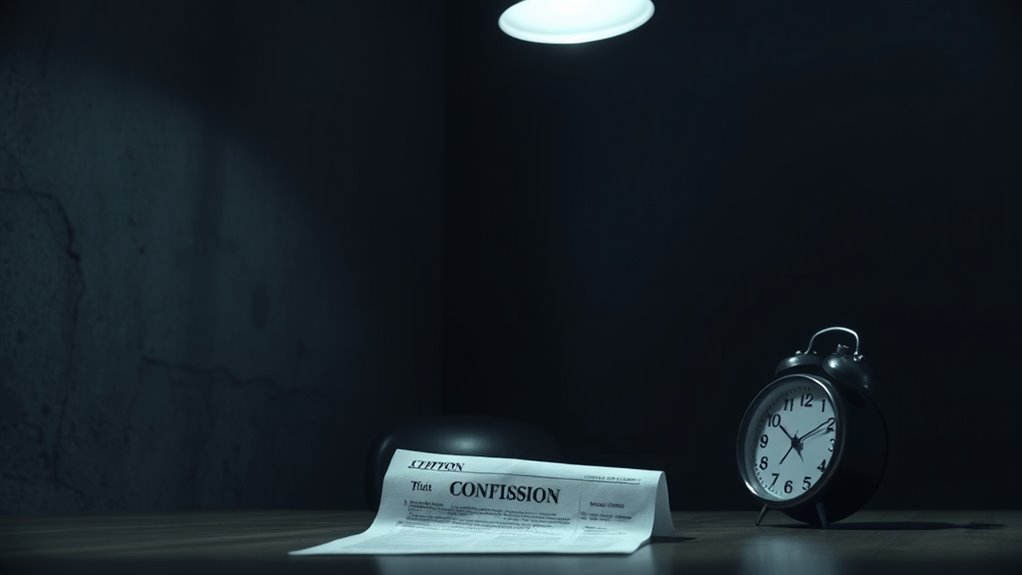

Innocent people sometimes admit guilt due to intense psychological pressures and coercive interrogation tactics. During stressful situations, they may experience memory distortions or feel overwhelmed by authority. Techniques like deception and isolation can wear down their resistance, leading to false confessions. External influences, like media scrutiny, can further amplify this pressure. Understanding these dynamics is vital to grasp how such confessions occur and what can be done to prevent them. There’s so much more to explore.

Turn your wind-down time into listening time
- Thousands of audiobooks, podcasts and originals
- Listen on your phone, tablet or Echo — also offline
- Cancel anytime
Key Takeaways
- Intense interrogations create high stress and fatigue, impairing judgment and increasing the likelihood of false confessions.
- Coercive techniques, such as deception and intimidation, can lead innocent individuals to falsely admit guilt.
- Social pressure and conformity can distort perceptions, causing individuals to doubt their innocence and accept blame.
- Memory distortion during interrogations may lead individuals to genuinely believe they committed crimes they did not commit.
- External influences, including media scrutiny and legal threats, significantly contribute to the risk of false admissions.
interrogation stress relief tools
As an affiliate, we earn on qualifying purchases.
As an affiliate, we earn on qualifying purchases.
Understanding False Confessions

Why do innocent people confess to crimes they didn’t commit? You might not realize how easily false memories can be implanted through social pressure. When you’re in an intense situation, like an interrogation, your mind can play tricks on you. The stress and fear of accusations may lead you to doubt your own innocence. You may feel overwhelmed by the pressure to conform, making you more likely to agree with an investigator’s narrative, even if it’s false. This social pressure can distort your perception of reality, causing you to believe you did something you didn’t. Recognizing how these factors intertwine helps explain the disturbing phenomenon of false confessions, shedding light on the complexities of human psychology in high-stress environments.
psychology books on false confessions
As an affiliate, we earn on qualifying purchases.
As an affiliate, we earn on qualifying purchases.
The Role of Coercive Interrogation Techniques

How do coercive interrogation techniques contribute to false confessions? When you’re faced with aggressive interrogation tactics, the pressure can be overwhelming. Police pressure can create a sense of helplessness, making it easier for you to admit to something you didn’t do. Interrogators often use deception, isolation, and intimidation to wear you down, leading to a desperate desire to escape the situation. You might think that confessing, even falsely, is the quickest way out. As the hours stretch on, your mental and emotional state deteriorates, clouding your judgment. The promise of leniency or fear of harsher consequences can push you toward a confession, regardless of your innocence. Additionally, the use of coercive techniques during interrogations can significantly impact the likelihood of false confessions. It’s crucial to recognize how these tactics can distort reality, leading to tragic outcomes. In many countries, similar pressures are reflected in cultural norms that prioritize local traditions over foreign practices, influencing how individuals respond to authority. Moreover, the impact of AI technology on decision-making processes highlights the need for continuous monitoring of interrogation practices to mitigate the risks of false confessions. Understanding the implications of color accuracy in various contexts can further illustrate how perception can be manipulated under pressure.
deception detection training kit
As an affiliate, we earn on qualifying purchases.
As an affiliate, we earn on qualifying purchases.
Psychological Factors Contributing to False Confessions

While you might not realize it, various psychological factors can considerably influence your likelihood of making a false confession. Understanding these factors can help you recognize how easily one might succumb to admitting guilt, even when innocent. Here are three key psychological influences:
- Memory distortion: Your memories can be manipulated during interrogation, leading you to believe you committed a crime that you didn’t.
- Authority influence: The presence of an authoritative figure can pressure you into compliance, making you more susceptible to admitting guilt.
- Social compliance: You may feel the need to fit in or please the interrogators, pushing you to confess even under duress.
Additionally, the impact of emotional expression can play a crucial role in how individuals respond during high-pressure situations, including interrogations. Being aware of these factors can empower you to interrogate your own understanding of truth and reality.
coercive interrogation simulation game
As an affiliate, we earn on qualifying purchases.
As an affiliate, we earn on qualifying purchases.
The Impact of Stress and Fatigue

When you’re subjected to intense stress and fatigue during an interrogation, your ability to think clearly and make rational decisions can diminish considerably. Sleep deprivation and emotional exhaustion can cloud your judgment, making you more susceptible to pressure. You may find yourself agreeing to statements or confessions you don’t believe to be true, simply to escape the situation. This phenomenon can be further understood through the lens of voice acting techniques, where the pressure to perform can lead to compromised decision-making. Additionally, the environment can be similar to cultural breakfasts, where different settings influence behavior and responses. Recognizing the role of utilitarianism in ethical decision-making can shed light on the moral dilemmas faced during such high-pressure situations. Furthermore, the use of preppy dog names can reflect a trend where social status influences perception, much like how class dynamics can affect an individual’s behavior under stress.
| Factor | Description | Impact on Decision-Making |
|---|---|---|
| Sleep Deprivation | Lack of adequate sleep | Impairs cognitive function |
| Emotional Exhaustion | Overwhelming feelings of stress | Reduces resilience to pressure |
| Stress | Intense psychological pressure | Increases likelihood of false confessions |
| Fatigue | Physical and mental tiredness | Compromises clarity and focus |
Understanding these effects is *vital* in recognizing why innocent individuals may admit guilt under duress. Moreover, the environment of an interrogation can resemble the pressure found in high-stress situations, further exacerbating the risk of false confessions.
The Desire to Protect Loved Ones

Intense stress and fatigue can lead you to make decisions you wouldn’t normally consider, especially when it comes to protecting those you care about. Your deep emotional bonds and sense of family loyalty can drive you to admit guilt for crimes you didn’t commit, believing it’s the best way to shield your loved ones from harm. This desire to protect can manifest in several ways:
- You might think confessing will end the ordeal for your family.
- You could fear that your silence will implicate someone you love.
- You may believe your loved ones will be safer if you take the fall. The bond between father and daughter often emphasizes the lengths one would go to for family. The emotional toll of such situations can lead to high incidence of anxiety and further complicate decision-making.
These powerful feelings can cloud your judgment, pushing you towards false confessions in desperate moments. Additionally, the stress and fatigue experienced during intense situations may impair your ability to think clearly and make rational decisions. Often, the pressure of the situation can feel overwhelming, similar to the high pressure capability of airless paint sprayers, which can create a sense of urgency that leads to hasty decisions.
Misconceptions About the Justice System

Many people hold misconceptions about the justice system that can lead to misguided beliefs about how it operates. For instance, the reliability of eyewitness testimony is often overstated. Eyewitness bias can distort memories, leading to wrongful accusations. Additionally, you might think juries always make informed decisions, but that’s not always the case. Jury misjudgment can stem from inadequate evidence or emotional biases.
One important aspect to consider is that confessions can sometimes arise from coercive interrogation techniques, which can lead to false confessions that contribute to wrongful convictions.
| Misconception | Reality |
|---|---|
| Eyewitnesses are reliable | Eyewitness bias is common |
| Juries know all evidence | Juries can misjudge cases |
| Confessions mean guilt | False confessions happen often |
| Legal system is infallible | Mistakes occur frequently |
| Criminals always get caught | Many innocent people are convicted |
Understanding these misconceptions is vital for a fair and just legal process.
Case Studies of Notable False Confessions

Let’s explore some infamous cases of false confessions that shocked the public and raised questions about the justice system. You’ll see how psychological factors can lead innocent people to admit to crimes they didn’t commit. These examples reveal the complexities and dangers that come with interrogations. Understanding the impact of psychological factors involved in coercive questioning can help prevent such injustices in the future. Additionally, factors such as emotional dysregulation can influence an individual’s ability to withstand pressure during interrogations, leading to false admissions of guilt. Moreover, the use of Glycolic acid in skincare has been shown to enhance skin radiance, highlighting how external factors can also create pressure to conform to societal standards. Cultivating creative practices can provide individuals with the tools to express themselves and cope with stress, potentially reducing their vulnerability during high-pressure situations. Furthermore, the increased reliance on ECU tuning in automotive performance can mirror how external influences shape our decision-making processes under stress.
Infamous Case Examples
How do seemingly ordinary individuals end up confessing to crimes they didn’t commit? Infamous cases showcase the harrowing impact of false confessions, often influenced by intense media scrutiny and the looming threat of legal repercussions. Here are three notable examples:
- The Central Park Five: Five teenagers were wrongfully convicted in a sensationalized case, admitting guilt under extreme pressure. This case underscores how suction power in interrogations can lead to coerced confessions that distort the truth.
- Brendan Dassey: In the “Making a Murderer” documentary, Dassey’s coerced confession led to a conviction for a crime he likely didn’t commit.
- Richard Jewell: After being falsely accused in the Atlanta Olympic bombing, Jewell faced relentless media attention, which compounded his legal struggles.
These cases reveal how external pressures can distort reality, leading innocent people to admit guilt. The phenomenon of false confessions highlights the need for legal assistance to ensure fair treatment during interrogations.
Psychological Factors Involved
While external pressures play a significant role in false confessions, psychological factors are often at the heart of these disturbing admissions. You might not realize how memory distortion can affect your recall of events, leading you to believe you committed a crime you didn’t actually commit. Under intense interrogation, your mind can bend, making it easier to accept guilt. additionally, the influence of authority figures can skew your perception, creating a sense of helplessness. When an interrogator exerts pressure, you might feel that confessing is the only way to escape the situation, even if it means admitting to something you didn’t do. These psychological dynamics reveal just how vulnerable your mind can be in high-stress situations.
Frequently Asked Questions
How Common Are False Confessions in Criminal Cases?
False confessions happen more often than you might think, especially in high-pressure situations. Many innocent individuals succumb to police pressure during interrogations, where aggressive interview tactics can lead to overwhelming stress. You might be surprised to learn that studies suggest around 10-15% of all confessions could be false, highlighting how easily someone can admit guilt under duress. Recognizing these tactics can help you understand the complexities within the criminal justice system.
Are Certain Demographics More Likely to Give False Confessions?
Like a moth drawn to a flame, certain demographics can be more susceptible to giving false confessions. Research shows that age bias plays a significant role, with younger individuals often feeling pressure to comply, while cultural influences can shape perceptions of authority. You might find that those from marginalized backgrounds face additional stressors, making them more vulnerable to coercive interrogation tactics. Understanding these dynamics can help paint a clearer picture of this troubling issue.
What Legal Protections Exist Against False Confessions?
You’ve got legal protections in place against false confessions, primarily through Miranda rights. These rights ensure you’re informed of your right to remain silent and to have an attorney present during questioning. Additionally, courts scrutinize the use of coercive tactics by law enforcement. If officers apply pressure or manipulate situations to elicit confessions, those statements can be challenged in court, helping to safeguard your rights and ensure fair treatment.
How Can False Confessions Be Prevented in the Future?
You might think false confessions are just a part of the system, but they don’t have to be. To prevent them, law enforcement should adopt improved interview techniques focused on rapport-building rather than coercion. Enhanced interrogation training can help officers recognize psychological pressures that lead to false admissions. By prioritizing ethical practices and ensuring accountability during interrogations, you can considerably reduce the risk of innocent individuals feeling compelled to confess to crimes they didn’t commit.
What Role Do Attorneys Play in False Confession Cases?
Attorneys play a pivotal role in false confession cases by employing effective defense strategies and attorney tactics. They analyze interrogation techniques, challenge the validity of confessions, and highlight inconsistencies in police procedures. By cross-examining witnesses and presenting expert testimony, you can help establish reasonable doubt. Your attorney’s ability to communicate your side of the story is essential, ensuring that the jury understands the pressures you faced during the interrogation process.
Conclusion
In a world where “truth is stranger than fiction,” it’s heartbreaking to realize that innocent people often confess to crimes they didn’t commit. The pressures of coercive interrogation, psychological manipulation, and the overwhelming desire to shield loved ones can lead to devastating consequences. As we uncover these tragic stories, it’s essential to advocate for reform in our justice system. By understanding the complexities behind false confessions, we can aim for a future where justice truly prevails.
Halloween Picks
halloween
As an affiliate, we earn on qualifying purchases.