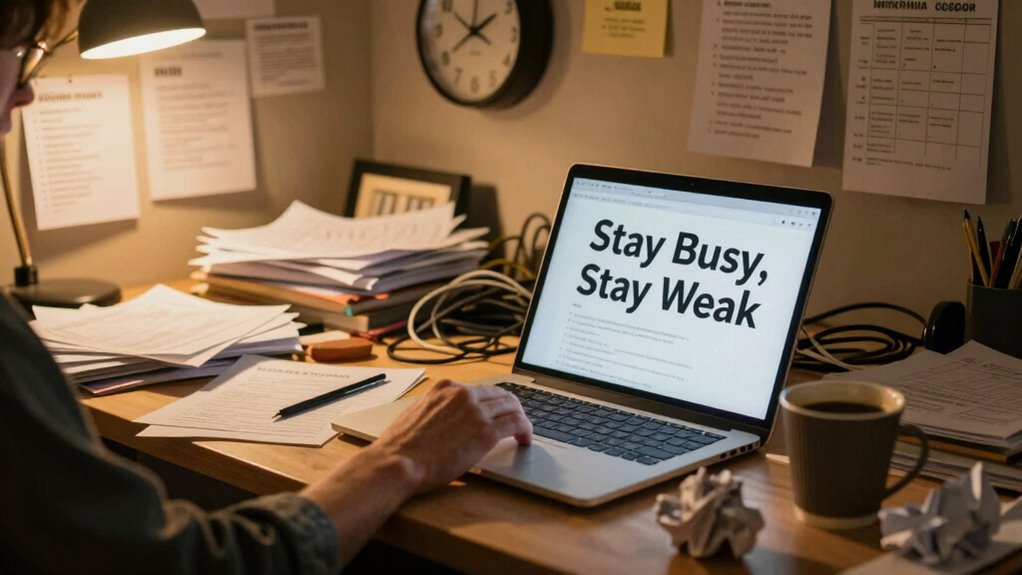

The ‘Stay Busy, Stay Weak’ strategy means filling your days with demands to avoid facing emotional challenges and true growth. When you’re constantly busy, you skip mindful reflection and hide difficult feelings, which weakens your resilience. This cycle creates a false sense of progress but prevents meaningful development. Continuing this pattern keeps you stuck in superficial activity and avoids confronting your inner struggles. Stay with it, and you’ll discover how slowing down can strengthen your emotional resilience.

Turn your wind-down time into listening time
- Thousands of audiobooks, podcasts and originals
- Listen on your phone, tablet or Echo — also offline
- Cancel anytime
Key Takeaways
- Constant busyness serves as an avoidance tactic, preventing emotional reflection and real personal growth.
- Staying constantly active creates a false sense of productivity, masking stagnation and superficial progress.
- The strategy suppresses self-awareness, making it harder to identify genuine needs and develop resilience.
- Avoiding reflection weakens emotional resilience, reducing capacity to handle setbacks and adversity.
- Recognizing and breaking this cycle fosters inner strength, true growth, and better emotional health.

Have you ever wondered why staying constantly busy might actually keep you weak? It’s a question worth pondering, especially when you recognize how the relentless pursuit of activity can prevent genuine growth. The “Stay Busy, Stay Weak” strategy is rooted in the idea that filling every moment with demands keeps you distracted from deeper self-awareness. When you’re always engaged with tasks, you often skip over mindful reflection, which is essential for understanding your true needs and emotional state. Without that pause, you might be avoiding difficult feelings, fears, or doubts that require honest attention. This avoidance weakens your emotional resilience, making it harder to handle setbacks or stress when they inevitably come.
By staying busy, you give yourself a false sense of progress. You might check off numerous to-do’s, but you’re not necessarily moving forward in a meaningful way. Instead, you’re just avoiding the uncomfortable moments that foster growth. Mindful reflection is a practice that encourages you to sit with your thoughts, observe your emotions without judgment, and develop a clearer picture of who you are. When you ignore this process, you stunt your emotional resilience—the ability to recover from adversity. You become less adaptable because you’re not practicing facing internal struggles head-on; you’re distracting yourself from them. This constant activity creates a cycle where you’re always pushing outward, but inward, you’re weakening your capacity to cope with life’s inevitable challenges. Recognizing how emotional resilience is built through self-awareness and reflection can help you understand the importance of slowing down. Additionally, cultivating mindful reflection can serve as a powerful tool in breaking this cycle and fostering genuine growth. Developing these skills is especially important because they are closely linked to mental health and overall well-being, as supported by emerging trends in health and exercise.
Constant busyness masks stagnation, hindering true growth and resilience through avoidance of mindful reflection.
Furthermore, persistent busyness can foster a false sense of productivity. You might think that staying busy means you’re making progress, but often, it’s just an avoidance tactic. This strategy prevents you from developing patience and self-awareness. When you don’t allow yourself time for mindful reflection, you miss out on opportunities to understand what truly matters to you. In fact, self-awareness is fundamental for nurturing resilience and emotional strength. Without that understanding, your emotional resilience diminishes because you’re not actively cultivating the inner strength needed to navigate tough times. Instead of building resilience, you’re reinforcing a pattern of superficial activity that leaves you vulnerable when real adversity hits.
Ultimately, the “Stay Busy, Stay Weak” approach keeps you from becoming your strongest self. It’s a trap that encourages constant distraction at the cost of genuine growth. If you want to build resilience, you need to pause, reflect, and confront what’s beneath the surface. Only then can you develop the emotional strength necessary to handle life’s uncertainties. Recognizing this pattern is the first step toward breaking free from it, allowing you to become more mindful of your inner world and more resilient in facing external challenges.
As an affiliate, we earn on qualifying purchases.
Frequently Asked Questions
How Does the Strategy Impact Long-Term Personal Growth?
You might find that constantly staying busy hampers your personal development because it prevents meaningful reflection and skill-building. This strategy encourages a mindset shift away from growth-focused activities, making you less resilient and adaptable over time. By prioritizing constant demands, you risk stagnation, missing opportunities for true self-improvement. To foster long-term growth, you need to break free from this cycle and dedicate time to intentional development and self-awareness.
Can This Approach Lead to Burnout Over Time?
You’re walking a tightrope over a stormy sea, and overwork fatigue pulls at your ankles while stress accumulation clouds your mind. This approach can definitely lead to burnout over time, draining your energy and dimming your motivation. The constant demands keep you trapped in a cycle of exhaustion, making it harder to find balance or recover. Without breaks, you risk sinking deeper into fatigue, losing sight of long-term growth and well-being.
What Are Signs You’re Using This Strategy Excessively?
If you’re using this strategy excessively, you might notice signs like feeling overwhelmed, drained, or unable to focus. You may avoid mindful reflection, ignoring your emotional needs, and struggle to set intentional boundaries. Over time, this can lead to burnout and decreased productivity. Recognizing these signs helps you re-engage with self-care, practice mindful reflection, and establish intentional boundaries to maintain balance and prevent exhaustion.
How Can One Balance Demands Without Feeling Overwhelmed?
To balance demands without feeling overwhelmed, prioritize your tasks with effective time management, focusing on what’s truly important. Set clear boundaries to protect your energy and limit unnecessary commitments. Learn to say no when needed, and schedule regular breaks to recharge. By managing your time wisely and establishing boundaries, you can maintain productivity without sacrificing your well-being, creating a sustainable rhythm that keeps demands manageable and your stress levels low.
Is This Strategy Effective Across Different Cultures or Industries?
You’ll find that this strategy’s effectiveness varies widely across cultures and industries. For instance, 65% of professionals in high-pressure industries report burnout, indicating limited success. Cultural adaptability shapes how well it works; some cultures value work-life balance, making constant demands counterproductive. Industry specificity also matters—what boosts productivity in tech may harm healthcare workers. So, tailoring the approach to cultural norms and industry needs is essential for real effectiveness.
emotional resilience training book
As an affiliate, we earn on qualifying purchases.
As an affiliate, we earn on qualifying purchases.
Conclusion
By staying constantly busy, you might think you’re staying ahead, but you’re actually keeping yourself weak and distracted. It’s easy to fall into the trap of always being on the move, avoiding reflection or growth. Remember, sometimes the best way to move forward is to pause and find clarity. Don’t let yourself be caught in the whirlwind; instead, slow down and take control. After all, a busy bee isn’t always a happy one.
guided meditation for self-awareness
As an affiliate, we earn on qualifying purchases.
As an affiliate, we earn on qualifying purchases.
As an affiliate, we earn on qualifying purchases.
Halloween Picks
halloween
As an affiliate, we earn on qualifying purchases.