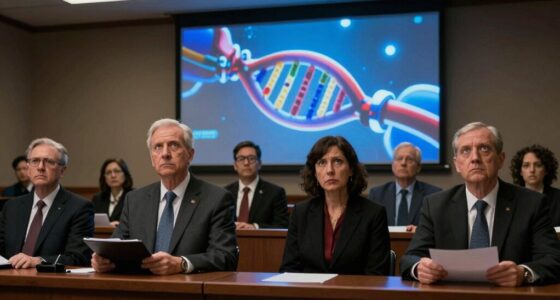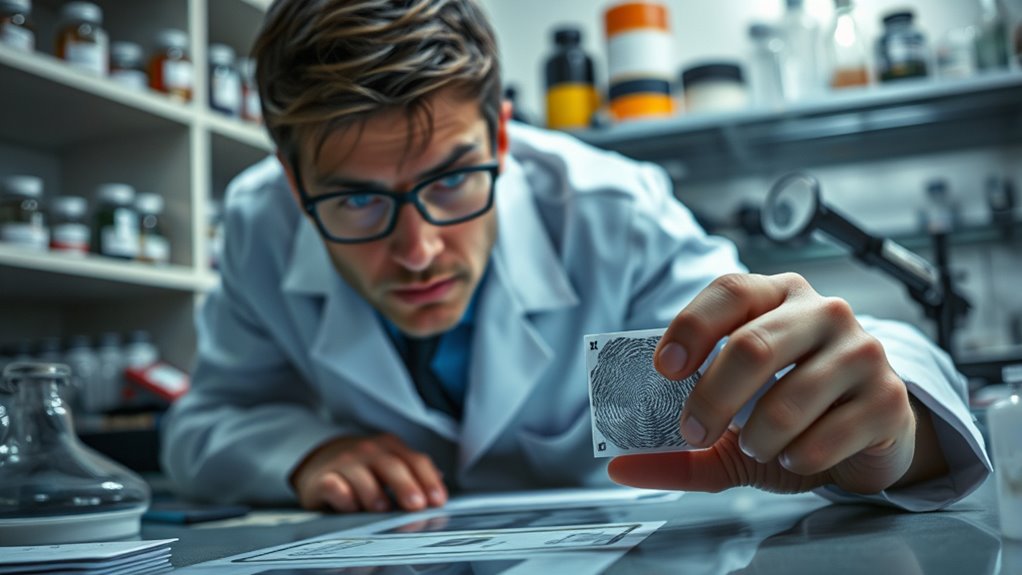
Confirmation bias in forensics causes you to favor evidence that supports your initial beliefs, which can lead to misinterpretations and wrongful conclusions. You might dismiss conflicting information or interpret evidence in a biased way to reinforce your original hypothesis. Eyewitness testimonies and emotional reactions can also unfairly influence your judgment. Recognizing these biases is vital for an accurate investigation. If you want to understand how these biases impact forensic work, keep exploring this significant topic.
Key Takeaways
- Confirmation bias causes forensic experts to favor evidence supporting initial hypotheses, leading to biased conclusions.
- Eyewitness testimonies, often emotionally charged, can disproportionately influence forensic case evaluations.
- Cognitive distortions like overconfidence and selective perception skew objectivity during evidence assessment.
- Biases may lead to dismissing contradictory evidence and reinforcing initial assumptions about guilt or innocence.
- Recognizing and mitigating confirmation bias is essential to prevent wrongful convictions and ensure accurate forensic analyses.
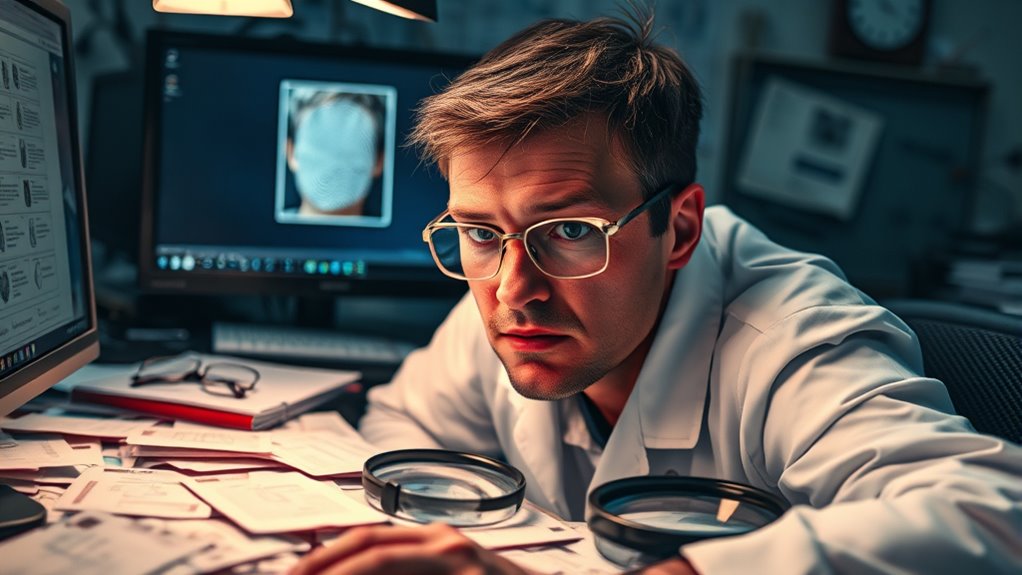
Confirmation bias can markedly influence forensic investigations, leading experts to favor evidence that supports their initial assumptions while dismissing conflicting information. When working on a case, you might find yourself unconsciously seeking out details that confirm your original hypothesis, whether that’s about a suspect’s guilt or innocence. This tendency can be amplified by eyewitness influence, where eyewitness testimonies seem to carry more weight than they should, even if they’re flawed or biased. You might rely heavily on a witness’s account because it aligns with your preliminary theory, ignoring signs that their memory could be distorted or influenced by external factors. Cognitive distortions, such as overconfidence or selective perception, can further skew your judgment, causing you to interpret evidence in a way that reinforces your initial beliefs.
In forensic settings, cognitive distortions often act as blind spots. For example, after forming an early suspicion, you might unconsciously dismiss evidence that contradicts your view, leading to a biased interpretation of facts. Eyewitness influence plays a significant role here; a witness’s confidence or emotional state can sway your perception of their testimony. If a witness appears convincing, you might give their account undue weight, even if subsequent evidence suggests their memory was inaccurate. This bias can be compounded if you’ve already developed a narrative in your mind about the case, making it harder to objectively evaluate new or conflicting evidence.
You may not realize how these cognitive distortions cloud your judgment, but they can cause you to overlook vital details. For instance, you might focus on evidence that supports your hypothesis while dismissing clues that challenge it. Eyewitness influence becomes particularly problematic when you give too much credence to eyewitness accounts without critically examining their reliability. The more emotionally charged or vivid a witness’s testimony, the more likely you are to be influenced by it, regardless of whether it’s factually accurate. Recognizing these biases is essential because they can lead to wrongful convictions or missed clues that could ultimately clear a suspect or solve a case.

LSD Surface Residue Forensic Drug Test Kit (Pro Kit)
Identify LSD – Detects LSD on paper and liquid.
As an affiliate, we earn on qualifying purchases.
As an affiliate, we earn on qualifying purchases.
Frequently Asked Questions
How Can Forensic Labs Prevent Confirmation Bias?
To prevent confirmation bias, you should implement blind testing and double-blind procedures in your forensic lab. These methods guarantee you don’t know the case details or suspect information, reducing your influence on the analysis. By keeping both the analyst and the case information concealed, you minimize subjective judgment, ensuring objective results. Regularly training staff on biases and establishing strict protocols further maintains the integrity of your forensic investigations.
Are There Legal Consequences for Confirmation Bias in Forensic Evidence?
Yes, there are legal consequences for confirmation bias in forensic evidence. If you overlook biases that lead to wrongful convictions, you may face legal accountability, including lawsuits or disciplinary action. To prevent this, policy reform is essential, ensuring strict guidelines and oversight. As a forensic professional, you’re responsible for maintaining objectivity, and failure to do so can result in significant legal repercussions, emphasizing the need for ongoing training and oversight.
What Training Exists to Reduce Bias Among Forensic Scientists?
You can benefit from bias awareness and targeted training programs designed to help forensic scientists recognize and mitigate their own biases. These programs often include workshops, case studies, and simulations that promote critical thinking and objectivity. By participating in such training, you’ll sharpen your skills, reduce the influence of subconscious biases, and guarantee your evidence analysis remains fair and accurate, ultimately strengthening the integrity of your forensic work.
How Does Confirmation Bias Impact Wrongful Convictions?
You should know that confirmation bias can lead to wrongful convictions by causing you to interpret evidence in a way that supports your initial assumptions. Judicial oversight and adherence to ethical standards are essential in catching these biases. When judges and forensic experts remain vigilant and critically evaluate evidence, you help guarantee fair trials and prevent wrongful convictions caused by biased interpretations.
Can Technological Tools Eliminate Human Confirmation Bias in Forensics?
Technological tools can help, but they can’t eliminate confirmation bias entirely. Machine learning algorithms analyze data objectively, reducing human influence, yet they can still reflect biases from training data. Cognitive heuristics, like shortcuts the human mind takes, remain a challenge. To truly minimize bias, you need a combination of advanced technology and awareness of your own cognitive tendencies, ensuring you stay vigilant despite automated assistance.
double-blind evidence analysis tools
As an affiliate, we earn on qualifying purchases.
As an affiliate, we earn on qualifying purchases.
Conclusion
You now understand how confirmation bias can influence forensic evidence, often leading to wrongful convictions. Studies show that up to 87% of wrongful convictions involve some form of forensic error, frequently linked to biased interpretations. Recognizing this, it’s essential to implement blind analysis and peer reviews in forensic work. By doing so, you help guarantee justice is based on facts, not assumptions, ultimately protecting innocent lives and improving the criminal justice system.

Crime and Criminality: A multidisciplinary approach
As an affiliate, we earn on qualifying purchases.
As an affiliate, we earn on qualifying purchases.

Logical Investigative Methods: Critical Thinking and Reasoning for Successful Investigations
As an affiliate, we earn on qualifying purchases.
As an affiliate, we earn on qualifying purchases.