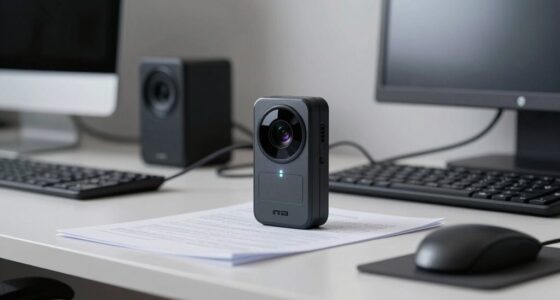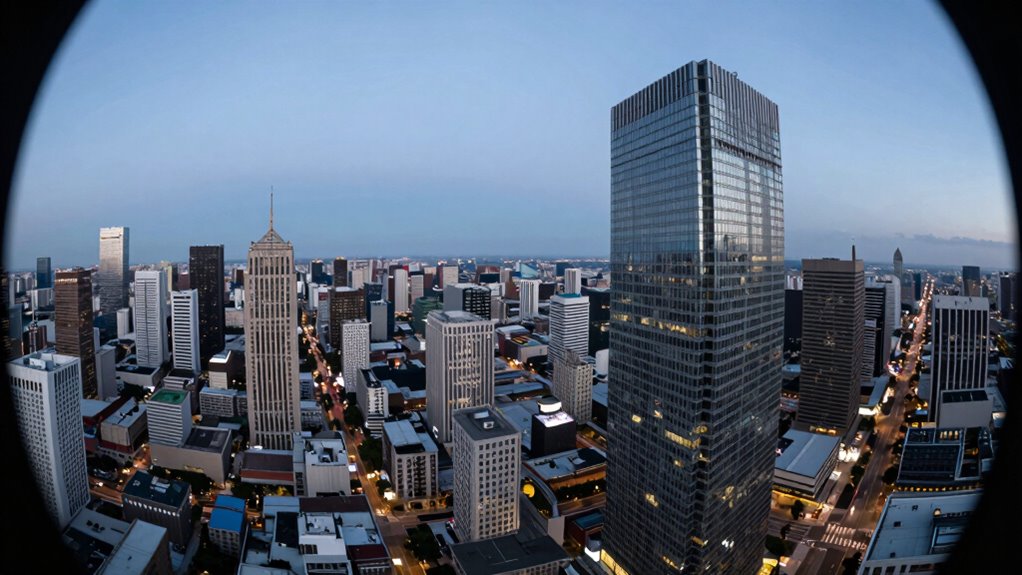

Using wide-angle lenses can sometimes hurt your evidence because they introduce distortions that make straight lines bend and objects appear larger or closer than they really are. This exaggeration can mislead viewers and distort scene relationships, potentially questioning the evidence’s reliability. If you’re not careful, these optical effects might challenge legal acceptance or cause misinterpretation of the scene. Keep exploring how to recognize and correct these distortions to improve your documentation.

Get self-care and calm essentials delivered free — and shop member deals
- Fast, free delivery on millions of items
- Access to Prime Big Deal Days deals on October 6–7
- Prime Video, Amazon Music and more included
Key Takeaways
- Optical distortions can misrepresent scene geometry, compromising the accuracy of evidence.
- Wide-angle lenses exaggerate object sizes and distances, leading to potential misinterpretations.
- Distortions near edges may obscure crucial details or create false impressions.
- Relying solely on wide-angle shots can hinder precise scene reconstruction.
- Correcting lens distortions requires additional effort, reducing the immediate reliability of evidence.

Wide-angle lenses have become essential tools in capturing expansive scenes and unusual perspectives, especially when gathering visual evidence. They allow you to encompass more of a scene in a single shot, making them popular in investigative work, crime scene documentation, and surveillance. However, despite their advantages, wide-angle lenses can sometimes hinder the clarity and accuracy of evidence. This is primarily because of optical distortions and their impact on depth perception.
Optical distortions are a significant concern when using wide-angle lenses. These distortions cause straight lines to appear curved, especially near the edges of the frame. If you’re not careful, this can lead to misinterpretations of the scene, making objects seem closer or farther away than they truly are. For example, a photograph of a suspect standing near a building might exaggerate the size of the building’s features, creating a misleading impression of proximity or scale. Such distortions can compromise the integrity of visual evidence, making it appear altered or exaggerated, which can challenge its admissibility in court.
Depth perception is another critical factor affected by wide-angle lenses. These lenses exaggerate the distance between objects in a scene, often making close objects appear disproportionately large and distant objects seem smaller or farther away. When you’re documenting a scene, this distortion can obscure the true spatial relationships between elements. For instance, if you’re trying to establish the position of evidence within a room, the warped perspective might give false cues about how close or far objects are from each other. This misrepresentation can hinder accurate scene reconstruction and lead to incorrect conclusions about the sequence of events or the layout of a crime scene. Additionally, understanding how optical distortions impact scene interpretation is crucial for forensic accuracy. Recognizing the limitations of wide-angle lenses can help ensure that the evidence remains reliable and that misinterpretations are minimized. Being aware of these optical effects is essential for maintaining the credibility of photographic evidence in legal proceedings. Furthermore, understanding how to correct lens distortions can significantly improve the reliability of visual documentation.
While wide-angle lenses are invaluable for capturing large areas quickly and for creative perspectives, they require careful use and understanding of their limitations. Relying solely on wide-angle shots can introduce optical distortions and skew depth perception, which might compromise the reliability of your evidence. To mitigate these issues, you should consider using additional lens types, applying correction techniques in post-processing, or combining wide-angle images with other photographic data. Recognizing these limitations ensures you don’t unintentionally weaken the credibility of your evidence, and it helps you produce more accurate, trustworthy visual documentation.
wide-angle lens correction software
As an affiliate, we earn on qualifying purchases.
As an affiliate, we earn on qualifying purchases.
Frequently Asked Questions
Can Wide-Angle Lenses Distort the Subject’s Proportions?
Yes, wide-angle lenses can distort the subject’s proportions. When you use them close-up, perspective distortion occurs, often leading to facial exaggeration or elongated features. This effect can make noses appear larger or faces seem stretched, especially if you’re too close to the subject. To avoid this, you should maintain some distance and be mindful of the lens’s influence on proportions, ensuring your images look natural and balanced.
Are Wide-Angle Lenses Suitable for Close-Up Evidence?
Wide-angle lenses aren’t ideal for close-up evidence because they can distort depth perception and exaggerate focal length effects. When you get too close, the lens makes objects appear larger and more distorted, which can mislead or obscure details. To accurately document evidence, you should use a lens with a longer focal length, ensuring true proportions and clear depth perception, rather than relying on wide-angle lenses that skew close-up visuals.
How Does Lens Distortion Affect Evidence Clarity?
Lens distortion affects evidence clarity by altering the true appearance of objects, impacting depth perception and causing optical compression. You might see straight lines bend or objects appear stretched, which can mislead your interpretation. This distortion reduces the accuracy of evidence, making it harder to judge distances or details correctly. To maintain clarity, you should consider using lenses with minimal distortion or correct the distortion during post-processing.
Do Wide-Angle Lenses Require Special Correction Techniques?
Yes, wide-angle lenses absolutely require special correction techniques! You need precise lens calibration to understand how your lens distorts images, and perspective correction to straighten out that exaggerated, fish-eye effect. Without these adjustments, your evidence could look wildly distorted—like a funhouse mirror! Proper correction guarantees your footage remains accurate and credible, so don’t skip lens calibration and perspective correction when working with wide-angle lenses.
Are Wide-Angle Lenses More Prone to Chromatic Aberration?
Yes, wide-angle lenses are more prone to chromatic aberration, especially at the edges of the frame. This results in color fringing around high-contrast areas, which can be distracting. The issue worsens with shorter focal lengths, common in wide-angle lenses, because they bend light more sharply. To combat this, you should use high-quality lenses and consider software correction during post-processing to reduce color fringing effectively.
professional lens distortion correction
As an affiliate, we earn on qualifying purchases.
As an affiliate, we earn on qualifying purchases.
Conclusion
As you peer through a wide-angle lens, the scene stretches before you like an endless canvas, but remember, not every detail is true to life. The vast expanse can distort your perception, making critical evidence seem distant or exaggerated. Just as a fog blurs the edges of a landscape, so too can wide angles obscure the truth. Approach with caution, knowing that what you see isn’t always what’s real—sometimes, less is more for clarity.
wide-angle lens for forensic photography
As an affiliate, we earn on qualifying purchases.
As an affiliate, we earn on qualifying purchases.
camera lens with minimal distortion
As an affiliate, we earn on qualifying purchases.
As an affiliate, we earn on qualifying purchases.
Halloween Picks
halloween
As an affiliate, we earn on qualifying purchases.