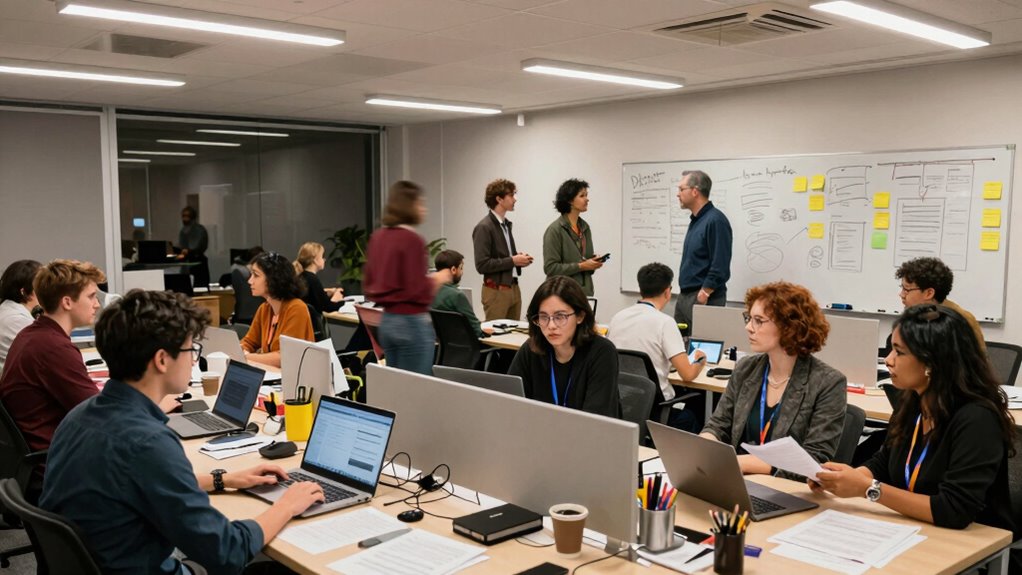

Shared spaces overload your senses with constant stimuli and social interactions that demand ongoing mental effort. Awkward setups, clutter, and distractions increase your cognitive load, forcing you to work harder just to focus. Managing social cues and decisions adds to your mental drain, leaving you exhausted faster. If you want to understand how these factors drain your energy and discover ways to protect your focus, there’s more to explore below.

Turn your wind-down time into listening time
- Thousands of audiobooks, podcasts and originals
- Listen on your phone, tablet or Echo — also offline
- Cancel anytime
Key Takeaways
- Shared spaces introduce constant environmental stimuli and social interactions that demand continuous mental effort, leading to decision fatigue.
- Poor ergonomic setups cause physical discomfort, which increases mental strain and accelerates cognitive depletion.
- Managing social cues and small talk in shared environments consumes significant mental energy, reducing cognitive resources.
- Disorganization and clutter in shared spaces elevate attention demands, contributing to faster mental exhaustion.
- The combined physical, social, and environmental demands create a “perfect storm” that accelerates decision fatigue.
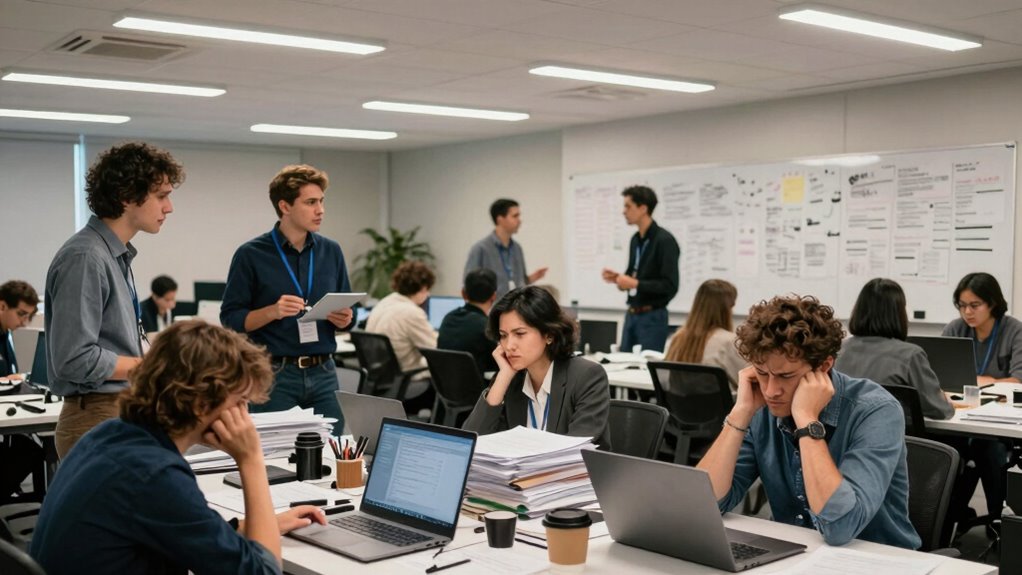
Shared spaces, whether in workplaces, homes, or public areas, can inadvertently contribute to decision fatigue, leaving you mentally drained and less able to make clear choices. When you’re surrounded by constant stimuli and numerous social interactions, your brain works overtime trying to process and respond. Over time, this mental effort wears you down, making simple decisions feel more taxing than they should. One key factor in this exhaustion is how shared spaces influence your workplace ergonomics. An awkwardly arranged desk, poor lighting, or uncomfortable seating forces you to spend extra energy just to stay focused and comfortable. When your environment isn’t optimized, it demands more of your cognitive resources, contributing to fatigue before you even start your day’s tasks. This physical discomfort can also lead to increased frustration, further depleting your mental reserves. Recognizing digital security threats and managing your environment can help mitigate some of these effects. Additionally, the constant need to monitor for potential security breaches adds another layer of mental load that drains your focus and decision-making capacity. Incorporating ergonomic solutions into shared spaces can significantly reduce physical discomfort and mental fatigue. Moreover, poorly designed shared environments can heighten sensory overload, intensifying the mental drain on individuals. Implementing design principles based on ergonomic best practices can help create more supportive environments.
Shared spaces’ poor ergonomics drain mental energy, making focus and comfort harder to achieve.
Social interactions within shared spaces add another layer of decision fatigue. Every conversation, greeting, or small talk demands mental engagement, pulling your attention away from your primary tasks. When you’re constantly orchestrating social cues, choosing whether to engage or ignore, and managing your responses, your brain expends additional energy. Over multiple interactions, these small decisions accumulate, leaving you feeling overwhelmed and less capable of making sound choices later on. It’s easy to underestimate how much these seemingly minor social demands drain your mental resources, especially during a busy workday or in crowded public settings.
The design of shared spaces also plays a role in how quickly decision fatigue sets in. Cluttered, chaotic environments demand more of your attention to find what you need or to focus on your work. Without clear organization, you spend extra time and mental effort sifting through distractions, which accelerates fatigue. When combined with constant social interactions, your capacity for decision-making diminishes rapidly. The pressure to constantly adapt to an ever-changing environment, whether it’s adjusting your posture, managing noise levels, or engaging in social exchanges, keeps your brain in a heightened state of alertness. This constant mental toggling wears you down faster than you might realize, impairing your judgment and productivity without you noticing. Creating organized shared spaces can help alleviate some of this mental burden and improve overall efficiency.
In essence, shared spaces create a perfect storm for decision fatigue by continuously taxing your physical comfort, social skills, and mental focus. Recognizing these factors empowers you to take steps—like optimizing your workspace ergonomics or setting boundaries during social interactions—to preserve your mental energy. When you manage your environment and social commitments wisely, you can reduce the mental toll and keep your decision-making sharp longer throughout the day.
As an affiliate, we earn on qualifying purchases.
Frequently Asked Questions
How Can I Recognize Signs of Decision Fatigue Early?
You can recognize signs of decision fatigue early by paying attention to mental and physical cues, like feeling overwhelmed, indecisiveness, or irritability. Incorporate mindfulness practices, such as deep breathing or brief meditation, to stay aware of your mental state. Use decision-making strategies, like simplifying choices or setting priorities, to reduce mental load. These approaches help you catch fatigue early and maintain clearer thinking throughout your day.
Do Shared Spaces Affect Mental Health Long-Term?
Shared spaces can severely impact your mental health long-term, as they subject you to relentless environmental stress and cognitive overload. Over time, constant exposure to noise, interruptions, and social demands can wear down your resilience, leading to burnout, anxiety, and even depression. You might not notice it right away, but your mental well-being gradually suffers, making it harder to focus, relax, or feel truly at peace in the long run.
Are Some People More Susceptible to Decision Fatigue?
Yes, some people are more susceptible to decision fatigue. Your personality traits, like high conscientiousness or perfectionism, can make you more vulnerable, while strong decision resilience helps you bounce back quickly. If you tend to overthink or feel overwhelmed easily, shared spaces might drain your mental energy faster. Recognizing these traits allows you to develop strategies to protect your mental clarity and manage decision-making stress more effectively.
How Do Shared Spaces Influence Team Productivity?
Shared spaces can boost team productivity by fostering spontaneous collaboration and open communication. For example, in a flexible office, team members quickly brainstorm ideas in common areas, improving collaboration dynamics. However, constant decision-making about where to work or when to engage can lead to decision fatigue. This mental exhaustion hampers focus and efficiency, making it essential to balance shared spaces with designated quiet zones to optimize the work environment.
Can Decision Fatigue Impact Social Relationships?
Decision fatigue can definitely impact your social relationships, especially during shared spaces. When you’re mentally drained, you might struggle with social interactions or become irritable, leading to misunderstandings. It also hampers your ability to engage in conflict resolution effectively, increasing the likelihood of unresolved issues. Over time, this fatigue can create distance or tension in your relationships, making it harder to maintain healthy connections despite your best intentions.
adjustable desk ergonomic accessories
As an affiliate, we earn on qualifying purchases.
As an affiliate, we earn on qualifying purchases.
Conclusion
Shared spaces are like bustling crossroads, constantly pulling your attention in different directions. Every small decision you make there adds up, draining your mental energy faster than you realize. Think of your mind as a sponge—each choice squeezes out a bit more, leaving you dry and worn. To keep your mental reservoir full, carve out quiet corners, and don’t let the chaos soak up all your decision-making strength. Protect your mental space like a precious oasis.
As an affiliate, we earn on qualifying purchases.
As an affiliate, we earn on qualifying purchases.
Halloween Picks
halloween
As an affiliate, we earn on qualifying purchases.