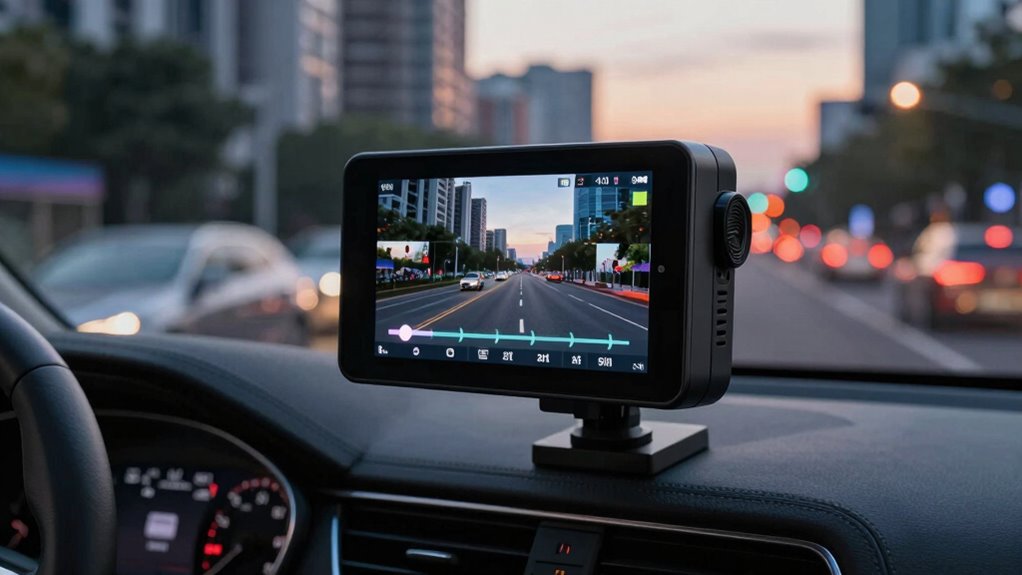

Loop recording automatically overwrites your oldest footage to keep your camera recording nonstop, so you don’t run out of storage. You can usually customize how long each clip lasts, like 1, 3, or 5 minutes, balancing detail and space. It’s important to regularly check storage capacity and lock important clips if needed. Want to understand how to optimize this system for your needs? Keep going to discover more.
Key Takeaways
- Loop recording automatically overwrites the oldest footage when storage is full, ensuring continuous recording without manual intervention.
- You can customize how long each recording cycle lasts, like 1, 3, or 5 minutes, to manage footage detail and storage.
- Regularly check storage capacity to prevent losing important videos and consider larger SD cards for extended buffer time.
- Important clips can be locked to prevent overwriting, preserving critical footage such as evidence or key moments.
- Adjust camera settings for optimal quality and storage balance, ensuring reliable, uninterrupted recordings.
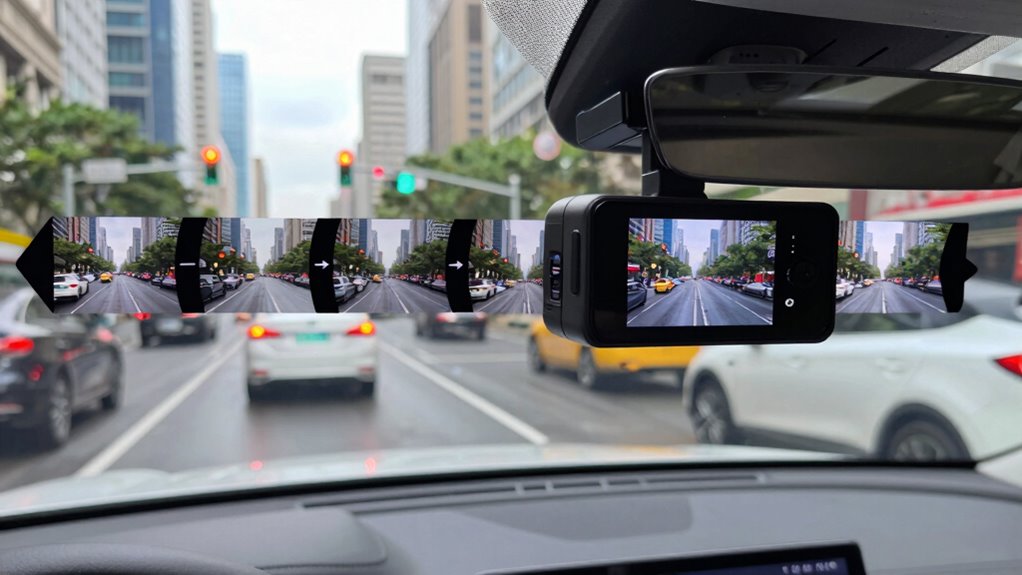
Ever wondered how dash cams or security cameras record continuously without filling up their storage? The secret lies in a feature called loop recording. When you set up your camera, understanding how loop recording works can make managing your footage much simpler. It’s designed to guarantee your camera keeps recording without running out of space, but it also requires some understanding of camera settings and storage management to work effectively.
At its core, loop recording automatically overwrites the oldest footage once the storage reaches its capacity. Instead of stopping recording or saving every clip separately, your camera continuously records in a loop, replacing the oldest videos with new ones. This process assures that your device always has space for the most recent footage, which is especially handy in situations like dash cams where you want ongoing coverage without manually deleting files. When you customize your camera settings, you typically choose the loop duration—say, 1 minute, 3 minutes, or 5 minutes—so the camera overwrites footage in set intervals. This flexibility helps you balance between having detailed footage and conserving storage space.
Loop recording automatically replaces old footage to ensure continuous recording without filling storage space.
Managing storage effectively is essential because, without proper settings, you risk losing important footage. Many cameras allow you to control the size and length of recordings, and some even enable you to set specific conditions for overwriting. For example, you might want to keep footage from certain events longer or prevent overwriting critical clips. It’s important to regularly check your storage capacity and adjust your camera settings based on your needs. If you’re recording continuously, opting for larger storage or higher-capacity SD cards can give you more buffer before overwriting occurs. Additionally, understanding storage capacity helps you plan how much footage you can save before it gets overwritten. Some cameras offer options like locking specific clips so they aren’t overwritten, which is useful if you want to preserve evidence or important moments. Knowing how camera settings influence the recording process can help you fine-tune your device for optimal performance.
Understanding how loop recording and storage management work together allows you to optimize your device’s performance. By adjusting camera settings thoughtfully, you guarantee that the footage you need remains available, and your storage stays organized. To further improve your recording experience, it’s helpful to familiarize yourself with video quality options, so you can select the best balance of clarity and storage use. This way, you don’t have to worry about running out of space unexpectedly or losing important recordings. Whether you’re using a dash cam on your daily commute or a security camera around your property, mastering loop recording makes it easier to keep a continuous record without hassle. It’s a simple yet powerful feature that, when properly configured, offers peace of mind, knowing that your footage is always up-to-date and safely stored.
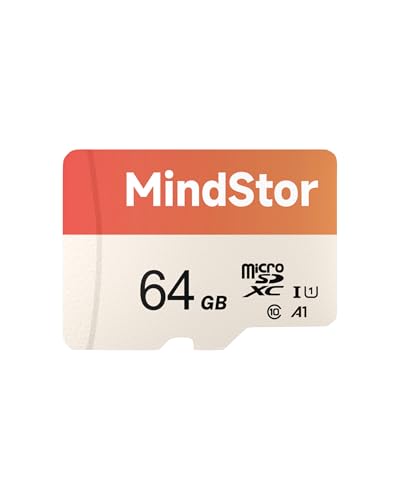
Micro SDXC 64GB Memory Card, MindStor 90MB/s Read Speed TF Card with Adapter, U1, A1 Rated, HD Video Support, Waterproof, for Security Camera, Dash cam, 1 Pack
- High-speed Read: Up to 90MB/s transfer rate
- A1 App Performance: Optimized for smooth app use
- Full HD Recording: Supports 1080P video recording
As an affiliate, we earn on qualifying purchases.
As an affiliate, we earn on qualifying purchases.
Frequently Asked Questions
Can Loop Recording Be Disabled on All Cameras?
Yes, you can disable loop recording on most cameras through their camera settings. Access the menu, find the loop recording option, and turn it off. Disabling loop recording helps you manage storage better, especially if you want to prevent overwriting important footage. Keep in mind, some cameras might have limited options, so check your device’s manual to confirm you can customize the settings to suit your storage management needs.
How Does Loop Recording Affect Video Quality?
Loop recording can impact your video quality more than you think. As it continuously overwrites old footage, it relies on video compression, which can reduce clarity and detail. This process might slightly compromise footage integrity, especially in high-motion scenes. But if you set your camera properly, you can minimize quality loss. Stay alert—understanding how loop recording works helps you guarantee your footage remains clear when you need it most.
Is Loop Recording Suitable for Professional Security Use?
Yes, loop recording is suitable for professional security use because it efficiently manages storage and guarantees continuous footage. You benefit from video compression, which reduces file sizes without sacrificing quality, and effective storage management that prevents data loss. This setup allows you to monitor and review footage seamlessly, making it reliable for security needs. Just make certain your system has adequate capacity to handle the loop recording settings for peak performance.
What Storage Capacity Is Needed for Continuous Loop Recording?
You need to take into account your storage requirements and desired recording duration for continuous loop recording. Typically, a 1TB drive offers about a week of footage at standard quality, but increasing storage capacity extends your recording duration. To guarantee you don’t miss important events, evaluate how long you need footage stored and choose a drive size accordingly. Adjust quality settings if you want to optimize storage and recording duration.
Does Loop Recording Overwrite Important Footage Automatically?
Loop recording is like a diligent librarian, always updating and prioritizing what’s most important. It automatically overwrites older footage, but only after data retention limits are reached, ensuring essential clips aren’t lost prematurely. You can set preferences for footage prioritization, so significant recordings stay protected longer. This process keeps your storage efficient while safeguarding important data, giving you peace of mind knowing that critical moments won’t be erased unexpectedly.

galphi 4K Dash Cam Front, 5GHz WiFi, 32GB Card Included, Mini Dashcam
- Memory Card Included: 32GB card included for immediate use
- 4K UHD Resolution: Captures clear, detailed footage in 4K
- Wide-Angle Lens: 160-degree field of view for comprehensive coverage
As an affiliate, we earn on qualifying purchases.
As an affiliate, we earn on qualifying purchases.
Conclusion
Now that you understand loop recording, you see its simplicity amid the chaos of endless footage. It’s like having a safety net that captures your moments without fuss, even when you’re not watching. Without it, you’d be lost in a sea of recordings, unsure where the important part is. So, embrace this clever feature—your reliable, invisible guardian—making sure every essential detail is kept, even when you forget to hit stop.

DTCRCH Wireless WiFi Indoor Camera for Home Security,Camera with Loop Recording, Night Vision
- Ultra 4K Clarity: Sharp 4K live streaming with night vision
As an affiliate, we earn on qualifying purchases.
As an affiliate, we earn on qualifying purchases.

Cable Clips Self with 3M Adhesive Cord Organizer, Wire Holder Clamp Management Sticky for Desk Car Dash Cam Tables Wall, Black 30pcs
- Strong 3M Adhesive: Secure grip on various surfaces
- Compact Size: 0.8"L x 0.6"W x 0.4"H
- Adjustable Design: Cuttable for different cable sizes
As an affiliate, we earn on qualifying purchases.
As an affiliate, we earn on qualifying purchases.