Sockpuppets are fake online identities created to deceive others, manipulate conversations, and sway opinions. They mimic real users by adopting similar language and behavior, often supporting certain ideas or undermining others. Detecting them can be tricky since they blend into communities and show subtle signs of coordination or duplicate phrasing. Understanding these tactics helps you spot manipulation and protect yourself from misinformation, so if you stay vigilant, you’ll uncover more about how these deceptive profiles operate.
Key Takeaways
- Sockpuppets are fake online identities used to manipulate conversations and influence opinions.
- They mimic real users’ language and behavior to blend seamlessly into communities.
- Detection is challenging due to coordinated activity and subtle inconsistencies.
- Their use can distort discourse, spread misinformation, and undermine trust online.
- Recognizing sockpuppets enhances critical evaluation and protects against digital deception.
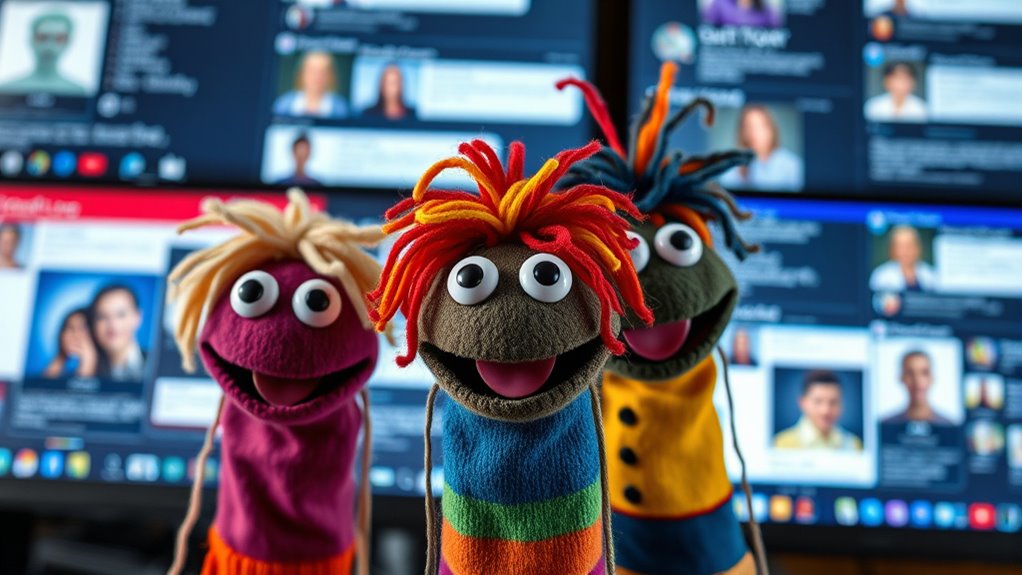
Online sockpuppets are false identities created to manipulate conversations, influence opinions, or conceal true intentions. These digital doppelgängers are tools of digital impersonation, allowing users to hide their real identities behind fake profiles. You might encounter sockpuppets when reading online forums, social media platforms, or comment sections where opinions are often polarized. The core purpose of these fabricated personas is online deception: they are designed to sway public perception, support specific agendas, or undermine genuine voices. By using sockpuppets, individuals can simulate consensus, drown out opposing views, or create the illusion of widespread support for a particular idea. This tactic makes it difficult to discern what’s authentic from what’s manufactured.
Online sockpuppets manipulate opinions and hide true identities behind fake profiles to deceive and influence online conversations.
Digital impersonation through sockpuppets is particularly insidious because it exploits the trust people place in online interactions. When you see someone defending a product, sharing a controversial opinion, or attacking another user, you might assume they’re a real person with genuine motives. But behind many of these profiles could be someone orchestrating an online deception campaign, intentionally misleading others for personal, political, or financial gain. It’s a way to manipulate the flow of information, often making false narratives seem more credible simply because they’re presented by multiple accounts. This multiplicity of fake personas creates a false sense of consensus or controversy, depending on the goal.
You should be aware that sockpuppets aren’t always easy to spot. They often mimic real users, adopting similar language styles, posting patterns, or even avatars to blend seamlessly into a community. Sometimes, they may be operated by individuals or organizations with a vested interest in shaping opinions or disrupting discussions. Recognizing digital impersonation involves paying attention to inconsistencies—such as identical phrasing across different profiles, abrupt changes in tone, or suspiciously coordinated activity. Understanding online deception is vital because it highlights how vulnerable you are to being misled by seemingly authentic interactions. Additionally, the prevalence of cybersecurity vulnerabilities can compound the impact of sockpuppets, making it even more crucial to evaluate online content critically.
The more aware you are of sockpuppets and their tactics, the better you can critically evaluate the information you encounter online. In the end, knowing about sockpuppets helps you navigate digital spaces more safely. By understanding that not every voice is genuine, you can question the motives behind certain posts and seek out credible sources. The prevalence of online deception underscores the importance of critical thinking and verification, especially when engaging in discussions or forming opinions based on online content. Recognizing digital impersonation isn’t just about catching fake profiles—it’s about protecting yourself from manipulation and ensuring that your online experience remains honest and trustworthy.
online sockpuppet detection tools
As an affiliate, we earn on qualifying purchases.
As an affiliate, we earn on qualifying purchases.
Frequently Asked Questions
How Can I Detect Sockpuppet Accounts Effectively?
You can detect sockpuppet accounts effectively by analyzing behavioral patterns and conducting thorough account analysis. Look for signs like repetitive posting styles, similar IP addresses, or overlapping activity times. Pay attention to consistent language and engagement with the same users. Use tools that track account creation dates and activity logs. Combining these methods helps you identify suspicious accounts and prevent deception online, maintaining a trustworthy digital environment.
What Legal Actions Exist Against Sockpuppet Creators?
Did you know that creating sockpuppet accounts can lead to serious legal penalties? Laws against cyber harassment and digital forgery allow victims to pursue criminal charges or civil lawsuits against sockpuppet creators. You could face fines, community service, or even jail time if found guilty. Authorities take these offenses seriously because they threaten online safety and integrity. So, if you’re involved in such activities, legal action might be just around the corner.
Can Sockpuppet Accounts Be Permanently Banned?
Yes, sockpuppet accounts can be permanently banned through account suspension by community moderation teams. When you violate platform rules, moderators have the authority to suspend or ban accounts to maintain a safe environment. Sometimes, users create multiple sockpuppets to bypass bans, but platforms often monitor for such behavior and take action accordingly. Persistent offenders may face indefinite suspension to prevent further deception or disruption.
How Do Sockpuppets Impact Online Communities Long-Term?
Sockpuppets can erode your online community like termites quietly weakening its foundation. They impact long-term trust by enabling identity manipulation, making members doubt each other’s authenticity. Over time, this can lead to a fractured environment where genuine interactions diminish, and members withdraw. Recognizing and addressing sockpuppets early helps preserve community trust, ensuring your online space remains safe, engaging, and authentic for everyone involved.
Are There Psychological Profiles of Sockpuppet Creators?
You might wonder if there are psychological profiles of sockpuppet creators. Researchers suggest that understanding their psychological motivations helps reveal creator personality traits, such as a desire for attention, power, or social validation. These traits often drive individuals to craft identities online for manipulation or influence. While profiles vary, recognizing these motivations can improve detection and prevention, ultimately safeguarding online communities from long-term harm caused by deceptive behaviors.

Computer Exposure Employee Time Tracking Software | Single PC, 100 Employees | Windows 7-11 | No Monthly Fees | Free Support
- Single PC Employee Tracking: Supports up to 100 employees on one PC
- No Monthly Fees: One-time purchase with no recurring costs
- Made in the USA: Locally produced and supported
As an affiliate, we earn on qualifying purchases.
As an affiliate, we earn on qualifying purchases.
Conclusion
Now, as you navigate the digital world, remember those shadowy figures lurking behind screens, cloaked in false identities like silent puppeteers pulling strings. Their deception weaves through conversations, camouflaging truth with a flicker of a profile picture. Stay vigilant, for behind every click, a mask might hide intentions you can’t see. Trust your instincts, and don’t let the illusion of authenticity deceive you—truth often hides in the shadows, waiting to be uncovered.

ONLINE COMMUNITY MANAGER: Journal, Notes, Ideas, Actions, Priorities, Checklists, Milestones, Log | Daily Goals, Time Management & Project Notes Tool … — Great for Office Gifts & Workplace Meetings
As an affiliate, we earn on qualifying purchases.
As an affiliate, we earn on qualifying purchases.

Python for Cybersecurity: Build 10 Real Security Tools and Become Job Ready
As an affiliate, we earn on qualifying purchases.
As an affiliate, we earn on qualifying purchases.