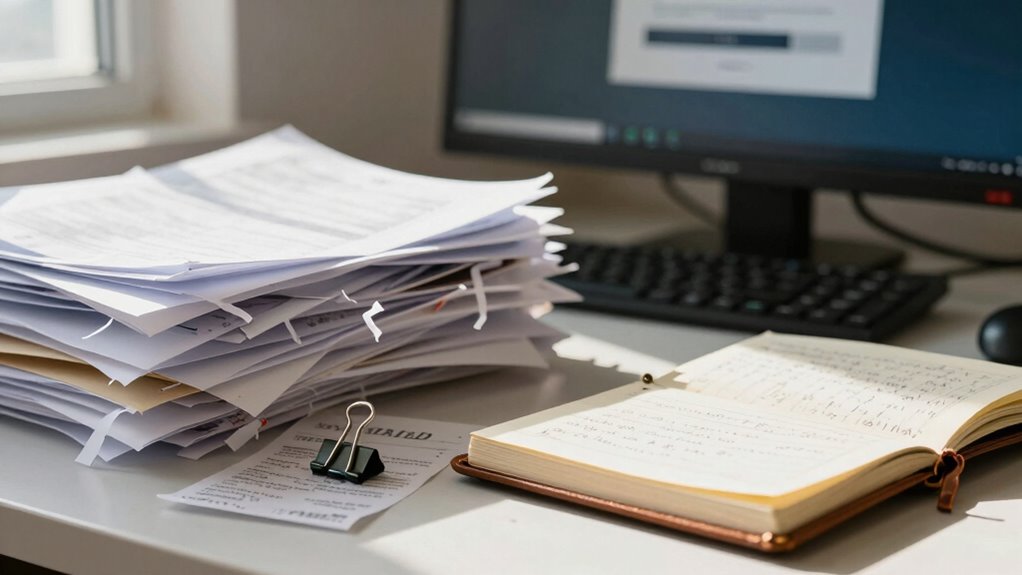

Your identity protection starts with managing your paper habits because physical documents like bank statements, bills, or personal info are easy targets if unsecured. Proper disposal through shredding, storing papers securely, and being cautious when sharing are essential steps that prevent theft and fraud. Neglecting paper security can undermine your digital efforts and leave gaps vulnerable to criminals. Keep improving your habits, because the more you understand, the stronger your overall protection becomes.
Key Takeaways
- Physical documents containing sensitive information are vulnerable to theft if not properly managed.
- Proper disposal, like shredding, prevents identity thieves from accessing personal data.
- Organized and secure storage reduces risks of unauthorized access and accidental exposure.
- Routine paper handling practices complement digital security, creating comprehensive protection.
- Neglecting paper habits leaves gaps in identity security, increasing fraud risk.

In today’s digital age, protecting your identity goes beyond online security; your paper habits play a vital role as well. While digital security measures like firewalls and data encryption are essential, the physical documents you handle can be just as vulnerable if not managed carefully. Paper records—such as bank statements, medical reports, or bills—can be an easy target for identity thieves if left unsecured. That’s why developing solid paper habits is a crucial part of your overall identity protection strategy.
Protect your identity by managing physical documents carefully alongside digital security measures.
When you throw away or neglect to shred sensitive documents, you risk exposing personal information that criminals can exploit. Proper disposal is key. Invest in a good cross-cut shredder and use it consistently for anything containing your name, address, account numbers, or Social Security number. It’s a simple but effective step that prevents thieves from piecing together your identity from discarded papers. Think of your paper disposal routine as an extension of your digital security efforts—just as you’d use data encryption to protect information stored online, you need to encrypt or secure your physical documents through careful handling.
Another important habit is organizing your papers. When you keep important documents in a secure, locked location, you reduce the chance of accidental exposure or theft. Label files clearly and store them away from prying eyes or unsecured areas. Regularly review these documents and dispose of outdated or unnecessary papers properly. This not only minimizes clutter but also limits the risk of losing control over sensitive information. Incorporating a regular document review process can help you stay vigilant and identify potential vulnerabilities early. Additionally, understanding the importance of physical document security can help you better safeguard your sensitive information from theft. Employing consistent paper management routines ensures that your habits remain effective over time, reducing the likelihood of oversight. Being aware of identity theft prevention strategies can further enhance your overall security measures and prevent future risks.
You should also be cautious about how you share paper documents. If you’re mailing important records, use secure mailing options and double-check recipient information. Avoid leaving sensitive papers in public spaces or in places where strangers might access them. When it comes to digital security, encrypt your files and use strong passwords, but remember that physical documents require different safeguards. The habits you form—such as secure storage, careful disposal, and cautious sharing—are equally essential to protect your identity from theft and fraud. Properly managing your paper handling routines can significantly decrease the risk of your information falling into the wrong hands.

Amazon Basics 8-Sheet High Security Cross Cut Paper and Credit Card Shredder with P-4 Security, Auto Shut-off, Black
Cross-cut paper and credit card shredder cuts material into approximate 0.2 x 0.7 inches (5 x 18 mm)…
As an affiliate, we earn on qualifying purchases.
As an affiliate, we earn on qualifying purchases.
Frequently Asked Questions
How Often Should I Review My Paper Documents for Security?
You should review your paper documents at least once every six months to maintain security. During this review, focus on proper document organization and paper labeling to easily identify sensitive information. Regular checks help you spot outdated or unnecessary files, reducing risks. Keep your files sorted and labeled clearly, and shred any documents no longer needed, ensuring your identity stays protected and your paper habits remain secure.
What Types of Paper Documents Pose the Highest Identity Theft Risk?
You should prioritize shredding documents like bank statements, credit card offers, and tax records, as they pose the highest identity theft risk. Keep personal records organized and secure, but always destroy outdated or unnecessary papers before disposal. Regularly reviewing your paper documents and practicing good personal recordkeeping helps prevent fraud. Implementing consistent document shredding habits ensures sensitive information doesn’t fall into the wrong hands, strengthening your overall identity protection.
Are Digital Alternatives Safer Than Paper for Storing Personal Information?
Digital storage is generally safer than paper, especially with encryption. Did you know that 43% of data breaches involve hacking into digital systems? Using cloud storage with strong digital encryption protects your personal info better than paper, which can be lost or stolen easily. Plus, digital options allow quick access and secure backups, reducing risks. So, switching to encrypted cloud storage is a smart move to defend your identity effectively.
How Can I Safely Dispose of Sensitive Paper Documents?
To safely dispose of sensitive paper documents, you should use document shredding, ensuring all personal information is thoroughly destroyed. Avoid just tearing papers by hand; instead, opt for a cross-cut shredder for added security. After shredding, store the shredded paper securely if needed for records, or dispose of it responsibly. Always keep important documents in a secure storage location until you’re ready to shred them to prevent identity theft.
What Are Common Mistakes People Make With Paper Document Security?
You might think you’re safe, but common mistakes like neglecting paper shredding or insecure storage can expose your sensitive info. Forgetting to shred outdated documents or leaving papers in *unlocked* drawers invites identity theft. Always prioritize secure storage for *crucial* records and shred anything unnecessary. These simple steps guard your identity, yet many overlook them, risking their personal security. Stay vigilant, and don’t let careless habits compromise your privacy.

Letaya 3 Drawer Mobile File Cabinet with Lock,Under Desk Metal Filing Cabinets for Home Office Organizer Letters/Legal/A4((Fully Assembled-Black)
Metal Material:File cabinet is made of 0.8mm thick steel,whole is solid and does not deform, and it is…
As an affiliate, we earn on qualifying purchases.
As an affiliate, we earn on qualifying purchases.
Conclusion
Remember, your paper habits are the first line of defense in your identity’s fortress. Think of your personal documents as tiny guards—if they’re sloppy or left unguarded, intruders can slip through unnoticed. By shredding, organizing, and safeguarding your papers, you’re planting seeds of armor that grow into a formidable barrier. So, stay vigilant and keep your paper habits sharp; it’s the cornerstone that keeps your identity safe amidst the chaos of everyday life.

Amazon Basics #10 Security-Tinted Self-Seal Business Envelopes for Documents, Privacy, Home & Office, White, 500-Pack
10 business letter envelopes for home or office
As an affiliate, we earn on qualifying purchases.
As an affiliate, we earn on qualifying purchases.

Jowlroel Black Poly Mailers 10×13 Inch 100 Pcs, Strong Adhesive Shipping Bags for Clothing, Self-Sealing and Waterproof Mailing Envelopes, Privacy Protected Mailer Bags for Small Business
Ideal for Small Business – Available in a variety of sizes and colors, Jowlroel shipping bags are ideal…
As an affiliate, we earn on qualifying purchases.
As an affiliate, we earn on qualifying purchases.