Adults looking for a psychology card game may want practical ways to handle stress, prompts for self-reflection, or activities that help a group talk about emotions. These five decks serve different purposes: Mind Brain Emotion is my strongest all-around pick for varied coping exercises and online learning resources, while The Group Therapy Card Deck is the clearest fit for facilitated groups. For creative emotional exploration, Guided Art Therapy Card Deck offers 75 activities rather than a conventional prompt deck.

Turn your wind-down time into listening time
- Thousands of audiobooks, podcasts and originals
- Listen on your phone, tablet or Echo — also offline
- Cancel anytime
The main choice is between structured skills practice and open-ended reflection. A 100-card prompt deck gives more variety but may need guidance; a compact sensory card set is easier to carry but offers less material. I rank these options by how directly their described content serves adult emotional learning, how flexible each is across solo and group settings, and how clearly the available details explain what a buyer will receive. These are self-help or facilitation tools, not substitutes for professional mental health care.
Key Takeaways
- Mind Brain Emotion is the most versatile choice here: it combines 52+ coping cards with CBT, mindfulness, meditation, somatic exercises, a tin, and online learning resources.
- The Group Therapy Card Deck is the most directly aimed at structured group work, with tools drawn from CBT, DBT, ACT, and positive psychology; the available product details are limited.
- Guided Art Therapy Card Deck offers 75 activities, making it the best fit for people who want to explore feelings through creative prompts rather than primarily practice coping techniques.
- BayWel provides the largest stated card count, with 100 prompts for individual or guided use, but some activities may be more useful with a facilitator.
- Deyl cavier’s 10 waterproof cards focus on quick, multisensory coping techniques, trading a larger activity library for durability and easy portability.
| Mind Brain Emotion 52 Essential Coping Skills Cards |  | Best Overall for Varied Coping Practice | Card count: 52+ cards | Approaches: CBT, mindfulness, meditation, and somatic exercises | Age range: Teens and adults; manufacturer-recommended age 8 years and up | VIEW LATEST PRICE | See Our Full Breakdown |
| The Group Therapy Card Deck: CBT, DBT, ACT, and Positive Psychology Tips and Tools | 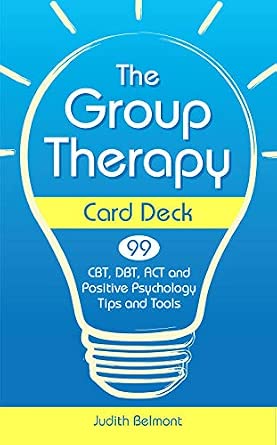 | Best for Facilitated Group Discussion | Approaches named: CBT, DBT, ACT, and positive psychology | Stated focus: Group therapy tips and tools | Card count: Not provided in the supplied details | VIEW LATEST PRICE | See Our Full Breakdown |
| Guided Art Therapy Card Deck: 75 Activities to Explore Your Feelings and Manage Your Emotional Well-Being |  | Best for Creative Emotional Exploration | Number of activities: 75 | Primary focus: Exploring feelings and emotional well-being | Format: Card deck | VIEW LATEST PRICE | See Our Full Breakdown |
| BayWel Coping Skills Cards for Teens and Adults, Ages 12+ |  | Best Value in Prompt Variety | Card count: 100 | Age range: Teens and adults, ages 12+ | Themes: Mindfulness, focus, gratitude, self-care, and personal growth | VIEW LATEST PRICE | See Our Full Breakdown |
| Coping Skills Cards for Anxiety and Stress Relief |  | Best Compact, Durable Quick-Reference Set | Card count: 10 | Coping skills: More than 20 | Material: Waterproof PVC | VIEW LATEST PRICE | See Our Full Breakdown |
| psychology card games for adult | Card count | Dimensions |
|---|---|---|
| Mind Brain Emotion 52 Essentia | 52+ cards | — |
| The Group Therapy Card Deck: C | Not provided in the supplied details | Not provided in the supplied details |
| Guided Art Therapy Card Deck: | — | Not specified in the supplied details |
| BayWel Coping Skills Cards for | 100 | 4 x 3 inches |
| Coping Skills Cards for Anxiet | 10 | — |
More Details on Our Top Picks
Mind Brain Emotion 52 Essential Coping Skills Cards
Mind Brain Emotion earns my top spot because its stated contents bridge several kinds of psychology-informed practice without being limited to one setting. The deck includes 52+ cards covering CBT, mindfulness, meditation, and somatic exercises, plus an online coping assessment and learning library. That combination gives an adult a route from drawing an exercise to learning more about coping, while the tin helps keep the cards together for use at home or on the go.
Compared with BayWel’s 100-card prompt deck, this pick provides a more clearly named range of methods and adds online materials, though BayWel states more prompts. Compared with the compact Deyl cavier set, Mind Brain Emotion is less focused on quick sensory techniques and contains a larger toolkit. Its suitability for individual, therapy, or group use also makes it the most adaptable option described here. The tradeoff is that accessing the extra online resources requires a separate phone or other suitable device, and the deck’s broad use claims do not mean it replaces a clinician’s support.
Pros:- Includes 52+ cards spanning CBT, mindfulness, meditation, and somatic exercises.
- Offers an online coping assessment and learning library in addition to physical cards.
- Tin case supports storage and portability.
- Described for individual, therapy, and group use.
Cons:- A separate phone or compatible device is needed to access the online resources.
- The provided details do not specify the full contents of each card or the online library.
- The broad age recommendation includes younger users, so adult buyers seeking explicitly adult-only content may prefer a different deck.
Best for: Adults who want a portable mix of coping exercises and are interested in using online assessment and learning materials alongside the cards.
Not ideal for: Buyers who want a fully self-contained, screen-free deck, a highly creative art activity format, or a group deck with detailed facilitation instructions.
- Card count:52+ cards
- Approaches:CBT, mindfulness, meditation, and somatic exercises
- Age range:Teens and adults; manufacturer-recommended age 8 years and up
- Included components:Cards, online coping assessment, and sturdy tin case
- Use settings:Individual, therapy, or group use
- Online resources:Coping assessment and learning library
- Model number:52Coping
Our verdict“I recommend Mind Brain Emotion first for adults who want the broadest stated mix of practical approaches and optional learning support.”
The Group Therapy Card Deck: CBT, DBT, ACT, and Positive Psychology Tips and Tools
This deck is the most explicitly group-oriented option in the lineup. Its title names CBT, DBT, ACT, and positive psychology, suggesting a wider framework mix than a deck centered on sensory grounding or art prompts. For facilitators who want conversation starters and tools linked to established therapeutic approaches, that focus makes it more directly relevant than the solo-friendly Deyl cavier cards or the creative activities in Guided Art Therapy.
The limitation is the amount of product information available: there is no supplied card count, format, age guidance, or description of how activities are organized. I would not assume that the deck includes facilitator instructions, a particular session plan, or a specific balance of tips and exercises based only on its title. Mind Brain Emotion is easier to evaluate for solo versatility because its description spells out individual and group use, card count, and online support. This pick ranks second because its group-therapy focus is a strong match for the topic, but buyers should check the full listing for practical details before choosing it for a specific group.
Pros:- Directly targets group therapy tools and tips.
- Names CBT, DBT, ACT, and positive psychology as source approaches.
- Its focus is more group-specific than the other decks in this roundup.
Cons:- The supplied product information does not specify card count or dimensions.
- No details are provided about facilitation guidance or individual use.
- The available description does not clarify the exact activities or contents.
Best for: Therapists, counselors, educators, or group leaders looking for a deck whose stated tools span CBT, DBT, ACT, and positive psychology.
Not ideal for: Adults shopping for a clearly described solo self-help deck, a known card count, or activities with explicitly stated materials and instructions.
- Approaches named:CBT, DBT, ACT, and positive psychology
- Stated focus:Group therapy tips and tools
- Card count:Not provided in the supplied details
- Dimensions:Not provided in the supplied details
- Age guidance:Not provided in the supplied details
- Format details:Not provided in the supplied details
Our verdict“I would choose this deck for its explicit group-therapy focus, provided the full listing answers questions about format and facilitation.”
Guided Art Therapy Card Deck: 75 Activities to Explore Your Feelings and Manage Your Emotional Well-Being
Guided Art Therapy offers a different kind of psychology card experience: its stated purpose is to help people explore feelings through 75 activities, rather than focus primarily on coping-skill drills or a named therapy framework. That makes it the clearest choice for adults who respond better to creative prompts than to a checklist of techniques. The activity count also gives buyers a concrete sense of the deck’s scope, unlike The Group Therapy Card Deck, whose supplied details do not state how many cards or tools it contains.
Compared with Mind Brain Emotion, this deck appears more focused on emotional exploration than on a broad mix of CBT, mindfulness, meditation, and somatic exercises. It may suit reflective solo sessions or creative work with others, but the provided description does not establish whether it includes art materials, detailed instructions, or guidance for facilitated use. Buyers should not assume that the title means the deck supplies everything needed for art-making. This ranks below the more fully specified all-around pick, but it earns a distinct place for people who want structured creative activities as their entry point.
Pros:- Includes 75 activities for emotional exploration.
- Offers a creative alternative to technique-centered coping decks.
- The activity count provides a clearer sense of scope than products with sparse details.
Cons:- The supplied description does not explain the activities or their level of guidance.
- No information is provided about included art materials or card dimensions.
- The description does not specify whether the deck is intended for solo, group, or professionally facilitated use.
Best for: Adults who want a substantial set of creative activities for exploring feelings and supporting reflection.
Not ideal for: Buyers who prioritize named coping methods, online learning resources, or clear details about included art supplies and facilitation.
- Number of activities:75
- Primary focus:Exploring feelings and emotional well-being
- Format:Card deck
- Art materials:Not specified in the supplied details
- Dimensions:Not specified in the supplied details
- Use setting:Not specified in the supplied details
Our verdict“I would pick Guided Art Therapy when creative reflection matters more than a clearly enumerated set of coping techniques.”
BayWel Coping Skills Cards for Teens and Adults, Ages 12+
BayWel’s defining advantage is quantity: the boxed deck contains 100 prompts and activities across mindfulness, focus, gratitude, self-care, and personal growth. It is described for individual use as well as home, school, counseling, group, and workplace settings, giving it broader stated flexibility than Deyl cavier’s smaller quick-reference set. Adults who like drawing a prompt and responding to it may find this format more engaging than a deck that focuses on a narrower set of coping techniques.
That breadth also creates a practical question: not every activity will work equally well without guidance. The product description specifically notes that some prompts may benefit from facilitated use, so solo users should be comfortable adapting an exercise or setting one aside. Mind Brain Emotion is the stronger choice if you want named approaches and online learning; BayWel is the better fit if the priority is a larger physical prompt library. The cards are paper, not waterproof PVC, and there is no app or digital activity component. Its 12+ age range may be useful for mixed-age households, though it is not an adult-only deck.
Pros:- Provides 100 prompts and activities across several self-care and personal-growth themes.
- Can be used individually or in a range of guided settings.
- Boxed format keeps the paper cards together.
- Age guidance supports use by teens and adults.
Cons:- Some activities may work better with a guide or facilitator.
- Paper cards are less suited to wet or rough conditions than Deyl cavier’s PVC cards.
- No app or digital activities are included.
Best for: Adults who want many prompts for solo reflection or shared use at home, in a workplace, or in a guided group.
Not ideal for: People who need waterproof cards, online activities, or a deck where every exercise is clearly designed for unguided solo use.
- Card count:100
- Age range:Teens and adults, ages 12+
- Themes:Mindfulness, focus, gratitude, self-care, and personal growth
- Material:Paper
- Dimensions:4 x 3 inches
- Container:Box
- Players:2–6
- Language:English
Our verdict“I recommend BayWel for adults who prioritize a large, varied prompt set over online resources or rugged, waterproof construction.”
Coping Skills Cards for Anxiety and Stress Relief
Deyl cavier takes the opposite approach to BayWel’s 100-card prompt library: it packs more than 20 coping skills into 10 waterproof PVC cards. The stated techniques cover visual, tactile, taste, auditory, olfactory, movement, and multisensory approaches. That sensory range makes this a particularly practical option for someone who wants brief, accessible ideas rather than a large deck to sort through. Its compact card size and keyring attachment option also favor carrying it outside the home.
Compared with Mind Brain Emotion, this set emphasizes immediate sensory and movement strategies rather than a named mix of CBT, meditation, and online learning. Compared with BayWel, it is smaller, more durable, and less oriented toward a broad prompt-based session. That makes it easier to keep on hand, but it offers fewer physical cards and the description does not give detailed instructions for each skill. The cards are described as therapy tools, yet they should not be treated as a substitute for professional care. I place this fifth not because portability is a weakness, but because the other decks provide more clearly defined activities, frameworks, or broader use formats for buyers seeking a psychology card game.
Pros:- Includes more than 20 coping skills across several senses and movement.
- Waterproof PVC construction is suited to portable, everyday handling.
- Compact 65 x 100 mm cards are easy to carry.
- Keyring attachment option supports quick access.
Cons:- Only 10 physical cards are included, fewer than the BayWel and Mind Brain Emotion decks.
- The supplied details do not describe each technique or how much instruction each card provides.
- The cards do not replace professional mental health care.
Best for: Adults who want a small, durable set of sensory and movement-based coping ideas to keep nearby or carry with them.
Not ideal for: Buyers seeking a large activity library, detailed therapeutic frameworks, or a deck centered on group discussion and facilitation.
- Card count:10
- Coping skills:More than 20
- Material:Waterproof PVC
- Card size:65 x 100 mm
- Techniques:Visual, tactile, taste, auditory, olfactory, movement, and multisensory
- Included components:Cards
- Portability:Compact; keyring attachment option
- Manufacturer part number:001
Our verdict“I would choose Deyl cavier for durable, portable sensory coping prompts, not for a deep or group-oriented activity deck.”
How We Picked
I ranked these products by how well their stated content matches adults seeking psychology-informed reflection or emotional skills, not by assuming that every product is a game in the conventional competitive sense. Several are better described as guided activity or coping decks: they support practice and conversation rather than scoring, winning, or playing rounds. That distinction matters for buyers expecting a party game.
I also compared the breadth and specificity of the tools. Mind Brain Emotion names several approaches and includes online resources; The Group Therapy Card Deck identifies CBT, DBT, ACT, and positive psychology, though its supplied description offers little detail on card count or format. BayWel specifies 100 prompts and use cases, while Guided Art Therapy gives a clear activity count. Deyl cavier emphasizes more than 20 skills across sensory and movement approaches in a 10-card format.
Finally, I weighed setting, portability, and guidance needs. A deck that fits solo use may not be the most useful option for a facilitator, and a large prompt set may ask more of its user than a concise set of quick techniques. I have not treated these products as clinical treatments or inferred therapeutic outcomes that the supplied descriptions do not establish. My ranking favors clearly described versatility, while calling out when sparse information limits what a buyer can confidently compare.
Factors to Consider When Choosing Psychology Card Games For Adults
I would start by deciding what you want the cards to do: prompt a conversation, offer a skill to practice, support creative reflection, or provide quick ideas to keep close. These decks share a self-care theme, but they are not interchangeable, and most are better understood as guided activity tools than competitive games.Choose skills practice or emotional exploration
If you want a card to suggest a concrete coping exercise, compare Mind Brain Emotion and Deyl cavier. Mind Brain Emotion lists CBT, mindfulness, meditation, and somatic exercises, while Deyl cavier focuses on multisensory and movement-based skills. The first offers a broader stated toolkit and learning resources; the second is compact and waterproof. For reflection through creative activities, Guided Art Therapy is the more natural fit, with 75 activities focused on exploring feelings. BayWel sits between these approaches with prompts about mindfulness, focus, gratitude, self-care, and personal growth.
Match the deck to the setting
For independent use, look for prompts you can understand and act on without a facilitator. Mind Brain Emotion is described for individual use, and Deyl cavier’s quick-reference format suits people who want portable coping ideas. BayWel also allows individual use, but its description cautions that some activities may work better with guidance. If you plan to use a deck in a group, The Group Therapy Card Deck is the most directly targeted by its title, while Mind Brain Emotion and BayWel also state group settings. The supplied details do not establish that every option includes session plans or facilitator notes, so check the full listing before relying on those features.
Compare card count with portability
More cards do not automatically mean a better match. BayWel’s 100 prompts offer variety, and Mind Brain Emotion has 52+ cards plus online material, but a larger set can take longer to browse. Deyl cavier gives up card count for waterproof PVC construction, compact dimensions, and an attachment option. That tradeoff matters if you want cards in a bag or nearby during the day. Guided Art Therapy’s 75 activities provides a clear activity count, though the details supplied do not state its dimensions or storage format.
Check how much guidance you want
Some people prefer a clear exercise they can try alone; others want prompts that lead to discussion with a counselor, group, or trusted person. BayWel specifically notes that some activities may benefit from guided use, and The Group Therapy Card Deck is aimed at group tools but has limited supplied information about instructions. Mind Brain Emotion adds an online assessment and learning library, although access requires a separate device. If you want a deck that is entirely physical, BayWel and Deyl cavier avoid a digital component; if you value extra background material, Mind Brain Emotion has the clearest stated advantage.
Treat mental health cards as tools, not care plans
These products may help organize reflection or introduce coping ideas, but a deck cannot assess your needs or replace professional treatment. Deyl cavier explicitly frames its cards as tools rather than a substitute for care. I would apply the same boundary to the other options: choose one for self-guided practice, conversation, or creative exploration, and seek qualified support for persistent distress or concerns that require clinical attention. For use with a group, select exercises with care and follow the facilitator’s judgment rather than assuming every card suits every participant.
Frequently Asked Questions
Are these psychology card games designed for competitive play?
Most of these products are better described as coping, reflection, or guided activity decks than competitive games. Their descriptions emphasize exercises, prompts, group tools, or emotional exploration, not points or winners. If you want a social game with conventional turns and scoring, check the product details carefully; these picks are aimed more at practicing skills or starting conversations.
Which deck is best for using on my own?
Mind Brain Emotion is my strongest all-around solo option because it is described for individual use and combines several kinds of coping exercises with an online assessment and learning library. Deyl cavier is a better fit if you want a small set of portable sensory prompts. BayWel can also be used individually, though its description says some activities may work better with guidance.
Which option has the most cards or activities?
BayWel states that it includes 100 prompts and activities, the largest stated card count in this group. Guided Art Therapy lists 75 activities, while Mind Brain Emotion includes 52+ cards. Deyl cavier has 10 physical cards containing more than 20 skills, so its skill count is higher than its card count. The Group Therapy Card Deck’s supplied details do not specify a count.
Can these decks replace therapy or professional mental health care?
No. These decks are described as self-help, coping, or facilitation tools; they do not replace assessment or care from a qualified mental health professional. Deyl cavier expressly cautions that its cards are not a substitute for professional care. I would use any of these as an optional aid for reflection or practice, not as a treatment plan.
Which deck should I choose for a group?
The Group Therapy Card Deck is the most explicitly group-focused, with tools named across CBT, DBT, ACT, and positive psychology, but the available details do not clarify its format or facilitation instructions. Mind Brain Emotion and BayWel also state group use, with BayWel suitable for guided settings and Mind Brain Emotion intended for groups as well as individual use. A facilitator should review the actual activities and choose those that fit the participants.
Conclusion
For the most flexible coping toolkit, I recommend Mind Brain Emotion, especially if online learning resources are useful to you. Choose The Group Therapy Card Deck when your priority is a group-focused mix of named psychological approaches, but check the listing for practical details before buying. If you want creative emotional exploration, Guided Art Therapy provides 75 activities. BayWel suits buyers who want a large variety of prompts, while Deyl cavier is my pick for a small, waterproof set of sensory coping ideas. I would choose based on how you plan to use the cards, and keep professional support separate from any self-guided deck.