

Mood tracking journals can help you spot emotional patterns, but the right choice depends on how much guidance you want and how much time you can spend writing. I rank My Daily Mood Tracker Journal as the best overall pick for its six-month undated format and reflection prompts; 5-Minute Daily Mental Health Mood Journal stands out for brief guided entries, while Mood Tracker Journal: Undated Daily and Weekly Pages suits readers who want both short- and longer-term check-ins. The main tradeoff is between structured prompts that make starting easier and open space that gives you more freedom. Read on for how all 15 options differ and which journal best fits your routine.

Give the gift of listening to someone who needs a break
- Choose a 1-, 3-, 6- or 12-month membership
- They pick the audiobooks they love
- Easy to send by email
Key Takeaways
- Undated formats appear in several titles, including the six-month My Daily Mood Tracker Journal and the journal with daily and weekly pages, making flexible start dates a clear point of comparison in this lineup.
- Prompt depth varies: the 5-Minute Daily journal emphasizes quick guided entries, while journals described as diaries or notebooks may suit readers who want a less prescriptive format.
- Daily and weekly tracking is a distinct format choice; the undated journal with both page types offers a different rhythm from options framed around daily entries alone.
- Audience framing is not the same as clinical fit: one title names anxiety, borderline personality disorder, and depression, but a journal is a reflection aid, not a substitute for professional care.
- Similar product names reveal little about page design, so buyers should check the listing’s sample pages, duration, prompts, and tracking layout before choosing between near-identical titles.
| Color My Mood: A Cute Activity Journal for Tracking My Feelings |  | Best for Creative Reflection | Product type: Activity journal | Primary purpose: Tracking feelings | Activity: Coloring | VIEW LATEST PRICE | See Our Full Breakdown |
| Mood Tracker Journal – Daily Mental Health & Wellness Diary with Prompts for Relieving Anxiety, Borderline Personality Disorder, or Depression (Self‑Help for Teens and Girls) |  | Best for Condition-Focused Prompts | Product type: Mental-health and wellness diary | Format: Daily journal | Includes: Guided prompts | VIEW LATEST PRICE | See Our Full Breakdown |
| Mood Tracker Journal: Daily Mental Health and Wellness Diary with Prompts |  | Best for Straightforward Daily Check-Ins | Product type: Mental-health and wellness diary | Format: Daily journal | Primary use: Mood tracking | VIEW LATEST PRICE | See Our Full Breakdown |
| Mood Tracker Journal: Daily Mental Health and Wellness Diary |  | Best for Stress and Self-Care Check-Ins | Product type: Mental-health and wellness diary | Format: Daily journal | Primary use: Mood tracking | VIEW LATEST PRICE | See Our Full Breakdown |
| Mood Tracking Journal: Daily Health and Mental Health Tracker |  | Best for Multi-Factor Pattern Tracking | Product type: Daily health and mental-health tracker | Format: Journal | Tracks: Mood, energy, sleep, food intake, and goals | VIEW LATEST PRICE | See Our Full Breakdown |
| Daily Mood Tracker Journal for Mental Health and Wellness |  | Best for a Simple Daily Check-In | Product type: Mood tracker journal | Intended audience: Teens and adults | Primary use: Daily mood tracking | VIEW LATEST PRICE | See Our Full Breakdown |
| One Day at a Time: Mood Tracking Journal |  | Best for Guided Reflection | Format: Prompt journal, diary, and mood tracker | Intended audience: Women and teens | Tracking frequency: Daily | VIEW LATEST PRICE | See Our Full Breakdown |
| My Daily Mood Tracker Journal: A 6-Month Undated Journal with Reflection Prompts |  | Best for Flexible Long-Term Tracking | Duration: 6 months | Format: Undated journal | Tracking frequency: Daily | VIEW LATEST PRICE | See Our Full Breakdown |
| Mood Tracker Journal: Daily Mood and Mental Health Diary for Mindfulness and Self-Care |  | Best for a Defined Tracking Plan | Duration: 16 weeks | Pages: More than 130 | Intended audience: Teens and adults | VIEW LATEST PRICE | See Our Full Breakdown |
| Mood Tracker Journal for Daily Emotional Wellness, Self-Care, and Personal Reflection |  | Best for General Self-Care Reflection | Product type: Mood tracker journal | Tracking frequency: Daily | Stated focus: Emotional wellness | VIEW LATEST PRICE | See Our Full Breakdown |
| 5-Minute Daily Mental Health Mood Journal: Guided Mood Tracker and Journaling Pages |  | Best for a Quick Daily Check-In | Format: Guided journal | Intended use: Daily mood tracking and journaling | Time commitment: 5 minutes per day | VIEW LATEST PRICE | See Our Full Breakdown |
| Mood Tracker Journal: Undated Daily and Weekly Pages for Mental Health and Self-Care |  | Best for Flexible Daily and Weekly Tracking | Format: Undated daily and weekly journal | Tracking: Mood tracking | Reflection: Reflection prompts | VIEW LATEST PRICE | See Our Full Breakdown |
| Mood Journal and Mental Health Tracker |  | Best for Connecting Mood With Daily Habits | Format: Daily journal | Tracking categories: Mood, food, exercise, activity, and sleep | Writing space: Journal entries | VIEW LATEST PRICE | See Our Full Breakdown |
| Mood Tracking Journal: Daily Mood Notebook & Mental Health Tracker |  | Best for Visual Habit and Mood Reviews | Format: Daily mood notebook and mental health tracker | Tracking cadence: Daily | Tracking categories: Mood, food, activity, and sleep | VIEW LATEST PRICE | See Our Full Breakdown |
| Mood Tracker Journal | 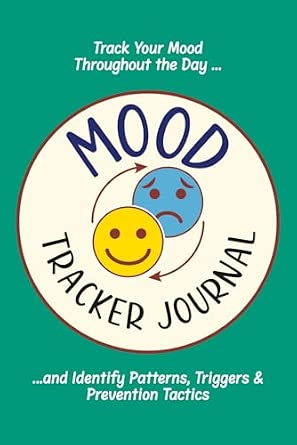 | Best for Tracking Triggers Throughout the Day | Format: Mood tracker journal | Tracking cadence: Throughout the day | Purpose: Identify mood patterns and triggers | VIEW LATEST PRICE | See Our Full Breakdown |
| mood tracking journal | Format |
|---|---|
| Color My Mood: A Cute Activity | — |
| Mood Tracker Journal | Daily journal |
| Mood Tracker Journal: Daily Me | Daily journal |
| Mood Tracker Journal: Daily Me | Daily journal |
| Mood Tracking Journal: Daily H | Journal |
| Daily Mood Tracker Journal for | — |
| One Day at a Time: Mood Tracki | Prompt journal, diary, and mood tracker |
| My Daily Mood Tracker Journal: | Undated journal |
| Mood Tracker Journal: Daily Mo | Guided journal |
| Mood Tracker Journal for Daily | — |
| 5-Minute Daily Mental Health M | Guided journal |
| Mood Tracker Journal: Undated | Undated daily and weekly journal |
| Mood Journal and Mental Health | Daily journal |
| Mood Tracking Journal: Daily M | Daily mood notebook and mental health tracker |
| Mood Tracker Journal | Mood tracker journal |
More Details on Our Top Picks
Color My Mood: A Cute Activity Journal for Tracking My Feelings
Color My Mood makes the most sense for someone who finds it easier to express feelings through an activity than through written prompts. Its coloring-based approach gives mood tracking a creative outlet, setting it apart from the more explicitly guided Mood Tracker Journal: Daily Mental Health and Wellness Diary with Prompts. That could make checking in feel less like filling out a form, though the available details do not describe the activity selection or how moods are recorded. I would choose this for low-pressure emotional reflection, not for a detailed daily log: there is no supplied information about tracking fields, frequency, or layout. The tradeoff is a distinctive creative angle with little documented structure, so buyers who want consistent entries or specific prompts may prefer a more clearly described journal.
Pros:- Combines feeling reflection with coloring activities
- Offers a creative alternative to prompt-led journaling
- May suit people who find open-ended writing difficult
Cons:- The available product details do not explain its activities or page layout
- No specific daily tracking fields or routine are confirmed
- May offer less structure for identifying patterns than a prompt-led journal
Best for: People who prefer coloring and creative activities as a gentle way to reflect on feelings
Not ideal for: Buyers who want a clearly specified daily tracking layout, detailed prompts, or a way to monitor multiple wellbeing factors
- Product type:Activity journal
- Primary purpose:Tracking feelings
- Activity:Coloring
- Reflection focus:Feelings
- Format details:Not provided
- Activity details:Not provided
Our verdict“Choose this creative activity journal if coloring helps you reflect, but pick a prompt-led option if you need a clearly defined tracking routine.”
Mood Tracker Journal – Daily Mental Health & Wellness Diary with Prompts for Relieving Anxiety, Borderline Personality Disorder, or Depression (Self‑Help for Teens and Girls)
This journal is the most explicitly condition-focused choice in this group: its prompts are described as addressing anxiety, borderline personality disorder symptoms, and depression, with teens and young women as its intended audience. That specificity may help readers seeking reflection that speaks to particular mental-health concerns; it goes further in that direction than Mood Tracker Journal: Daily Mental Health and Wellness Diary, whose supplied description centers on stress, anxiety, and self-care. The daily format and guided prompts also offer more direction than the activity-based Color My Mood. The tradeoff is that this framing may feel too narrow or clinical for someone seeking general emotional check-ins. No page count, layout, or clinical credentials are provided, so I would treat it as a journaling aid rather than a substitute for professional care.
Pros:- Provides prompts for daily mood and mental-health reflection
- Aims to help users notice emotional patterns over time
- Names anxiety, BPD symptoms, and depression as focus areas
- Intended for teens and young women seeking structured self-care
Cons:- Condition-specific framing may not suit general mood tracking
- The available details do not specify its page layout or tracking fields
- No clinical credentials or treatment role are described
Best for: Teen girls and young women who want guided daily reflection around anxiety, depression, or BPD-related experiences
Not ideal for: Adults seeking neutral, general-purpose mood logging, or anyone expecting treatment guidance or documented clinical oversight
- Product type:Mental-health and wellness diary
- Format:Daily journal
- Includes:Guided prompts
- Tracking focus:Daily emotions and mental health
- Named focus areas:Anxiety, BPD symptoms, and depression
- Intended audience:Teens and young women
Our verdict“Choose this for condition-focused prompts aimed at teens and young women, but skip it if you want a neutral tracker or clinical guidance.”
Mood Tracker Journal: Daily Mental Health and Wellness Diary with Prompts
For shoppers who want a basic daily routine without a prominently stated condition-specific focus, this journal offers a straightforward combination of mood tracking and reflection prompts. That makes it a more general-purpose alternative to Mood Tracker Journal – Daily Mental Health & Wellness Diary with Prompts for Relieving Anxiety, Borderline Personality Disorder, or Depression, whose description names specific conditions and an intended audience. Compared with Mood Tracking Journal: Daily Health and Mental Health Tracker, it is less clearly focused on logging several lifestyle factors; its listed strengths are daily mood check-ins and guided reflection. The tradeoff is sparse product information: no particular prompts, tracking categories, or physical format are described. I would shortlist it for a simple prompt-supported habit, but not when detailed specifications or broad wellness tracking matter.
Pros:- Supports daily mood tracking
- Includes prompts to guide reflection
- Has a general wellness focus rather than a named condition-specific audience
Cons:- The available details do not identify the prompts or tracking fields
- No format, page count, or layout information is supplied
- Does not list additional factors such as sleep, energy, or food intake
Best for: People seeking a general daily mood-tracking habit with prompts for reflection
Not ideal for: Buyers who need stated tracking categories, condition-specific prompts, or confirmed details about journal format
- Product type:Mental-health and wellness diary
- Format:Daily journal
- Primary use:Mood tracking
- Reflection support:Prompts
- Focus:Mental health and wellness
- Page count:Not provided
Our verdict“Pick this for a simple prompt-supported daily mood habit, but choose a more fully described tracker if you need specific fields or format details.”
Mood Tracker Journal: Daily Mental Health and Wellness Diary
Stress, anxiety, and self-care give this daily journal a clearer focus than the broadly described Mood Tracker Journal: Daily Mental Health and Wellness Diary with Prompts. That focus may help readers connect a mood entry with common sources of strain and their self-care routine, while still keeping the stated purpose centered on daily mood tracking. It is less condition-specific than Mood Tracker Journal – Daily Mental Health & Wellness Diary with Prompts for Relieving Anxiety, Borderline Personality Disorder, or Depression, which names several diagnoses and targets teens and young women. The tradeoff is that the supplied details do not describe its exact prompts, fields, or page layout; even the daily structure is known only at a high level. This is a sensible fit for stress-aware reflection, but not for buyers who need verified tracking categories or a detailed feature list.
Pros:- Uses a daily journal format for mood tracking
- Names stress, anxiety, and self-care as prompt themes
- Has a broader audience framing than the condition-specific teen-focused option
Cons:- The supplied details do not describe the prompts in depth
- No page count or layout information is available
- No additional tracking categories are confirmed
Best for: People who want daily mood check-ins linked to stress, anxiety, and self-care reflection
Not ideal for: Buyers who need detailed prompt examples, confirmed tracking fields, or a multi-factor log for sleep and energy
- Product type:Mental-health and wellness diary
- Format:Daily journal
- Primary use:Mood tracking
- Focus areas:Stress, anxiety, and self-care
- Prompt focus:Stress, anxiety, and self-care
- Page count:Not provided
Our verdict“Choose this if stress and self-care are central to your mood reflections, but look elsewhere for detailed specifications or multi-factor tracking.”
Mood Tracking Journal: Daily Health and Mental Health Tracker
This journal stands out for tracking more than mood: its listed fields include energy, sleep, food intake, and goals. That wider view may help users compare emotional shifts with daily habits, a useful distinction from Mood Tracker Journal: Daily Mental Health and Wellness Diary with Prompts, which is described around mood entries and reflection prompts. It also gives buyers more named tracking categories than Mood Tracker Journal: Daily Mental Health and Wellness Diary, whose stated themes are stress, anxiety, and self-care. The tradeoff is that the available information says little about how these factors are organized, how much writing each day requires, or how goals are recorded. I would choose it for a broad personal log, not for someone who wants a narrowly focused mood journal or needs a confirmed page layout.
Pros:- Tracks mood alongside energy, sleep, and food intake
- Includes space for goal tracking
- Provides a broader daily wellbeing view than mood-only descriptions
Cons:- The available details do not specify journal size or page count
- The layout and amount of daily writing are not described
- More tracking categories may feel like extra work for someone seeking a quick mood check-in
Best for: People who want to compare daily mood with sleep, energy, food intake, and personal goals
Not ideal for: Buyers who want a simple mood-only check-in or need page count, size, and layout details before choosing
- Product type:Daily health and mental-health tracker
- Format:Journal
- Tracks:Mood, energy, sleep, food intake, and goals
- Mood tracking:Included
- Goal tracking:Included
- Size:Not provided
- Page count:Not provided
Our verdict“Choose this if you want to look for links between mood and daily habits, but opt for a simpler journal if you prefer a brief mood-only entry.”
Daily Mood Tracker Journal for Mental Health and Wellness
This journal’s clearest appeal is its daily mood-tracking focus for teens and adults seeking a basic place to monitor emotions. Compared with One Day at a Time: Mood Tracking Journal, which is described as including reflection prompts and diary-style tracking, this option has no confirmed prompts or format details. That makes it a less defined choice for people who want guidance, but it may suit someone who prefers a straightforward concept and does not want to choose a journal based on a specific prompt style. The title points to mental wellness and anxiety and depression, though the available information does not establish specialized exercises or clinical support. With no details about layout, length, or binding, I’d treat it as a cautious pick for buyers comfortable with uncertainty.
Pros:- Designed around daily mood tracking
- Intended for both teens and adults
- Explicitly framed around mental health and wellness
Cons:- Journal layout and format are not specified
- No prompts or other tracking fields are confirmed
- The anxiety and depression focus is not supported by details about specific exercises
Best for: Teens or adults who want a daily mood-tracking journal and are comfortable choosing without confirmed layout or prompt details
Not ideal for: Buyers who need structured reflection prompts, a known journal duration, or specific anxiety and depression exercises
- Product type:Mood tracker journal
- Intended audience:Teens and adults
- Primary use:Daily mood tracking
- Stated focus:Mental health and wellness
- Additional title focus:Anxiety and depression
- Prompts:Not specified
- Format details:Not provided
Our verdict“Choose this if a daily mood-tracking focus matters more to you than confirmed prompts, format, or journal length.”
One Day at a Time: Mood Tracking Journal
Guided prompts plus diary-style tracking give this journal a more reflective approach than the minimally specified Daily Mood Tracker Journal for Mental Health and Wellness. Rather than only naming mood tracking as its purpose, this option is described as combining daily mood records with prompts, which can help turn a check-in into a moment of reflection. Its stated audience is women and teens, making it a more audience-specific pick than journals described for adults and teens generally. That focus may feel more relevant to those readers, though buyers outside that group may prefer a broadly framed option such as Mood Tracker Journal: Daily Mood and Mental Health Diary for Mindfulness and Self-Care. The main uncertainty is practical: no journal length or page layout is provided, so I can’t tell how much writing each day requires or how long it may last.
Pros:- Combines mood tracking with guided prompts
- Supports daily reflection in diary form
- Specifically described for women and teens
Cons:- Journal length is not provided
- Page layout and daily writing demands are unknown
- Its stated audience may feel less tailored to buyers outside women and teens
Best for: Women and teens who want mood tracking paired with guided prompts and diary-style reflection
Not ideal for: Buyers who want a confirmed journal duration, a specified page layout, or an audience-neutral description
- Format:Prompt journal, diary, and mood tracker
- Intended audience:Women and teens
- Tracking frequency:Daily
- Includes:Reflection prompts
- Journal style:Diary-style tracking
- Duration:Not specified
Our verdict“Pick this for prompt-led daily reflection if you are comfortable not knowing the journal’s length or layout in advance.”
My Daily Mood Tracker Journal: A 6-Month Undated Journal with Reflection Prompts
The clearest advantage here is a combination of undated daily pages and a stated six-month duration. You can start when you are ready and take breaks without being tied to calendar dates, while the longer planned span gives mood tracking room to reveal recurring patterns. Compared with Mood Tracker Journal: Daily Mood and Mental Health Diary for Mindfulness and Self-Care, which is described as a 16-week journal with more than 130 pages, this one offers a longer stated tracking period but no page count or detailed layout. Reflection prompts add some guidance, though the available description does not explain their content or frequency. I’d rank it for buyers who value a flexible timeline more than detailed specifications; those who want a confirmed page count should favor a better-documented option.
Pros:- Undated pages allow a flexible start and schedule
- Designed for six months of daily use
- Includes reflection prompts alongside mood tracking
Cons:- Page count and layout are not specified
- Prompt topics and frequency are not described
- The available details do not clarify how the six-month duration is organized
Best for: People who want to track moods over several months but need an undated journal that can accommodate missed days or an irregular start
Not ideal for: Buyers who need a confirmed page count, a detailed layout preview, or a precisely described prompt structure
- Duration:6 months
- Format:Undated journal
- Tracking frequency:Daily
- Features:Mood tracking and reflection prompts
- Stated purpose:Mental health awareness and emotional wellness
- Page count:Not specified
Our verdict“Choose this for flexible, multi-month mood tracking with prompts, but look elsewhere if you need a known page count or layout.”
Mood Tracker Journal: Daily Mood and Mental Health Diary for Mindfulness and Self-Care
Among these five, this is the most clearly specified option for buyers who want to know the intended commitment before starting: it lays out 16 weeks of daily prompts and more than 130 pages. That detail makes it easier to compare with My Daily Mood Tracker Journal, which offers six months and an undated format but does not state a page count. The broader emphasis on mindfulness and self-care may suit someone who wants mood records to sit alongside general wellness reflection, not just emotion logging. It is described for teens and adults, giving it a wider audience than One Day at a Time, which is framed for women and teens. The tradeoff is its fixed 16-week plan; anyone seeking a longer or more flexible timeline may prefer the undated six-month alternative.
Pros:- Defines a 16-week journaling period
- More than 130 pages provide a stated sense of journal scope
- Daily prompts support a regular mood-tracking routine
- Designed for teens and adults with mindfulness and self-care in view
Cons:- The 16-week duration is less flexible than the undated six-month journal
- Prompt content and page layout are not detailed
- The broad wellness focus may be more than buyers seeking mood logging alone need
Best for: Teens and adults who want a defined 16-week routine with daily prompts and space for mindfulness and self-care
Not ideal for: People who want an undated schedule, a commitment longer than 16 weeks, or a journal with a clearly stated six-month span
- Duration:16 weeks
- Pages:More than 130
- Intended audience:Teens and adults
- Tracking frequency:Daily
- Format:Guided journal
- Focus:Mood tracking, mental health, mindfulness, and self-care
- Prompts:Daily prompts
Our verdict“Choose this if a defined 16-week prompt routine and broader wellness focus fit your tracking plans.”
Mood Tracker Journal for Daily Emotional Wellness, Self-Care, and Personal Reflection
This title positions the journal around daily mood tracking, self-care, and personal reflection, making it a broad-fit option for someone who wants emotional check-ins within a general wellness routine. Its description, however, is less specific than Mood Tracker Journal: Daily Mood and Mental Health Diary for Mindfulness and Self-Care, which states a 16-week duration, daily prompts, and a page count. Here, no prompt structure, audience, format, or journal length is confirmed. That can leave buyers with fewer details to match against their habits, even though the stated self-care emphasis may appeal to people who want reflection beyond recording a mood. Compared with the prompt-led One Day at a Time, this is a less clearly guided choice. I’d only favor it when its broad framing suits you and unspecified details are not deal-breakers.
Pros:- Supports daily mood tracking
- Pairs emotional wellness with self-care
- Explicitly includes personal reflection as a purpose
Cons:- No journal format or layout is provided
- Prompt structure and page count are unspecified
- No intended audience or tracking duration is stated
Best for: Adults seeking a broadly framed daily mood journal for self-care and personal reflection, without needing a specified prompt system
Not ideal for: Teens or adults who need a known duration, guided prompts, a stated audience, or confirmed page and layout details
- Product type:Mood tracker journal
- Tracking frequency:Daily
- Stated focus:Emotional wellness
- Additional focus:Self-care
- Additional purpose:Personal reflection
- Intended audience:Not specified
- Format and duration:Not specified
Our verdict“Consider this for broad daily self-care reflection only if you are comfortable choosing without format, prompt, or duration details.”
5-Minute Daily Mental Health Mood Journal: Guided Mood Tracker and Journaling Pages
The defining advantage here is its five-minute daily routine: a short time commitment can make regular mood notes feel more manageable than a journal that asks for broad, detailed tracking. It pairs a mood check with journaling pages, so there is room to add context rather than recording a feeling without reflection. Inspiring quotes provide a small prompt for the day, though they are not a substitute for detailed questions or tracking categories. Compared with Mood Journal and Mental Health Tracker, which follows food, activity, and sleep, this journal is less focused on finding links between lifestyle factors and mood. That narrower scope is a tradeoff, but it suits someone who values a low-friction habit over a data-heavy log.
Pros:- Five-minute daily commitment supports a manageable routine
- Combines mood tracking with written reflection
- Inspiring quotes offer a simple daily reflection cue
Cons:- Does not specify broader tracking categories such as sleep or food
- A short format may leave little room for extended journaling
Best for: People who want a brief, guided mood check-in with a little space to reflect each day.
Not ideal for: People seeking detailed tracking of sleep, food, exercise, or other possible mood influences.
- Format:Guided journal
- Intended use:Daily mood tracking and journaling
- Time commitment:5 minutes per day
- Included content:Journaling pages
- Additional feature:Inspiring quotes
- Brand or series:The Wayfinder
Our verdict“Choose this journal if a quick mood check-in is more likely to stick than a detailed daily log.”
Mood Tracker Journal: Undated Daily and Weekly Pages for Mental Health and Self-Care
Undated daily and weekly pages make this a practical fit for an uneven schedule: missed days do not leave dated gaps to work around. The two time scales serve different purposes, with daily prompts for recording immediate feelings and weekly reflection for noticing broader changes. Its focus extends beyond mood to stress, anxiety, and self-care, while yearly mood tracking offers a longer-range view. Compared with the brief 5-Minute Daily Mental Health Mood Journal, this asks the buyer to work across more kinds of reflection and tracking, so it may take more effort to keep up. The added structure is useful for someone who wants patterns across a week or year, but the description does not specify how much writing space each page provides.
Pros:- Undated pages allow flexible starts and pauses
- Daily and weekly formats support both immediate notes and broader reflection
- Prompts cover stress, anxiety, and self-care alongside mood
- Yearly mood tracking supports a longer view of patterns
Cons:- Multiple tracking and reflection layers may feel like more upkeep than a short daily journal
- Page layout and writing space are not specified
Best for: People with irregular routines who want both daily check-ins and weekly reflection on mood, stress, and self-care.
Not ideal for: People who want a very brief, single-purpose mood log or need confirmed details about page space before buying.
- Format:Undated daily and weekly journal
- Tracking:Mood tracking
- Reflection:Reflection prompts
- Focus areas:Mental health, stress, anxiety, and self-care
- Additional tracking:Yearly mood tracking
- Dating:Undated pages
Our verdict“Pick this if you want flexible daily entries plus weekly and yearly views, rather than only a quick daily check-in.”
Mood Journal and Mental Health Tracker
This journal’s strength is its range of daily tracking categories: mood is recorded alongside food, exercise, activities, and sleep. That mix can help a writer compare how a day felt with what else was happening, while space for journal entries leaves room to explain details that checkboxes or brief notes might miss. Compared with the 5-Minute Daily Mental Health Mood Journal, this is a better fit for looking for possible lifestyle patterns, but it also asks the user to record more information. That extra logging may be worthwhile for someone who likes to review several factors together; it may feel like needless work for a person who only wants to name a mood and move on. The description does not specify prompts or a time commitment.
Pros:- Tracks mood alongside food, exercise, activity, and sleep
- Journal-entry space adds context to the tracked categories
- Multiple factors can support personal pattern review
Cons:- Several daily categories may take more effort than a focused mood journal
- Prompt style and expected time commitment are not specified
Best for: People who want to track mood alongside sleep, food, exercise, and activities in a daily wellness record.
Not ideal for: People seeking a short, low-effort mood check-in without multiple daily categories to fill out.
- Format:Daily journal
- Tracking categories:Mood, food, exercise, activity, and sleep
- Writing space:Journal entries
- Intended focus:Mood and mental health tracking
- Tracking cadence:Daily
- Lifestyle tracking:Food, exercise, activity, and sleep
Our verdict“Choose this if you want a combined mood and lifestyle log, not just a brief emotional check-in.”
Mood Tracking Journal: Daily Mood Notebook & Mental Health Tracker
Structured prompts and charts give this journal a more visual approach to mood tracking than a notebook built mainly around open writing. It covers mood, food, activity, and sleep, so a reader can review several daily factors together instead of relying on memory to spot connections. Its portable size is also described as suitable for carrying in a bag or backpack, which favors on-the-go entries. Compared with Mood Journal and Mental Health Tracker, it offers explicit charts and prompts, while that alternative clearly lists activity categories and journal-entry space. The tradeoff is structure: limited space may constrain detailed notes, and people who prefer free-form writing may find the layout restrictive. Paper quality is not specified, leaving durability unclear.
Pros:- Charts offer a visual way to review tracked information
- Prompts support structured daily reflection
- Covers mood, food, activity, and sleep
- Described as portable for use on the go
Cons:- Limited writing space may constrain detailed entries
- Structured pages may not suit free-form journaling
- Paper quality and durability are not specified
Best for: People who prefer prompts and charts for reviewing mood alongside food, exercise, and sleep, including those who want to carry a journal with them.
Not ideal for: People who write long entries, prefer an open notebook layout, or need information about paper durability.
- Format:Daily mood notebook and mental health tracker
- Tracking cadence:Daily
- Tracking categories:Mood, food, activity, and sleep
- Guidance:Structured prompts
- Visual tools:Tracking charts
- Portability:Described as suitable for a bag or backpack
Our verdict“Choose this for portable, chart-based tracking; choose a more open journal if writing space matters most.”
Mood Tracker Journal
This journal stands apart through its focus on mood changes throughout the day, rather than only one daily summary. Prompts for factors such as weather, food, bowel movements, and activity levels give readers a broader set of details to compare against emotional shifts. That unusual range may help someone who is trying to notice personal triggers or prevention tactics, and it makes this a more specialized choice than Mood Tracking Journal: Daily Mood Notebook & Mental Health Tracker, which is described as a daily tracker with charts and prompts. The tradeoff is that frequent entries and many personal factors could make the routine feel demanding. The supplied details do not specify page layout, writing space, or how the journal organizes these observations.
Pros:- Supports mood tracking throughout the day
- Designed to help identify patterns and possible triggers
- Includes prompts for weather, food, bowel movements, and activity levels
Cons:- Frequent tracking may require more effort than a once-daily journal
- Some prompts, including bowel movements, may feel too personal or unnecessary
- Page layout and available writing space are not specified
Best for: People who want to record mood shifts during the day and compare them with a wide range of possible triggers.
Not ideal for: People who prefer one quick daily summary or do not want to track personal factors such as bowel movements.
- Format:Mood tracker journal
- Tracking cadence:Throughout the day
- Purpose:Identify mood patterns and triggers
- Related factors:Weather, food, bowel movements, and activity levels
- Additional focus:Prevention tactics
- Tracking style:Mood tracking with daily-factor prompts
Our verdict“Pick this if detailed, within-day trigger tracking matters more to you than a simple daily mood summary.”

How We Picked
I compared the 15 journals by how clearly their stated formats support a repeatable mood-tracking habit: daily versus daily-and-weekly pages, dated versus undated use, prompt guidance, stated duration, and whether the title signals a particular audience or reflection style. I gave more weight to concrete usability clues than broad wellness language, since a buyer needs to know what they will actually write and how often.
The order favors options with a distinctive, useful format that is apparent from the available product information, followed by journals that may work for narrower preferences or whose titles provide fewer differentiating details. Since the supplied information is limited to product names and subtitles, I do not infer paper quality, layout details, therapeutic effectiveness, or included tools that are not stated. Before buying, inspect the listing images and description; similarly named journals may have different interiors.
Factors to Consider When Choosing Mood Tracking Journals
Choosing a mood journal is less about finding the most elaborate title and more about selecting a format you can return to. I would match the pages to your available time, preferred level of guidance, and reason for tracking, then verify the interior details before ordering.
Match the Page Rhythm to Your Routine
A daily entry can make short-term patterns easier to notice, but it also asks you to return to the journal often. Weekly pages may suit someone who wants a broader review without writing every day. A combined format can offer both, though it may feel unnecessary if you only plan to check in occasionally. Think about your real schedule rather than an ideal streak. A missed entry should not make the journal feel unusable, so undated pages can be a practical choice when routines vary.
Choose the Right Amount of Prompting
Prompts can lower the effort of starting, especially if a blank page feels difficult to approach. Their tradeoff is that fixed questions may not match what you want to record on a particular day. A short guided format can keep entries manageable, while a more open diary offers room for context and free writing. Before choosing, check whether prompts ask about feelings, events, habits, or reflections; these serve different tracking goals. Avoid assuming that a journal labeled “guided” includes the specific questions you need without checking its sample pages.
Treat Duration as a Commitment, Not a Score
A stated six-month format gives you a clear span for regular use, while a journal without a stated duration may leave more flexibility. Longer tracking can help you compare periods, but only if the layout remains practical and you keep using it. A compact commitment may feel less demanding for a new habit. Check whether the journal is undated and how many entries it provides before relying on a title’s duration. The best span is one that fits your plans, not the one that sounds most ambitious.
Decide What You Want to Learn From Tracking
Some people want a simple record of mood; others want to connect feelings with sleep, events, self-care, or recurring circumstances. The title alone may not show which of those dimensions the pages capture. If you want to find patterns, look for clear, repeatable fields rather than relying only on long free-writing sessions. If reflection matters more than comparing entries, open prompts may be a better fit. Do not choose a journal on the assumption that it will identify causes or diagnose a condition; tracking records observations, and interpretation may call for a qualified professional.
Check Audience and Emotional Tone
Titles aimed at teens or girls may signal a particular tone, but they do not establish that the content will suit every reader in that age group. Likewise, references to anxiety, depression, or borderline personality disorder do not prove clinical review or treatment value. Read the sample pages and description for wording that feels supportive rather than judgmental. Consider whether the journal gives you room to record difficult feelings without requiring a positive spin. If tracking increases distress, pause and seek guidance from a mental health professional.
Verify the Interior Before You Buy
Product names across this category are often very similar, so a title may not reliably distinguish one journal’s page layout from another. Review listing images for the actual entry fields, writing space, weekly summaries, and any undated labels. Check the physical dimensions and binding details in the listing if portability or writing comfort matters to you. Do not infer paper quality, page count, or extras from words such as “wellness” or “daily.” A few minutes spent checking the interior can prevent a mismatch between the journal’s promise and the habit you want to build.
Frequently Asked Questions
Should I choose a daily mood journal or one with weekly pages?
Choose daily pages if you want frequent, brief records that may help you recall changes across the week. Weekly pages can be a better match if daily writing feels like too much or your goal is periodic reflection. A combined daily-and-weekly layout offers both rhythms, but check how much space each gets before deciding. The useful format is the one you can keep using without turning missed entries into a reason to stop.
Are undated mood tracking journals better for beginners?
Undated pages can make a first journal less rigid because you can start at any time and resume after a gap. They do not automatically make a journal easy to use, though; a long set of prompts or a complex layout can still feel demanding. Beginners may want to check both the date flexibility and the time required for an entry. A short guided format may help more than an undated label alone.
Can a mood tracking journal help with a mental health condition?
A journal can record feelings and context that you may wish to discuss with a clinician, but it cannot diagnose or treat a condition by itself. Product titles that name specific diagnoses do not establish clinical endorsement or effectiveness. If you use tracking as part of care, ask your mental health professional what information would be useful to record. Stop or adjust the practice if writing about your mood makes distress worse.
How can I tell which similarly named journal has the right layout?
Compare the product images and description rather than relying on the title, since several options in this roundup use nearly identical wording. Look for sample pages that show the entry questions, tracking fields, and any weekly review section. Confirm whether pages are dated, how long the journal is designed to cover, and whether it offers guided prompts or open writing space. If those details are missing, the title alone is not enough to judge fit.
Is a five-minute guided journal enough for meaningful tracking?
A brief entry can be enough to build a consistent record, particularly if you want a low-effort check-in rather than a long reflection session. Its value depends on whether the questions capture the details you care about and whether you use the format regularly. If you want to explore context or write through complex feelings, you may prefer more open space alongside quick prompts. You can also start brief and add notes when a day calls for more detail.
Conclusion
My best overall choice is My Daily Mood Tracker Journal for readers who want an undated six-month format with reflection prompts. For beginners or time-conscious writers, the 5-Minute Daily Mental Health Mood Journal offers the clearest quick-entry direction from its title. The journal with daily and weekly pages is the better fit for people who want more than one check-in rhythm, while Color My Mood may appeal to readers seeking a more activity-oriented, cute presentation. I cannot name a meaningful best-value or best-premium pick from titles alone: the listing details do not establish interior quality or construction. Check sample pages, duration, and materials, then choose the option whose actual layout suits your routine.