

When it comes to understanding and applying cognitive behavioral therapy (CBT), the right book can make a significant difference. The best CBT books offer clear strategies, evidence-based techniques, and practical exercises to help manage anxiety, depression, and other mental health challenges. The overall best pick, Cognitive Behavior Therapy: Basics and Beyond, stands out for its comprehensive approach. Meanwhile, Mind Over Mood is favored for its accessible, user-friendly style, making it ideal for beginners. However, choosing the right book involves balancing depth, usability, and focus—tradeoffs that can be confusing. Keep reading for a detailed breakdown of these top choices to help you find the perfect fit.

Turn your wind-down time into listening time
- Thousands of audiobooks, podcasts and originals
- Listen on your phone, tablet or Echo — also offline
- Cancel anytime
Key Takeaways
- The top-ranked books balance scientific rigor with practical exercises for real-world use.
- Many highly-rated options include workbooks or interactive components to enhance learning.
- Books tailored for beginners tend to simplify concepts but may lack depth for advanced users.
- Professional-focused titles often provide more comprehensive guides but are less accessible for casual readers.
- Price and depth vary widely; the most expensive options usually offer more detailed strategies and exercises.




More Details on Our Top Picks
Cognitive Behavior Therapy: Basics and Beyond
This book stands out for its comprehensive coverage of core CBT techniques, making it an essential resource for therapists seeking to refine their practice. Compared with Cognitive Behavioral Therapy Made Simple, which offers straightforward strategies for managing common issues, this guide provides in-depth treatment planning and case examples, though it remains quite technical and less accessible for beginners. Its clear step-by-step approach makes it ideal for clinicians wanting to deepen their understanding of CBT fundamentals, but less suitable for those seeking self-help or casual reading. The inclusion of worksheets and real case studies enhances practical application, yet its primary focus on therapist training means it might overwhelm new learners without clinical experience.
Pros:- Comprehensive coverage of core CBT techniques for professionals
- Includes practical case examples and worksheets
- Clear, step-by-step guidance for treatment planning
Cons:- Primarily designed for therapist training, not self-help
- Can be overly technical for casual readers
Best for: Licensed therapists or graduate students training in CBT who need a detailed, structured resource.
Not ideal for: Beginners or self-help readers looking for simple, easy-to-understand guidance without clinical jargon.
- Author:Judith S. Beck
- Publication Date:2011
- Format:Paperback
Bottom line: This book is best suited for mental health professionals seeking an in-depth, technical resource on CBT practices.
Cognitive Behavioral Therapy: 32 Strategies to Master Your Mind – Beginner’s At-Home Workbook
This workbook makes CBT accessible for newcomers by offering 32 practical strategies that can be applied at home, making it a strong choice for those new to mental health exercises. Unlike Mind Over Mood, which emphasizes changing thought patterns through a broader set of techniques, this book focuses on straightforward, actionable strategies with clear exercises designed for daily use. Its self-guided format encourages motivation and independence, but it may fall short for individuals with complex mental health issues needing professional support. The focus on practical exercises makes it ideal for beginners who want quick, tangible results, but it might not provide enough depth for long-term therapy or those with serious conditions.
Pros:- Actionable CBT techniques for self-improvement
- Designed specifically for beginners with practical exercises
- Easy-to-use format for at-home practice
Cons:- Requires self-motivation without professional guidance
- Limited depth for complex mental health issues
Best for: Individuals new to CBT seeking an easy-to-follow, at-home workbook for emotional management.
Not ideal for: People with severe mental health disorders or those seeking detailed theoretical explanations, as it relies on self-motivation and may lack comprehensive coverage.
- Format:Workbook
- Strategies Included:32
- Target Audience:Beginners
Bottom line: This workbook is a practical starting point for beginners wanting to apply CBT techniques independently.
Cognitive Behavioural Therapy For Dummies
This entry in the For Dummies series provides a broad overview of CBT concepts in an accessible language, making it ideal for readers who want a solid introduction without prior knowledge. Unlike Mind Over Mood, which emphasizes changing thoughts to improve feelings, this book covers a wider range of topics including anxiety, depression, and stress management, with practical tips suitable for self-help. However, its generalist approach means it lacks the detailed exercises and structured programs found in more specialized titles. It’s a good starting point for novices, but those seeking an in-depth or clinical-level understanding might find it too superficial.
Pros:- Accessible language for readers new to CBT
- Covers a wide range of mental health issues
- Includes practical tips and real-world examples
Cons:- Lacks depth and detailed exercises for serious cases
- Designed more for general understanding than clinical practice
Best for: Beginners looking for a clear, comprehensive overview of CBT concepts in an easy-to-understand format.
Not ideal for: Advanced practitioners or individuals needing detailed, step-by-step therapy protocols, as it remains at an introductory level.
Bottom line: This book is well-suited for beginners seeking a broad, understandable overview of CBT principles.
Cognitive Behavioral Therapy Made Simple: 10 Strategies for Managing Anxiety, Depression, Anger, Panic, and Worry
This guide offers a practical, structured approach to managing common mental health challenges through 10 focused CBT strategies, making it ideal for those seeking quick, actionable techniques. Compared with Mind Over Mood, which explores a variety of thought and emotion management methods, this book concentrates on core strategies for specific problems like anxiety and depression. Its straightforward format appeals to readers who want to retrain their brain without needing extensive background knowledge. However, it doesn’t delve deeply into each issue, and the lack of supplementary exercises or resources might limit its long-term effectiveness for serious conditions. It’s a good choice for those wanting a concise, easy-to-follow guide for common emotional struggles.
Pros:- Provides actionable CBT techniques for various mental health issues
- Structured approach simplifies retraining thought patterns
- Accessible format for self-guided learning
Cons:- May lack depth for more severe or complex issues
- No mention of additional resources or exercises
Best for: Individuals looking for a practical, quick-reference guide to manage everyday mental health challenges.
Not ideal for: Readers with complex or chronic mental health issues seeking detailed, personalized therapy approaches.
- Format:Book
- Strategies Covered:10
Bottom line: This book is ideal for individuals wanting straightforward, effective CBT strategies for common emotional problems.
Mind Over Mood: Change How You Feel by Changing the Way You Think
This classic self-help book emphasizes cognitive restructuring techniques to help readers identify and modify negative thought patterns, making it a popular choice for managing anxiety and depression. Compared with Cognitive Behavioral Therapy: 32 Strategies to Master Your Mind, which offers bite-sized exercises, Mind Over Mood provides a more comprehensive approach to understanding and changing moods through detailed worksheets and step-by-step strategies. While its practical techniques are effective, consistent practice is essential to see results, and the less structured format may challenge those needing more guidance. It’s best suited for motivated individuals willing to work through the material repeatedly to achieve lasting change.
Pros:- Practical cognitive-behavioral techniques for mood management
- Helpful for managing anxiety and depression symptoms
- Includes worksheets to reinforce learning
Cons:- Requires repeated practice for meaningful change
- Less structured than some clinical CBT programs
Best for: Self-motivated adults aiming to improve mood and emotional health through cognitive restructuring.
Not ideal for: People who prefer highly structured programs or need immediate results, as the process requires ongoing effort and practice.
Bottom line: This book offers practical, proven techniques for those committed to working on their emotional well-being over time.
ACT, CBT & DBT Workbook: 3 in 1: Ultimate Guide to Overcoming Anxiety and Depression With 180+ Acceptance & Commitment, Cognitive, and Dialectical Behavioral Therapy Exercises
This comprehensive workbook combines Acceptance and Commitment Therapy (ACT), Cognitive Behavioral Therapy (CBT), and Dialectical Behavioral Therapy (DBT), making it ideal for those seeking a versatile and layered approach. Compared to standalone CBT books like The CBT Workbook for Mental Health, this one offers a broader toolkit, but the tradeoff is that it can feel overwhelming for beginners who prefer a step-by-step guide. Its extensive exercises are excellent for committed learners ready to explore multiple modalities, yet less suited for someone looking for quick fixes. The variety of techniques helps target anxiety, depression, and emotional regulation, but the sheer volume might dilute focus for those new to therapy concepts.
Pros:- Integrates three therapy models providing diverse strategies
- Over 180 exercises promote active engagement
- Suitable for serious learners committed to self-improvement
- Addresses a wide range of emotional challenges
Cons:- Can be overwhelming due to its breadth and depth
- Less accessible for newcomers unfamiliar with therapy terminology
Best for: Readers who want a dense, multi-modal workbook to deepen their understanding and practice of various therapies.
Not ideal for: Beginners seeking a straightforward, beginner-friendly introduction to CBT without the complexity of multiple therapies.
- Number of exercises:over 180
- Therapies covered:ACT, CBT, DBT
- Focus areas:Anxiety, depression, emotional regulation
- Format:Workbook with practical exercises
- Intended audience:Advanced self-help seekers
- Language:English
Bottom line: This book is best for dedicated individuals ready to explore multiple CBT, ACT, and DBT techniques in one resource.
The Only Cognitive Behavioral Therapy Book You’ll Ever Need: Life-Changing CBT Strategies to Overcome Depression, Anxiety, Insomnia, Intrusive Thoughts, and Anger
This book claims to be the definitive CBT resource, making it more suitable for those who prefer a one-stop guide compared to more targeted books like The CBT Workbook for Mental Health. Its broad coverage of issues—from insomnia to anger—means it consolidates many strategies into a single volume, which can save time and reduce confusion. However, this breadth may come at the expense of depth; readers seeking detailed, step-by-step exercises may find it less comprehensive than dedicated workbooks. Its straightforward language and practical advice make it accessible, but some may find it less suitable for those who want tailored approaches for specific struggles.
Pros:- Consolidates multiple mental health issues into one guide
- Clear, accessible language suitable for beginners
- Practical strategies with quick implementation
- Offers a holistic approach to mental well-being
Cons:- Lacks the detailed exercises found in dedicated workbooks
- May be too broad for those needing targeted interventions
Best for: Individuals looking for a comprehensive, easy-to-follow CBT book that addresses multiple mental health concerns in one volume.
Not ideal for: Readers wanting an in-depth, specialized workbook focused solely on anxiety or depression.
- Coverage:Depression, anxiety, insomnia, intrusive thoughts, anger
- Approach:Practical CBT strategies
- Format:Self-help book with strategies
- Intended audience:General adult readers
- Language:English
Bottom line: This book is well-suited for those seeking a single, straightforward resource to manage various mental health issues simultaneously.
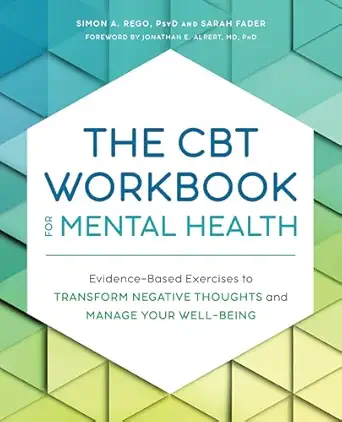
The CBT Workbook for Mental Health: Evidence-Based Exercises to Transform Negative Thoughts and Manage Your Well-Being
This workbook emphasizes evidence-based exercises designed to help users reshape negative thoughts, making it a solid choice for those who prefer structured, practical activities over theoretical explanations. Compared to 28-Day CBT Workbook for Adults, it offers more detailed exercises for ongoing mental health management rather than a quick-start, making it ideal for consistent practice. Its focus on transforming thought patterns aligns well with those who want actionable steps, but it might lack the motivational content needed for complete beginners or those seeking a more narrative-driven approach. Its clarity and research-backed techniques make it a dependable tool for steady progress.
Pros:- Based on proven, evidence-based techniques
- Clear exercises that target negative thoughts
- Suitable for regular, ongoing practice
- Focuses on transforming thought patterns
Cons:- Less engaging for those who prefer narrative or stories
- May require some prior familiarity with CBT concepts
Best for: People who want a practical, exercise-focused CBT resource to incorporate into daily routines.
Not ideal for: Beginners who need a gentle introduction or those looking for quick, easy-to-read guides.
- Focus:Thought transformation and well-being
- Exercises:Multiple practical activities
- Approach:Evidence-based
- Format:Workbook with exercises
- Intended audience:Self-motivated learners
- Language:English
Bottom line: This workbook is ideal for motivated individuals seeking structured, research-backed exercises to improve mental health over time.
28-Day CBT Workbook for Adults: A Straightforward Guide to Start Rewiring Your Brain in 15 Minutes a Day—With Proven Cognitive Behavioral Therapy Techniques For Anxiety, Depression, & Self-Esteem
Designed for those who want rapid, manageable progress, this workbook emphasizes short daily activities—just 15 minutes—to rewire the brain using proven CBT techniques. Compared with the more comprehensive The ACT, CBT & DBT Workbook, this one offers a more structured, time-restricted approach that fits easily into busy schedules. Its focus on quick, daily exercises makes it less suitable for individuals seeking deep, transformative work or those needing extensive guidance through complex issues. However, its simplicity and focus on daily habit formation make it perfect for newcomers or busy individuals who want practical, fast results.
Pros:- Short daily exercises fit into busy schedules
- Proven techniques for anxiety, depression, and self-esteem
- Easy to follow with clear instructions
- Supports habit formation for long-term change
Cons:- Limited depth; not suited for severe or complex issues
- May require ongoing supplementation for sustained progress
Best for: Busy adults looking for a quick, daily mental health boost with manageable exercises.
Not ideal for: Those needing in-depth therapy for complex trauma or longstanding issues who require more extensive guidance.
- Duration:28 days
- Daily commitment:15 minutes
- Focus areas:Anxiety, depression, self-esteem
- Approach:Proven CBT techniques
- Format:Quick-start workbook
- Intended audience:Time-constrained adults
Bottom line: This workbook is perfect for individuals seeking quick, daily CBT practices to fit into a hectic lifestyle.
Healing Your Wounded Inner Child: A CBT Workbook to Overcome Past Trauma, Face Abandonment and Regain Emotional Stability
This targeted workbook addresses deep-seated issues rooted in childhood trauma, making it distinct from general CBT guides like The CBT Workbook for Mental Health. Its focus on healing the inner child through specific exercises and emotional work provides valuable tools for those carrying unresolved past wounds. Compared with broader self-help books, it offers a more sensitive and trauma-informed approach, but its specialized nature might limit its usefulness for individuals seeking more general anxiety or depression relief. It’s particularly suited for readers willing to confront painful memories and committed to emotional recovery, though it may be too intense for absolute beginners.
Pros:- Specifically targets childhood trauma and inner child work
- Trauma-informed approach ensures safety and sensitivity
- Helps rebuild emotional stability from past wounds
- Practical exercises tailored to deep emotional healing
Cons:- Intense emotional work may be overwhelming for some
- Less suited for those seeking general anxiety or depression solutions
Best for: Adults ready to confront childhood trauma and seeking emotional stability through trauma-informed CBT.
Not ideal for: People looking for quick solutions or those not prepared to face intense emotional work.
- Focus:Inner child and trauma recovery
- Approach:Trauma-informed CBT
- Exercises:Emotional and reflective
- Intended audience:Trauma survivors and emotional healers
- Language:English
Bottom line: This workbook is best for trauma survivors committed to healing childhood wounds and rebuilding emotional resilience.
Retrain Your Brain: Cognitive Behavioral Therapy in 7 Weeks – A Workbook for Managing Depression and Anxiety
This workbook stands out for its clear, step-by-step 7-week program that guides users through practical CBT exercises. Unlike more comprehensive clinical texts like The Comprehensive Clinician’s Guide to Cognitive Behavioral Therapy, it prioritizes accessibility for individuals seeking to manage depression and anxiety without prior therapy experience. The structured format promotes consistency, but the commitment of a full seven weeks can be daunting for those with limited time or motivation. Its focus on actionable tools makes it ideal for motivated self-learners, though it may feel too simplified for those wanting deep theoretical background.
Pros:- Provides a clear, step-by-step 7-week plan for manageable progress
- Focuses on practical exercises that can be integrated into daily life
- Suitable for beginners without prior therapy experience
Cons:- Requires a significant time commitment over seven weeks
- Limited in scope—does not cover complex cases or deeper theories
Best for: Individuals seeking an organized, time-bound approach to practicing CBT techniques on their own
Not ideal for: People looking for an in-depth, theoretical reference or those who prefer flexible, less time-intensive methods
- Duration:7 weeks
- Focus:Practical exercises for depression and anxiety
- Format:Workbook
Bottom line: This workbook is ideal for motivated individuals who want a structured, hands-on approach to managing depression and anxiety through CBT.
The Comprehensive Clinician’s Guide to Cognitive Behavioral Therapy
This guide offers extensive coverage of CBT techniques, making it a valuable resource for mental health professionals seeking to deepen their clinical toolkit. Unlike Retrain Your Brain, which targets self-help, it provides detailed strategies backed by research, ideal for practitioners implementing CBT with clients. However, its dense, text-heavy layout and reliance on prior psychotherapy knowledge mean it’s less accessible to beginners or casual readers. Its thoroughness makes it less suitable for quick reference but invaluable for those wanting an authoritative, comprehensive resource.
Pros:- Comprehensive coverage of CBT techniques and interventions
- Evidence-based approach rooted in current research
- A valuable reference for clinical practice and training
Cons:- Primarily text-heavy with minimal visual aids, which can hinder quick understanding
- Requires prior knowledge of psychotherapy principles for full comprehension
Best for: Licensed mental health professionals or graduate students specializing in psychotherapy
Not ideal for: Beginners or individuals seeking a straightforward, introductory overview of CBT concepts
- Intended Audience:Mental health professionals and advanced students
- Content Depth:Extensive and detailed
- Format:Text-heavy reference book
Bottom line: This guide best serves trained clinicians and graduate students needing an in-depth, authoritative CBT reference.
The Essentials of Cognitive Behavioral Therapy: Manage Depression, Anxiety, Anger and Stress Learn How to Regulate Emotions to Achieve Inner Peace
This book makes the most sense for readers looking for practical guidance on emotional regulation across various issues like depression, anxiety, and anger. Compared with the more clinical Comprehensive Clinician’s Guide, it emphasizes accessible strategies to help individuals gain control over their emotions and find inner peace. While it covers multiple emotional challenges, its broad scope means it may lack the depth needed for complex cases or those seeking detailed scientific explanations. Its straightforward approach appeals to those new to CBT or self-help methods but could leave advanced users wanting more nuance.
Pros:- Addresses a wide range of emotional issues with practical techniques
- Uses simple language suitable for beginners or casual readers
- Focuses on achieving inner peace through emotion regulation
Cons:- Lacks in-depth analysis or scientific background for complex cases
- Broad scope might oversimplify some issues
Best for: Readers seeking an easy-to-understand, emotion-focused CBT guide for everyday stress and mood management
Not ideal for: Mental health practitioners or experienced individuals seeking detailed, technical CBT strategies
- Focus Areas:Depression, anxiety, anger, stress
- Approach:Practical, accessible techniques
- Target Audience:Self-help seekers and beginners
Bottom line: This book is a good starting point for individuals wanting to learn practical emotion regulation skills through CBT principles.

How We Picked
The selections for this list were evaluated based on clarity, evidence-based content, usability, and scope. I prioritized books that offer actionable strategies, practical exercises, and a clear presentation of CBT principles. Books with positive reviews from both mental health professionals and lay readers were given preference. Additionally, the balance between depth and accessibility was a key factor, ensuring options suit both beginners and more advanced users. The ranking reflects the overall value, comprehensiveness, and ease of understanding, with a focus on books that truly support mental health improvement.Factors to Consider When Choosing Cognitive Behavioral Therapy Books
Choosing the right cognitive behavioral therapy book depends on your goals, background, and preferred learning style. Whether you’re new to CBT or seeking a professional reference, understanding these key factors can help you pick the best resource for your needs.Target Audience and Skill Level
Identify whether you need a book designed for beginners or one suitable for mental health professionals. Beginner books tend to simplify concepts and include practical exercises, while professional guides delve into complex theories and advanced techniques. Picking a book aligned with your current understanding prevents overwhelm and maximizes learning efficiency.
Content Focus and Scope
Consider whether you’re looking for a general overview, specific strategies for anxiety or depression, or a comprehensive workbook. Some books emphasize theoretical foundations, while others focus solely on practical exercises. Clarifying your primary goal helps avoid books that are either too broad or too narrow for your needs.
Format and Usability
Decide if you prefer a traditional book, a workbook, or a hybrid. Workbooks with exercises can enhance your practice but may be less portable or more time-consuming. Also, look at layout and clarity—books with visual aids, summaries, and step-by-step instructions tend to facilitate better engagement.
Author Credibility and Evidence Base
Check the credentials of the author, especially if you want scientifically grounded techniques. Books authored by licensed therapists or researchers often provide more reliable strategies. Be wary of books that lack references or rely heavily on anecdotal evidence, as they might not be as effective for serious issues.
Price and Accessibility
Prices range from affordable paperbacks to premium professional guides. Consider your budget and how much you’re willing to invest. Keep in mind that more comprehensive books usually cost more but may offer better long-term value. Additionally, some books come with online resources or companion websites, which can enhance your learning experience.
Frequently Asked Questions
Can I use these books without a therapist?
Many of these books are designed for self-help and can be effective without a therapist, especially if you’re motivated and have mild to moderate symptoms. However, for serious mental health issues or if you’re unsure about your condition, consulting a mental health professional is advisable. Books can serve as excellent supplementary resources, but they are not substitutes for professional care when needed.
Are CBT books suitable for children or teenagers?
Some CBT books are tailored specifically for younger audiences, focusing on age-appropriate language and exercises. The books listed here are primarily geared toward adults, but there are specialized titles for children and teens. If you’re seeking resources for younger individuals, look for books explicitly designed for that age group to ensure material is suitable and effective.
How long does it typically take to see results from using a CBT book?
Results depend on your consistency, the severity of your issues, and the book’s focus. Some users notice improvements within a few weeks of regular practice, especially when following structured workbooks. However, sustained change often requires ongoing effort over months, and books should be viewed as part of a broader mental health strategy rather than a quick fix.
Should I choose a workbook or a traditional book?
Workbooks are ideal if you prefer hands-on learning and want to actively practice techniques through exercises. They tend to be more interactive and can reinforce skills more effectively. Traditional books often provide more in-depth explanations and background, making them better suited for those interested in understanding theory or who prefer reading without frequent exercises.
Are these books suitable for cultural or language differences?
Most CBT books are written in English and reflect Western psychological paradigms. If you come from a different cultural background or speak another language, some concepts might not translate directly. Look for books that acknowledge cultural diversity or are translated into your language for better relevance and understanding.
Conclusion
For general use, Cognitive Behavior Therapy: Basics and Beyond offers a comprehensive and balanced approach, making it the best overall choice. Those seeking affordability and practical exercises may want to consider Mind Over Mood for its accessible format. Beginners aiming for straightforward guidance will benefit from Cognitive Behavioural Therapy For Dummies. Professionals or advanced users should look at more detailed titles like The Comprehensive Clinician’s Guide to Cognitive Behavioral Therapy. Ultimately, your choice depends on your familiarity with CBT and your specific goals—whether self-help, education, or professional reference.
Fall Picks
fall essentials
As an affiliate, we earn on qualifying purchases.