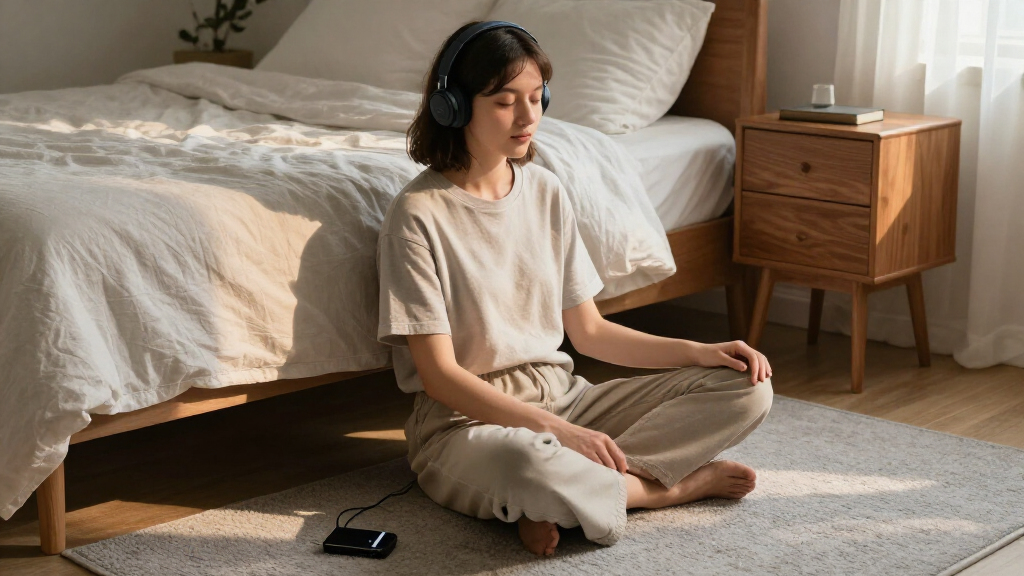
The best guided meditation audio devices make it easier to practise without relying on a phone, but they differ in how much structure and feedback they provide. I’d put the Morphée Zen Guided Meditation Sound Device first for its broad session and language selection, while the Zenimal Teen and Adult Meditation Audio Player stands out for screen-free simplicity and the Reflect Orb for buyers who want biofeedback. The main tradeoff is between a focused, tactile device and a connected or light-based tool that may guide breathing rather than play a wide library of meditations. Age range, session variety, and whether you want audio, visual cues, or breathing feedback can change the right choice. Read on for the full breakdown and how I’d match each device to a different routine.

Turn your wind-down time into listening time
- Thousands of audiobooks, podcasts and originals
- Listen on your phone, tablet or Echo — also offline
- Cancel anytime
Key Takeaways
- Morphée Zen Guided Meditation Sound Device leads for session breadth: its 72 sessions across four languages give it more variety than the compact, more narrowly focused options.
- Zenimal Teen and Adult Meditation Audio Player is a stronger fit than app-connected choices for people who want a straightforward, screen-free listening routine.
- Reflect Orb serves a different purpose from audio players: biofeedback and an app membership may suit users who want responsive feedback, but add connected-device complexity.
- Zenimal’s turtle player is the clearest age-specific pick for children, while adult and teen models avoid making a kids’ design do double duty.
- Breathing lights and affirmation cards can support short guided practices, but they are not substitutes for a broad spoken meditation library.
| Morphée Zen Guided Meditation Sound Device, 72 Sessions in 4 Languages |  | Best for Short, Screen-Free Variety | Sessions: 72 | Session length: 2 or 5 minutes | Languages: 4 | VIEW LATEST PRICE | See Our Full Breakdown |
| Reflect Orb Smart Biofeedback Device with 1-Year App Membership |  | Best for Biofeedback-Guided Breathing | Model: Reflect Orb | Sensors: Heart rate and skin conductance | App compatibility: iPhone and Android | VIEW LATEST PRICE | See Our Full Breakdown |
| Morphee Zen Pebble Guided Meditation Device |  | Best Pocket-Sized Meditation Player | Audio sessions: 72 | Session length: 5 minutes | Languages: English, French, German, and Dutch | VIEW LATEST PRICE | See Our Full Breakdown |
| Mindsight Original Breathing Buddha Guided Meditation Light |  | Best for App-Free Breathing Patterns | Breathing modes: 4/7/8 calming breath, 5/5 balance breath, and box breathing | Ambient sounds: 6 nature sounds | Brightness levels: 2 | VIEW LATEST PRICE | See Our Full Breakdown |
| Rainlax Mindfulness Breathing Owl with Guided 4-7-8 Meditation Light |  | Best for Family-Friendly Sleep Atmosphere | Breathing method: 4-7-8 | Sound options: 7 | Sound examples: Heartbeat, ocean waves, rain, water drops, crickets, and birds | VIEW LATEST PRICE | See Our Full Breakdown |
| Zenimal Teen and Adult Meditation Audio Player |  | Best for Screen-Free Guided Sessions | Guided meditations: 9 tracks | Track length: 4–20 minutes | Power: Rechargeable base unit | VIEW LATEST PRICE | See Our Full Breakdown |
| Zenimal Meditation Turtle Screen-Free Audio Player for Kids, Ages 3–12 |  | Best for Young Children | Age range: 3–12 years | Included audio: 9 guided meditations and 3 sleep sounds | Battery life: About 8 hours per charge | VIEW LATEST PRICE | See Our Full Breakdown |
| Zenimal Teen and Adult Meditation and Soothing Sounds Audio Player |  | Best for Meditation Plus Bedtime Sounds | Meditation tracks: 9 guided tracks | Track length: 4–20 minutes | Sleep sound tracks: 3 continuous tracks when plugged in | VIEW LATEST PRICE | See Our Full Breakdown |
| PUVIDJUT M3 Meditation Sound Machine |  | Best Compact Tone Generator | Model: M3 | Tones: 417 Hz, 432 Hz, 528 Hz, 639 Hz, and Tibetan singing bowl | Timer settings: 15, 30, or 60 minutes | VIEW LATEST PRICE | See Our Full Breakdown |
| Mindfulness Set with Guided Breathing Lamp and 48 Affirmation Cards |  | Best for Hands-On Breathing Practice | Included items: Breathing lamp, 48 mindfulness cards, and USB-C charging cable | Functions: Breathing light, night light, and noise machine | Breathing modes: 5-5 balanced breathing and 4-7-8 calm breathing | VIEW LATEST PRICE | See Our Full Breakdown |
More Details on Our Top Picks
Morphée Zen Guided Meditation Sound Device, 72 Sessions in 4 Languages
Morphée Zen suits people who want a choice of brief guided audio without opening an app or looking at a screen. Its 72 sessions span six themes, from dynamic relaxation to white noise, so it offers more variety than the Morphée Zen Pebble, which is described as having five-minute sessions. Here, buyers can choose between two- and five-minute lengths, making it easier to fit a short pause into a busy day. Four languages add flexibility for multilingual households. The tradeoff is that neither session length provides a longer guided practice, so it is less suited to listeners seeking extended meditation. Compared with the biofeedback-led Reflect Orb, Morphée Zen keeps the experience simpler and app-free, but does not adapt guidance to body signals.
Pros:- Offers 72 audio sessions across six distinct themes
- Two- and five-minute formats suit brief breaks
- Portable and screen-free for use away from a phone
- Supports four languages
Cons:- Sessions are limited to two or five minutes
- Does not provide the body-signal feedback offered by the Reflect Orb
Best for: People who want several short, screen-free relaxation options at home, at work, or while traveling, including multilingual users
Not ideal for: Listeners who want guided meditations longer than five minutes or sessions that respond to biometric feedback
- Sessions:72
- Session length:2 or 5 minutes
- Languages:4
- Themes:Deep Relaxation, Immersive Journey, Dynamic Relaxation, Nature Sounds, Relaxing Music, and White Noise
- Design:Portable, disconnected, and screen-free
- Audio options:Guided sessions, nature sounds, relaxing music, and white noise
Our verdict“Choose Morphée Zen if you want varied, very short guided audio without relying on a screen or app.”
Reflect Orb Smart Biofeedback Device with 1-Year App Membership
Reflect Orb takes a more responsive approach to guided practice than the fixed audio libraries in Morphée Zen and the Morphée Zen Pebble. It tracks heart rate and skin conductance, then uses light feedback to guide breathing and relaxation. That makes it a better fit for people who want cues connected to their body signals, rather than simply choosing a prerecorded session. The app works with iPhone and Android for setup and includes one year of premium guided content and session insights; afterward, the biofeedback still works, but premium content requires a paid membership. The Orb can be used independently after setup, though its app-based starting point is less immediate than an app-free device such as the Mindsight Original Breathing Buddha. Battery life is listed as up to two weeks per charge, depending on use.
Pros:- Uses heart-rate and skin-conductance tracking to inform light feedback
- Includes one year of premium guided breathing, meditation, and session insights
- Can operate independently after app setup
- Battery life is listed as up to two weeks per charge, depending on use
Cons:- Premium app content requires a paid membership after the first year
- Requires an iPhone or Android app for setup
- Its feedback-centered design differs from a straightforward library of guided audio sessions
Best for: Adults who want light-guided breathing informed by heart-rate and skin-conductance signals and are comfortable setting up a device with a phone
Not ideal for: People seeking a completely app-free audio player or those unwilling to pay for premium app content after the included year
- Model:Reflect Orb
- Sensors:Heart rate and skin conductance
- App compatibility:iPhone and Android
- Battery life:Up to 2 weeks per charge, depending on use
- Battery type:Lithium-ion
- Included membership:1 year of premium app access
- Dimensions:6.7 x 6.6 x 6.3 inches
Our verdict“Pick Reflect Orb if body-signal feedback matters more to you than a simple, app-free library of recorded meditations.”
Morphee Zen Pebble Guided Meditation Device
The Morphée Zen Pebble is the clearest choice here for carrying guided audio in a compact, screen-free format. It packs 72 sessions into a pocket-sized device, includes headphones, and works without a smartphone, app, or internet connection. That offline setup is simpler than the Reflect Orb, which begins with app setup and focuses on biofeedback rather than a fixed session library. Compared with the full-size Morphée Zen, the Pebble’s sessions are specified as five minutes only, so it gives up the shorter two-minute option. Its four languages make it useful for multilingual listeners, but the product information does not state battery life or charging details. Buyers who need to plan around long trips may want those power details before choosing it.
Pros:- Pocket-sized design is suited to carrying on the go
- Offers 72 guided audio sessions
- Works without a smartphone, app, or internet connection
- Includes headphones and supports four languages
Cons:- Sessions are limited to five minutes
- Battery life and charging details are not specified
- Offers less session-length flexibility than the Morphée Zen
Best for: Travelers and commuters who want a pocket-sized, offline meditation player with included headphones
Not ideal for: People who want sessions shorter than five minutes or need clearly specified battery and charging details before buying
- Audio sessions:72
- Session length:5 minutes
- Languages:English, French, German, and Dutch
- Connectivity:No smartphone, app, or internet required
- Included accessories:Headphones
- Design:Portable and pocket-sized
Our verdict“Choose the Pebble for portable, offline five-minute guidance, but look elsewhere if session-length choice or power details are priorities.”
Mindsight Original Breathing Buddha Guided Meditation Light
Mindsight Original Breathing Buddha is a breathing guide first, with sound as an added layer rather than the main event. Its light cues walk users through three patterns—4/7/8 calming breath, 5/5 balance breath, and box breathing—while six nature sounds can add a quieter backdrop. That makes it more structured for breath practice than the Rainlax Mindfulness Breathing Owl, which is specified around the 4-7-8 method. It also avoids app setup, unlike the Reflect Orb. Two brightness levels, tap control, and night-light use make it easy to leave in a bedroom. The tradeoff is limited audio variety compared with dedicated session players such as the Morphée Zen, and the three-hour automatic shutoff is not a manual timer for shorter sessions.
Pros:- Guides three breathing patterns with color prompts
- Includes six ambient nature sounds
- Works without an app and uses tap brightness control
- Can serve as a night light, with two brightness levels
Cons:- The three-hour automatic shutoff is not a manual timer
- Battery-life figure is based on 10 minutes of daily use
- Offers fewer session-style audio choices than the Morphée Zen
Best for: People who want an app-free bedside light to cue several breathing patterns, with nature sounds available as background
Not ideal for: Listeners seeking a broad library of recorded guided meditations or a device with a manual short-session timer
- Breathing modes:4/7/8 calming breath, 5/5 balance breath, and box breathing
- Ambient sounds:6 nature sounds
- Brightness levels:2
- Material:Silicone
- Dimensions:3.5 x 4 x 6 inches (L x W x H)
- Battery life:1+ months at 10 minutes per day
- Automatic shutoff:After 3 hours
- Controls:Tap to adjust brightness; no app required
Our verdict“Choose this light if you want simple, app-free visual guidance for several breathing patterns more than a library of spoken meditations.”
Rainlax Mindfulness Breathing Owl with Guided 4-7-8 Meditation Light
Rainlax Mindfulness Breathing Owl combines a breathing cue, colored night light, and ambient sound machine, so it is better suited to a shared bedroom routine than a dedicated audio player. Its 4-7-8 light guidance is more focused than the three breathing patterns on the Mindsight Original Breathing Buddha, while seven sound options and seven colors provide more atmosphere choices than the Buddha’s six nature sounds. The listed sounds include ocean waves, rain, heartbeat, and crickets, which can support quiet time or sleep alongside the breathing light. That mix makes it a more flexible room device than the pocket-sized Morphée Zen Pebble, but it does not offer a specified library of spoken guided sessions. Power source and dimensions are also not provided, leaving practical setup and placement questions unanswered.
Pros:- Combines breathing guidance, ambient lighting, and white-noise functions
- Offers seven sound options, including ocean waves, rain, and birds
- Provides seven light colors with three brightness levels
- Designed for both children and adults
Cons:- Guidance is limited to the 4-7-8 breathing method
- Power source and dimensions are not specified
- Does not list a library of spoken guided meditation sessions
Best for: Families seeking a combined 4-7-8 breathing light, night light, and ambient sound option for a bedroom or relaxation routine
Not ideal for: Buyers who want spoken meditation sessions, multiple breathing methods, or confirmed power and size details
- Breathing method:4-7-8
- Sound options:7
- Sound examples:Heartbeat, ocean waves, rain, water drops, crickets, and birds
- Night light colors:7
- Brightness levels:3
- Functions:Breathing light, night light, and white noise machine
- Intended users:Children and adults
Our verdict“Choose Rainlax for a family-oriented bedroom device that pairs 4-7-8 light cues with sound and adjustable color, not for spoken meditation libraries.”
Zenimal Teen and Adult Meditation Audio Player
The Zenimal Teen and Adult Meditation Audio Player is the clearest fit here for someone who wants spoken meditation rather than a sound machine or breathing light. Its nine guided tracks cover sleep, relaxation, breathing, awareness, inspiration, empathy, and gratitude, with sessions ranging from 4 to 20 minutes. That range makes it easier to choose a short reset or a longer practice without reaching for a phone. Compared with the PUVIDJUT M3, which produces tones rather than guided instruction, this player gives listeners a voice-led practice. It also offers both a speaker and an audio jack for different listening situations. The tradeoff is a small, fixed library and no screen for browsing; prospective buyers may need to check the product video for track samples before choosing.
Pros:- Nine guided meditations cover several practical themes
- Track lengths range from 4 to 20 minutes
- Speaker and audio jack support different listening setups
- Rechargeable base and removable food-grade silicone cover are included
Cons:- The included library is limited to nine tracks
- No display is available for visual track navigation
- Track samples are presented in the product video section rather than described in the listing
Best for: Teens and adults who want a portable, phone-free player with spoken meditation across several mindfulness themes.
Not ideal for: Listeners who want a large or expandable meditation library, on-device track previews, or a visual navigation display.
- Guided meditations:9 tracks
- Track length:4–20 minutes
- Power:Rechargeable base unit
- Audio options:Built-in speaker and audio jack
- Cover:Removable food-grade silicone
- Charging:Micro USB
Our verdict“Choose this Zenimal for a straightforward, screen-free guided practice, but pick the PUVIDJUT M3 if you want selectable tones instead of spoken sessions.”
Zenimal Meditation Turtle Screen-Free Audio Player for Kids, Ages 3–12
For younger listeners, the Zenimal Meditation Turtle pairs a child-friendly button layout with offline playback, so a caregiver can offer guided listening without handing over a phone or setting up an app. It includes nine meditations and three sleep sounds, giving it more bedtime variety than the teen-and-adult Zenimal, which lists guided sessions but not sleep sounds. The built-in speaker, headphone jack, and automatic shutoff support different routines, while the removable dishwasher-safe shell is a practical touch for a device used by children. Its focus is deliberately narrower than the Mindfulness Set, which adds a breathing lamp and affirmation cards. This Turtle is not the pick for a growing, customizable library: it does not connect to the Zenimal Connect app, and its roughly eight-hour battery life calls for regular charging.
Pros:- Combines nine guided meditations with three sleep sounds
- Fully offline operation avoids app setup and network dependence
- Simple buttons are suited to independent use by children
- Removable shell is dishwasher-safe
Cons:- Does not connect to the Zenimal Connect app
- About eight hours of playback per charge may require frequent recharging
- Additional memory cards are sold separately
Best for: Caregivers seeking an easy-button, offline meditation and sleep-sound player for children ages 3–12.
Not ideal for: Families who want app access, a connected library, or longer playback between charges.
- Age range:3–12 years
- Included audio:9 guided meditations and 3 sleep sounds
- Battery life:About 8 hours per charge
- Connectivity:None; fully offline
- Audio output:Built-in speaker and headphone jack
- Charging:Micro USB cable included
- Shell:Removable and dishwasher-safe
- Automatic shutoff:Yes
Our verdict“Choose the Turtle for simple, offline listening tailored to children; choose the teen-and-adult Zenimal for a less child-specific guided meditation player.”
Zenimal Teen and Adult Meditation and Soothing Sounds Audio Player
This Zenimal adds a useful bedtime extra to the teen-and-adult player format: alongside nine guided meditations, it has three continuous sleep-sound tracks. That makes it a better match than the standard Zenimal Teen and Adult Meditation Audio Player for someone who wants both a guided wind-down and sounds that continue afterward. The meditation topics span sleep, relaxation, breathing, awareness, inspiration, empathy, and gratitude, with 4–20-minute tracks for short or longer sessions. A speaker and audio jack keep listening flexible, and the removable silicone cover suits portable use. The main limitation is that the sleep sounds play continuously only while plugged in, reducing their usefulness away from an outlet. It also relies on micro USB, while the Mindfulness Set offers sound and breathing guidance in a different, more hands-on format.
Pros:- Includes nine guided meditations across varied themes
- Three continuous sleep-sound tracks add bedtime use beyond guided sessions
- Speaker and audio jack provide flexible listening
- Portable design includes a removable silicone cover
Cons:- Sleep sounds run continuously only when the player is plugged in
- Uses a micro USB charging cord
- The fixed selection may not suit listeners seeking a larger library
Best for: Adults and teens who want spoken meditation sessions plus continuous sleep sounds beside a power outlet.
Not ideal for: People who need continuous sleep audio while traveling or want modern USB-C charging.
- Meditation tracks:9 guided tracks
- Track length:4–20 minutes
- Sleep sound tracks:3 continuous tracks when plugged in
- Power:Rechargeable base unit
- Audio options:Built-in speaker and audio jack
- Included accessories:Removable silicone cover and micro USB charging cord
Our verdict“Pick this model over the standard teen-and-adult Zenimal if continuous sleep sounds matter and you can keep it plugged in.”
PUVIDJUT M3 Meditation Sound Machine
The PUVIDJUT M3 takes a different route from the guided-track players: it generates five selectable tones, including four listed frequencies and a Tibetan singing bowl tone, rather than leading a spoken meditation. That makes it a compact choice for people who prefer a steady sound backdrop during yoga or quiet practice. Its 15-, 30-, and 60-minute timers let a session end without manual shutoff, while adjustable volume helps tailor the sound to a room. Against the Zenimal Teen and Adult Meditation Audio Player, the M3 is simpler and smaller in scope: it does not provide instructions, themed sessions, music, or podcasts. The rechargeable battery offers up to 20 hours of use, but there is a catch—without setting a timer, it powers off after five minutes. Buyers should also treat it as a tone device, not a general audio player.
Pros:- Five selectable tones include Solfeggio frequencies and a singing bowl tone
- Three timer options support set-length sessions
- Adjustable volume suits different listening environments
- Compact rechargeable design offers up to 20 hours of use
Cons:- Does not play guided meditations, music, or podcasts
- Powers off after five minutes if no timer is set
- Tone-based output offers less instruction than the Zenimal guided players
Best for: Meditators who want a small rechargeable source of selectable tones for timed, phone-free practice.
Not ideal for: Listeners who need spoken guidance, streaming audio, or a device that stays on without a timer setting.
- Model:M3
- Tones:417 Hz, 432 Hz, 528 Hz, 639 Hz, and Tibetan singing bowl
- Timer settings:15, 30, or 60 minutes
- Battery life:Up to 20 hours
- Power:Rechargeable battery
- Connector:USB Type-C
- Dimensions:3.5 × 3.5 × 1.9 inches
- Weight:7.6 ounces
- Material:Metal
Our verdict“Choose the M3 for timed tone-based practice; choose a Zenimal if you want spoken guidance and themed meditation tracks.”
Mindfulness Set with Guided Breathing Lamp and 48 Affirmation Cards
The Mindfulness Set is less an audio-guided meditation player than a bedside breathing and reflection kit. Its lamp guides breathing through 5-5 balanced and 4-7-8 calm modes, while a noise machine supplies six natural sounds and the 48 affirmation cards add an offline prompt for reflection. Compared with the PUVIDJUT M3, which offers selectable tones and timed sessions, this set makes breathing pace visible and adds cards for users who want a tactile routine. It also provides three brightness and volume levels, so the lamp can serve as a night light as well as a practice aid. The compromise is its limited guided-audio offering: the description lists natural sounds, not spoken meditation tracks. Battery runtime and physical dimensions are also unspecified, making it harder to judge charging frequency and bedside fit.
Pros:- Combines a breathing lamp, night light, and noise machine
- Two breathing modes provide distinct pacing options
- Includes 48 affirmation cards for screen-free reflection
- USB-C rechargeable power supports portable use
Cons:- No spoken guided meditation tracks are listed
- Battery runtime is not specified
- Dimensions and weight are not provided
Best for: People who want visual breathing cues, gentle natural sounds, and affirmation prompts in one bedside set.
Not ideal for: Buyers seeking spoken guided meditations, known battery runtime, or clearly stated size and weight before purchase.
- Included items:Breathing lamp, 48 mindfulness cards, and USB-C charging cable
- Functions:Breathing light, night light, and noise machine
- Breathing modes:5-5 balanced breathing and 4-7-8 calm breathing
- Natural sounds:6
- Brightness levels:3
- Volume levels:3
- Material:Soft silicone
- Power:Rechargeable battery; USB-C charging cable included
Our verdict“Choose this set for visible breathing cues and card-based reflection, not as a substitute for the spoken meditation tracks in a Zenimal player.”
How We Picked
I compared these devices by how directly they serve guided meditation: the range and format of sessions, ease of starting a practice, and whether the device offers spoken instruction, breathing cues, biofeedback, or a mix. I also weighed age fit, screen and app dependence, portability, and how much setup or ongoing attention a routine is likely to demand. A device that is simple to use can be a better everyday fit than one with more features if those features add friction.
The order reflects breadth and practical fit for a wider set of buyers, not a claim that one format suits everyone. The Morphée Zen Guided Meditation Sound Device ranks highest for its stated session and language range; screen-free Zenimal players follow for approachable listening, with the child-specific model judged for its intended audience. Reflect Orb earns a distinct place for biofeedback, while breathing lamps, the pebble, and the affirmation set are more specialized tools. I treat claims and included features as product distinctions, not proof of clinical benefit, and I weigh each option against the limitations of its format.
Factors to Consider When Choosing Guided Meditation Audio Devices
Before choosing, decide what you want the device to do during a real practice: play a guided track, pace your breathing, offer feedback, or help a child settle into a routine. These formats can all support mindfulness, but they do not solve the same problem. I’d use the factors below to separate a device you’ll return to from one that sounds appealing but asks more of you than your routine allows.
Choose the kind of guidance you will actually use
Spoken meditation, visual breathing prompts, and biofeedback each ask for a different kind of attention. Audio is useful when you want someone to guide a longer practice, while a breathing light can cue a short exercise without requiring you to follow a full narration. Biofeedback may appeal if tracking your responses helps you stay engaged, though it can shift attention toward the device itself. A common mistake is to buy the most feature-rich format before deciding whether you prefer listening, watching, or responding. Think about where you practise and whether you want your eyes closed, open, or on a screen. Match the guidance style to that habit rather than treating every meditation device as interchangeable.
Check library variety against repeat use
A large session count matters most when you want to rotate themes, durations, or approaches over time. If you usually repeat one short breathing practice, a smaller selection may be easier to use and less distracting. Language support can matter as much as session count when the device is shared or when guided audio feels most natural in a particular language. Look for clear information about what is included and whether access depends on an app or membership. Do not assume that a bigger library means every track will suit your needs. Choose variety for exploration, and simplicity for a routine you already know.
Decide how much screen and app involvement suits you
Screen-free players reduce the temptation to check messages or browse after starting a session. App-connected devices can add controls or feedback, but they may require setup, a phone nearby, or ongoing attention to account access. Consider whether the person using the device is comfortable managing those steps, especially if it is a gift for a child or someone who prefers physical controls. A frequent buying error is to value connectivity without asking whether it will be used after setup. If the goal is a calmer routine away from a phone, a standalone player may be the better match. If feedback and app tools are part of the appeal, confirm those features fit the way you want to practise.
Match the device to the listener’s age and independence
Children, teens, and adults may respond to different presentation styles, session language, and controls. A child-specific player can feel more approachable for younger listeners, while an adult device may offer a better fit for independent use by teens and grown-ups. For a shared household, ask whether everyone needs their own content or whether one device can serve several routines comfortably. Avoid choosing only by age label: a child who dislikes spoken guidance may prefer a visual breathing cue, and an adult may want a simple tool rather than a complex library. Consider who will start sessions, adjust settings, and keep track of the device. The best age fit is the one the intended listener can use without constant help.
Think about portability, controls, and where it will live
A meditation device kept beside a bed can be larger or more decorative than one carried between work, travel, and home. Physical controls are useful when you want to start a session without opening a phone, but small or unfamiliar buttons can slow down use. A light-based device needs to be placed where its visual cue is easy to see, while an audio player depends on comfortable listening in the chosen space. Before buying, picture the storage spot, charging or power needs, and whether the device will be shared. A common mistake is to focus on the feature list and overlook the daily setup. Pick a form that fits the place and moment when you are most likely to practise.
Pay for features that solve a real routine problem
Extra sessions, app access, biofeedback, or bundled cards are worthwhile only if they address something your current routine lacks. A connected tool may be a better fit for someone who wants feedback, while a basic screen-free player may serve a person who simply needs a dependable prompt to begin. Compare what is included with what requires a separate device, membership, or additional effort. Do not pay for a feature just because it sounds more advanced; added options can create more decisions rather than more practice. Set a priority list before comparing models, such as language choice, child suitability, or feedback. That makes it easier to separate useful capability from appealing but unused extras.
Frequently Asked Questions
Should I choose an audio player or a breathing light?
Choose an audio player if you want spoken guidance, themed sessions, or a voice to lead you through a practice. A breathing light is better suited to brief, visually paced breathing when you do not need a narrated session. The two formats can complement each other, but one does not replace the other’s main function. Consider whether you want to close your eyes or follow a visible cue. If you are unsure, start with the format closest to the habit you already find easiest to maintain.
Is a screen-free meditation device worth choosing over an app?
A screen-free player can reduce the steps between deciding to practise and starting a session, especially if phone notifications often interrupt you. An app may offer more control or connected features, but it keeps the phone involved and can add setup or account considerations. The tradeoff is not simply device versus software; it is simplicity versus flexibility. If you already use a meditation app consistently, a dedicated player may add little. If phone distraction is the obstacle, physical controls and a separate device may better support your routine.
Do I need biofeedback to get value from a meditation device?
No. Biofeedback is one approach for people who want a device to respond to or report information during practice, but it is not required for guided meditation. A session library or a breathing cue may be enough if your main goal is to follow a regular routine. Connected features can also bring extra setup and attention, so weigh that against the value you expect from the feedback. If seeing a response helps you stay engaged, a biofeedback device may be appealing. If you prefer to focus on the practice itself, a simpler option may feel less distracting.
What should I prioritize when buying a meditation device for a child?
Start with whether the device is designed for the child’s age and whether its controls and presentation feel approachable to them. Also consider whether they respond better to spoken sessions or visual breathing prompts; a child-oriented audio player is not automatically right for every child. Think about how much help an adult will need to provide when starting or choosing a session. A device intended for independent use may support a steadier routine than one that depends on a parent managing every step. Choose for the child’s actual attention style, not only the age range printed on the product.
Are affirmation cards and breathing lamps enough for a guided meditation routine?
They can support a short, self-led practice, but they offer a different kind of guidance from a device with a spoken meditation library. A breathing lamp can provide a visual pace, and cards can supply prompts or reflection themes. They may suit people who want a brief ritual without listening to audio. If you want a voice to lead a longer session or a selection of meditation themes, cards and lights alone may feel limited. Decide whether you need an external guide or just a cue to begin before choosing this format.
Conclusion
For the broadest guided-audio choice, I’d recommend the Morphée Zen Guided Meditation Sound Device as the best overall, thanks to its stated 72 sessions and four-language support. For screen-free listening with a simpler format, the Zenimal Teen and Adult Meditation Audio Player is my best value-style pick, while the Reflect Orb is the premium-leaning choice for buyers who specifically want biofeedback and app-connected tools. Beginners who prefer a low-pressure visual cue may find a breathing lamp easier to start with than a large session library; for a spoken, straightforward routine, the adult Zenimal is another approachable option. For children, choose the Zenimal Meditation Turtle; for a compact guided device, look at the Morphée Zen Pebble; and for affirmation-led practice, the card-and-lamp set serves a distinct need. I’d skip connected features or extra accessories unless they match the way you want to meditate.