TL;DR

Turn your wind-down time into listening time
- Thousands of audiobooks, podcasts and originals
- Listen on your phone, tablet or Echo — also offline
- Cancel anytime
Sixty and Me published the second part of its Wisdom Series, arguing that years of life experience can hold useful insight even when people dismiss it as ordinary. The author offers three reflection exercises and promotes a free assessment; the article presents personal guidance, not research establishing its claims.
Sixty and Me has published Part 2 of its Wisdom Series, in which the author encourages readers—particularly women later in life—to treat their experiences as a potential source of insight rather than dismissing them as ordinary. The article proposes three ways to identify that knowledge, while presenting the approach as the author’s perspective rather than a finding supported by cited research.
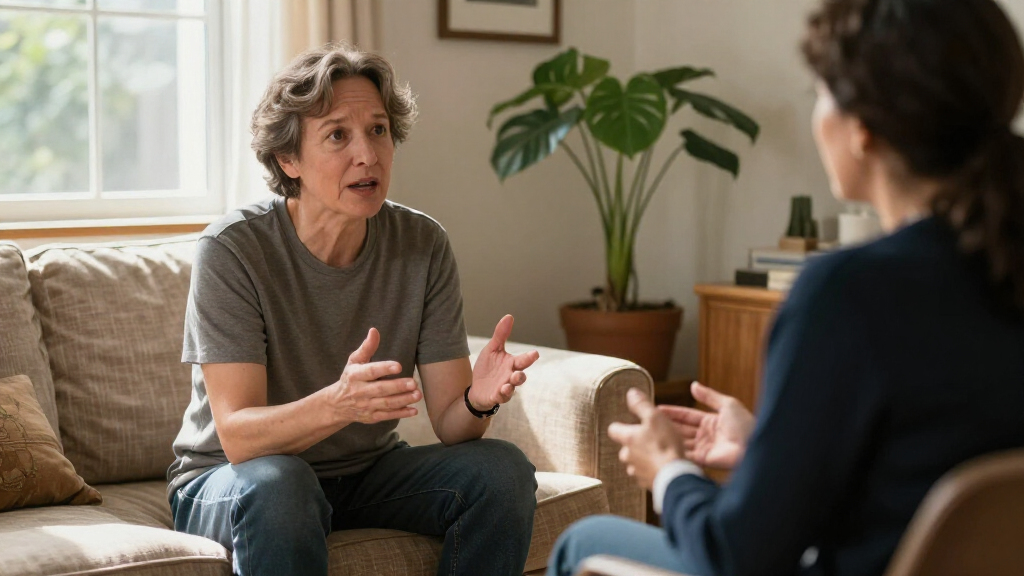
The author says that conversations with women about sharing what they know often bring up doubts such as “Who would want to hear what I have to say?” and “I’ve just lived an ordinary life.” The article responds that skills developed through relationships, work, caregiving, setbacks and recovery may be valuable to others, even when they feel commonplace to the person who acquired them.
To explain the idea, the author draws on 35 years of work with data for Fortune 500 companies. The author says companies sometimes overlook useful patterns in accumulated records, and compares that process with looking back at a life to identify lessons within its history. This is an analogy from the writer’s professional experience, not a reported study of how people learn or share wisdom.
The article describes wisdom as an overlap among gifts and talents, knowledge and experience, and passions and intuition. The author calls this combination “Quantum Wisdom™.” The piece recommends noticing what others ask for help with, asking three trusted people to name one’s strengths and impact, and reflecting in writing on a formative period of life.
Turning Life Experience Into Guidance
The article’s practical point is that people may not recognize skills they use routinely. Someone who is often asked to listen, help solve a problem or guide others through change may have experience worth sharing, even if they do not think of themselves as an expert. The exercises are intended to help readers find those patterns through other people’s observations and personal reflection.
That message may matter to readers who have discounted their contributions because their work or care was unpaid, private or not formally recognized. The author argues that ordinary-seeming acts and difficult periods can inform how someone supports another person facing a similar situation. The article does not establish that every personal experience translates into advice suitable for others; its emphasis is on noticing, interpreting and choosing what to share.
The piece also provides a structured prompt for starting conversations about experience. Rather than asking readers to make broad claims about their expertise, it suggests identifying concrete strengths and examples. That can make reflection more specific, while leaving readers to decide whether and how they want to share what they have learned.
reflection journal for life experiences
As an affiliate, we earn on qualifying purchases.
As an affiliate, we earn on qualifying purchases.
A Second Part in a Wisdom Series
This article is presented as the second installment of a series about wisdom gained over a lifetime. The author refers to a previous article, saying it argued that the world does not need older people to become younger versions of themselves, but can benefit from their wisdom. The source text does not provide the first installment’s title or publication date, so the wider series timeline is not specified.
Part 2 moves from that broad argument to the question of why readers may fail to see their own value. The author offers several explanations: people can mistake what comes naturally for something everyone can do; they may have learned that speaking about their strengths is boastful; and some experiences that taught them the most may be painful to revisit. The author describes her own difficult life chapters as a later source of compassion, while acknowledging that she did not always see them that way.
The article closes by previewing a coming installment on the idea that hard challenges were not wasted. It also invites readers to take a free, three-minute Quantum Wisdom Path Assessment, which the author says will provide a personalized Path Blueprint. The source does not give independent details about how the assessment works or what its results contain.
self-discovery workbook for women over 50
As an affiliate, we earn on qualifying purchases.
As an affiliate, we earn on qualifying purchases.
What the Article Does Not Establish
The source is an advice article, not a research report. It does not provide studies, survey results or independently verified evidence that its three exercises lead to greater confidence, wellbeing or impact. The author’s descriptions of wisdom and “Quantum Wisdom™” are her own framework, and the article does not define a method for measuring those concepts.
The source material also does not state when the article was published, identify the author in the supplied text, or explain how the assessment produces its personalized blueprint. Readers cannot assess from the article alone what information the assessment requests, how its results are generated, or how any information is handled. Those details remain unspecified in the material provided.
life coaching books for older women
As an affiliate, we earn on qualifying purchases.
As an affiliate, we earn on qualifying purchases.
The Series’ Planned Next Topic
The author says the next installment will examine the idea that difficult challenges were not wasted. The source does not give a publication date or confirm when that part will appear. Readers seeking to act on Part 2’s advice can start with one suggested exercise: ask three people who know them well to describe their strengths and how they have made a difference.
The article also invites readers to take the author’s free assessment and to share which life experiences they believe could become wisdom. No further details about the assessment or the next installment are provided in the source.
As an affiliate, we earn on qualifying purchases.
Key Questions
What is Part 2 of the Wisdom Series about?
It argues that people may overlook useful insight gained through their lives and offers exercises to help identify and share that experience.
What three exercises does the author suggest?
The author suggests noticing what others seek help with, asking three trusted people about your strengths and impact, and writing about what a formative life period taught you.
What does “Quantum Wisdom” mean in the article?
The author uses “Quantum Wisdom™” for the overlap of a person’s talents, experience and knowledge, and passions and intuition. The article presents this as the author’s framework, not a scientific measure.
Is the article based on research?
The supplied article text does not cite studies or data supporting its advice. The author draws on her reported 35 years of work with corporate data and offers personal guidance and reflection prompts.
What is expected in the next installment?
The author says the next part will discuss the idea that hard challenges were not wasted, but gives no publication date.
Source: rss
Halloween Picks
halloween
As an affiliate, we earn on qualifying purchases.