When you develop tunnel vision during an investigation, your focus narrows, causing you to overlook important evidence or alternative suspects. Over time, your biases reinforce this narrow view, making it harder to see the full picture. This can lead to missing essential clues and sticking to initial theories even when new information contradicts them. If you keep focusing narrowly, you risk missing critical leads. To understand how to prevent this, keep exploring further.
Key Takeaways
- Tunnel vision causes investigators to focus narrowly, leading to the consistent overlooking of critical evidence throughout the investigation.
- Over time, confirmation bias reinforces initial theories, making it harder to adapt or consider alternative explanations.
- Persistent tunnel vision creates blind spots, reducing awareness of new or contradictory evidence as the investigation progresses.
- As focus narrows, investigators may dismiss or ignore evidence that challenges their current hypothesis, skewing the investigation’s trajectory.
- Recognizing and addressing tunnel vision early can help maintain objectivity and improve investigative thoroughness over time.
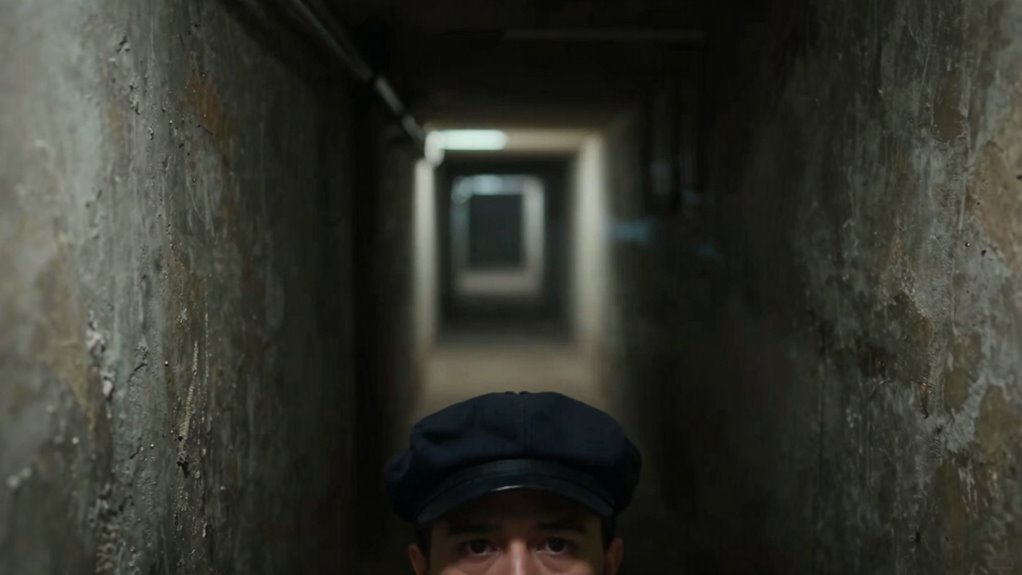
Have you ever wondered how investigators sometimes miss essential evidence because they focus too narrowly on a single theory? This phenomenon, often driven by tunnel vision, can cause you to overlook critical clues that don’t fit your initial assumptions. As you delve into an investigation, your mind naturally seeks patterns and explanations, but this can lead to bias reinforcement. When you start to favor certain theories, your perception narrows, creating a cognitive tunnel where only evidence supporting your hypothesis is noticed, and everything else is disregarded. This cognitive tunnel limits your ability to see the full picture, pushing you further away from objective truth.
Focusing too narrowly can cause investigators to overlook crucial evidence and miss the full truth.
When your focus becomes too concentrated on one idea, you unintentionally reinforce your existing biases. You might interpret ambiguous evidence as confirmation of your theory, even if it could point elsewhere. This bias reinforcement makes you more confident in your initial assumptions, which can hinder your willingness to consider alternative possibilities. Over time, this creates a feedback loop: your beliefs shape your perceptions, which in turn reinforce your beliefs. This self-perpetuating cycle deepens the tunnel vision, making it harder to step back and reassess the situation objectively. Recognizing that confirmation bias can influence your judgment is crucial to maintaining a balanced perspective. Additionally, understanding how cognitive biases impact decision-making can help investigators avoid common pitfalls. Recognizing these biases as part of investigative psychology can improve your ability to challenge assumptions and think critically.
As investigations progress, this cognitive tunnel can cause you to miss vital pieces of evidence simply because you’re not actively searching for them. Your attention becomes fixated on specific suspects, motives, or theories, causing you to filter out information that might challenge your narrative. You may dismiss or overlook evidence that seems irrelevant or inconvenient, further narrowing your scope. This tunnel vision isn’t just about missing facts; it’s about blind spots that form when your focus becomes too restricted. The more you rely on a narrow perspective, the less likely you are to recognize alternative explanations or suspect profiles that could be crucial to solving the case. Recognizing and mitigating these blind spots is essential for a thorough investigation.
Breaking free from this tunnel requires conscious effort. It involves actively questioning your assumptions and seeking out disconfirming evidence. Recognizing the presence of bias reinforcement and cognitive tunnel effects in your thinking is the first step toward maintaining objectivity. By expanding your perspective, considering multiple hypotheses, and remaining open to new information, you can prevent your investigation from becoming a victim of its own tunnel vision. Overcoming this bias isn’t easy, but it’s essential if you want to uncover the truth without being blinded by your own focus.
investigation evidence collection kit
As an affiliate, we earn on qualifying purchases.
As an affiliate, we earn on qualifying purchases.
Frequently Asked Questions
How Can Investigators Recognize Their Own Tunnel Vision?
You can recognize your own tunnel vision by staying aware of cognitive biases that cloud your judgment and emotional influences that sway your objectivity. Regularly questioning your assumptions and seeking alternative perspectives helps you stay open-minded. When you notice yourself fixating on a single theory or dismissing conflicting evidence, it’s a sign you might be experiencing tunnel vision. Reflecting on your emotional state also helps maintain impartiality during investigations.
What Psychological Factors Contribute to Tunnel Vision?
You’re often influenced by psychological factors like cognitive biases and confirmation bias, which contribute to tunnel vision. These biases lead you to favor information that supports your initial assumptions while ignoring evidence that challenges them. As a result, your focus narrows, making it harder to see the bigger picture. Recognizing these biases helps you stay objective, question your assumptions, and keep your investigation balanced and thorough.
Are There Specific Training Methods to Prevent Tunnel Vision?
Like Icarus flying too close to the sun, you can fall prey to cognitive biases without proper training. To prevent tunnel vision, engage in training interventions designed to broaden perspective and challenge assumptions. Techniques such as scenario analysis, peer reviews, and mindfulness exercises help you recognize biases and stay open-minded, ensuring you don’t miss critical details. Consistent practice keeps your focus sharp and your investigations well-rounded.
How Does Tunnel Vision Impact Decision-Making Accuracy?
Tunnel vision can profoundly impair your decision-making accuracy by reinforcing heuristic biases and fostering cognitive rigidity. When you focus narrowly, you might overlook vital evidence or alternative explanations, leading to errors. This mental trap causes you to rely on familiar patterns instead of critically analyzing new information. To improve, you need to actively challenge assumptions and remain flexible, ensuring your judgments are well-informed rather than limited by tunnel vision.
Can Tunnel Vision Be Intentionally Exploited by Suspects?
You should know that roughly 60% of suspects use manipulation tactics to exploit tunnel vision. They can intentionally manipulate an investigator’s focus, leading to suspect deception. By steering attention away from critical evidence, suspects can hide their tracks and mislead investigations. This deliberate exploitation underscores how tunnel vision can be turned against investigators, making awareness of such tactics essential to prevent suspects from controlling the narrative and avoiding detection.
investigative note-taking journal
As an affiliate, we earn on qualifying purchases.
As an affiliate, we earn on qualifying purchases.
Conclusion
As you navigate investigations, remember that tunnel vision can trap your thoughts, blinding you to broader possibilities. Break free by broadening your baseline, balancing suspicion with skepticism, and banishing bias. Embrace an open mind to uncover overlooked clues, outsmart assumptions, and stay sharp. Stay vigilant against the vortex of narrow focus—your perseverance and perspective are your most powerful tools. With clarity and curiosity, you’ll confidently conquer the complexities, culminating in an all-encompassing, credible conclusion.

Sway: Unravelling Unconscious Bias
As an affiliate, we earn on qualifying purchases.
As an affiliate, we earn on qualifying purchases.
investigation evidence marker
As an affiliate, we earn on qualifying purchases.
As an affiliate, we earn on qualifying purchases.