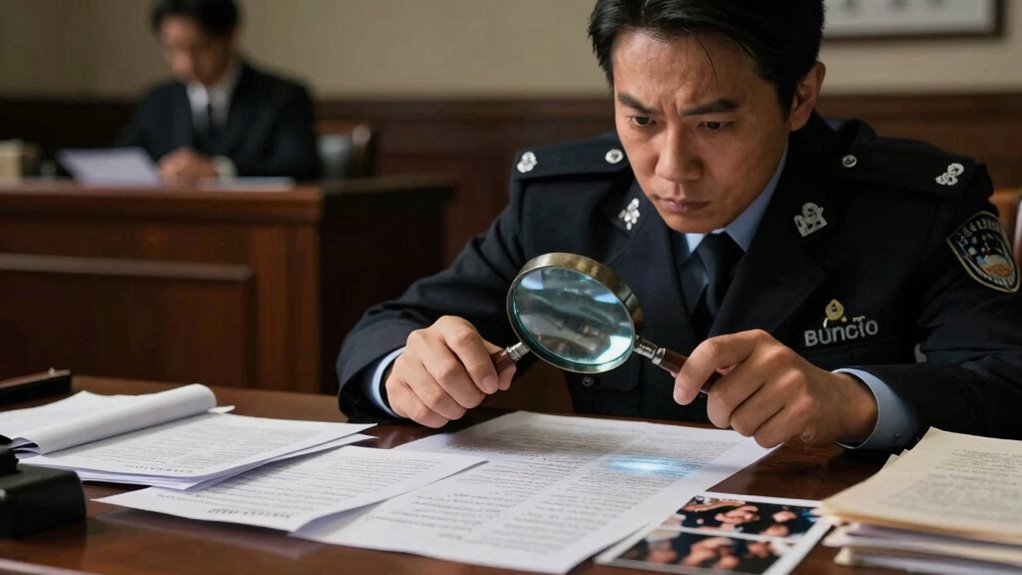

In high-profile cases, you should understand that suspicion is based on rumors, assumptions, or circumstantial clues, while evidence is concrete and verified proof collected through strict protocols. Suspicion alone isn’t enough for legal actions or guilt recognition, whereas evidence holds the weight needed in court. Public and media influence can blur these lines, so it’s essential to distinguish between the two for a fair perspective. Keep exploring to learn how these differences shape justice and perception.
Key Takeaways
- Suspicion is based on assumptions or circumstantial clues, while evidence is tangible, verified proof collected through strict protocols.
- Forensic techniques transform suspicion into credible evidence that can withstand legal scrutiny.
- Media can sensationalize suspicions, potentially distorting facts and influencing public perception.
- Legal standards demand verified evidence for conviction, not mere suspicion or media reports.
- Critical evaluation and procedural integrity are essential to prevent wrongful judgments and ensure fair trials.
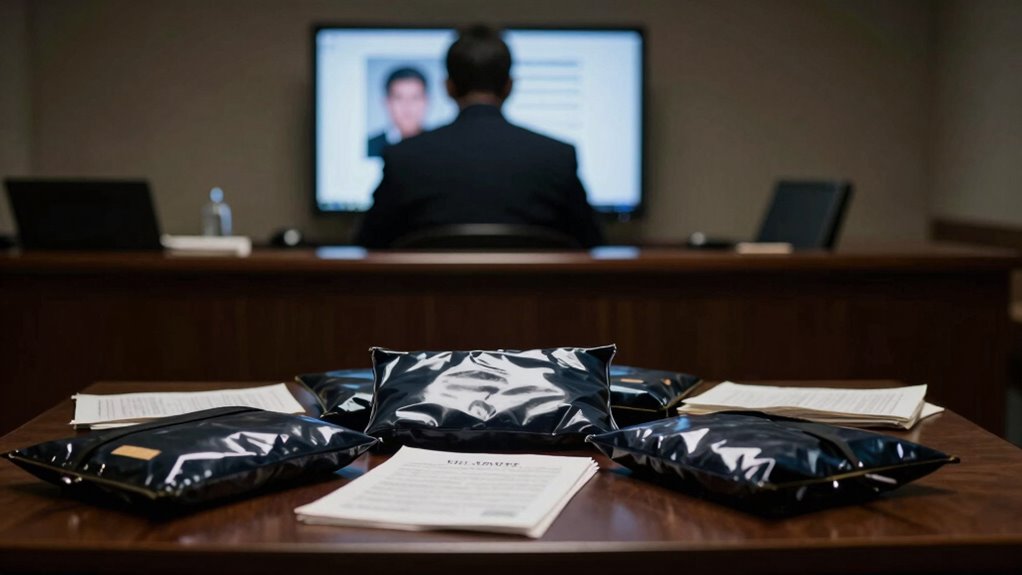
In high-profile cases, the line between suspicion and evidence often becomes blurred, but understanding the difference is essential. When you’re caught in the spotlight, it’s easy to mistake public speculation or media narratives for concrete proof. Suspicion might spark from circumstantial evidence, rumors, or assumptions, but it doesn’t carry the weight required to establish guilt. Evidence, on the other hand, must be tangible, verifiable, and collected following strict protocols. Recognizing this distinction is crucial because it affects legal outcomes and public perception alike.
Suspicion alone isn’t enough; concrete, verified evidence is essential to establish guilt in high-profile cases.
Forensic techniques play a pivotal role in turning suspicion into evidence. When law enforcement investigates, they rely on scientific methods—such as fingerprint analysis, DNA testing, ballistics, and digital forensics—to gather proof that can withstand scrutiny in court. If properly applied, forensic techniques ensure that what’s presented as evidence is credible and unbiased. Media influence, however, can muddy these waters. Journalists and commentators often amplify suspicion by sensationalizing details, which can lead to a distorted view of the case. This pressure can cause law enforcement or legal teams to rush or embellish findings, risking the integrity of the evidence.
You must understand that suspicion isn’t enough to convict someone. It might motivate further investigation, but it doesn’t replace the need for concrete proof. When the media highlights certain theories or unverified claims, it can sway public opinion and even influence the legal process, sometimes prematurely. This is why courts demand rigorous standards for evidence collection and presentation, ensuring that decisions aren’t based on conjecture or media hype.
In high-profile cases, the challenge lies in maintaining objectivity amid intense scrutiny. You need to distinguish between what’s suspected and what’s proven through forensic techniques. While media influence may shape public sentiment, it shouldn’t dictate legal outcomes. Investigators and legal professionals must rely on verified evidence, not just suspicion, to build a case. This careful process helps uphold justice and prevents wrongful accusations based on unreliable information. Additionally, proper evidence collection is essential to prevent wrongful convictions and ensure fair trials. The use of scientific standards and adherence to protocols ensures that evidence remains credible and unbiased, even in the face of public pressure. Recognizing the importance of forensic techniques can help prevent premature judgments and promote a fair legal process. Moreover, understanding the difference between suspicion and evidence can help you critically evaluate the information presented during high-profile cases, fostering a more informed perspective. Ultimately, understanding the difference between suspicion and evidence empowers you to critically evaluate what you hear and see, especially when the stakes are high and the spotlight is on.

AncestryDNA + Traits Genetic Test Kit: Personalized Genetic Traits, DNA Ethnicity Test, Origins & Ethnicities, Complete DNA Test, Ancestry Reports
TOP-SELLING CONSUMER DNA TEST: From your origins in over 3,600+ places around the world to the most connections…
As an affiliate, we earn on qualifying purchases.
As an affiliate, we earn on qualifying purchases.
Frequently Asked Questions
How Do Investigators Distinguish Between Suspicion and Concrete Evidence?
You can tell suspicion from concrete evidence by examining circumstantial clues that point toward guilt, rather than mere hints. Investigators assess witness credibility, ensuring testimonies are reliable and consistent. Concrete evidence involves tangible items or facts, like DNA or surveillance footage, that directly link a suspect to a crime. Suspicion remains uncertain, but solid evidence provides undeniable proof, making the case stronger and more legally sound.
Can Suspicion Alone Lead to a Conviction in High-Profile Cases?
No, suspicion alone can’t lead to a conviction, even in high-profile cases. It’s like building a house on shifting sands—circumstantial reasoning and intuitive judgments can guide investigations but aren’t enough for a conviction. You need concrete evidence to prove guilt beyond a reasonable doubt. Suspicion may spark a case, but it’s solid evidence that seals the verdict, transforming mere intuition into undeniable truth.
What Role Does Media Play in Shaping Public Perception of Evidence?
Media influence plays a significant role in shaping public perception of evidence in high-profile cases. You see, media coverage can amplify certain details, often sensationalizing them, which sways how the public views the case. This shaping of perception occurs even before all evidence is thoroughly examined in court. So, your opinion might be influenced more by media narratives than by the actual evidence presented, impacting the case’s overall perception.
Are There Legal Limits to What Can Be Considered Suspicion?
Imagine stepping across a delicate bridge; the legal thresholds for suspicion are like its sturdy ropes—carefully measured to prevent falling into unfounded accusations. Legally, suspicion must be grounded in reasonable doubt, meaning it’s more than mere hunches but not yet proof. Authorities can’t rely solely on suspicion to justify actions or convictions. This boundary guarantees fairness, safeguarding against unjust accusations and maintaining the integrity of the justice process.
How Does the Burden of Proof Differ Between Suspicion and Evidence?
You’re comparing suspicion and evidence, so the burden of proof differs greatly. Intuition versus inference plays a role here: suspicion relies on instinct or presumption, which isn’t enough for proof, while evidence provides concrete facts. With suspicion, the burden remains on the accuser’s assumptions, but with evidence, proof must be clear and convincing. Ultimately, presumption isn’t enough; proof must stand on its own to meet legal standards.

TillBio Latent Fingerprint Kit 13-Piece Set, Magnetic Two-Tone Powder, Magnetic Brush, Fingerprint Cards & More for Classroom and Forensic Science Education (13-in-1 Set)
All-Inclusive Contents – Includes magnetic two-tone fingerprint powder (30ml), a magnetic dusting brush, an acrylic plate, 25 fingerprint…
As an affiliate, we earn on qualifying purchases.
As an affiliate, we earn on qualifying purchases.
Conclusion
Think of suspicion as the flickering shadow on the wall, hinting at what might be lurking behind. Evidence, on the other hand, is the steady lighthouse beam, illuminating truth amidst the fog. In high-profile cases, you must navigate carefully—trusting the lighthouse to guide you, not the shadow’s dance. Only then can justice shine clear, casting away doubt and revealing what truly lies beneath the surface.

Computer Forensics Tools, Data Recovery Kit with iRecovery, Phone Recovery
The PBN-TEC Digital Investigation Kit is a comprehensive eight-tool investigation system trusted by law enforcement agencies, private investigators,…
As an affiliate, we earn on qualifying purchases.
As an affiliate, we earn on qualifying purchases.

Understanding Firearm Ballistics: Basic to Advanced Ballistics, Simplified, Illustrated and Explained.
basic to advanced ballistics simplified, illustrated & explained
As an affiliate, we earn on qualifying purchases.
As an affiliate, we earn on qualifying purchases.