
Researchers track stalking escalation through behavioral signs like increased contact attempts, such as frequent calls, messages, or in-person visits, signaling growing obsession. They also observe obsessive surveillance behaviors like online monitoring, GPS tracking, and invasive gift-giving. Red flags include boundary violations, threats, and sudden hostility, which heighten the risk of violence. Monitoring behaviors tend to intensify gradually—understanding these signs can help you recognize danger early and learn how to respond effectively.
Key Takeaways
- Researchers monitor increasing contact frequency, including more messages, calls, and in-person visits, indicating behavioral escalation.
- Escalation signs include obsessive online activity, GPS tracking, hidden cameras, and intrusive surveillance behaviors.
- Behavioral cues such as boundary violations, threats, and hostility reflect a rising risk of violence.
- Persistent, invasive behaviors like unwanted gifts and stalking symbolism signal obsessive monitoring.
- Documentation of incidents and digital evidence helps identify patterns and assess escalation over time.
What Are the Early Signs of Escalating Stalking Behavior?

Early signs of escalating stalking behavior often start subtly but can quickly become more concerning. You might notice the stalker’s actions driven by complex motivational factors, such as obsession, jealousy, or perceived rejection, which are rooted in stalking psychology. Initially, they may appear harmless, like showing up unexpectedly or sending repeated messages. Over time, these behaviors tend to intensify as the stalker seeks to regain control or satisfy their fixation. You might observe increased contact frequency, more intrusive surveillance, or attempts to gather personal information. Recognizing these early signs is vital, as they indicate a potential escalation pattern. Understanding the underlying motivational factors helps explain why stalking behaviors escalate, emphasizing the importance of responding promptly to prevent further harm. Additionally, the use of high-tech devices like GPS trackers and hidden cameras can signal an escalation beyond typical obsessive behaviors, making early detection even more crucial. Being aware of behavioral warning signs can help individuals identify when stalking is beginning to escalate and seek help before the situation worsens. Recognizing the presence of behavioral escalation cues is essential to intervene early and protect oneself from potential harm. Moreover, awareness of stalking psychology provides valuable insight into the stalker’s mindset, enabling better preventive strategies.
How Do Contact Frequency and Intensity Change as Stalking Escalates?

As stalking escalates, you’ll notice the stalker increasing how often they contact you. They also start using more intense and persistent methods to get your attention. These changes make their behavior harder to ignore and more difficult to escape. Additionally, the behavior may reflect a pattern similar to the obsessive tendencies seen in individuals with a strong desire for personal branding, which can further intensify their actions.
Increasing Contact Frequency
Initially, stalkers often increase the frequency of their contact gradually to test boundaries and gauge their target’s reactions. This escalation can seem subtle at first, with more texts, calls, or in-person visits. As they observe your responses, their attempts become more persistent. Many stalking myths suggest victims should ignore these behaviors, but early signs of increasing contact are important indicators of escalation. Recognizing this pattern helps you seek victim support and take safety measures. You might notice more frequent messages or attempts to find you in person. This rising contact frequency signals the stalker’s growing obsession and intent to maintain control. Staying alert to these signs enables you to respond proactively and seek help before the behavior intensifies further. Monitoring behavior escalation can help identify when a situation might become dangerous. Being aware of behavioral patterns is vital for understanding the progression of stalking activities and protecting yourself effectively.
Escalating Communication Intensity
As contact frequency increases, stalkers often intensify the way they communicate, making their efforts more persistent and invasive. You might notice cyber harassment escalating with more frequent messages, calls, or social media interactions designed to overwhelm you. They may use emotional manipulation to evoke guilt, fear, or obligation, deepening their control. The intensity of their communication can become relentless, crossing boundaries from casual contact to invasive surveillance. This escalation aims to break your emotional defenses, increasing your sense of vulnerability. You’ll likely see a shift from sporadic attempts to a constant barrage designed to dominate your attention and response. Understanding this pattern helps you recognize how increasing contact isn’t just about frequency but also about the growing invasiveness and emotional manipulation that intensify as stalking progresses.
More Persistent Stalking Behaviors
When stalking escalates, the behaviors become increasingly persistent and invasive, crossing from occasional contact to relentless efforts to monitor and control you. The stalker’s psychology drives them to escalate contact frequency and intensity, making their actions harder to ignore. They might increase the number of calls, messages, or visits, often ignoring your attempts to set boundaries. This persistence can be alarming, prompting you to focus on victim self protection. Recognizing these patterns helps you stay alert. Here’s a snapshot of escalation:
| Contact Type | Frequency | Intensity |
|---|---|---|
| Phone calls | Multiple daily | Persistent and urgent |
| Text messages | Hourly | Repetitive and invasive |
| In-person visits | Weekly, then daily | Intrusive and controlling |
| Social media | Constant monitoring | Stalking behaviors |
Understanding these signs aids in your victim self protection.
Recognizing Obsessive Monitoring and Unwanted Surveillance

If you notice someone’s behavior becoming unusually invasive, it could be a sign of obsessive monitoring. Persistent following patterns and excessive checking habits are clear indicators that surveillance is escalating beyond normal boundaries. Recognizing these behaviors early can help you take steps to protect yourself before the situation worsens. Being aware of free floating tendencies can aid in identifying when monitoring is becoming unanchored and unpredictable. Such behaviors may also be linked to security system oversights that allow for unnoticed monitoring. Conducting regular privacy audits can help you identify vulnerabilities and prevent unauthorized surveillance.
Unusual Stalking Behaviors
Unusual stalking behaviors often involve obsessive monitoring and unwanted surveillance that can be difficult to detect but are essential to recognize. You might notice subtle signs like frequent, unexplained online activity or messages that contain stalking symbolism. Cyberstalking patterns often include persistent checks on your social media, sending unwanted gifts, or hiding in digital spaces. These actions reflect an obsessive need to monitor your life constantly. Recognizing these behaviors early helps prevent escalation. Below is a table highlighting common signs:
| Signs of Unusual Stalking Behaviors | Examples |
|---|---|
| Unsolicited online interactions | Repeated messages, friend requests |
| Digital surveillance | Tracking locations, spyware |
| Use of stalking symbolism | Hidden messages, coded images |
| Excessive monitoring | Visiting your profiles often |
| Unusual gifts or gestures | Unexpected presents, notes |
Persistent Following Patterns
Persistent following patterns are among the clearest signs of obsessive monitoring and unwanted surveillance. They reflect deep-rooted aspects of stalker psychology, where the stalker feels compelled to track their victim constantly. You might notice someone repeatedly appearing near your home, workplace, or usual routes, even without a clear reason. These behaviors demonstrate an inability to let go, often escalating over time. Recognizing these signs is vital for victim support, as persistent following can cause significant fear and distress. It’s important to document these patterns and seek help from authorities or support networks. Understanding that such behaviors are driven by an obsession helps you respond appropriately and guarantees your safety. Early recognition can prevent escalation and aid in effective intervention. Additionally, understanding regulatory compliance related to protective measures can assist in establishing necessary legal boundaries. Being aware of behavioral signs linked to obsessive monitoring can further empower victims to take timely action. Recognizing these behaviors also underscores the importance of psychological factors that influence stalker actions, helping responders tailor their support strategies.
Excessive Checking Habits
When someone engages in excessive checking behaviors, it often indicates an obsessive need to monitor or surveil. You might notice patterns like constant social media monitoring, where they repeatedly refresh profiles or posts. This behavior aligns with cyberstalking patterns that involve relentless digital surveillance. To recognize warning signs, look for:
- Frequent visits to the person’s social media profiles, even when unnecessary
- Repeatedly checking for updates or changes online
- Monitoring messages or interactions obsessively
- An inability to stop or control the urge to surveil digitally
These behaviors show a compulsive need to track the target’s activities, often escalating from casual curiosity to persistent unwanted surveillance. Recognizing excessive checking habits can help identify early signs of stalking escalation.
What Are the Red Flags That Indicate Increasing Risk of Violence?
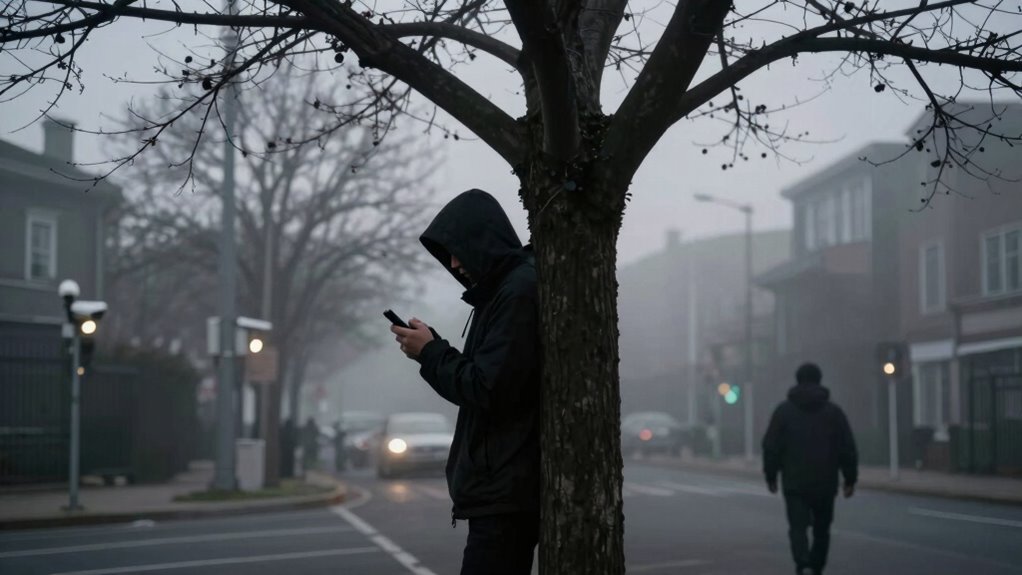
Recognizing red flags that signal an increasing risk of violence is essential for your safety. Pay attention when the stalker’s behaviors become more intense or unpredictable, such as threats or attempts to isolate you. Understanding stalking motivations can reveal underlying psychological profiles that may escalate to violence, especially if the individual shows signs of obsession, jealousy, or possessiveness. Sudden changes in their demeanor, such as anger or hostility, are major warning signs. If they start to ignore boundaries, escalate their efforts to contact you, or display aggressive tendencies, the risk heightens. Trust your instincts—these behaviors indicate a potential for violence and should be taken seriously. Early recognition of these red flags can be crucial in preventing harm. Monitoring behavioral escalation can help identify when a stalker is becoming more dangerous, especially if their actions begin to mirror patterns associated with psychological profiles linked to violent behavior. Being aware of risk factors can further improve your ability to respond appropriately and seek help promptly.
How Can You Document and Respond to Escalating Stalking Behaviors?

To effectively respond to escalating stalking behaviors, it’s essential to document every incident accurately and promptly. Proper documentation helps establish patterns and provides evidence if legal action becomes necessary. Here are four ways to do this:
Document every incident promptly to establish patterns and gather evidence for legal action.
- Keep detailed logs of all encounters, noting dates, times, locations, and descriptions.
- Save all cyber stalking evidence, including emails, texts, and social media messages.
- Use social media monitoring tools to track any suspicious activity or messages.
- Take screenshots of threatening or harassing posts or messages for future reference.
Responding promptly and systematically helps you stay organized and prepared. Remember, thorough documentation can be pivotal in protecting yourself and escalating your response when needed.
When and How Should You Seek Help or Legal Action?

Knowing the right moments to seek help or take legal action can be crucial in stopping a stalker’s behavior. Recognize when cyberstalking patterns become persistent or threatening, signaling it’s time to act. If you notice ongoing harassment despite warnings, consider legal intervention timing to protect yourself. Acting early can prevent escalation and further harm. Being aware of caregiving challenges can also prepare you to handle stressful situations more effectively. Additionally, understanding the behavioral signs of escalation can help you identify when a situation may be reaching a dangerous point and require immediate action. Monitoring electric dirt bike horsepower can sometimes be relevant if a stalker uses high-powered bikes to intimidate or follow, highlighting the importance of safety precautions. Recognizing threatening behaviors early is key to preventing situations from worsening, especially when combined with an understanding of home safety measures that can help you respond effectively.
Frequently Asked Questions
How Do Stalking Behaviors Vary Across Different Demographics?
You’ll notice that stalking behaviors vary across demographics, with gender differences playing a significant role. Men might exhibit more aggressive or physical behaviors, while women’s stalking tends to involve emotional or digital harassment. Cultural influences also shape these actions, affecting what’s considered acceptable or normal. Recognizing these variations helps in tailoring prevention efforts and understanding why behaviors differ across groups, making interventions more effective and culturally sensitive.
What Psychological Factors Contribute to Stalking Escalation?
Imagine your mind as a garden where certain psychological factors, like attachment styles and cognitive biases, seed escalation. These factors can make someone more prone to stalking escalation by fostering obsessive thoughts or misinterpreting signals. If you have anxious attachment, you might cling more intensely, while cognitive biases distort reality, making escalation seem justified. Recognizing these influences helps you understand how psychological triggers propel dangerous behaviors forward.
Can Stalking Behaviors Predict Future Violence?
Yes, stalking behaviors can predict future violence, especially when analyzing stalking patterns through thorough risk assessment. If you notice escalating behaviors, increased intrusion, or persistent contact despite rejection, these signs suggest a higher likelihood of violence. Monitoring these patterns helps you assess the threat level accurately, allowing prompt intervention. Recognizing the connection between specific stalking behaviors and potential violence is vital for effective prevention and safety planning.
How Effective Are Current Intervention Strategies?
Current intervention strategies are fairly effective when you include legal consequences and support programs. You’re more likely to see behavior change when offenders face clear legal repercussions and access resources like counseling or supervision. These combined efforts discourage escalation and promote accountability. However, success varies based on individual circumstances and the consistency of enforcement. Overall, integrating legal measures with support programs offers the best chance to prevent future harm and promote safety.
What Role Does Technology Play in Stalking Escalation?
Technology markedly influences stalking escalation by enabling cyber harassment and tracking digital footprints. You might find that stalkers use social media, messaging apps, or GPS to monitor your activities or invade your privacy. This digital presence allows them to escalate their behaviors quickly, making boundaries harder to enforce. Staying aware of your digital footprints and adjusting privacy settings can help reduce the risk of escalation through technology.
Conclusion
Understanding the signs of escalating stalking is like watching a storm brew on the horizon—you need to recognize the dark clouds early. By paying attention to behavior changes, documenting incidents, and acting promptly, you can protect yourself before things intensify. Don’t wait until the situation feels overwhelming; small sparks can ignite a wildfire. Stay vigilant, seek help when needed, and remember, your safety is the priority—acting early can prevent a dangerous escalation.