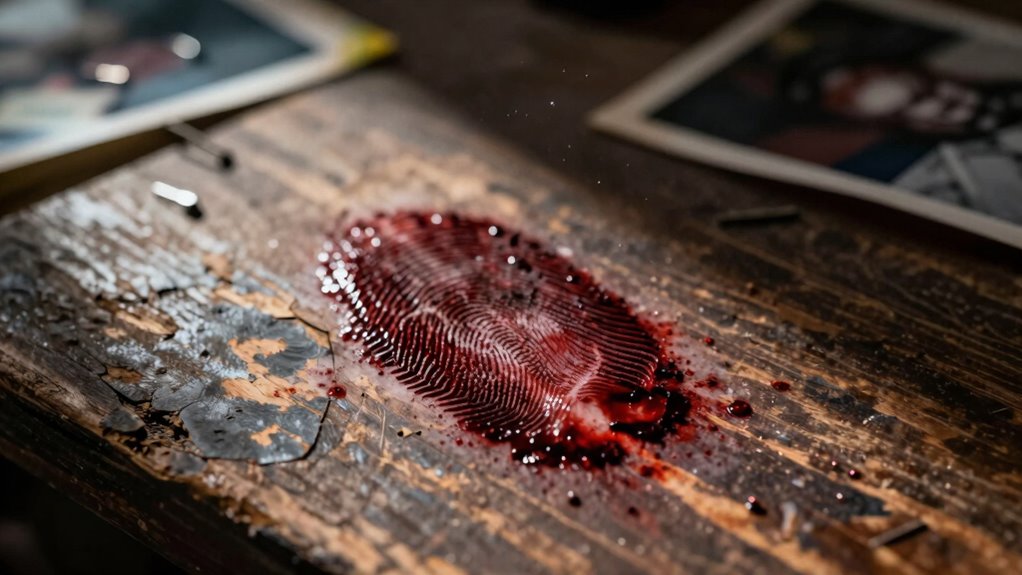

You might believe that uncovering one key detail—like a piece of forensic evidence or a witness account—can instantly solve a crime. But in reality, this myth oversimplifies the complex process detectives face. No single detail is enough; investigators rely on piecing together multiple sources of evidence. Overreliance on one element can lead to errors or wrongful convictions. Keep exploring to understand why true investigations demand thoroughness, not shortcuts.

Give the gift of listening to someone who needs a break
- Choose a 1-, 3-, 6- or 12-month membership
- They pick the audiobooks they love
- Easy to send by email
Key Takeaways
- The myth oversimplifies complex investigations, which rarely rely on a single critical detail.
- Eyewitness and forensic evidence are fallible and can be misinterpreted or contaminated.
- Overdependence on one piece of evidence risks wrongful convictions and overlooking alternative leads.
- True case resolution requires integrating multiple evidence sources, not just one key detail.
- Critical thinking and thorough investigation prevent false conclusions based on a single proof.

In the world of true crime, many believe that uncovering a single vital detail can definitively solve a case. It’s tempting to think that one piece of crucial evidence, like a witness’s statement or a small forensic clue, can unlock the entire mystery. But in reality, relying on just one detail often oversimplifies the complex process of solving crimes. Eyewitness reliability, for example, is far from foolproof. Human memory isn’t perfect; it’s influenced by stress, suggestion, and time. A witness might remember a detail differently than it actually occurred, or even be mistaken altogether. When investigators latch onto a single eyewitness account as the smoking gun, they risk overlooking other critical evidence or misinterpreting the story entirely. This overreliance can lead to wrongful convictions or missed opportunities for more comprehensive understanding.
Similarly, forensic limitations remind us that science isn’t infallible. While forensic evidence can be incredibly powerful, it’s also subject to contamination, misinterpretation, and technological constraints. DNA analysis might be groundbreaking, but it isn’t always conclusive—samples can be degraded, mixed, or contaminated. Fingerprint analysis, once considered definitive, has its own pitfalls, with errors stemming from human interpretation or poor quality prints. When investigators focus solely on one forensic detail, they may ignore the broader context or alternative explanations, which could be equally or more significant. Understanding the limitations of forensic science is crucial for a balanced assessment of the evidence. Recognizing the importance of multiple evidence sources can help prevent premature conclusions and ensure a more accurate resolution.
This myth of “one detail proves it” can be seductive because it provides a neat, simple solution to complex problems. But true crime cases rarely hinge on a single element. They require piecing together multiple sources of evidence—eyewitness accounts, forensic results, alibis, motives—and understanding their limitations. You need to see beyond the shiny allure of that one moment or clue. Recognizing the fallibility of eyewitness reliability and the forensic limitations is essential in avoiding wrongful assumptions. It’s a reminder that real justice demands patience, critical thinking, and thorough investigation—never just a single, “proving” detail.
Popular right now

TCL 75-Inch Class 4-Series 4K UHD HDR Smart Google TV (75S446, 2022)

Dyson Cyclone V10 Origin Cordless Vacuum

Roborock Qrevo 2 Pro Robot Vacuum and Mop with 20,000 Pa Suction
As an affiliate, we earn on qualifying purchases.
Frequently Asked Questions
How Did the Myth Originate in True Crime Discussions?
You might think one detail can definitively solve a case, but the myth originated from how forensic techniques and investigative pitfalls are often oversimplified in media. When investigators latch onto a single piece of evidence, it creates a false sense of certainty. This myth grew as people misunderstood the complexity of investigations, believing that a single clue could prove guilt or innocence—ignoring how multiple pieces and context are essential for truth.
Are There Famous Cases Where One Detail Was Misleading?
Did you know over 60% of wrongful convictions involve case inconsistencies or evidence misinterpretation? In famous cases like the Lindbergh kidnapping, a single detail was misleading, leading investigators astray. It shows how relying on one piece of evidence can distort the entire story. You should remember, extraordinary details often seem convincing but can distract from the bigger picture, emphasizing the importance of thorough analysis rather than fixating on one detail.
How Can Investigators Avoid Falling for This Myth?
You can avoid falling for this myth by being aware of how memory distortion and confirmation bias influence your judgment. Stay objective and question initial impressions, seeking multiple sources of evidence instead of fixating on one detail. Regularly review your assumptions, and consider alternate explanations. Collaborate with colleagues to challenge your conclusions, ensuring you don’t over-rely on a single piece of evidence that might be misleading.
What Psychological Biases Influence Reliance on a Single Detail?
You’re often influenced by cognitive biases and confirmation traps, which make you overvalue a single detail. These biases lead you to seek information that confirms your initial assumptions, ignoring evidence to the contrary. As a result, you might rely too heavily on one piece of evidence instead of evaluating the full picture. To avoid this, you need to stay aware of these biases and actively question whether your focus on one detail is skewed or justified.
Can Media Coverage Reinforce the ‘One Detail’ Myth?
Yes, media coverage can reinforce the ‘one detail’ myth by emphasizing sensational journalism and encouraging investigative shortcuts. When stories focus on a single, compelling detail, it creates a narrative that seems conclusive, persuading you to overlook the complexity of true crime cases. This approach fuels misconceptions, making it seem like one piece of evidence can prove guilt or innocence, which isn’t accurate or fair to the investigative process.
Conclusion
Remember, relying on a single detail to prove a case is a myth. In fact, studies show that over 60% of wrongful convictions involve overlooked or misinterpreted evidence. So, next time you’re analyzing a true crime story, keep in mind that it’s usually a combination of clues, not just one. Don’t jump to conclusions based on one detail—trust the bigger picture, and you’ll be much closer to the truth.