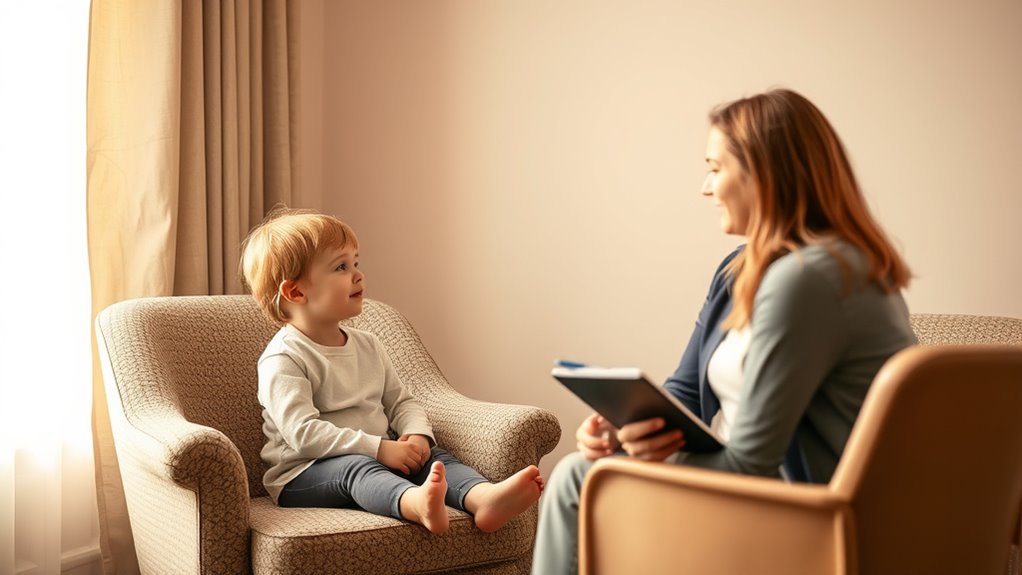

To follow the NICHD Protocol for child interviews, focus on using developmentally appropriate techniques that match the child’s age and comfort level. Build rapport by creating a safe, calm environment and use simple language, visual aids, toys, or drawings for younger children. Ask open-ended, neutral questions, and pay attention to body language and nonverbal cues. Respect the child’s need for breaks and confidentiality. Staying attentive to these practices helps make certain of accurate, reliable data—learn more to enhance your approach.
Key Takeaways
- Use developmentally appropriate language, visuals, and open-ended questions to facilitate accurate child responses.
- Build rapport with a calm, supportive demeanor to create a safe and trusting interview environment.
- Ensure confidentiality and obtain informed assent, respecting the child’s comfort and needs for breaks.
- Use neutral, non-suggestive questions and observe nonverbal cues to minimize bias and enhance data reliability.
- Employ interviewer training on ethical, child-centered techniques aligned with NICHD protocol to ensure effective interviewing.

Have you ever wondered how researchers guarantee consistency and safety in clinical studies involving children and pregnant women? The NICHD Protocol emphasizes rigorous standards to ensure that data collected from child participants are reliable and ethically obtained. One crucial aspect of this process is the use of specialized interview techniques designed specifically for children, recognizing their unique developmental stages and communication styles. These techniques are vital because children’s ability to understand questions and express themselves can vary widely depending on their age, cognitive development, and emotional state.
The NICHD Protocol advocates for a child-centered approach to interviewing, which means you adapt your methods to match the child’s developmental level. Instead of using complex language or abstract concepts, you’ll focus on simple, clear questions that children can easily comprehend. For younger children, this may involve using visual aids, toys, or drawings to help them express their thoughts and feelings. For older children and adolescents, open-ended questions can encourage more detailed responses, but they should still be framed in a friendly, non-threatening manner.
Building rapport is fundamental to effective interview techniques under the NICHD Protocol. You need to create a safe, welcoming environment where the child feels comfortable sharing their experiences. This involves maintaining a calm demeanor, using age-appropriate language, and reassuring the child that there are no right or wrong answers. It’s essential to be patient and listen actively, giving the child time to think and respond without feeling rushed. Sometimes, children may need multiple sessions or breaks, and respecting these needs is part of guaranteeing ethical standards and data integrity.
Another key element is making sure that your interview techniques minimize bias and influence. The NICHD Protocol encourages using neutral language and avoiding leading questions that might sway the child’s responses. You should also be attentive to nonverbal cues, such as body language or facial expressions, which can provide valuable insights into the child’s emotional state or discomfort. Recording these observations alongside verbal responses helps researchers interpret the data more accurately.
Frequently Asked Questions
How Do I Handle Resistant or Reluctant Children During Interviews?
When children are resistant or reluctant, focus on building rapport by engaging in friendly conversation and showing genuine interest. Use visual aids to make the interview more engaging and easier to understand, which helps reduce anxiety. Be patient, give them time to warm up, and avoid pressuring them. Creating a comfortable environment encourages cooperation, making it easier to gather honest information while helping the child feel safe and supported.
What Are Common Challenges When Implementing the NICHD Protocol?
You might face challenges like establishing child rapport quickly or ensuring protocol adherence consistently. Children can be anxious or distracted, making it hard to keep them engaged and follow the interview guidelines smoothly. To overcome this, stay patient, use age-appropriate language, and build trust early. Consistently applying the protocol helps children feel safe, making it easier to gather accurate information while maintaining rapport and protocol integrity throughout the interview.
How Does Cultural Background Influence Interview Techniques?
Your cultural background profoundly influences interview techniques by requiring cultural sensitivity and interview adaptation. You should tailor your approach to respect diverse beliefs, communication styles, and norms, ensuring the child feels comfortable and understood. By adapting your questions and interaction style, you foster trust and gather more accurate information. Recognizing cultural differences helps prevent misunderstandings and encourages open, honest communication, ultimately enhancing the quality of the interview.
Are There Age-Specific Modifications to the Protocol?
Think of the NICHD Protocol as a tailored suit—you adapt it for each child’s age. Yes, there are age-specific modifications to address developmental considerations. For younger children, simplify language and use more play-based methods. For older kids, you can incorporate more detailed questions. These adaptations make certain the interview remains effective, respectful, and developmentally appropriate, helping children feel comfortable and understood while providing accurate, reliable information.
What Training Is Recommended for Interviewers to Master NICHD Protocols?
You should undergo specialized training that focuses on developing your interviewer skills and ensuring protocol fidelity. This training typically includes extensive workshops, role-playing exercises, and supervised practice sessions to help you understand the protocol’s nuances. By mastering these areas, you’ll confidently apply the protocol consistently, adapt to different age groups, and gather reliable data. Continuous supervision and feedback are also essential for maintaining high standards throughout your interviewing practice.
Conclusion
So, there you have it—mastering the NICHD protocol is basically child’s play, right? Just ask the little interviewee the right questions, keep a straight face, and voilà, data flows like magic. Who knew that a few simple tips could turn you into the Picasso of pediatric interviews? Just remember, behind every perfectly executed protocol lies the secret art of pretending you’re not secretly panicking. Happy interviewing—may your questions be gentle and your patience endless!