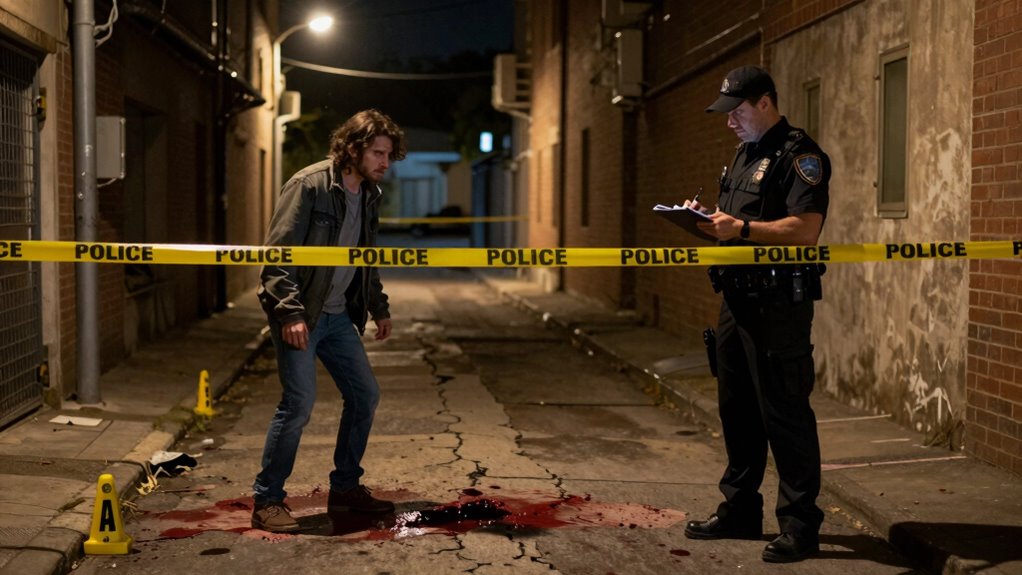

You shouldn’t assume that a suspect’s actions at a crime scene reveal their true personality. Behaviors can be strategic, impulsive, or influenced by immediate circumstances, making it risky to jump to conclusions. People often act differently under stress or in specific situations, so relying solely on these cues can lead to inaccurate profiles. To truly understand someone’s personality, you need to take into account broader psychological factors. If you’re curious about how to avoid these pitfalls, keep exploring this topic further.
Key Takeaways
- Crime scene actions are often strategic or influenced by immediate circumstances, not true reflections of personality.
- Behavioral cues at a crime scene can be manipulated to send messages or conceal identity.
- Situational factors and emotional states can cause behaviors that differ from an offender’s usual personality.
- Assuming consistency in behavior risks oversimplifying human complexity and misinterpreting motives.
- Incorporating psychological context prevents wrongful profiling and improves accuracy in offender analysis.
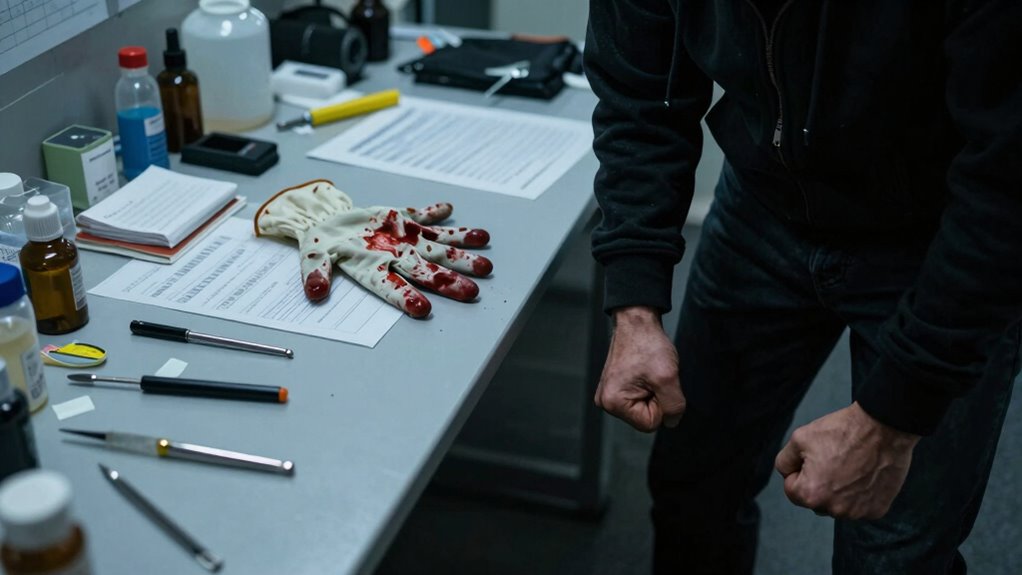
Understanding the differences between crime scene behavior and personality can help you better analyze criminal tendencies. When you’re studying a crime scene, it’s tempting to jump to conclusions about the offender’s personality based on their actions. However, forensic psychology shows us that behavior at a crime scene doesn’t always reflect a person’s true character. Offenders often act in ways that are carefully crafted, either consciously or unconsciously, to send a certain message or conceal their identity. Relying solely on behavioral clues without considering the broader psychological context can lead you astray. That’s why understanding behavioral consistency plays a key role. In forensic psychology, behavioral consistency refers to the tendency for a person’s actions to resemble their usual patterns over time. But this consistency isn’t always evident in crime scene behavior, especially if the offender is trying to manipulate perceptions or avoid detection.
You might observe certain behaviors at a crime scene—like cleanliness, mutilation, or specific staging—and assume they reveal the perpetrator’s personality traits. But these behaviors could be situational, strategic, or even impulsive. For example, an offender might act meticulously to mislead investigators, even if they’re generally impulsive or disorganized. Conversely, someone might leave chaotic clues not because of their personality but because they’re overwhelmed or panicked. It’s essential to differentiate between what a person’s behavior at a crime scene indicates about their personality and what it reveals about their current state or intentions. Forensic psychology emphasizes that crime scene behavior is often motivated by situational factors rather than stable personality traits. Recognizing that behavioral cues can be influenced by immediate circumstances is crucial for accurate interpretation. A person’s emotional state during the crime can significantly impact their actions, further complicating the connection to their personality.
Attempting to draw direct links from crime scene actions to personality traits is risky because it oversimplifies human behavior. People are complex, and many factors influence how they act in particular moments. A person’s background, emotional state, and immediate circumstances can all drive behavior that doesn’t align with their usual personality. If you ignore this nuance, you risk making inaccurate assumptions, which could impair investigations or lead to wrongful profiling. Recognizing that behavior at a crime scene may not be fully representative of someone’s personality is crucial. It helps you avoid the trap of assuming behavioral consistency where it might not exist—thus making your analysis more accurate and reliable. Additionally, understanding how situational variables influence behavior can aid in developing a more nuanced profile of the offender. Incorporating an awareness of psychological context into your analysis prevents misinterpretations and enhances the accuracy of offender profiling. This awareness is especially important because behavioral variability can occur even within the same individual depending on the circumstances. In the end, combining forensic psychology insights with a cautious interpretation of crime scene behavior enables you to better understand the offender’s true psychological makeup, rather than just their immediate actions.

THE NEURONS OF A CRIMINAL: WHAT THE BRAIN HIDES BEHIND BEHAVIOR
As an affiliate, we earn on qualifying purchases.
As an affiliate, we earn on qualifying purchases.
Frequently Asked Questions
Can Crime Scene Behavior Predict Future Criminal Activity?
You can’t reliably predict future criminal activity based solely on crime scene behavior. Behavioral consistency isn’t guaranteed, as individuals may alter their actions over time. While crime scene cues provide clues, they don’t offer definitive evidence of future behavior. Relying on these factors alone risks misjudging someone’s potential, so it’s essential to combine them with other assessments rather than making assumptions based solely on the scene.
How Reliable Are Behavioral Indicators in Profiling Suspects?
Behavioral indicators can offer clues, but they’re not entirely reliable in profiling suspects. You might notice behavioral inconsistencies, yet these can be misleading or misinterpreted. Profiling limitations mean you shouldn’t rely solely on behavior, as it doesn’t always reflect true personality or future actions. Use behavioral cues as part of a broader investigation, but avoid overconfidence, because suspects can manipulate their actions to deceive.
Do Personality Traits Change After Committing a Crime?
You might think personality traits change after a crime, but personality stability suggests otherwise. While behavior at a crime scene can vary due to situational factors, behavioral consistency over time indicates core traits remain steady. So, even if your actions seem different, your underlying personality likely stays the same. This makes it risky to assume that a single criminal act reflects a permanent change in personality.
Is There a Genetic Link to Criminal Tendencies?
You should know that there’s some evidence suggesting a genetic predisposition to criminal tendencies, but it’s not definitive on its own. Biological factors, like brain chemistry or genetics, can influence behavior, but environment and personal choices play huge roles too. While genetics may contribute to a tendency, they don’t determine criminal actions directly. So, understanding the complex interplay is key before jumping to conclusions about a direct genetic link.
How Do Cultural Differences Affect Crime Scene Behavior Analysis?
You might find that cultural norms profoundly influence crime scene behavior analysis, with studies showing that behavioral expressions vary widely across societies. For example, what’s considered aggressive in one culture might be seen as respectful in another. Understanding these differences helps you avoid misinterpreting behaviors. Recognizing cultural context allows you to better assess motives and avoid false assumptions, making your analysis more accurate and sensitive to diverse behavioral expressions.

Crime Scene Investigator (CSI) Field Guide
As an affiliate, we earn on qualifying purchases.
As an affiliate, we earn on qualifying purchases.
Conclusion
Just remember, like Icarus who soared too close to the sun, jumping to conclusions based solely on crime scene behavior can lead you astray. Behavior at a crime scene offers clues, but it doesn’t tell the whole story of who someone truly is—much like how a mask hides the face beneath. So, tread carefully; don’t let the allure of surface impressions blind you to the deeper truths lurking beneath the surface.

Basic Counseling Techniques: A Beginning Therapist's Tool Kit
Used Book in Good Condition
As an affiliate, we earn on qualifying purchases.
As an affiliate, we earn on qualifying purchases.

The Forensic Psychology of Criminal Minds
As an affiliate, we earn on qualifying purchases.
As an affiliate, we earn on qualifying purchases.