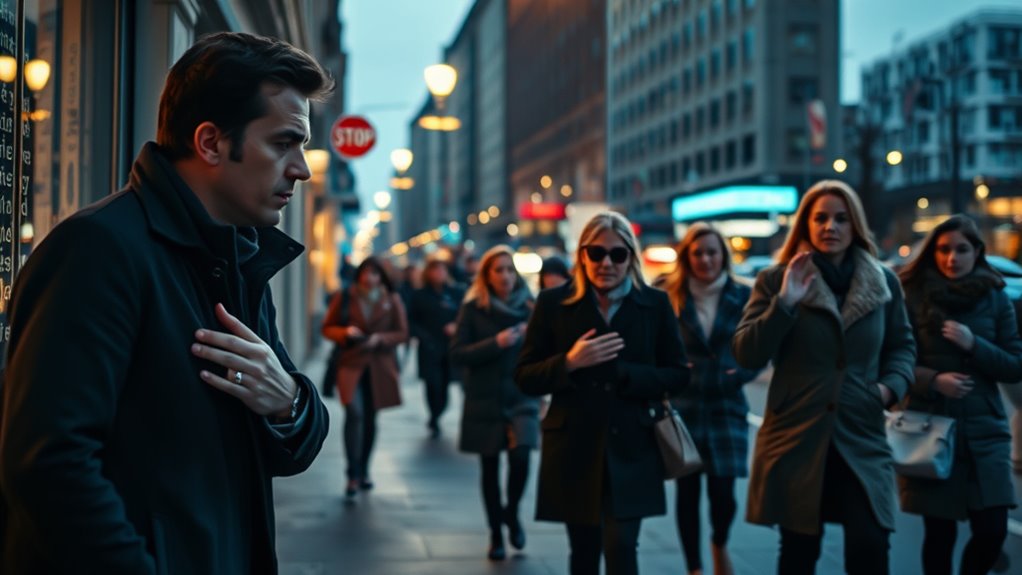

The evidence shows that the bystander effect makes it less likely you’ll help in emergencies when many people are around. As others watch, you might feel responsibility is shared, so you hesitate. Larger groups increase this diffusion of responsibility, encouraging inaction. People tend to look at others for cues, thinking someone more qualified will step in. Understanding these social dynamics can help you recognize when you’re influenced and how to overcome it—if you keep exploring, you’ll find ways to act confidently.
Key Takeaways
- The evidence shows that larger crowds often decrease helping behavior due to diffusion of responsibility.
- Studies indicate that the presence of more bystanders reduces individual likelihood of intervention.
- Social cues and group dynamics heavily influence whether individuals choose to help or not.
- Awareness of the bystander effect can empower individuals to overcome inaction in emergencies.
- Experimental findings support that recognizing social influences can mitigate the diffusion of responsibility.

Have you ever wondered why people often hesitate to help in emergencies when others are present? It’s a question that has puzzled psychologists for decades, and the answer often lies in the way we perceive group responsibility. When you’re in a crowd, you might assume someone else will step up, which diminishes your sense of personal obligation. This phenomenon is known as the diffusion of responsibility, where responsibility feels spread out across all bystanders rather than resting with any one individual. Because of this, you may think, “Someone else will do it,” and delay or avoid intervening altogether. This mental shift is a core component of the bystander effect, and it’s rooted in the idea that responsibility doesn’t solely rest on your shoulders in a group setting. Instead, it’s diffused among everyone present, leading to a collective inaction. You may believe that if no one else is helping, it must not be an emergency, or perhaps that someone more qualified will step in. This diffusion of responsibility creates a kind of psychological safety net, where you feel less personal pressure to act. As a result, the more people are around, the less likely you are to intervene — not because you don’t want to help, but because the social dynamics make it seem less urgent or your responsibility less clear. Recognizing group responsibility can help you understand the social influences at play in these situations.
Research consistently shows that in situations with many witnesses, the likelihood of helping decreases. When you’re part of a large crowd, you tend to look around for cues from others, hoping they’ll take action first. If no one does, you might interpret this as a sign that intervention isn’t necessary or that someone else is already handling it. This indirect form of social influence further encourages inaction. The diffusion of responsibility doesn’t mean you’re inherently selfish or uncaring; it’s a natural psychological response to group settings. The more people there are, the more you may unconsciously think, “Someone else will handle this,” which can paralyze your ability to act. Understanding this dynamic is key to overcoming the bystander effect. If you recognize how group responsibility and diffusion of responsibility work, you can remind yourself that individual action is essential, regardless of how many bystanders are around. Though it’s easy to feel overwhelmed or doubtful in a crowd, knowing these psychological tendencies can empower you to take responsibility and help when it’s needed most.
Frequently Asked Questions
How Can We Effectively Combat the Bystander Effect?
To combat the bystander effect, you should actively develop empathy and foster a sense of social responsibility. When you see someone in need, remind yourself that your intervention can make a difference. Practice stepping up in small situations to build confidence, and encourage others to do the same. By cultivating these qualities, you create a culture where helping others becomes the default response, reducing bystander apathy.
Are There Cultural Differences in Witnessing and Responding to Emergencies?
Think of cultural norms as the invisible threads shaping your reactions when witnessing an emergency. In some societies, you might feel more compelled to step in, demonstrating strong witnessing variations, while others may encourage restraint. These differences influence how quickly and openly you respond. Recognizing these cultural nuances helps you understand that your response isn’t just personal but deeply rooted in the societal fabric, guiding your actions in critical moments.
What Role Does Personality Play in Bystander Intervention?
Your personality traits markedly influence whether you intervene as a bystander. If you’re assertive, empathetic, and confident, you’re more likely to help. Conversely, traits like shyness or fear can inhibit action. Social influence also plays a role; if others are present and not intervening, you might hesitate. Recognizing how your personality and the surrounding social cues impact your response can empower you to act more decisively in emergencies.
Can Training Programs Significantly Reduce the Bystander Effect?
Training programs can notably reduce the bystander effect if they focus on training effectiveness through well-designed program design. When you participate in these programs, you’re better equipped to recognize emergencies and overcome hesitation. Effective programs include scenario-based exercises and clear action steps, which boost your confidence. As a result, you’re more likely to intervene, making the overall community safer. Properly crafted training truly makes a difference in encouraging active bystander behavior.
How Does the Severity of an Incident Influence Bystander Behavior?
You should know that when an incident’s emergency severity increases, bystanders are more likely to respond quickly. Studies show that in severe emergencies, response urgency rises by over 50%, prompting people to act rather than freeze. The more urgent and critical the situation, the less likely the bystander effect will inhibit your willingness to intervene. So, higher severity directly boosts your motivation to help, overcoming hesitation caused by ambiguity or diffusion of responsibility.
Conclusion
Remember, the bystander effect isn’t just a myth; it’s a call to action. When you see someone in need, don’t let fear or doubt hold you back—step forward and make a difference. The world needs more heroes willing to break the silence, to shatter the illusion of helplessness. Your courage can ignite hope in others and turn the tide against indifference. Will you be the one to stand up when it matters most?