
Weather and lighting can trick your outdoor cameras by causing glare, overexposure, or obscuring details. Bright sunlight and glare may wash out images or hide faces and plates, while rain, snow, or fog scatter IR light, reducing night vision. Poor placement and dirty lenses worsen the effects. Adjusting angles, using shading, and selecting cameras with features like WDR or enhanced IR can help. If you keep exploring, you’ll discover more ways to boost your camera’s reliability in tough conditions.
Key Takeaways
- Proper camera placement and shading reduce glare and weather effects, enhancing image clarity in varying conditions.
- Using cameras with WDR and enhanced IR capabilities helps manage exposure and night vision during adverse weather.
- Regular lens cleaning and maintenance prevent dirt or water spots from impairing camera visibility.
- Adjusting camera angles away from direct sunlight minimizes glare and overexposure issues.
- Incorporating weather-resistant hardware ensures consistent performance despite rain, snow, or fog.
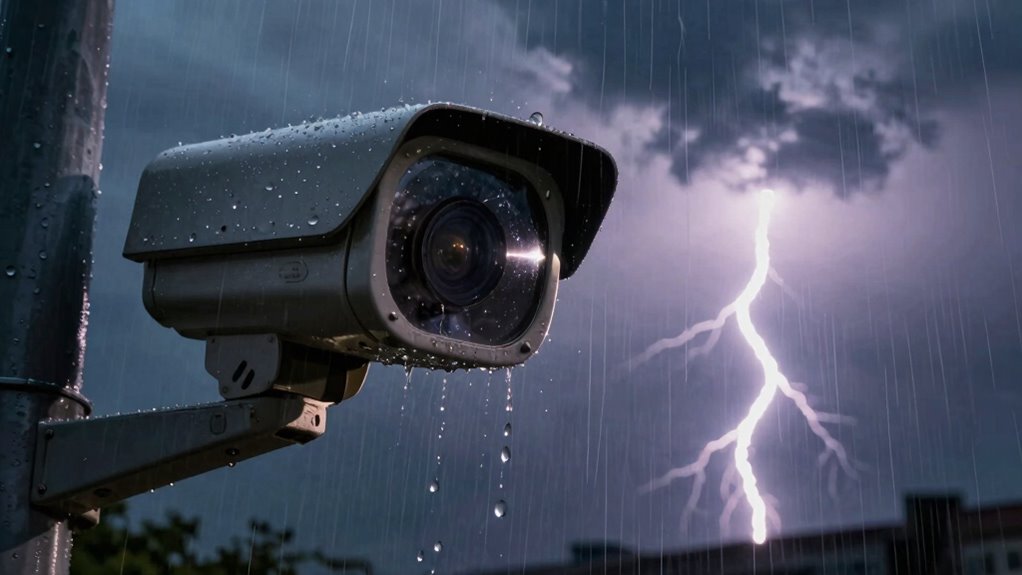
Outdoor cameras are constantly exposed to changing weather and lighting conditions, which can considerably impact their performance and image quality. One of the key factors influencing this is infrared sensitivity. Many cameras rely on infrared (IR) LEDs to capture footage in low-light or nighttime conditions. However, when weather conditions like fog, rain, or snow occur, IR light can scatter, reducing image clarity and making it harder to identify details. If your camera’s IR sensitivity isn’t well-calibrated, it might produce washed-out images or fail to distinguish objects properly in challenging conditions. Conversely, some cameras are designed with enhanced IR capabilities to better handle these adverse scenarios, guaranteeing clearer night vision even in poor weather.
IR sensitivity affects night vision clarity; weather like fog or snow scatters IR light, reducing image detail and visibility.
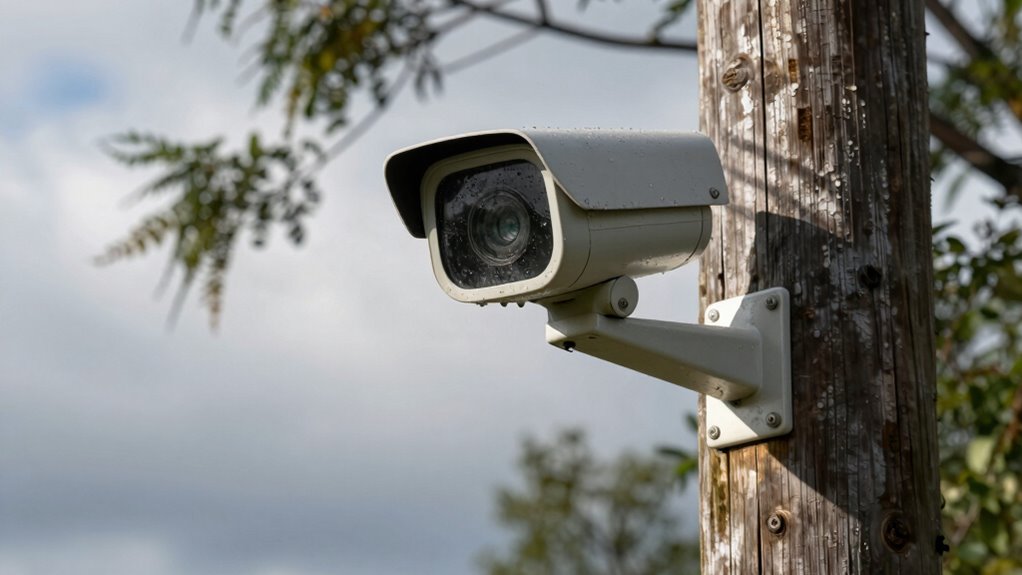
Sun glare effects pose another significant challenge. During the day, direct sunlight can cause intense glare that overwhelms the camera’s sensor. When sunlight hits the lens at certain angles, it creates bright spots or reflections that obscure the scene. This glare can make it difficult to see important details, like facial features or license plates. To combat this, many outdoor cameras come with adjustable lens hoods or anti-glare coatings. Still, if your camera lacks these features, you might notice that images during bright, sunny days are washed out or contain strong glare spots. Sometimes, the sun’s position changes throughout the day, so what’s clear in the morning might become unreadable by afternoon due to sun glare. Proper camera placement** can significantly reduce the impact of glare and improve overall image quality. Additionally, understanding how weather and lighting influence camera performance can help you optimize your setup. For example, selecting cameras with wide dynamic range (WDR) capabilities can help manage the varying light levels caused by changing weather and sunlight. Choosing the right camera angle** can also minimize direct exposure to harsh sunlight, enhancing image clarity.
Lighting conditions also change rapidly with weather shifts, affecting the camera’s exposure settings. Bright sunlight can cause overexposure, washing out details, while cloudy or rainy weather can plunge the scene into darkness, challenging the camera’s dynamic range. If your camera doesn’t automatically adjust exposure or has limited manual controls, the image quality suffers. This can make it difficult to identify objects or people in the footage. To mitigate this, choose cameras with wide dynamic range (WDR) capabilities, which help balance exposure levels across different lighting conditions, ensuring that neither bright nor dark areas lose detail.
In addition to hardware features, placement plays a vital role. Position your outdoor camera where it’s less exposed to direct sunlight, such as under eaves or shaded areas, to minimize glare effects. Regularly cleaning the lens also helps prevent dirt or water spots from exacerbating glare or reducing infrared effectiveness. Understanding how weather and lighting influence your outdoor cameras allows you to optimize their placement, select models with appropriate features, and guarantee reliable surveillance regardless of the weather. Additionally, being aware of weather-related lighting challenges can help you better prepare and adjust your surveillance setup for optimal results.

2026 Enhanced 2K UHD Security Cameras Wireless Outdoor – Free Cloud & SD Storage, Dual-Band WiFi 2.4G/5G, Full-Color Night Vision, 6-Month Battery, Motion Alerts, IP66 Weatherproof, 2-Way Talk
📌【Why Choose Us?】 Millions of families trust realhide for hassle-free, reliable home security. From easy setup to long-lasting…
As an affiliate, we earn on qualifying purchases.
As an affiliate, we earn on qualifying purchases.
Frequently Asked Questions
Can Weather Damage Outdoor Cameras Permanently?
Weather can cause permanent damage to outdoor cameras if they aren’t properly protected. Extreme conditions like heavy rain, snow, or heat can harm internal components. To prevent this, you should focus on camera placement—install cameras in sheltered spots—and follow maintenance tips like checking seals and cleaning lenses regularly. Proper installation and upkeep help guarantee your outdoor cameras withstand weather and continue functioning effectively over time.
How Does Snow Affect Camera Visibility?
Snow interference can drastically reduce your outdoor camera’s visibility, making it seem like an invisible sentinel. The snow’s relentless fall causes severe visibility reduction, obscuring images and thwarting your surveillance efforts. It’s as if a whiteout has swallowed the lens, rendering the camera nearly useless. To combat this, make sure your camera’s lens is shielded or heated, and regularly clear snow buildup to keep your footage clear and your property secure.
Are There Weatherproof Outdoor Cameras?
Yes, there are weatherproof outdoor cameras designed to withstand various elements. When choosing one, consider camera mounting options that secure it firmly against wind or rain, and check the power supply options, like solar or wired connections, to guarantee continuous operation. Weatherproof features protect the camera from rain, snow, and dust, so you can rely on clear footage regardless of weather conditions.
How to Prevent Lens Fogging in Humid Conditions?
Think of your camera lens as a window to your security world. To keep it clear, regularly perform lens cleaning and consider applying anti fog coatings, which act like a dew shield. These coatings prevent moisture from settling, much like a raincoat keeps you dry. In humid conditions, these simple steps guarantee your camera’s view stays sharp, so you never miss a moment, rain or shine.
Do Lighting Conditions Impact Night Vision Clarity?
Lighting conditions do impact night vision clarity, especially when there’s lighting interference nearby. Bright lights can cause glare, reducing your camera’s ability to see clearly. To improve vision enhancement, consider installing cameras with infrared or low-light capabilities. Adjusting the camera’s placement away from direct light sources also helps. Proper lighting management guarantees your outdoor camera captures clear, detailed footage even in challenging lighting situations.

ZOSI 2.0MP 1080P HD 1920TVL Security Camera Hybrid 4-in-1 TVI/CVI/AHD/960H CVBS CCTV Camera Outdoor Indoor,80ft IR Night Vision,Weatherproof Bullet Camera For analog Surveillance DVR(Black)
【2.0MP HD 1080P 4-IN-1 Security Camera】– This is 4-in-1 TVI/CVI/AHD/CVBS Bullet Camera. compatible with 960H,720P,1080P,3MP,5MP,8MP,4K HD-TVI, AHD, CVI,…
As an affiliate, we earn on qualifying purchases.
As an affiliate, we earn on qualifying purchases.
Conclusion
Understanding how weather and lighting affect outdoor cameras helps you better protect your property. Rain, fog, and bright sunlight can all interfere with clear footage, making it harder to identify intruders. Remarkably, studies show that outdoor cameras can experience up to a 40% decrease in image quality during heavy rain or fog. Being aware of these effects allows you to take proactive steps, like adjusting camera angles or adding supplemental lighting, ensuring your security remains reliable regardless of weather conditions.
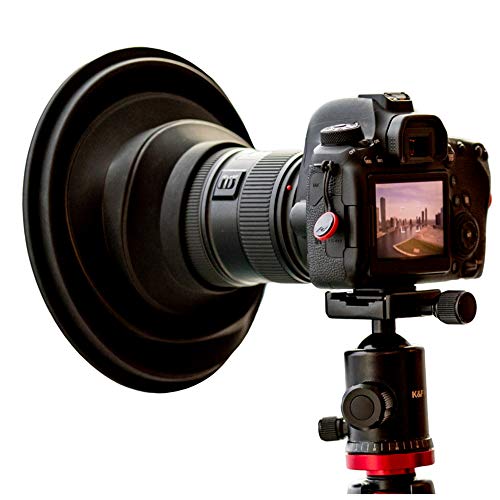
Original ULHgo Ultimate Lens Hood – Camera Lens Anti Reflection – LenSkirt Antireflection – DSLR Rubber Lens Hoods – Fits 49mm to 82mm Filter Thread – from Kickstarter
Universal Fit – ULHgo is the medium sized and most popular ULH lens hood and will fit any…
As an affiliate, we earn on qualifying purchases.
As an affiliate, we earn on qualifying purchases.

CameraShine PRO Surveillance Cleaning Kit – Safely Clean Any Security Camera Safely From The Ground
CLEAN ANY CAMERA IN SECONDS…SAFELY FROM THE GROUND – Your cameras get dirty; spider webs, pollen, bird droppings,…
As an affiliate, we earn on qualifying purchases.
As an affiliate, we earn on qualifying purchases.