When managing meetings, use clear, polite scripts to address interruptions, like saying, “Let’s allow everyone to finish before speaking,” and gently remind participants about respectful communication. For credit theft, correct the record by attributing ideas properly, such as, “That idea was originally proposed by [name].” Consistently applying these scripts helps foster respect and accountability. Want to discover more strategies to keep your meetings productive and fair? Keep exploring.
Key Takeaways
- Use polite yet firm scripts to address interruptions, such as: “Please hold your thoughts until it’s your turn.”
- Correct credit theft promptly with statements like: “That idea was proposed by [name], let’s acknowledge their contribution.”
- Reinforce respectful communication standards to reduce future interruptions and credit misattributions.
- Consistently applying prepared responses fosters accountability, professionalism, and a culture of respect.
- Incorporate scripts into broader strategies to promote fairness, trust, and productive meeting environments.
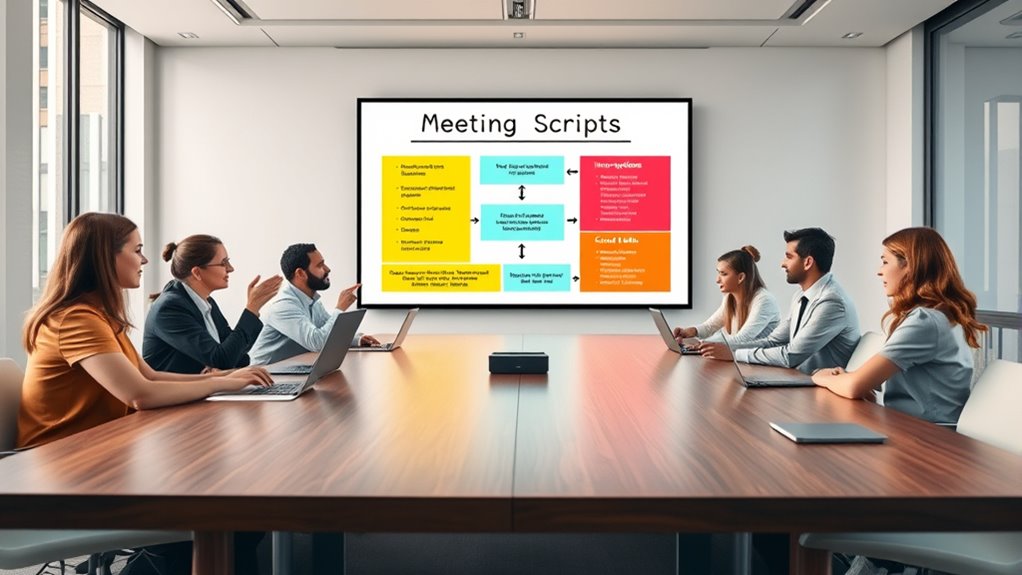
Interruptions and credit theft can disrupt meetings and undermine productivity, making it essential to have clear scripts ready to address these issues promptly. When someone interrupts or claims credit unfairly, it can derail the flow of discussion and compromise the meeting’s objectives. Having prepared responses helps you maintain control, reinforce professionalism, and ensure that everyone stays accountable. These scripts also serve as a tool for breach prevention, signaling that you’re serious about protecting ideas and contributions. By addressing interruptions and credit theft swiftly and assertively, you promote a culture of customer accountability, where team members understand the importance of respecting others’ input and ownership.
When someone interrupts, your script should be straightforward and polite but firm. You might say, “I appreciate your enthusiasm, but let’s allow everyone to finish their thoughts first.” This not only addresses the interruption but also sets a clear boundary. If the interruption persists, you could follow up with, “Let’s ensure everyone has a chance to speak. Please hold your thoughts until it’s your turn.” Such responses remind participants of respectful communication standards and help keep the meeting on track. Consistently using these scripts signals that interruptions are unacceptable, reducing their frequency over time.
Credit theft, or when someone claims ownership of ideas or contributions that aren’t theirs, demands a different approach. A suitable script could be, “Actually, that idea was originally proposed by [name], and I’d like to give them credit for it.” This not only corrects the record but also reinforces the value of acknowledging others’ contributions. If someone continues to steal credit, you might say, “It’s important we accurately attribute ideas to promote trust and accountability. Let’s be clear about who contributed what.” Addressing credit theft directly helps prevent future breaches and encourages a culture of honesty and respect. It also demonstrates your commitment to customer accountability, where everyone is responsible for their actions and recognition.
Having these scripts at your fingertips prepares you to handle disruptions confidently, fostering a professional environment that discourages breaches of integrity. Clear communication about expectations and consequences demonstrates your leadership and commitment to fairness. Over time, this consistency helps establish norms that prevent interruptions and credit theft, ensuring meetings are productive and ideas are properly credited. Ultimately, these scripts aren’t just tools for immediate response—they’re part of a broader strategy to promote accountability, prevent breaches, and maintain a respectful, efficient meeting culture. By implementing them, you reinforce the importance of respectful dialogue and shared responsibility, making your meetings more effective and trustworthy.
Frequently Asked Questions
How Can I Prevent Credit Theft During Meetings?
To prevent credit theft during meetings, you should promote vigilance and establish clear protocols. Encourage participants to verify identities and avoid sharing sensitive info openly. Use credit monitoring services and identity protection tools to detect suspicious activity early. Remind everyone to lock devices and avoid discussing confidential details in unsecured settings. Staying alert and proactive helps safeguard your organization’s financial health and reduces the risk of credit theft during meetings.
What Are Effective Ways to Handle Frequent Interruptions?
To handle frequent interruptions effectively, you should implement clear communication strategies like politely but firmly asking interrupters to hold their questions or comments until your turn. Use professionalism tips such as maintaining eye contact and a calm tone to reinforce your authority. Setting ground rules at the start of the meeting also helps manage disruptions, ensuring everyone respects the flow and stays focused on the agenda.
How Do I Document Credit Theft Incidents Properly?
To document credit theft incidents properly, start by collecting all relevant evidence, like bank statements, credit reports, and any suspicious correspondence. Report the theft to the credit bureaus for credit reporting updates and initiate dispute resolution to correct inaccurate information. Keep detailed records of your communications and responses. This thorough documentation helps protect your credit score and guarantees you have a clear record if further action is needed.
What Legal Actions Are Available for Credit Theft Cases?
Think of credit theft as a storm threatening your financial sky. You can take legal actions like filing a police report, pursuing a civil lawsuit, or contacting the FTC for identity theft complaints. Additionally, you should utilize credit monitoring and identity protection services to catch fraud early and prevent further damage. These steps help you fight back, protect your credit, and hold perpetrators accountable effectively.
How Can I Train Staff to Recognize and Prevent Credit Theft?
You should train your staff to recognize signs of theft and emphasize employee accountability and theft awareness. Conduct regular training sessions that highlight common theft tactics and encourage vigilance. Implement clear policies and reporting procedures, fostering a culture where staff feel responsible for preventing credit theft. Use real-life examples and role-playing exercises to reinforce lessons, ensuring everyone understands their role in safeguarding credit and maintaining integrity.
Conclusion
As you close the meeting, you realize how easily interruptions or credit theft can slip in like unexpected shadows. It’s like catching a fleeting breeze that tries to steal your focus, only to remind you of the importance of clear boundaries. With these scripts, you’re prepared to navigate surprises confidently, turning potential chaos into clarity. Just like a sudden rain clearing the air, your approach clears the way for honest collaboration and rightful recognition.