A facts vs feelings log is a simple two-column tool that helps you distinguish between objective facts and emotional reactions. By recording what actually happened on one side and your feelings, thoughts, and sensations on the other, you can clarify confusion and make better decisions. This method reduces impulsiveness and emotional bias. Keep practicing and updating your log regularly, and you’ll develop a sharper awareness of your reactions and improve your overall thinking process.
Key Takeaways
- The two-column method separates objective facts from emotional reactions to clarify perceptions.
- It helps identify if feelings are based on actual events or cognitive biases.
- Regularly using the log enhances emotional awareness and improves decision-making.
- The process involves documenting facts objectively and labeling feelings honestly without judgment.
- Reviewing entries reveals patterns and triggers, fostering deeper self-awareness and rational responses.
What Is the Facts vs Feelings Log: And Why Should You Use It?
Have you ever wondered how separating facts from feelings can help you handle situations more effectively? The Facts vs Feelings Log is a simple tool that boosts your emotional awareness and improves decision making. It involves listing objective facts on one side and your emotional reactions on the other. By doing this, you gain clarity about what’s truly happening versus how you feel about it. This process helps you recognize biases and emotional triggers that might cloud your judgment. Using the log regularly trains you to approach problems with a clearer mind, making better choices and managing your reactions more thoughtfully. Incorporating natural aesthetics awareness from your environment can also enhance your overall perception and understanding during this process. Recognizing existential themes can deepen your self-reflection and foster a more authentic perspective. Developing emotional intelligence skills through this method allows for more nuanced self-awareness and empathy, which are essential for personal growth. Paying attention to local attractions or familiar surroundings can also provide a grounding perspective during emotional reflection. Ultimately, it’s about creating a healthier mindset, where you’re more aware of your emotions and better equipped to handle life’s challenges.
When and Why Should You Use the Facts vs Feelings Log?

Knowing when to use the Facts vs Feelings Log is essential for gaining clarity during challenging situations. This tool helps you develop emotional awareness, so you can distinguish between what’s objectively true and how you feel about it. Use the log when you’re facing confusing or emotionally charged moments, such as conflicts or tough decisions. It prompts you to step back and assess whether your reactions are rooted in facts or feelings. This clarity improves your decision making, reducing impulsiveness and emotional bias. By regularly practicing, you’ll become more aware of your emotional triggers and thought patterns, empowering you to respond thoughtfully rather than react impulsively. Additionally, understanding basic self-sufficiency skills like rendering lard or managing livestock can bolster your confidence in stressful times. Recognizing the importance of contingency planning in case of outages or disruptions can further prepare you for unforeseen challenges. Incorporating knowledge about public figures and their journeys, such as Kate from Breaking Amish or Phil Lesh’s success story, can provide inspiration and perspective during difficult moments. Being aware of piercing care and hygiene practices can also help you maintain physical health and resilience when faced with stress. Overall, the log guides you toward healthier, more balanced responses during stressful or uncertain times.
Step-by-Step Guide to Building Your Facts vs Feelings Log
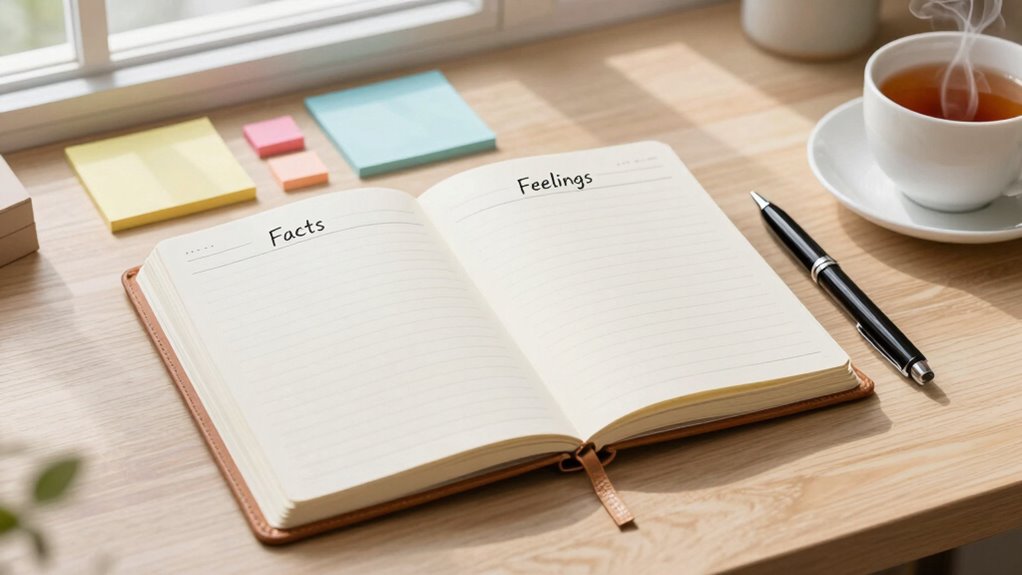
To start building your Facts vs Feelings Log, gather a quiet space where you can reflect without interruptions. This environment helps enhance your emotional awareness, allowing you to identify and distinguish what you truly feel from what you know to be factual. Begin by writing down the situation or thought that’s bothering you. In the facts column, record objective details—what happened, who was involved, what was said. In the feelings column, note your emotional reactions, thoughts, and sensations. Be honest and specific. This process clarifies your thinking, reduces confusion, and supports better decision making. Regularly updating your log trains you to recognize patterns in your emotions versus facts, empowering you to respond more thoughtfully during challenging moments.
Real-Life Examples of How the Log Clarifies Your Thinking
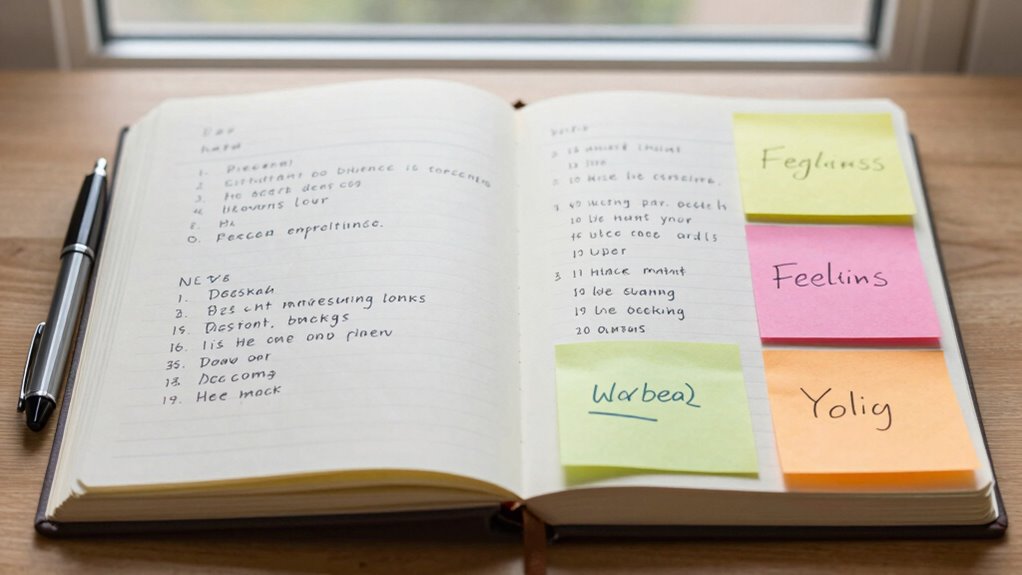
When you use your Facts vs Feelings Log in real-life situations, it often reveals how your perceptions can distort your understanding. This process brings emotional clarity, helping you see situations more objectively. For example, you might realize that feeling overwhelmed at work stems from a belief that you’re failing, rather than facts about your performance. Or, you might recognize that anger towards a friend is fueled by misunderstood intentions, not their actions. Your log helps you differentiate facts from feelings, enabling better decision making. Some common insights include:
Using your Facts vs Feelings Log reveals perception distortions and promotes emotional clarity for better decisions.
- Recognizing emotional reactions aren’t always based on facts
- Identifying when feelings amplify a situation unnecessarily
- Clarifying misunderstandings by examining evidence
- Reducing impulsive reactions through awareness
- Gaining confidence in making balanced decisions
- Understanding the power of horsepower in electric dirt bikes to better assess their performance and suitability for your needs
- Appreciating how European cloud innovation supports sustainable and secure cloud solutions, which can influence your perceptions of technological reliability
- Recognizing that understanding the importance of facts in decision making can lead to more rational and less emotionally driven choices
- Applying holistic SEO strategies to improve your approach to content and search rankings, ensuring a comprehensive perspective on your goals
- Recognizing that factual information plays a crucial role in reducing cognitive biases and emotional misjudgments.
This clarity ultimately supports healthier choices and emotional stability.
Tips to Keep Your Facts vs Feelings Log Effective and Consistent
Maintaining a Facts vs Feelings Log requires regular effort and intentionality to stay effective and consistent. To do this, prioritize building strong journaling habits, such as setting aside dedicated time daily or weekly for reflection. Focus on enhancing your emotional awareness by honestly identifying and labeling your feelings without judgment. This practice helps you distinguish emotions from facts more clearly. Keep your entries simple and specific, avoiding vague language. Review your log regularly to spot patterns and track progress, which reinforces consistency. Remember, the key is ongoing commitment—small, consistent efforts are more effective than sporadic check-ins. Over time, this discipline will deepen your emotional awareness and sharpen your ability to differentiate facts from feelings, leading to clearer, more balanced thinking.
Frequently Asked Questions
Can the Facts Vs Feelings Log Improve Emotional Intelligence?
Yes, a facts vs feelings log can improve your emotional intelligence by boosting emotional awareness and self-regulation. When you regularly track your emotions and the facts behind them, you become more aware of your emotional patterns. This practice helps you respond more thoughtfully instead of reacting impulsively, fostering better self-control and understanding of others’ perspectives. Over time, it enhances your ability to manage emotions effectively and communicate more empathetically.
How Long Should I Maintain My Facts Vs Feelings Log?
You should maintain your facts vs feelings log for at least four to six weeks to see meaningful progress. Duration planning helps you build consistency, so set a daily or weekly schedule that’s manageable. Use consistency tips like setting reminders and reviewing your entries regularly. Keep tracking until you notice patterns, improved emotional awareness, or feel confident in managing your emotions, then decide if you want to continue or pause.
Is the Method Suitable for Children or Teenagers?
Yes, the method can be adapted for children and teenagers. For children, use child-friendly adaptations like simple language and visual aids to help them express their facts and feelings clearly. For teenagers, focus on supporting their emotional development by encouraging honest reflection and discussion. This approach helps them understand their emotions better, build self-awareness, and develop healthy coping skills during these critical developmental stages.
Can This Log Help With Managing Anxiety or Depression?
Imagine you’re a modern-day Hippocrates, and yes, this log can help manage anxiety or depression. It boosts your emotional awareness, making it easier to identify feelings versus facts. By regularly using the two-column method, you gain clarity, reduce emotional confusion, and support your mental health. This simple yet powerful tool encourages self-reflection, helping you develop healthier responses and build resilience in tough times.
Are Digital Tools Available for Creating and Tracking the Log?
Yes, digital tools like tracking apps and digital templates make creating and maintaining your Facts vs Feelings Log easy. You can find various apps designed specifically for journaling or mood tracking, allowing you to log facts and feelings effortlessly. These tools often offer customizable templates, reminders, and data visualization features, helping you stay consistent and gain clearer insights into your emotions and thoughts, ultimately supporting your mental health journey.
Conclusion
Using the facts vs feelings log is like wielding a superpower to cut through confusion and find clarity. By consistently separating what’s true from what you feel, you’ll master your thoughts and make better decisions faster than ever. Think of it as your personal mental GPS—guiding you through the chaos with laser-sharp precision. Keep practicing, stay committed, and watch your understanding deepen—transforming overwhelming emotions into clear, confident actions.