
To check a hotel or rental for privacy red flags calmly, start by inspecting common areas and your room for hidden devices or unusual fixtures with a flashlight. Confirm windows are fully covered and look for signs of tampering. Ask hotel staff if needed and read guest feedback for potential issues. Trust your instincts—if something feels off, consider other options. Keep these tips in mind, and you’ll discover more ways to stay vigilant and protect your privacy.

Get self-care and calm essentials delivered free — and shop member deals
- Fast, free delivery on millions of items
- Access to Prime Big Deal Days deals on October 6–7
- Prime Video, Amazon Music and more included
Key Takeaways
- Inspect common areas for visible surveillance cameras, ensuring they aren’t aimed at private spaces like rooms or bathrooms.
- Use a flashlight to check mirrors, fixtures, and walls for tiny lenses or hidden cameras.
- Ensure window coverings are secure and fully block external views; look for signs of tampering.
- Read guest reviews for reports of privacy issues or suspicious devices in the property.
- Trust your instincts; if something feels off, consider requesting a room change or finding alternative accommodations.

When booking a hotel, it’s essential to be vigilant about your privacy, as some red flags can indicate potential risks. Your guest privacy concerns should always come first, and spotting hidden surveillance risks early can save you from uncomfortable or invasive situations. Before you settle into a room, take a moment to observe your surroundings carefully. Check the placement of security cameras—these should be in common areas like the lobby or hallways, not aimed directly at guest rooms or bathrooms. If you notice cameras inside your room or pointing into private spaces, that’s a clear warning sign. While some hotels use surveillance for security, it’s important they respect your privacy boundaries.
Always check for hidden cameras inside rooms and ensure security devices respect your privacy boundaries.
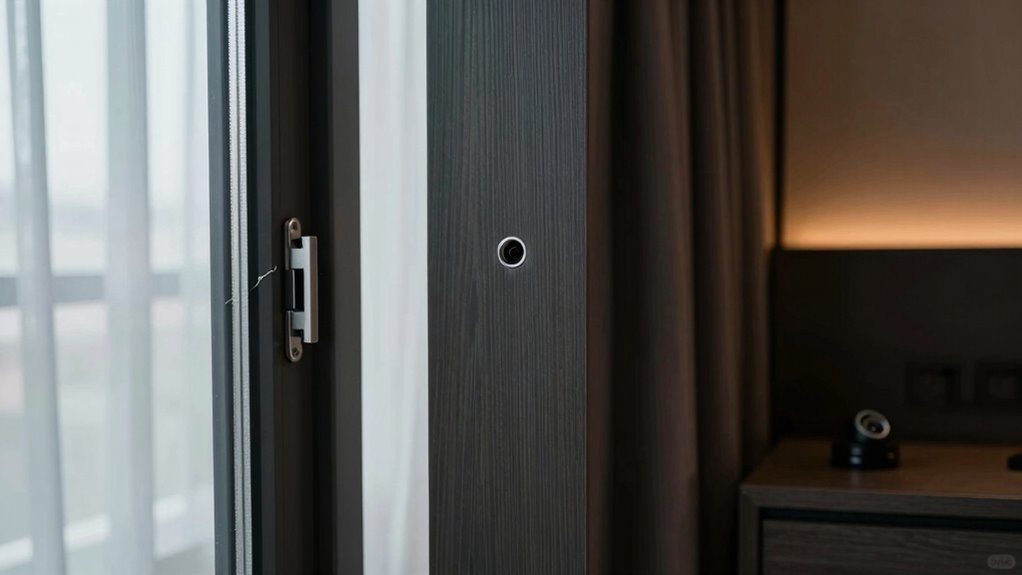
Another sign to watch out for is the presence of devices or equipment that seem out of place. For example, tiny holes or unusual fixtures on walls, ceilings, or bathroom mirrors could hide hidden surveillance risks. These are often used to discreetly record or monitor without your knowledge. It might seem paranoid, but being cautious helps you protect your privacy. If you feel uneasy about the setup or notice anything suspicious, don’t hesitate to ask hotel staff about their surveillance policies. Reputable hotels should be transparent about where cameras are located and how they’re used.
Pay attention to the room’s layout and window placement. Are the windows well-covered or equipped with curtains that fully block the view? Windows that are easily overlooked or poorly covered could be a privacy concern, especially if neighboring buildings are close. Also, check for any signs of tampering or odd modifications around the room, such as loose fixtures or unusual wiring. These could indicate previous surveillance devices or unauthorized alterations. Being aware of surveillance risks can help you better assess your environment and stay vigilant. Additionally, understanding the hotel’s privacy policies can provide insight into how your data and surroundings are protected. It’s also helpful to familiarize yourself with common privacy red flags to better recognize potential risks early.
It’s also wise to consider the hotel’s reputation. Look for reviews that mention privacy issues or concerns about hidden cameras. Guests often share their experiences, and these insights can help you identify red flags before you even arrive. When you check in, inspect the bathroom and bedroom areas for unusual devices or signs of tampering. Use your phone’s flashlight if needed to detect reflective surfaces or tiny lenses that might be hidden. Furthermore, being aware of security camera placement can assist in identifying areas that might be vulnerable to covert surveillance. In addition, understanding how common surveillance methods are employed in hospitality settings can further inform your assessments.
Ultimately, staying calm and observant helps you assess the situation without jumping to conclusions. Trust your instincts—if something feels off, don’t hesitate to seek alternative accommodations or request a different room. Protecting your guest privacy concerns isn’t just about avoiding discomfort; it’s about ensuring your safety and peace of mind during your stay. By being proactive and attentive, you can spot hidden surveillance risks early and enjoy your trip with confidence.
hidden camera detector flashlight
As an affiliate, we earn on qualifying purchases.
As an affiliate, we earn on qualifying purchases.
Frequently Asked Questions
How Can I Discreetly Assess a Property’s Privacy Before Booking?
To discreetly assess a property’s guest privacy before booking, start by reading reviews focusing on privacy concerns. During your initial visit or virtual tour, look for indicators like window coverings, soundproofing, and access controls. Ask discreet questions about privacy policies without sounding invasive. Trust your instincts—if something feels off, consider alternative options. Prioritize places with clear privacy measures to guarantee your comfort and security during your stay.
Are There Specific Signs of Hidden Cameras in Hotel Rooms?
Hidden cameras often leave subtle signs, so stay alert for privacy red flags. Look for unusual objects, tiny holes, or lens reflections on devices like smoke detectors and picture frames. Use hidden camera detection apps or a flashlight to scan for glints. If anything feels off, trust your instincts. Recognizing these signs helps you assess privacy risks and guarantees your stay remains discreet and secure.
What Privacy Policies Should I Look for in Rental Agreements?
Primarily, prioritize rental agreements that plainly present privacy policies, promising protection and privacy. Look for clear clauses about guest confidentiality, camera restrictions, and data handling. Pay attention to policies that specify how your personal information is stored and shared, ensuring transparency. A detailed rental agreement with an all-encompassing privacy policy indicates a host’s commitment to your confidentiality, creating confidence and comfort during your stay or rental experience.
How Do I Identify if a Property Has Unauthorized Surveillance?
You can spot unauthorized surveillance by thoroughly inspecting the property for spy gadgets and hidden cameras. Look in common hiding spots like smoke detectors, alarm clocks, picture frames, and electrical outlets. Use a flashlight to detect any tiny lenses or unusual reflections. Turn off the lights and check for blinking lights or glints. If anything seems suspicious, consider using a camera detector app or device to confirm your suspicions.
Can Reviews Reveal Privacy Concerns About a Hotel or Rental?
Reviews are like windows into guest privacy experiences, revealing hidden cracks in the hotel’s facade. While some privacy myths linger, honest reviews can spot red flags about unauthorized surveillance or intrusive practices. They paint a vivid picture of how well a place respects guest privacy, helping you avoid surprises. Trust detailed feedback to guide your choice, ensuring your stay remains private and peaceful, free from prying eyes.
privacy window covers for hotel rooms
As an affiliate, we earn on qualifying purchases.
As an affiliate, we earn on qualifying purchases.
Conclusion
Ultimately, spotting privacy red flags isn’t about paranoia; it’s about peace of mind. You’re choosing a sanctuary where your secrets stay safe, not a place where shadows could hide prying eyes. When you pay attention to the details—whether it’s the placement of windows or the presence of cameras—you’re safeguarding your personal space. Because in the end, true privacy isn’t just about avoiding red flags; it’s about feeling secure enough to truly relax.
surveillance camera detection device
As an affiliate, we earn on qualifying purchases.
As an affiliate, we earn on qualifying purchases.
hotel room privacy inspection kit
As an affiliate, we earn on qualifying purchases.
As an affiliate, we earn on qualifying purchases.
Fall Picks
fall essentials
As an affiliate, we earn on qualifying purchases.