

To see if someone truly owns their mistake, look for genuine emotional sincerity, like remorseful eyes and heartfelt language. Check if they acknowledge the specific issue without shifting blame, demonstrating real accountability. An authentic apology reflects an understanding of the hurt caused and a willingness to make amends. If you explore further, you’ll gain insights into identifying these key signs and evaluating if their apology is truly sincere.
Key Takeaways
- Look for genuine emotional cues like remorseful expressions and consistent sincerity over time.
- Assess if the apology clearly acknowledges the specific mistake without shifting blame.
- Check for signs of authentic reflection, such as understanding the impact of actions.
- Ensure the apology demonstrates accountability through honest ownership of the fault.
- Observe ongoing efforts to make amends and improve behavior beyond the initial apology.
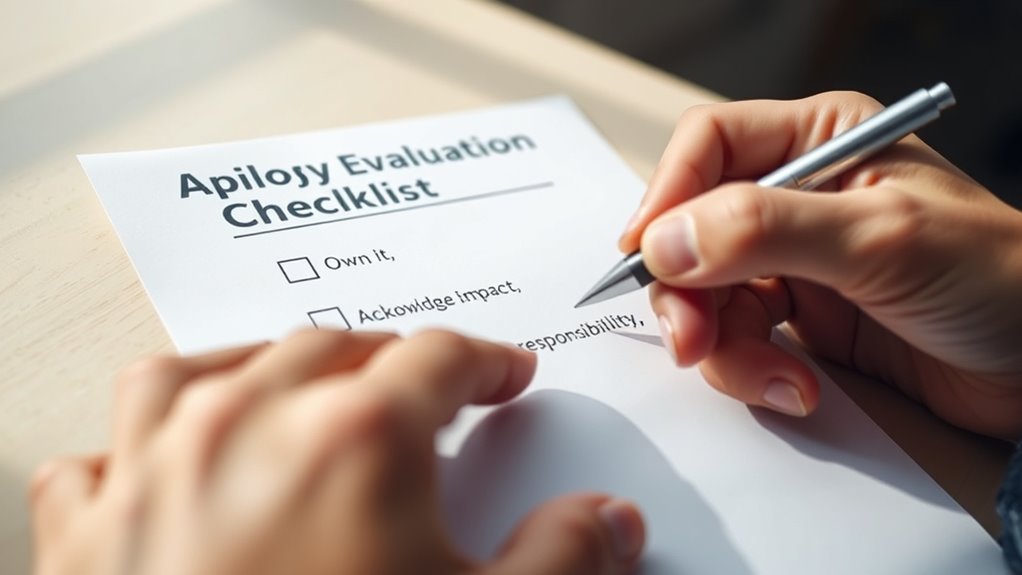
Have you ever wondered if your apology truly hits the mark? When someone offers an apology, it’s natural to want to believe they’re genuinely sorry. But how can you tell if their words come from the heart or if they’re just going through the motions? One key factor to contemplate is emotional sincerity. When someone apologizes with real emotion, you can feel the authenticity behind their words. It’s not just about saying “sorry,” but about conveying genuine remorse that resonates with you. Look for signs that they’ve truly reflected on their actions and understand the impact they had. Do they seem remorseful, with eyes that show regret? Or do they appear indifferent or dismissive? Emotional sincerity isn’t something you can fake easily. It’s often reflected in tone of voice, facial expressions, and body language. When someone’s apology feels heartfelt, it’s easier for you to accept it and begin healing from the hurt. Additionally, the consistency of their words and actions over time can be a strong indicator of true remorse.
Another critical aspect is accountability acknowledgment. Has the person owning their mistake or are they shifting blame? An effective apology involves taking responsibility for their actions without making excuses. They should clearly acknowledge what they did wrong, demonstrating that they understand the specific issue and accept their role in causing harm. This acknowledgment shows maturity and respect for your feelings. Instead of minimizing or denying their fault, they openly admit their mistake, which fosters trust and paves the way for genuine reconciliation. An apology lacking accountability acknowledgment often feels hollow, leaving you unsure if the person truly understands or cares about the consequences of their actions. It can even make the hurt worse if they refuse to accept responsibility, as it signals a lack of respect for your experience.
When evaluating an apology, consider whether it strikes a balance between emotional sincerity and accountability acknowledgment. A sincere apology combines heartfelt remorse with clear ownership of the mistake. If someone’s apology feels superficial or scripted, it’s a red flag that they might not be truly sorry. On the other hand, an apology that feels honest and includes acknowledgment of their accountability shows they’ve put effort into making amends. You should feel that the person genuinely understands the pain they caused and is committed to doing better. Remember, a sincere apology isn’t just about words; it’s about the intention behind those words and the willingness to accept responsibility. When both emotional sincerity and accountability acknowledgment are present, it’s a strong indicator that the apology is authentic and meaningful.
Additionally, understanding the effectiveness of apologies can help gauge how genuine a person’s remorse is, especially when they show consistent effort to improve their behavior after the apology.
Frequently Asked Questions
How Can I Tell if an Apology Is Sincere?
You can tell if an apology is sincere by observing its emotional tone and considering cultural differences. A genuine apology shows remorse, empathy, and a willingness to make amends, not just words. Pay attention to body language and tone of voice. Remember, cultural backgrounds influence how apologies are expressed; what feels sincere in one culture may differ in another. Trust your instincts and look for consistent, heartfelt gestures.
What Are Common Signs of a Fake Apology?
A fake apology often feels like a painted mask hiding true feelings. You’ll notice it lacks genuine remorse and emotional tone—words seem rehearsed or insincere. The person might avoid eye contact, hesitate, or quickly change the subject. They might also downplay the impact or offer conditional forgiveness. These signs tell you their apology is more about saving face than truly owning their mistake, making it feel empty and unconvincing.
Does the Timing of the Apology Matter?
The timing of an apology truly matters because it reflects your sincerity and understanding of the situation. Prompt apology timing shows you acknowledge the issue quickly, demonstrating accountability and respect. Delayed apologies might seem insincere or reactive, damaging trust. You should aim for the right timing to ensure your apology feels genuine, showing that you value the other person’s feelings and are committed to making amends promptly.
How Should I Respond to an Insincere Apology?
When faced with an insincere apology, you should respond assertively, seeking genuine remorse and emotional tone. Don’t accept vague words or empty promises; ask for clarity and accountability. Express your feelings honestly, emphasizing your need for sincerity. By demanding authenticity, you encourage accountability, foster respect, and protect your emotional well-being. Remember, a true apology reflects genuine remorse and emotional tone, which are essential for healing and moving forward.
Can Repeated Apologies Impact Credibility?
Repeated apologies can substantially impact your credibility. When someone keeps apologizing without genuine change, it might seem insincere or superficial, making you question their sincerity. This repeated pattern can erode trust and damage their reputation over time. To maintain credibility, it’s essential that apologies are meaningful, accompanied by real actions, and not just repeated words. Otherwise, the impact of these repeated apologies diminishes, and your confidence in their intentions weakens.
Conclusion
Remember, a genuine apology shows you truly own what happened and are committed to making things right. Have you taken the time to reflect on whether they’ve demonstrated accountability, empathy, and a clear plan to improve? When someone owns their mistake, it’s easier to rebuild trust and move forward. So, next time you evaluate an apology, ask yourself: are they truly owning it, or just going through the motions? That’s the key to genuine reconciliation.