
TL;DR
Anthropic says Claude Code can now create dynamic workflows: task-specific JavaScript harnesses that spawn and coordinate multiple subagents. The company frames the feature as useful for complex, high-value work, while warning that it can use far more tokens than a single-agent request.
Anthropic says Claude Code can now build temporary teams of subagents for complex tasks by writing its own JavaScript orchestration harness, a development that could change how developers and organizations use AI agents for large, parallel, or review-heavy work.
The feature is called dynamic workflows. According to Anthropic’s Claude Code team, Claude can write and run a small program that coordinates separate agents, assigns focused work, waits for results, and combines outputs into a final answer. The company described the underlying approach in a June 2, 2026 Claude blog post, “A harness for every task”, by Thariq Shihipar and Sid Bidasaria.
The confirmed mechanism, as described by Anthropic and summarized by Thorsten Meyer AI, is that Claude can create a task-specific harness rather than relying on one agent to handle every step inside one context window. That harness can fan out work to subagents with separate context, use different models where appropriate, and apply patterns such as fan-out-and-synthesize, adversarial review, generate-and-filter, tournaments, and loop-until-done workflows.
Anthropic’s claim is that this structure can reduce common single-agent failures, including incomplete work, self-review bias, and goal drift over long tasks. The company also warns that dynamic workflows consume more tokens and are aimed at complex, high-value tasks, not routine edits or small prompts.
When one agent isn’t enough: Claude now builds its own team on the fly
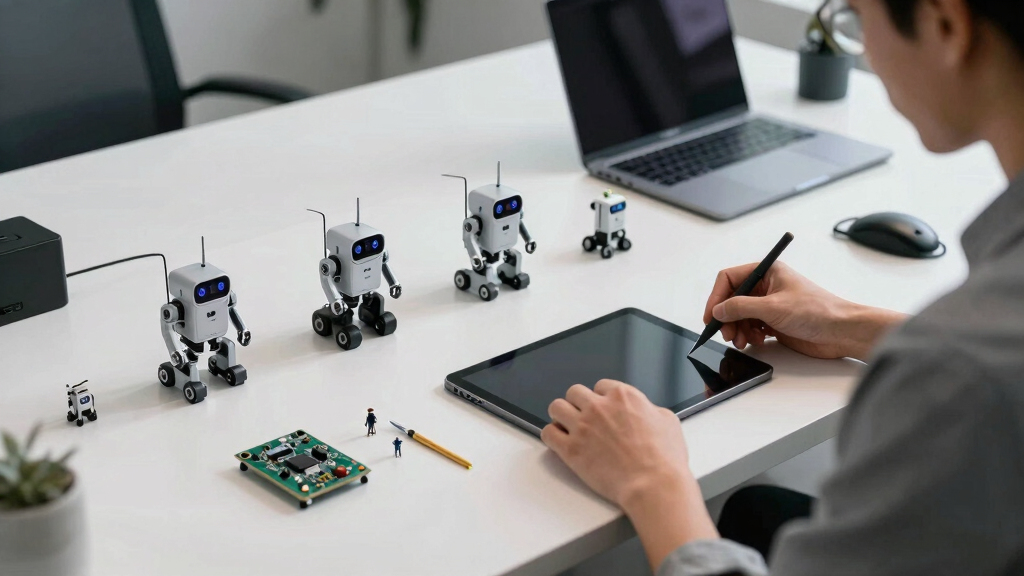
Skills package what you know; loops decide how far you delegate over time. Dynamic workflows are the third axis — within a single task, Claude writes its own harness and assembles a temporary team of subagents. Think of it as Claude drawing an org chart for one job.
The shift is from prompting a worker to commissioning a team — more output, more cost, and a manager’s judgment required. Reach for a workflow when a task is big, parallel, adversarial, or judgment-heavy — and when you can feel a single agent getting lazy, grading its own homework, or losing the plot. Bound it (token budgets, pilot first) — workflows can spawn hundreds of agents and burn far more tokens. For everything else, don’t hire five people to change a lightbulb.
Agent Work Gets More Structured
The development matters because it moves agent use from one model handling a task alone toward orchestrated systems that divide labor, verify outputs, and merge results. For developers, that could make Claude Code more useful for large refactors, security reviews, migrations, research reports, and backlog triage.
It also adds a management problem. Users may need to set token budgets, define stop conditions, and decide when the added cost is justified. Thorsten Meyer AI’s analysis frames the feature as a shift from “prompting a worker” to commissioning a team, with higher output potential and higher cost.
Building AI Agents for Network Operations: Design LLM-powered NetOps workflows with Python, Ollama, MCP, and tool calling
As an affiliate, we earn on qualifying purchases.
As an affiliate, we earn on qualifying purchases.
Claude Code’s Third Agent Pattern
Thorsten Meyer AI describes dynamic workflows as the third part of a loose Claude Code arc: Skills package organizational knowledge, loops decide how far to delegate over time, and dynamic workflows let Claude assemble subagents inside a single task.
The approach reflects a broader pattern in AI development: agent systems are being designed less as single chat sessions and more as coordinated software workflows. In Anthropic’s framing, Claude can act as an orchestrator, assigning isolated work and using independent reviewers or judges for checks.
One security detail highlighted in the source material is quarantine: agents that read untrusted public content should be barred from high-privilege actions, while a separate agent performs sensitive operations. That separation of duties is presented as a guardrail for autonomous workflows.
“A harness for every task”
— Anthropic’s Claude Code team, as cited by Thorsten Meyer AI
Designing Multi-Agent Systems: Principles, Patterns, and Implementation for AI Agents
As an affiliate, we earn on qualifying purchases.
As an affiliate, we earn on qualifying purchases.
Costs And Limits Remain Open
Several details remain unclear from the available source material. It is not yet clear how often Claude will choose these workflows in everyday use, how predictable costs will be across different tasks, or how reliably subagent review catches errors compared with human review.
Anthropic’s own caveat is that token use can rise sharply. The source material also says workflows can spawn many agents, so organizations may need pilots and limits before applying the feature to large production workloads.
The Human-Agent Orchestrator: Leading and Scaling AI-Driven Organizations
As an affiliate, we earn on qualifying purchases.
As an affiliate, we earn on qualifying purchases.
Teams Will Test Boundaries
The next step is practical adoption. Developers and AI teams are likely to test dynamic workflows on bounded, high-value tasks such as migrations, security checks, ticket ranking, and research synthesis before using them in broader operations.
Readers should watch for updated Claude Code documentation, pricing guidance, examples from Anthropic, and evidence from real deployments showing where dynamic workflows outperform single-agent approaches and where the added cost is not justified.

Zapier Mastery: Automate Apps, Build AI Agents, and Run Your Business on Autopilot — No Coding Required (Made Simple: Beginner's Guides to the Apps and Software Running Modern Work and Life)
As an affiliate, we earn on qualifying purchases.
As an affiliate, we earn on qualifying purchases.
Key Questions
What did Anthropic announce about Claude Code?
Anthropic described dynamic workflows, a Claude Code capability where Claude writes a JavaScript harness to spawn and coordinate subagents for one complex task.
Is this meant for everyday prompts?
No. The source material says Anthropic presents the feature for complex, high-value work. It is not intended for small tasks such as fixing a typo.
What kinds of tasks could use dynamic workflows?
Examples cited include large refactors, deep research, fact-checking, ticket ranking, security pattern checks, post-mortems, and backlog triage.
What is the main risk for users?
The main confirmed concern is higher token use. It is also still developing how teams should set budgets, stop conditions, and review standards.
Where did the information come from?
The article is based on Thorsten Meyer AI’s July 1, 2026 analysis and its cited Anthropic Claude blog post, “A harness for every task: dynamic workflows in Claude Code”, published June 2, 2026.
Source: Thorsten Meyer AI