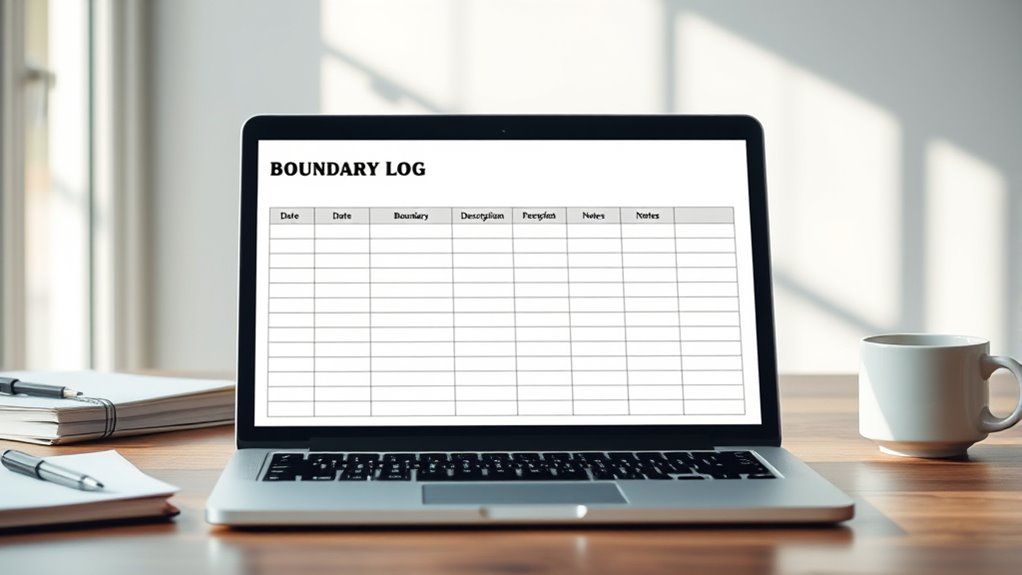

To use a boundary log template effectively, start by clearly outlining the project scope boundaries, including what’s included and excluded. Document any boundary changes with details like the reason, requester, and decision made. Regularly update the log to reflect approved changes and track trends over time. This disciplined documentation helps you stay organized, manage stakeholder expectations, and prevent scope creep. Keep going to discover detailed steps for implementing and maintaining your boundary log successfully.
Key Takeaways
- Clearly define project boundaries and scope inclusions/exclusions before logging requests.
- Record details of each boundary change request, including reason, requester, date, and decision.
- Review new requests against existing boundaries to determine acceptability and update the log accordingly.
- Use the log to track trends, recurring issues, and impact of boundary adjustments over time.
- Regularly update and review the log to ensure project scope remains controlled and transparent.

A boundary log template is an essential tool for project management, helping you track and manage scope changes, stakeholder requests, and boundary adjustments efficiently. When you’re working on a project, it’s crucial to establish clear boundaries early on. Setting boundaries isn’t just about drawing lines; it’s about defining what’s included and what’s not, so everyone involved understands the scope from the start. Using a boundary log template makes this process straightforward because it provides a structured way to document these boundaries, ensuring clarity and accountability. As you set boundaries, you’re effectively communicating the limits of your project’s scope, which helps prevent scope creep and keeps your team focused on the agreed-upon deliverables.
Respecting limits plays a vital role in maintaining project stability. When you respect boundaries—both your own and others’—you create a foundation of trust and mutual understanding. The boundary log acts as a record that reinforces these limits. Whenever a stakeholder requests a change or proposes an adjustment, you can log it, assess its impact, and determine whether it aligns with the established boundaries. This process helps you prevent unauthorized scope expansions that could derail timelines or inflate costs. Respecting limits also means being transparent about what can and cannot be accommodated, which fosters better communication and minimizes misunderstandings.
Using the boundary log template, you can easily capture details about boundary adjustments, such as the reason for the change, who requested it, the date, and the decision made. This documentation enables you to track trends over time, identify recurring issues, and make informed decisions about scope management. When a new request comes in, you compare it against the logged boundaries to see if it falls within acceptable limits. If it does, you update the log accordingly; if not, you can communicate why the request can’t be fulfilled within the current scope. This approach ensures you’re respecting project limits while maintaining flexibility where appropriate.
Ultimately, a boundary log template helps you stay organized and disciplined. It’s a reminder to set boundaries thoughtfully and respect those limits throughout the project’s lifecycle. By doing so, you minimize risks, manage stakeholder expectations, and keep your project on track. The template ensures your boundaries are documented, accessible, and easy to review, making it easier to enforce scope boundaries and make adjustments responsibly. When you consistently use the boundary log, you foster a disciplined approach to project management that promotes clarity, accountability, and success. Additionally, understanding types of cookies and their purpose can help teams implement privacy measures that align with project needs and stakeholder expectations.
Frequently Asked Questions
Can the Template Be Customized for Different Project Types?
Yes, you can customize the template for different project types. Your project flexibility allows you to adapt the boundary log to suit specific needs. You can modify sections, add new fields, or remove irrelevant ones, making it more effective for your unique project requirements. Customization options make certain the boundary log remains a practical tool, helping you clearly define and manage boundaries across various projects with ease.
How Often Should I Update the Boundary Log?
You should update the boundary log regularly, ideally after each significant project milestone or change. This guarantees your boundary accuracy stays current and reliable. The frequency updates depend on your project’s pace; faster-moving projects need more frequent updates, while slower ones can be updated less often. Regular updates help you stay aligned with evolving boundaries, reducing misunderstandings and keeping your project on track.
Is There a Digital Version of the Boundary Log Template?
Yes, there is a digital template for boundary tracking. You can find customizable boundary log templates online, often in formats like Excel, Google Sheets, or specialized apps. Using a digital template makes it easier to update and access your boundary log anytime, ensuring you stay organized and consistent in tracking your boundaries. This way, you can quickly review and adjust your boundaries as needed, keeping everything clear and manageable.
Who Should Be Responsible for Maintaining the Boundary Log?
Imagine you’re managing a team project, and you notice a conflict over responsibilities. In this case, you’re responsible for maintaining the boundary log because it guarantees stakeholder accountability and boundary clarity. By actively updating and reviewing it, you help prevent misunderstandings, keeping everyone aligned. As the project leader, your role is vital in making certain the boundary log is accurate, fostering transparency, and holding stakeholders accountable for their roles and boundaries.
How Do I Handle Conflicting Boundary Information?
When you encounter conflicting boundary information, prioritize clear boundary clarification through open communication. Use conflict resolution strategies like active listening and empathy to understand differing perspectives. Document each version in your boundary log, noting the source and date. This helps you track changes and verify everyone’s on the same page. Regularly review and update the log to resolve discrepancies swiftly and maintain healthy boundaries effectively.
Conclusion
Think of your boundary log as a sturdy fence around your well-being. By consistently using it, you’re building a clear border that keeps out stress and overcommitment. It’s your personal blueprint for healthy boundaries, guiding you step by step. When you respect and update your boundary log, you’re tending to a garden that blooms with balance and peace. Keep it active, and watch your emotional landscape thrive—because boundaries are the foundation for your flourishing self.