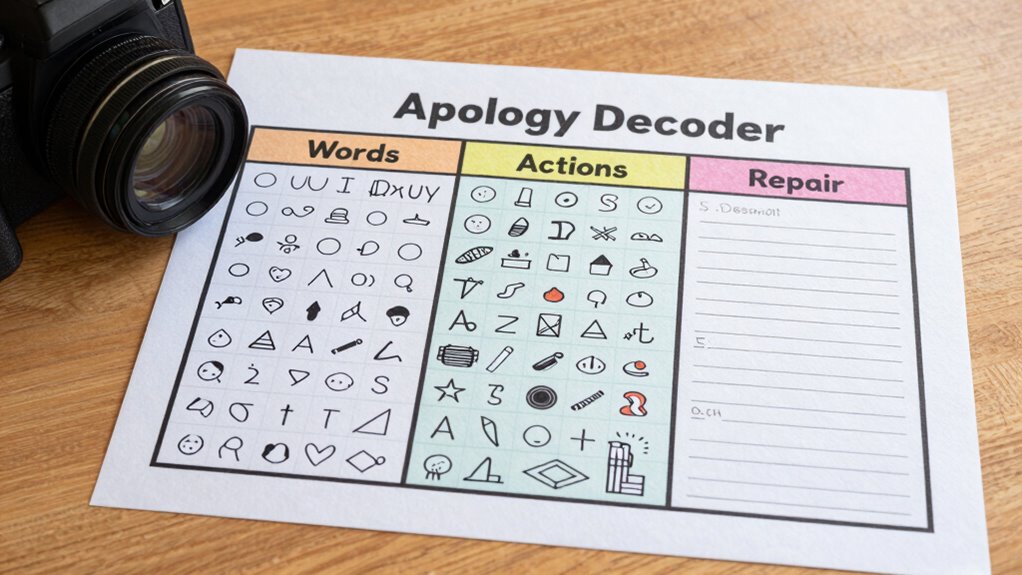

An Apology Decoder Worksheet helps you break down your apology into three key parts: words, actions, and repair. Focus on using sincere, clear words that show genuine remorse. Recognize which actions support your apology and how they impact others. Planning specific steps for repair strengthens trust and avoids misunderstandings. Following this framework guarantees your apology is heartfelt and effective. Keep exploring this approach to learn how to build stronger, more honest relationships.
Key Takeaways
- Distinguish sincere apology words expressing regret from actions that demonstrate accountability and repair efforts.
- Analyze emotional tone and specific language to assess genuine remorse and responsibility.
- Separate acknowledgment of harm from concrete steps taken to make amends and rebuild trust.
- Evaluate consistency between spoken words and behaviors to ensure authentic repair.
- Use the worksheet to identify gaps between apology language, emotional recognition, and follow-through actions.
Why Understanding the Key Components of an Apology Builds Trust
Understanding the key components of an apology is essential because it shows that you’re genuinely taking responsibility for your actions. When you demonstrate emotional intelligence, you acknowledge how your behavior affects others, which helps in conflict resolution. Recognizing and expressing remorse, offering a clear explanation, and committing to change build credibility and trust. These components show you’re empathetic and willing to repair the relationship. When your apology includes genuine understanding and accountability, others feel safe to forgive and reconnect. This not only resolves conflicts more effectively but also strengthens your relationships over time. By mastering these elements, you signal that you value honesty and respect, fostering a foundation of trust that encourages open communication and mutual understanding. Additionally, understanding the role of contrast ratio in visual clarity can help you recognize the importance of clarity and perception in effective communication and relationships.
How the Apology Decoder Worksheet Breaks Down Words, Actions, and Repair

The Apology Decoder Worksheet helps you clarify what words and intentions truly mean, so you can understand the other person’s perspective. It also distinguishes between actions and their real impact, making it easier to address misunderstandings. Plus, it guides you through steps to repair harm and find resolution effectively. Incorporating clear communication techniques can further support creating calmer, more functional homes by fostering clear communication and understanding. Implementing wave and wind principles can further enhance your ability to process and respond thoughtfully during these conversations. Recognizing colloquial language and slang terms can also aid in interpreting messages accurately, especially when informal expressions are involved.
Clarifies Words and Intent
When you analyze an apology using the worksheet, it helps to clarify the specific words and actions involved. This process sharpens your emotional awareness and improves communication skills, making your understanding clearer. To do this, focus on:
- Identifying exactly what words were used and how they express feelings or intentions.
- Recognizing whether the apology explicitly states regret or remorse.
- Noting any phrases that imply responsibility or accountability.
- Understanding the tone and context behind the words, which reveals true intent.
- Considering whether the apology is part of a Free Floating pattern, which can influence the sincerity and effectiveness of the repair.
- Being aware of how different electric bikes and their features, like speed or horsepower, may impact perceptions of sincerity or commitment in an apology, especially when discussing performance or reliability.
- Additionally, evaluating the performance ratings of related tools or products can help contextualize certain expressions of accountability or dedication in an apology.
- Recognizing that the use of precise language and emotional tone can greatly affect how the apology is received and understood by others.
- Incorporating knowledge of self-sufficiency and preparedness principles can help assess whether the apology aligns with behaviors supporting trustworthiness and reliability.
Differentiates Actions and Impact
To effectively analyze an apology, it’s important to distinguish between the actions that caused harm and the impact those actions had on others. The Apology Decoder Worksheet helps you identify emotional acknowledgment by prompting you to recognize how the hurt was experienced, separate from the specific behavior. This distinction encourages accountability practices, where you accept responsibility for both what was done and how it affected others. By breaking down actions from their emotional impact, you see whether the apology addresses both aspects clearly. This clarity allows you to evaluate if the person truly understands the harm caused and is willing to accept responsibility. Differentiating actions and impact ensures the apology isn’t just words but a genuine effort to acknowledge and repair emotional wounds. Additionally, understanding emotional intelligence can enhance your ability to interpret and respond to apologies effectively. Recognizing the difference between words and genuine remorse is key to building trust and fostering healthier relationships, which is also a vital aspect of effective problem-solving skills. Developing media literacy skills can help you better assess the sincerity of apologies in various contexts, especially when evaluating non-verbal cues that reveal true feelings.
Guides Repair and Resolution
The Apology Decoder Worksheet breaks down the language of an apology by examining the specific words used, the actions taken, and the steps toward repair. This structured approach helps you develop emotional intelligence and improve conflict resolution skills. To guide repair effectively, consider these steps:
- Acknowledge the harm clearly to validate feelings and build trust. Recognizing the impact of your actions is essential for safe and smart e-bike and e-scooter commuting, as it fosters understanding and accountability. Incorporating effective communication techniques can further enhance the sincerity and clarity of your apology. Demonstrating transparency in your intentions can also strengthen trust and credibility. Additionally, understanding the importance of trust-building strategies can help solidify the repair process.
- Express genuine remorse to show accountability and sincerity.
- Offer concrete actions to make amends and demonstrate commitment to change.
- Follow through consistently, reinforcing your intent to repair the relationship. Engaging in creative storytelling that aligns with your values can further strengthen the connection and foster lasting understanding.
Crafting Sincere Words That Truly Heal

You can create words that genuinely show your remorse and understanding, making your apology more meaningful. Remember, actions should back up your words to rebuild trust effectively. When your words and actions align, healing becomes possible for everyone involved. Incorporating human-centered approaches can further enhance the sincerity and effectiveness of your apology. Recognizing the importance of emotional intelligence can help you connect more authentically during the reconciliation process, especially when considering healthy communication strategies to foster trust and understanding. Acknowledging the significance of non-verbal cues can also strengthen your heartfelt apologies, ensuring your message resonates beyond words. Additionally, being aware of warranty considerations can help you understand the boundaries and long-term implications of your actions, ultimately supporting a more genuine and responsible apology process.
Words That Convey Sincerity
When expressing an apology, choosing words that genuinely convey sincerity can make all the difference. Your sincere language and heartfelt expressions show you’re truly remorseful. To do this effectively, consider these four key points:
- Use clear, direct language—avoid vague or defensive phrases.
- Acknowledge the specific hurt caused, showing you understand the impact.
- Express genuine regret with simple, honest words like “I’m sorry” or “I regret.”
- Avoid justifying your actions; focus on the apology, not excuses.
Actions That Reinforce Trust
Consistently demonstrating your commitment to making things right can substantially reinforce trust after an apology. Show emotional empathy by genuinely understanding how your actions affected the other person. Practice active listening, giving your full attention and validating their feelings without interrupting or defending yourself. Follow through with concrete actions that reflect your sincerity, such as changing behaviors or taking responsibility. These efforts communicate that you value their feelings and are dedicated to rebuilding trust. When you combine heartfelt words with consistent actions, you create a foundation of reliability and respect. This approach reassures the other person that your apology is more than words—it’s a genuine commitment to grow and restore the relationship.
Recognizing Actions That Support or Undermine Your Apology
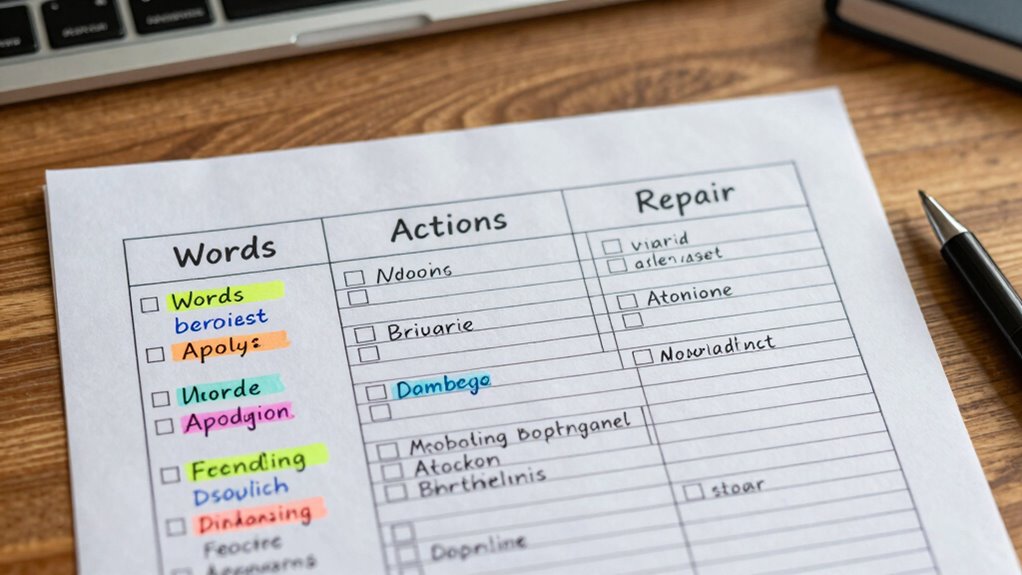
Recognizing actions that support or undermine your apology is essential for genuine reconciliation. Your intent clarity and emotion recognition play key roles here. When your actions align with your words, you reinforce trust. Conversely, actions that contradict your apology weaken it. To evaluate this, consider these actions:
Align actions with words, listen sincerely, and follow through to strengthen genuine apologies and rebuild trust.
- Showing genuine remorse through consistent body language and tone.
- Listening actively to the other person’s feelings without defensiveness.
- Following through on promises to make amends.
- Avoiding behaviors that suggest indifference or dismissal.
Effective Strategies to Repair and Make Things Right

To effectively repair a relationship and make things right, you need to take deliberate steps that demonstrate your commitment to change. Using emotional intelligence helps you understand how your actions impact others and guides you in responding empathetically. Practice conflict resolution by actively listening, acknowledging the hurt caused, and expressing genuine remorse. Avoid defensiveness and focus on creating a safe space for honest communication. Show accountability through specific actions, like making amends or changing behavior. Consistently demonstrating your willingness to improve fosters trust and healing. Remember, repairing trust takes time, patience, and sincerity. By combining emotional intelligence with effective conflict resolution techniques, you can rebuild relationships and turn a mistake into an opportunity for growth.
Common Apology Mistakes and How to Avoid Them
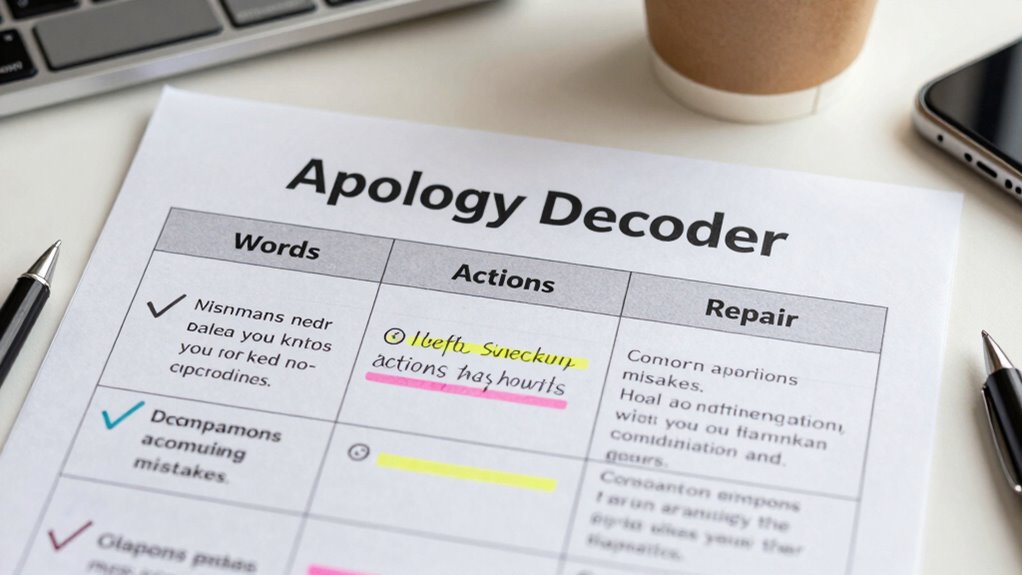
Have you ever apologized but felt like it didn’t make things better? Common mistakes can hinder your apology’s effectiveness. Here are four errors to watch out for:
- Using vague apology language like “Sorry if I upset you” instead of taking full responsibility.
- Failing to show emotional awareness, which makes your apology seem insincere.
- Ignoring the impact of your actions, so the other person feels unheard.
- Rushing the apology without understanding what truly needs repair.
To avoid these mistakes, be specific, acknowledge feelings, and reflect on how your actions affected others. A genuine apology combines clear apology language with emotional awareness, helping to rebuild trust and foster understanding.
Tips for Using the Worksheet to Improve Your Apologies

Using the worksheet effectively can help you craft more meaningful and sincere apologies. It enhances your emotional intelligence by prompting honest reflection on your actions and feelings. To maximize its impact, focus on understanding the other person’s perspective and identify areas for conflict resolution. Consider this table to guide your process:
| Words to Say | Actions to Take | Repair Strategies |
|---|---|---|
| Acknowledge hurt | Listen actively | Follow through on promises |
| Express remorse | Make amends | Show consistency |
| Take responsibility | Apologize sincerely | Rebuild trust |
| Clarify misunderstandings | Offer support | Be patient |
| Show empathy | Validate feelings | Maintain open communication |
Using this structure helps you approach apologies with clarity, emotional insight, and a focus on genuine resolution.
How This Approach Strengthens Your Relationships Over Time

When you consistently apply the apology strategies outlined in the worksheet, your relationships grow stronger over time. This approach fosters emotional vulnerability, building trust and openness. By practicing active listening, you show genuine care and understanding, which deepens your connection. Over time, these habits lead to:
- Improved communication, reducing misunderstandings
- Increased empathy, fostering mutual respect
- Greater emotional intimacy, strengthening bonds
- More resilient relationships, better equipped to handle conflicts
As you become more comfortable expressing vulnerability and listening actively, your relationships become more authentic and supportive. This ongoing effort creates a foundation of trust and respect, making it easier to navigate challenges together. Ultimately, this approach transforms your connections into stronger, more meaningful bonds.
Frequently Asked Questions
How Can I Adapt the Worksheet for Different Types of Conflicts?
To adapt the worksheet for different conflicts, focus on enhancing your conflict resolution skills and emotional intelligence. Customize sections to address specific issues, like communication breakdowns or misunderstandings. Encourage honest reflection on your feelings and actions, and tailor repair steps to fit the situation. By doing so, you’ll better understand emotions involved and foster healthier resolutions, making the worksheet a versatile tool for handling various conflicts effectively.
What Are Signs of a Genuine vs. Insincere Apology?
You can tell a genuine apology by sincerity cues like eye contact, tone, and body language, indicating real remorse. The apology language matters too—if it includes acknowledgment of hurt, responsibility, and a promise to change, it’s more sincere. Insincere apologies often lack these sincerity cues, sound defensive, or seem rushed. Look for consistent actions that match words, showing true accountability beyond just saying the right things.
How Do Cultural Differences Impact Apology Effectiveness?
You might think a simple “sorry” works everywhere, but cultural expectations say otherwise. Apology nuances vary wildly—what’s heartfelt in one culture could be a faux pas in another. You need to understand these differences to truly connect. Ignoring cultural context risks miscommunication, turning a sincere apology into an awkward dance of misaligned signals. So, adapt your approach, respect local norms, and watch your apologies become genuinely effective, no matter where you are.
Can This Worksheet Help With Ongoing Relationship Issues?
Yes, this worksheet can help with ongoing relationship issues by improving your emotional awareness and conflict resolution skills. It encourages you to identify words, actions, and repairs, making it easier to understand your partner’s feelings and responses. By actively analyzing conflicts, you’ll communicate more effectively, reduce misunderstandings, and build stronger connections. Using this tool regularly helps you navigate recurring issues and foster healthier, more empathetic relationships.
How Often Should I Revisit or Update My Apology Strategies?
You should review your apology strategies regularly, ideally every few months, to guarantee they remain effective. This frequency review helps you identify when your approach needs updating, especially if you notice recurring issues or misunderstandings. By consistently evaluating and adjusting your strategies, you foster better communication and repair relationships more effectively. Staying proactive with these updates ensures your apologies stay sincere, relevant, and impactful over time.
Conclusion
Think of your apology as planting a seed. When you choose your words carefully, act with genuine intention, and take steps to repair, you’re nurturing trust. Just like a gardener tends to each part of the plant, using the worksheet helps you nurture your relationships with honesty and care. Over time, these efforts grow stronger, creating bonds that can weather any storm. Your sincere apologies are the sunlight that helps relationships flourish.