
TL;DR
Stress relief adult coloring books offer structured, creative downtime: you choose colors, fill shapes, and see a page take form. Some people find that calming, but effects vary, and coloring is not a treatment for anxiety or other mental health conditions. Start with artwork and page detail you enjoy, then choose supplies and paper that work together.
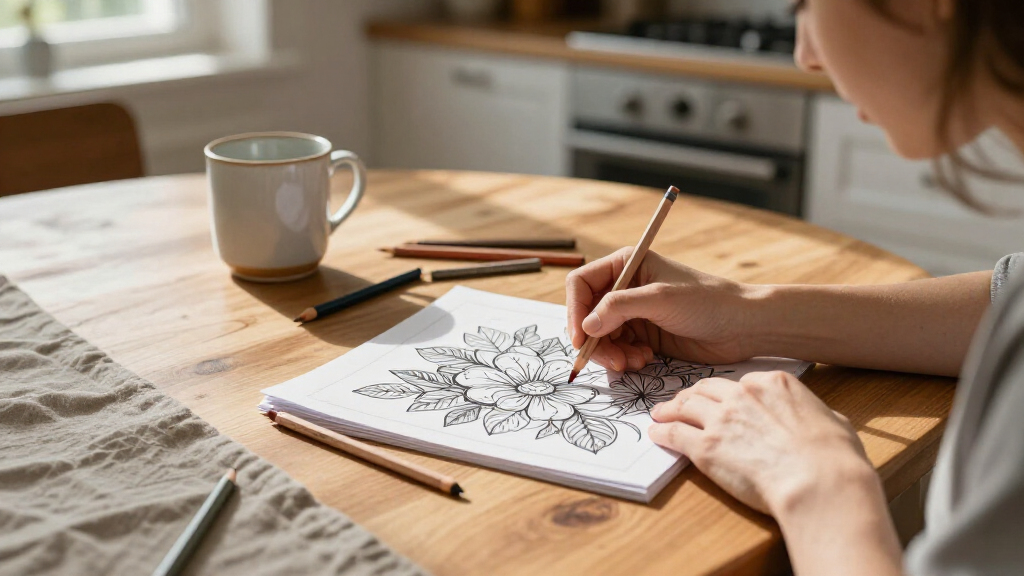
After a day of bright screens and buzzing notifications, a page of black outlines and colored pencils can feel like a welcome change of pace. You don’t need to be an artist or finish the picture. You just need a design you want to spend a few minutes with.

Give the gift of listening to someone who needs a break
- Choose a 1-, 3-, 6- or 12-month membership
- They pick the audiobooks they love
- Easy to send by email
This guide explains what stress relief adult coloring books offer, what research can and can’t tell you, and how to choose a comfortable design, format, and set of supplies. Think of coloring as a possible calming leisure activity—not a promise to treat stress or a mental health condition.
Treat “stress relief” as a description of a coloring book’s intended use, not a guaranteed health effect.
Start with artwork and page detail you find inviting; larger shapes can feel easier than intricate patterns.
Colored pencils are versatile, while markers work best with paper that can handle the ink.
Compare printed and digital formats based on screen time, portability, comfort, and the supplies or features you prefer.
Take breaks when coloring feels tiring, and consult a qualified professional about mental health concerns.
What adult coloring books offer beyond a pretty page
Stress relief adult coloring books are books of outlined illustrations made for older readers, often with more detail and varied themes than children’s coloring books. You might find mandalas, flowers, animals, landscapes, or abstract patterns, ready for pencils, markers, crayons, or gel pens.
The activity gives you a small, clear task: choose a color, fill a shape, and watch the page change. That structure can make it easier to settle into a quiet moment, especially when you’ve spent hours switching between messages, tabs, and chores.
For example, you might color one flower during a tea break and leave the rest for another day. There’s no need to complete the page or follow a color scheme. The book provides the outlines; you set the pace.
Popular right now

Shark Pet Cordless Stick Vacuum, Up to 40-Minute Runtime, Lightweight, IX141

Ninja Foodi Smart 6-in-1 Indoor Grill and Air Fryer, 4 Qt, FG551

Ninja Crispi Microwave and Air Fryer with FusionCrisp, Silver, MW101
As an affiliate, we earn on qualifying purchases.
Why coloring may feel calming—and where the evidence stops
Coloring may feel calming because it gives your attention a simple, hands-on focus for a while. You choose a color, guide a pencil across the paper, and see a visible result instead of keeping a list of unfinished tasks in your head.
Research on coloring and related art activities suggests some people feel calmer in the moment, but findings vary by person, activity, and study design [1]. That doesn’t show that coloring books treat anxiety, depression, or other health conditions. The phrase “stress relief” describes an intended use, not a guaranteed result.
Coloring can be a pleasant pause in your day. It does not replace care from a qualified professional when you have health concerns.
Imagine coming home tense and coloring for ten minutes because the routine feels pleasant. If it helps you unwind, that’s useful information about your experience—not proof that it will have the same effect for everyone.
Choose page detail that feels inviting, not demanding
The most relaxing coloring page is one you want to use, and its level of detail can shape how the activity feels. Large, open shapes are often an approachable starting point, while intricate patterns suit people who enjoy careful, slow work.
A crowded mandala can feel satisfying if you like repeating small motions. If you’re already tired or your hands feel sore, though, all those tiny spaces may turn a break into a chore. A garden scene with broad leaves or a simple animal illustration may feel easier to begin.
Choose a subject you already enjoy—perhaps cats, travel, food, or fantasy art. Adult coloring books now cover a wide range of interests and detail levels, and sample pages can help you judge whether a design looks inviting before you buy [2].
- Try larger shapes if fine details feel fiddly.
- Pick familiar subjects if patterns alone don’t hold your interest.
- Leave pages unfinished if you’re ready to stop.
Match pencils or markers to the paper before you start
Colored pencils are a versatile first choice because they give you control and work with many kinds of paper. Markers make bold, vivid color, but ink can bleed through thin pages—especially if you press hard or layer several shades.
Before you color a full page, test your supplies on a sample page or the back of an illustration. If the paper is thin, place scrap paper beneath the page. For markers, check whether the book has single-sided pages, which can reduce the chance of ink spoiling the picture behind it.
Picture starting a bright tropical bird with a marker, only to find color soaking through its paper-thin wing. A quick paper check could save that surprise. Look at page thickness, binding, page count, and whether pages are perforated or removable if you want to frame or share your work.
Use this quick checklist to choose a book you’ll enjoy
To choose a coloring book you’ll actually use, check the artwork, detail level, page layout, and paper before buying. A book with your favorite subject and a comfortable page size is usually a better starting point than one marketed with sweeping wellness claims.
- Pick a theme you like. Browse sample pages for plants, animals, scenes, or patterns that catch your eye.
- Check the detail. Choose broad shapes for an easy start or fine patterns if you enjoy precision.
- Match the medium to the paper. Pencils suit many pages; markers call for thicker or single-sided paper.
- Consider handling. Check the binding, page size, and whether pages are easy to turn or remove.
- Try a short session. Color for a few minutes, pause if your hand gets uncomfortable, and notice whether you enjoyed it.
For example, someone who wants to color during a lunch break might prefer a compact book with clear outlines and colored pencils. Someone who likes bold, saturated color at home may choose a larger book with thicker, single-sided pages.
Decide whether paper or a coloring app suits your routine
Printed books give you a tactile, screen-free activity; digital coloring apps offer portability and easy corrections. Neither format is automatically more relaxing—the better fit depends on what you enjoy and where you plan to color.
| Format | What you may like | What to check |
|---|---|---|
| Printed book | Paper texture, pencil control, and a break from screens | Paper quality, binding, page layout, and supply compatibility |
| Digital app | Easy corrections, portability, and zoom for small details | Screen time, ads, in-app purchases, and comfort using the device |
If you already spend your evening on a tablet, paper may feel like a clearer change of scene. If holding a pencil is uncomfortable, digital zoom and fill tools may make the activity easier to manage.
Make coloring fit your hands, eyes, and evening
You can adapt coloring to your comfort by choosing visible outlines, a manageable page, and tools that feel easy to hold. High-contrast designs and larger shapes may help if you have limited vision, while digital zoom can make small details easier to see.
If your fingers tire quickly, try a thicker pencil grip or switch to a page with fewer tiny spaces. You can also color for just a few minutes and stop when the motion feels uncomfortable. There’s no required session length or prize for finishing.
A quiet page of coloring might fit into an evening routine if you find it pleasant, but there isn’t enough basis to say that coloring itself reliably improves sleep [1]. If anxiety, low mood, or another health concern is affecting your life, speak with a qualified professional about support.
Frequently Asked Questions
Do adult coloring books actually relieve stress?
Some people find coloring relaxing or absorbing for a while, but the effect varies. Research on coloring and related art activities does not establish coloring books as treatment for a mental health condition [1].
How long should I color?
There’s no required duration. Try a few minutes and stop when you’re ready, especially if your hand feels tired or the page starts to frustrate you.
Which coloring book should a beginner choose?
Start with a subject you like and sample pages that look manageable. Larger shapes and moderate detail can be a comfortable first choice.
Are mandalas better for relaxation?
Not for everyone. Some people enjoy their symmetry and repeating shapes, while others prefer animals, flowers, landscapes, or simpler designs.
What should I look for when buying a coloring book?
Check the subject, detail level, paper thickness, binding, and page layout. If you plan to use markers, look for paper suited to them and consider single-sided pages to reduce bleed-through.
Conclusion
Choose a coloring book for the page you’re happy to open, then give yourself permission to color one small corner and stop. If the pencil’s soft scratch and the slow spread of color make your break more enjoyable, that’s enough.