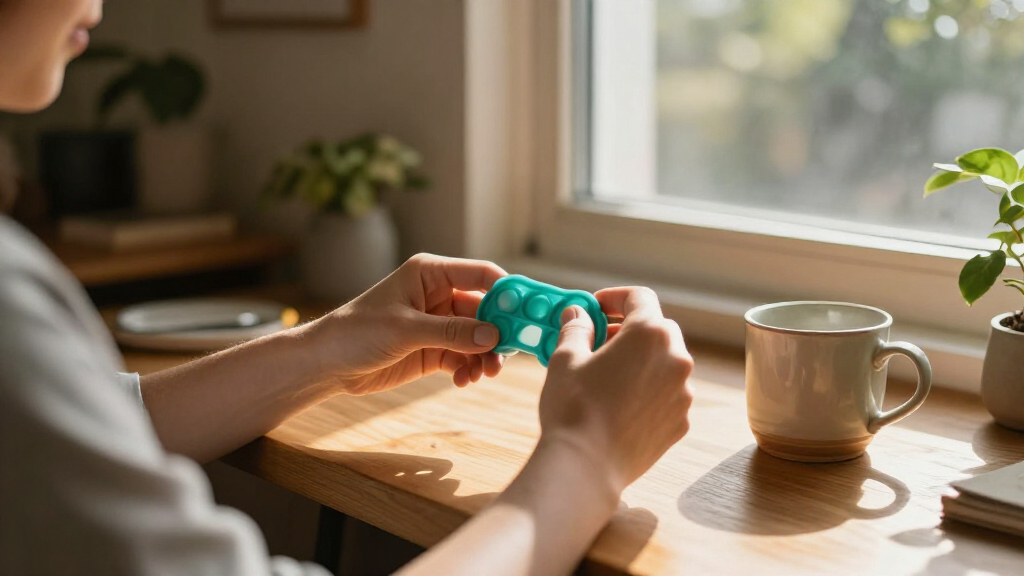

This guide helps you choose and try a stress relief fidget toy that fits your hands, surroundings, and preferences. It is for beginners who want a practical way to keep their hands occupied during a stressful moment, a pause in work, or a quiet activity. You will compare a few toy types, check for comfort and safety, and decide whether a toy helps you focus or relax. Allow 15-30 minutes to select and test one; using it later can take only a few minutes.

Turn your wind-down time into listening time
- Thousands of audiobooks, podcasts and originals
- Listen on your phone, tablet or Echo — also offline
- Cancel anytime

PILPOC TheFube Fidget Cube – Stress Relief Infinity Cube for Adults and Kids
- ✔ Brand: PILPOC
- ✔ Type: Fidget cube
- ✔ Actions: Six sides with silent, partly silent, and audible modes

Sensory Stone Fidget Toys – 6 Pack Textured Worry Stones for Stress Relief
- ✔ Brand: KLT
- ✔ Type: Textured worry stones
- ✔ Quantity: 6

Crayola Globbles Fidget Toy – 6 Count Sticky Stress Balls
- ✔ Brand: Crayola
- ✔ Model: 74-7294
- ✔ Type: Sticky stress balls
A fidget toy is a personal aid, not a guaranteed treatment for stress. Different textures, sounds, and movements suit different people. Start with a small, simple option and judge it by how it feels and whether it helps you stay with the activity at hand.
Difficulty: Beginner | Time: 15-30 minutes to choose and try a toy; a few minutes per use
What You’ll Need
Tools & Materials:
- A few fidget toys to compare, or access to a shop that carries them
- A clean, flat surface for inspecting and testing a toy
- A small pouch or case if you plan to carry the toy
Knowledge:
- No special skills are needed
- Know whether you will use the toy in a quiet shared space, at home, or on the move
Set aside 15-30 minutes to compare and test options without rushing. If the toy is for a child, check its age guidance and small-parts warnings. Keep small toys and detachable pieces away from children or anyone who may put them in their mouth. If you have a condition that affects hand movement, sensation, or grip, choose a toy that feels manageable and stop if it causes pain or numbness.
PILPOC TheFube Fidget Cube – Stress Relief Infinity Cube for Adults and Kids
TheFube earns our top spot because it gives us several ways to occupy our hands in one compact object. Its six sides include silent, partly silent, and audible actions, so we can shift between tactile input and more deliberate clicking depending on the setting. That range makes it a more adaptable desk companion than the Sensory Stones, whose main appeal is consistent textured rubbing, and less focused on squeezing play than the Globbles.Its small cube shape and included protective case favor carrying it between home, school, or work. The reported sturdy plastic and smooth silicone construction suit repeated handling, while the modest size may feel cramped for people who prefer larger fidgets. The quiet modes help with discretion, but “quiet” is not the same as silent in every environment: an audible switch could distract others in a very quiet room. We’d choose TheFube when variety matters most, and skip it if we need a larger, purely silent surface to rub.
Pros:
- Six sides offer multiple ways to keep hands engaged.
- Silent and partly silent modes support more discreet settings.
- Protective case helps keep the cube together in a bag.
- Plastic and silicone construction is designed for repeated handling.
Cons:
- Small dimensions may feel too tiny for some users.
- The audible switch can be distracting in quiet rooms.
- Only one listed color theme limits choice.
Best for: People who want several kinds of fidget action in one small, portable toy.
Not ideal for: Anyone who prefers a larger fidget or needs completely unobtrusive use in a very quiet space.
Bottom line: Choose TheFube for the broadest mix of fidget actions, provided its compact size and occasional clicking suit your setting.
“Choose TheFube for the broadest mix of fidget actions, provided its compact size and occasional clicking suit your setting.”
Sensory Stone Fidget Toys – 6 Pack Textured Worry Stones for Stress Relief
When a fidget needs to stay unobtrusive, the KLT Sensory Stones make the clearest case in this lineup. Their textured surfaces offer a simple tactile routine—hold, rub, and repeat—without the switching sounds that can come from TheFube. Compared with the Globbles, they also avoid a sticky play surface, which may make them easier to use discreetly at a desk or in a classroom.The six-piece set gives us spares to keep in a backpack, pocket, or different work areas, and the washable custom rubber is described as durable. The tradeoff is a narrower experience: there are limited shape variations, and the firmer texture may feel too intense for very young children or anyone sensitive to rougher tactile input. These stones suit buyers who know that rubbing a surface helps them settle; people who need varied motions or a soft squeeze may find TheFube or Globbles more engaging.
Pros:
- Quiet design fits shared spaces.
- Textured surfaces offer a consistent rubbing sensation.
- Six pieces can be distributed across bags or rooms.
- Washable rubber supports regular use.
Cons:
- The harder texture may feel too intense for some young children.
- Limited shape variety may not suit different sensory preferences.
- Offers less movement variety than TheFube or Globbles.
Best for: Adults, teens, and children who want quiet tactile input at school, work, or while travelling.
Not ideal for: Users who dislike firm textures or want varied actions such as clicking, stacking, and squeezing.
Bottom line: Pick the Sensory Stones when quiet, repeatable rubbing matters more than a range of fidget actions.
“Pick the Sensory Stones when quiet, repeatable rubbing matters more than a range of fidget actions.”
Crayola Globbles Fidget Toy – 6 Count Sticky Stress Balls
Globbles stand apart by making stress relief feel like tactile play. We can squeeze, stack, or sling the sticky balls, so they offer a softer, more active alternative to the Sensory Stones’ steady rubbing. The six-count set also means there are several pieces to share or keep nearby. Compared with TheFube, though, Globbles deliver a more focused sensation: they do not offer multiple switch actions or a quiet mode to choose between.The reusable, washable design is useful because the product description says washing restores stickiness. That benefit comes with upkeep: tack can diminish over time, and cleaning becomes part of keeping the balls ready for play. Their small size also calls for care around younger children; the stated age guidance is four and up, and the product notes a choking hazard for younger children. This is the right pick when squeezing and sticky tactile play are the draw, but less suitable for people seeking a discreet desk fidget or a no-maintenance texture.
Pros:
- Six reusable balls support sharing or keeping spares nearby.
- Can be squeezed, stacked, and played with in different ways.
- Washable design can restore stickiness.
- Compact for desks, travel, or classroom use.
Cons:
- Stickiness can fade and requires washing to restore.
- Small balls can be lost and are a choking hazard for younger children.
- Not recommended for exposure to extreme temperatures.
Best for: Children aged four and up, or adults, who prefer soft squeezing and hands-on tactile play.
Not ideal for: People seeking a quiet, discreet object for formal settings or who do not want to wash a fidget periodically.
Bottom line: Choose Globbles for squeezable, playful sensory input if periodic washing and small-piece care fit your routine.
“Choose Globbles for squeezable, playful sensory input if periodic washing and small-piece care fit your routine.”
As an Amazon Associate we earn from qualifying purchases.
Before You Start
Think about when and where you expect to use the toy. A clicky spinner or textured plastic may be fine at home but distracting in a meeting, classroom, library, or shared office. In a quiet setting, choose a silent toy and test it at the same volume and pace you would use there. Check cleaning directions before sharing a toy, and avoid sharing one if its material cannot be cleaned easily.
Decide what you want the toy to do for you. You might want gentle movement during a listening task, a tactile object to hold during a tense pause, or a short hand activity during a break. Keep the goal modest: notice whether the toy feels comfortable and whether it helps you return to what you were doing.
Step-by-Step Instructions
Step 1: Choose a setting and purpose
Choose one situation in which you want to use a fidget toy, such as listening to a call, waiting, or taking a short break. Note whether the space must stay quiet and whether you need one hand free for writing, a device, or another task. Narrow your choice using those details: select silent movement for quiet spaces, and consider more sound or larger motions for a break at home.
Tip: Choose one main situation to start. A toy that suits every setting is not necessary.
Check: You can describe when you will use the toy and any limits on noise, size, or hand movement.
Step 2: Compare toy types
Select two or three toy types to compare. Rub a smooth worry stone or pocket pebble with your thumb, squeeze a soft ball lightly, or move a quiet slider, ring, or small textured object with your fingers. Check each toy’s size, material, surface, moving parts, and cleaning directions. Choose an option that feels comfortable and can be handled without force.
Tip: A popular toy is not automatically a good fit. Texture and resistance are personal preferences.
Check: You have one or two options that suit your setting and feel comfortable to hold.
Step 3: Inspect the toy
Inspect the toy before using it. Look for cracks, sharp edges, loose pieces, sticky residue, or damaged seams. Read any age guidance and warnings on the package. If you are selecting a toy for a child, avoid items with small detachable parts when they could pose a choking risk. Set aside any damaged toy or one with an unclear safety label.
Tip: Do not pull, bite, or sharply stretch a toy to test it. Follow its care and use instructions.
Check: The toy is intact, has no loose parts, and its age and care information fit the intended user.
Step 4: Try the toy gently
Hold the toy and use it for two or three minutes while sitting or standing comfortably. Move it at a gentle pace: roll a stone between your fingers, squeeze a ball lightly, or slide a quiet mechanism back and forth. Keep your grip relaxed. Notice the texture, resistance, sound, and whether your hand feels tired or uncomfortable.
Tip: Stop if you feel pain, tingling, numbness, or skin irritation. A fidget toy should not require a hard grip.
Check: You can use the toy briefly without discomfort, and you can tell whether its feel and sound suit you.
Step 5: Test it during the intended activity
Use the toy for five to ten minutes during the situation you chose, or simulate that activity at home. Keep your attention on the task and notice whether the toy supports it. Check whether you look at the toy, make noise, lose track of the conversation, or find it hard to stop. If you are testing it in a quiet place, keep movements small and listen for clicks or rubbing sounds.
Tip: Try one toy at a time. Switching between several toys makes it harder to tell which one suits you.
Check: You can stay with the activity while using the toy, and it does not create unwanted noise or distraction.
Step 6: Set a simple use routine
Choose a clear cue for using the toy, such as starting a listening task or taking a scheduled pause. Pick a place to keep it so you can find it without searching. Use it gently for a short period, then put it away if it starts drawing your attention from the task. Wash or wipe it as its care instructions direct, especially after taking it outside or sharing it.
Tip: A short pause from the task may help more than continuous fidgeting. Set the toy down when you need both hands or full attention.
Check: You know when you will use the toy, where it belongs, and when to put it away.
Step 7: Review and adjust
Review the toy after a few uses. Ask yourself whether it felt pleasant, stayed quiet enough, and helped you remain with the activity or take a useful break. Keep it in your routine if it worked well. If it was uncomfortable, noisy, or distracting, change one feature at a time, such as choosing a softer texture, lower resistance, or silent movement. Try another option before deciding that fidget toys do not suit you.
Tip: Do not keep using a toy that causes discomfort or makes the activity harder.
Check: You have a toy and use pattern that feel comfortable, or a clear idea of what feature to change.
Common Mistakes to Avoid
- Choosing a toy because it is popular without checking its feel or sound. — Try the toy briefly and match its noise, size, and movement to the place where you plan to use it.
- Using a toy with a tight grip or forceful repeated movement. — Use light pressure, take breaks, and stop if your hand becomes sore, numb, or irritated.
- Using a noisy or visually engaging toy during a task that needs quiet attention. — Test it in the intended setting and switch to a silent, low-motion option if it distracts you or others.
- Ignoring loose parts, age guidance, or cleaning instructions. — Inspect the toy before use, follow its label, and keep small pieces away from anyone who could swallow them.
Troubleshooting
Problem: The toy makes more noise than expected.
Solution: Use smaller, slower movements and test again in the intended room. If it still clicks or rubs loudly, choose a silent stone, soft squeeze toy, or another low-noise option.
Problem: The toy distracts you from the task.
Solution: Put it away for activities that need full attention. Try using it only during listening or a planned pause, and choose a toy with fewer moving or visual features.
Problem: Your fingers or hand become tired or uncomfortable.
Solution: Stop and let your hand rest. Try a lighter toy or one with softer resistance and gentler movement. Do not use a toy that causes pain, tingling, numbness, or a skin reaction.
Problem: The toy feels dirty or is difficult to clean.
Solution: Follow the product care directions. If it cannot be cleaned in a way that suits your use, keep it for personal use or choose a washable toy with clear cleaning instructions.
What Success Looks Like
You have selected an intact toy that fits the intended user and setting. You can use it gently without pain or irritation, and its sound and movement do not distract you or people nearby. You have a simple cue for when to use it, a place to store it, and a way to clean it. After several uses, you can describe whether it helped you stay with an activity or take a calming pause. If it did not, you know which feature to change or when to set it aside.
Next Steps
Keep the toy in its assigned spot and check it periodically for damage or loose parts. Clean it according to its care directions, and replace it if it becomes cracked, sticky, or difficult to clean. After a week of occasional use, review which situations suited it and which did not. Try a different texture or resistance if your first choice was uncomfortable or distracting. If stress is persistent or disrupting daily life, consider talking with a qualified health professional about additional support.
Frequently Asked Questions
Which fidget toy should I try first?
Start with a small, quiet toy that feels comfortable in your hand, such as a smooth stone or a soft squeeze toy. Choose based on the setting and movement you prefer, then test it briefly before carrying it regularly.
How long should I use a fidget toy?
There is no single time limit that suits everyone. Try it for a few minutes and check whether it remains comfortable and supports the activity. Take a break or put it away if your hand tires or your attention shifts to the toy.
Can I use a fidget toy at work or in class?
Yes, if the toy is quiet and its movement does not interrupt your work or other people. Test it at low volume and keep it out of sight when the activity needs your full attention or both hands.
What should I do if fidgeting does not help me feel calmer?
Try a different texture or movement, or use the toy only during a short break. It is also fine to stop using it. A fidget toy is one optional aid; it does not work the same way for everyone.