

TL;DR
Apple is reportedly lobbying Washington for permission to buy memory chips from China’s CXMT, a company on a Pentagon blacklist, after raising Mac and iPad prices because of a global memory shortage. The development highlights a sharper problem for Europe: it has no major domestic DRAM or HBM producer and little leverage over supply.
Apple is lobbying Washington for permission to buy memory chips from China’s CXMT, according to the source material citing the Financial Times, two days after raising Mac and iPad prices because of a global memory shortage. The move matters because even one of the world’s strongest hardware buyers is facing pressure, while Europe has no comparable memory supplier of its own.
The reported request concerns ChangXin Memory Technologies, known as CXMT, a Chinese memory-chip maker listed under the Pentagon’s 1260H designation. Apple’s effort, as described in the source material, reflects pressure from a supply squeeze that has pushed memory prices sharply higher across the electronics and AI hardware markets.
Apple has more room to maneuver than European buyers. It can rely on Micron as a U.S.-based supplier, press officials in Washington, and seek access to Chinese supply if regulators allow it. European companies, by contrast, are described as price takers in a market dominated by Samsung, SK Hynix, Micron and smaller players outside Europe.
The source material says the European Union produces less than 10 percent of global semiconductors by value and makes practically no commodity DRAM or high-bandwidth memory, the stacked memory used with AI accelerators. Counterpoint is cited as saying memory prices have risen by about four times over three quarters, with some segments seeing even steeper year-on-year increases.
Apple greift nach China-Speicher. Europa hat nicht einmal diese Option.
Der Speicher-Engpass legt Amerikas Abhängigkeit offen — und Europas weit brutaler. Apple hat einen heimischen Zulieferer, politisches Gewicht und die China-Option. Europa hat keinen eigenen Speicher, keinen Sitz am Tisch, keinen Hebel auf das, was zählt.
- EU fertigt < 10 % der Halbleiter weltweit
- Praktisch kein DRAM, kein HBM aus Europa
- 3–4 Speicherhersteller weltweit — keiner europäisch
- Reiner Preisnehmer: Speicher ~4× in 3 Quartalen
- ASML: EUV-Monopol — kein Spitzenchip ohne
- Zeiss: Präzisionsoptik, weltweit konkurrenzlos
- imec · CEA-Leti · Fraunhofer: Spitzenforschung
- Infineon, NXP, STMicro: Automotive · Leistung · SiC
Der Engpass ist ein Souveränitätstest — Europa fällt bei der Versorgung durch, hält die Hebelmacht aber in der Hand. Wenn sich selbst Apple nicht freikaufen kann, ist Europas Antwort nicht, sich einzukaufen, sondern zweigleisig: die einzigartigen Engstellen konsequent als Hebel nutzen — und die Abhängigkeit dort senken, wo es ohne Brüssel geht: lokal-first, offene Gewichte, Quantisierung, richtig dimensionierte Hardware. Den 20-%-Traum begraben, das Eigene verteidigen, weniger brauchen.
Europe Lacks Apple’s Options
The report points to a gap between supply dependence and political leverage. Apple can try to widen its supplier base because it has scale, domestic supply ties and direct access to U.S. decision-makers. European buyers face the same shortage but lack a homegrown DRAM champion and have little direct influence over HBM allocation.
That matters for readers because memory shortages affect more than smartphones and laptops. AI servers, cloud infrastructure, cars and industrial equipment all need memory, and tight supply can raise costs or slow deployment. Europe’s exposure is sharper because it depends on supply chains centered in East Asia and on design and purchasing power concentrated in the United States.
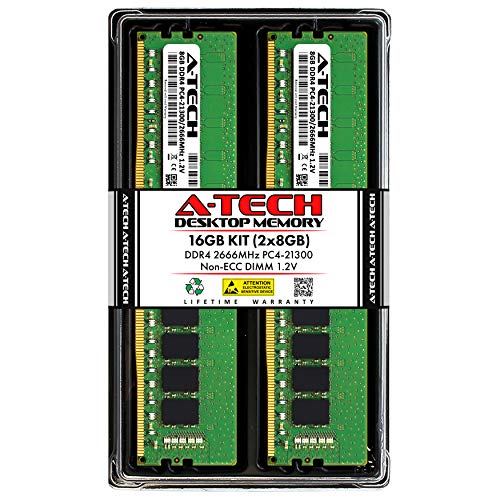
A-Tech 16GB (2x8GB) DDR4 2666 MHz UDIMM PC4-21300 (PC4-2666V) CL19 DIMM Non-ECC Desktop RAM Memory Modules
- Compatibility: Compatible with select DDR4 desktops
- Ease of Installation: Easy to install at home
- Performance Boost: Enhances system speed and multitasking
As an affiliate, we earn on qualifying purchases.
As an affiliate, we earn on qualifying purchases.
The EU Chip Target Slips
The EU Chips Act, adopted in 2023, aimed to raise Europe’s share of global semiconductor production to 20 percent by 2030, backed by about €43 billion in planned public and private support. The source material says the current European share is closer to 11.7 percent, and cites the European Court of Auditors as judging the 20 percent goal “very unlikely”.
Europe still holds major strengths in chipmaking. ASML dominates extreme ultraviolet lithography, Zeiss supplies advanced optics, and research groups such as imec, CEA-Leti and Fraunhofer are central to semiconductor development. But those strengths do not give Europe immediate access to DRAM wafers, HBM output or advanced packaging capacity at the scale now demanded by AI infrastructure.
High bandwidth memory (HBM) for AI hardware
As an affiliate, we earn on qualifying purchases.
As an affiliate, we earn on qualifying purchases.
Approval And Supply Remain Unclear
It is not yet clear whether U.S. officials will allow Apple to buy from CXMT, whether Apple would proceed at scale if approval came, or how much supply CXMT could provide. The reported lobbying does not confirm that shipments, contracts or product changes are already in place.
It also remains unclear how long the memory shortage will last. The source material cites reports of large AI-related supply commitments, including claims that OpenAI has reserved a major share of future DRAM wafer production, but those arrangements and their market effects remain difficult to verify from the provided material alone.
As an affiliate, we earn on qualifying purchases.
Brussels Faces A Supply Test
The next milestones are whether Washington responds to Apple’s reported request and whether further price increases spread across consumer electronics and AI hardware. In Europe, the pressure is likely to shift attention toward advanced packaging, new memory architectures and policies that reduce demand for scarce hardware through local-first systems, smaller models and better-sized infrastructure.
As an affiliate, we earn on qualifying purchases.
Key Questions
What did Apple reportedly ask for?
Apple is reportedly seeking U.S. approval to buy memory chips from CXMT, a Chinese supplier on a Pentagon list, amid a global memory shortage.
Why does this matter for Europe?
Europe has no major DRAM or HBM producer, so it has less leverage when supply tightens and prices rise.
Does Europe make any important chip technology?
Yes. Europe is strong in ASML lithography, Zeiss optics and research groups such as imec, but those assets do not equal domestic memory supply.
Is Apple already buying CXMT chips?
The provided material says Apple is lobbying for permission. It does not confirm approved purchases, shipments or use in specific products.
Source: Thorsten Meyer AI