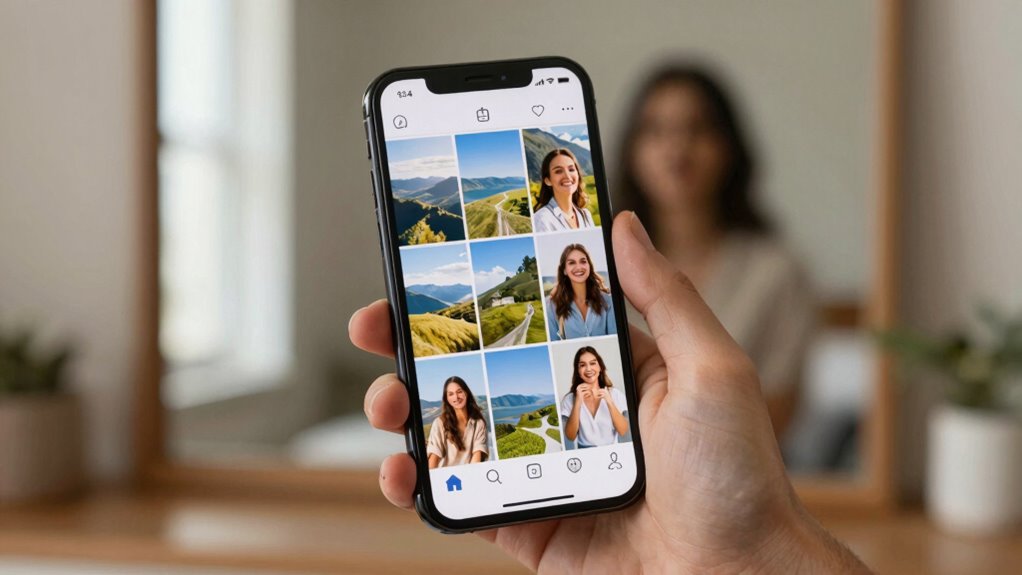

Social media gaslighting happens when your feed manipulates your perception of reality through curated content, fake news, and psychological tactics that undermine your confidence. It can cause confusion, anxiety, and self-doubt by distorting what’s real and controlling your emotions. Recognizing these signs and understanding how your perceptions are influenced is essential. Keep exploring to discover practical ways to protect yourself and reclaim control over your digital experiences.
Key Takeaways
- Social media gaslighting manipulates perceptions through false, misleading content, making users doubt their reality and feelings.
- Curated feeds and highlight reels create unrealistic life standards, fueling dissatisfaction and distorted perceptions.
- Repetitive false narratives and dismissive language undermine self-trust and distort users’ understanding of reality.
- Emotional reactions like confusion and anxiety signal exposure to manipulation, indicating a warped sense of reality.
- Developing critical thinking, setting boundaries, and curating content help protect mental health and counteract feed-induced distortions.
What Is Social Media Gaslighting, and How Does It Affect You?

Social media gaslighting involves manipulating your perception of reality through false or misleading information shared online. This tactic creates digital illusions that distort what you believe is true, making you doubt your experiences or feelings. Online deception can take many forms, like edited photos, fake news, or exaggerated claims, all designed to sway your perspective. When you’re exposed to these tactics regularly, it can undermine your confidence and sense of self. You might start questioning your judgments or feel confused about what’s real. Social media gaslighting subtly influences your thoughts and emotions, often without you realizing it. Recognizing these manipulations is essential because they can impact your mental health and how you interpret the world around you. Understanding the tactics behind digital manipulation can help you better protect your mental well-being. Being aware of how technological innovations are used to shape perceptions can empower you to critically evaluate online content and guard against undue influence. Additionally, understanding the visual distortions common in online content can help you identify when your perceptions are being deliberately skewed.
How to Recognize Gaslighting in Your Social Media Feed
You can spot gaslighting by noticing manipulative content that twists facts or dismisses your feelings. Pay attention to how certain posts make you feel—confused, anxious, or overly defensive. Recognizing these signs helps you protect yourself from emotional manipulation on your feed. Additionally, being aware of essential oils for emotional well-being can offer natural support in maintaining mental clarity and emotional balance during stressful social media interactions. Developing media literacy skills can further empower you to critically evaluate the content and identify subtle forms of gaslighting. Understanding the role of battery reconditioning in product lifespan can also help you discern trustworthy information from misleading claims online. Cultivating a strong sense of critical thinking allows you to better analyze and question the motives behind certain social media narratives.
Spot Manipulative Content
Recognizing gaslighting in your social media feed requires careful attention to certain patterns and cues. Be alert to disinformation campaigns that spread false narratives designed to distort reality. These often come from accounts pushing a specific agenda or ideology, making it hard to discern truth. Watch for influencer manipulation, where trusted figures subtly sway opinions or downplay issues to serve their interests. Manipulative content may include exaggerated claims, dismissive language, or repeated misinformation that seems to undermine your perception of facts. If you notice inconsistencies or messages that aim to make you doubt your judgment, it’s a red flag. Spotting these tactics helps you maintain a clearer, more accurate understanding amid the noise of manipulative content. Additionally, understanding the role of Free Floating elements can help you recognize when content is intentionally designed to sway opinion without grounding in reality. Being aware of Media Literacy strategies enhances your ability to critically evaluate such content and resist manipulation. Recognizing the influence of Cultural Narratives can further aid in identifying when content is crafted to evoke emotional responses rather than factual accuracy. Developing critical thinking skills and understanding common Manipulation Techniques can bolster your defenses against deceptive content. Furthermore, awareness of Sound Healing Science principles can help you differentiate between scientifically supported information and pseudoscience used to mislead audiences.
Observe Emotional Responses
When encountering gaslighting on social media, emotional responses can serve as powerful indicators that something’s off. Pay attention to your emotional awareness—notice if you feel confused, anxious, or dismissive after engaging with certain posts or comments. Response patterns also reveal clues; if you find yourself repeatedly questioning your perceptions or feeling invalidated, it’s a sign to pause. Gaslighting often aims to distort your reality, so your emotional reactions are crucial signals. Recognizing these responses helps you distinguish between genuine content and manipulative messaging. Trust your feelings as a guide, and don’t dismiss subtle shifts in your emotional state. Additionally, developing emotional awareness can help you better identify when social media feeds are warping your sense of reality. By observing your emotional responses carefully, you can better identify when social media feeds are warping your sense of reality. Cultivating a sense of perception validation allows you to discern authentic content from distortions. Building emotional resilience can further strengthen your ability to remain grounded amidst manipulative content. Strengthening your critical thinking skills also enables you to analyze content more objectively and avoid falling prey to gaslighting tactics. Developing awareness of common gaslighting tactics used online can empower you to recognize and counteract manipulation more effectively.
How Curated Content Distorts Your Reality

When you see only the highlights of others’ lives online, it can make you think everyone else has perfect lives. This curated content sets unrealistic expectations and makes your own experiences seem less impressive. As a result, your perception of reality gets skewed, leading to dissatisfaction and self-doubt. Additionally, the constant exposure to social media jargon can reinforce feelings of inadequacy when comparing your everyday life to the polished images and stories you encounter. Recognizing the importance of visual content quality can help you develop a more critical perspective on what you see online, understanding that curated posts often highlight only the best moments rather than the full reality. Understanding Net+ Certification Benefits can remind you of the value of authentic, foundational knowledge rather than superficial online portrayals. Being aware of privacy and data protection can also help you safeguard your personal information while navigating social platforms.
Perfect Lives Online
Curated content on social media often presents an idealized version of people’s lives, making it easy to believe that everyone else is living perfectly. These online illusions fuel digital deception, convincing you that others have flawless relationships, perfect bodies, and endless happiness. But behind those glossy images, reality is often very different. Consider these common distortions:
- People only share their highlights, hiding struggles.
- Filters and editing create false perfection.
- Celebrations and vacations are carefully curated moments, not everyday life.
This curated perfection warps your perception, making you think your life falls short. You start comparing your behind-the-scenes with someone’s highlight reel, fueling feelings of inadequacy. Recognizing these online illusions helps you see through the digital deception and maintain a healthier perspective. Additionally, understanding the horsepower of electric dirt bikes can remind you that appearances can be deceiving, as powerful bikes often look simple but pack significant performance. Just as water slides, wave pools, and lazy rivers create fun distractions in water parks, curated social media content can be entertaining but may not reflect real life.
Unrealistic Expectations Set
Because social media often showcases only the most polished moments, it sets unrealistic expectations for your own life. You start to believe that everyone else’s highlight reel reflects their everyday reality, fueling feelings of inadequacy. Influencer culture amplifies this by promoting idealized images of success, beauty, and happiness, which seem achievable but rarely reflect the full story. As you seek virtual validation through likes and comments, you may feel pressured to conform to these high standards. This distorted view makes you overlook the struggles and imperfections behind curated posts. Over time, it warps your perception of what’s normal, causing you to chase an unattainable ideal. The result? A constant cycle of comparison and disappointment, fueled by the false narratives crafted online. Recognizing the impact of curated content and understanding sustainable habits can help you develop a healthier perspective and reduce the influence of unrealistic standards.
Psychological Tactics Used in Social Media Gaslighting
Social media gaslighting relies on a range of psychological tactics designed to undermine your perception of reality. These tactics exploit common cognitive biases and psychological manipulation techniques to make you doubt yourself. Here are three key strategies used:
- Repetition of false narratives – Constantly presenting a distorted version of events makes it harder for you to trust your memory.
- Cherry-picking information – Highlighting only certain facts while ignoring others to manipulate your perception.
- Gaslighting language – Using dismissive or invalidating words to make you question your feelings or judgments.
How Gaslighting Impacts Your Mental Health and Confidence
Gaslighting on social media can severely damage your mental health and self-confidence by making you doubt your perceptions and feelings. Over time, this manipulation erodes your self-esteem, leaving you questioning your worth and judgment. As you receive conflicting messages or invalidations, your confidence diminishes, and you may start to believe you’re overly sensitive or mistaken. This constant doubt triggers an increase in anxiety, making everyday interactions feel overwhelming. You might find yourself obsessively analyzing your posts or interactions, searching for validation or proof that you’re right. The cumulative effect of social media gaslighting can lead to feelings of helplessness, emotional exhaustion, and a distorted sense of reality, ultimately undermining your mental well-being and personal confidence. Recognizing emotional manipulation is crucial to protecting your mental health and maintaining a balanced perspective.
Practical Strategies to Protect Yourself From Digital Gaslighting

To protect yourself from digital gaslighting, start by setting clear boundaries around your online interactions. Focus on mindful scrolling—pause to evaluate whether content aligns with your values and mental health needs. Incorporate a digital detox regularly: take breaks from social media to clear your mind and regain perspective. Here are three practical strategies:
- Limit screen time daily to prevent overload.
- Curate your feed by unfollowing or muting sources that distort reality.
- Establish designated offline moments to reconnect with yourself and the physical world.
These steps help you maintain control over your digital environment, reducing exposure to manipulative content. By practicing mindful scrolling and taking regular breaks, you shield your mental health from the distortions of online gaslighting.
Social Media Tools to Reduce Misinformation and Manipulation

Fortunately, numerous digital tools now help you identify and reduce misinformation and manipulation on social media platforms. These tools combat algorithm bias and address privacy concerns while enhancing your digital safety. For example, fact-checking extensions flag false information, and content moderation tools limit harmful content exposure. You can also adjust your feed settings or use platforms that prioritize transparent algorithms. To make this clearer, here’s a quick comparison:
| Tool | Focus | Privacy Concerns |
|---|---|---|
| Fact-Checker Extensions | Verify info | Minimal |
| Privacy Settings | Protect data | Yes |
| Algorithm Transparency Platforms | Reduce bias | Moderate |
| Content Moderation Tools | Limit harmful content | Low |
| Feed Customization | Control feed | Varies |
Using these tools empowers you to navigate social media more critically and safely.
Reclaim Your Digital Space With Critical Thinking

By leveraging digital tools to identify misinformation, you already take steps toward safeguarding your online experience. To further reclaim your digital space, develop critical thinking habits. Start with a digital detox: take regular breaks from social media to reset your perspective. Next, practice consistent fact checking: verify sources before sharing or believing content. Finally, question the intent behind what you see—consider biases or manipulations that may be present. Building these habits strengthens your ability to discern truth from falsehood and reduces the impact of social media gaslighting. Remember, your online environment is a reflection of your choices. Cultivating skepticism and mindfulness helps you maintain a healthier, more authentic digital space. Critical thinking isn’t just a skill—it’s your defense against distorted realities.
Frequently Asked Questions
How Can I Differentiate Between Genuine Content and Manipulated Posts?
To tell genuine content apart from manipulated posts, start with content verification—look for credible sources and cross-check information. Pay attention to authenticity markers like verified badges, consistent branding, and original photos or videos. Be skeptical of overly sensational or emotionally charged posts. If something seems off, do a quick reverse image search or check the creator’s profile. Trust your instincts and don’t hesitate to question what you see before accepting it as truth.
What Are the Long-Term Effects of Social Media Gaslighting?
Like a slow drip of water eroding stone, social media gaslighting can deeply impact you over time. It may weaken your mental health, causing anxiety, confusion, or depression. You might also experience trust erosion, doubting your perceptions and judgment. Long-term, this manipulation can lead to emotional exhaustion and detachment from reality. Staying aware and critically evaluating content helps protect your mental well-being and preserves your trust in your own experiences.
Can Social Media Algorithms Intentionally Promote Gaslighting?
Yes, social media algorithms can intentionally promote gaslighting through algorithm manipulation and content bias. They prioritize sensational or divisive content to boost engagement, which can distort your perception of reality. By amplifying certain narratives and suppressing others, these algorithms subtly influence your beliefs and feelings. Recognizing this manipulation helps you stay critical of what you see and maintain a healthier, more balanced perspective online.
How Do Cultural Differences Influence Perceptions of Social Media Gaslighting?
Cultural perceptions and social norms shape how you recognize and respond to social media gaslighting. In some cultures, questioning authority or digital content may be frowned upon, making you less likely to identify manipulation. Conversely, societies that emphasize individualism might encourage you to scrutinize content more critically. Your awareness of these cultural differences influences how you perceive gaslighting, affecting your ability to navigate social media environments confidently and protect your mental health.
What Role Do Online Communities Play in Mitigating Digital Gaslighting?
Online communities play a vital role in mitigating digital gaslighting by providing community support and online validation. When you engage with others who understand your experiences, you gain reassurance and perspective, making it easier to recognize manipulation. Sharing your concerns fosters a sense of solidarity, helping you trust your perception again. These communities empower you to challenge gaslighting tactics and regain control over your digital reality.
Conclusion
Now that you’re aware of social media gaslighting, you can start to see through the illusion. Will you let curated feeds and manipulative tactics distort your reality, or will you take control and protect your mental well-being? Remember, your digital space is yours to reclaim. Trust your instincts, question what you see, and build a healthier relationship with social media. After all, isn’t your peace of mind worth fighting for in this digital maze?