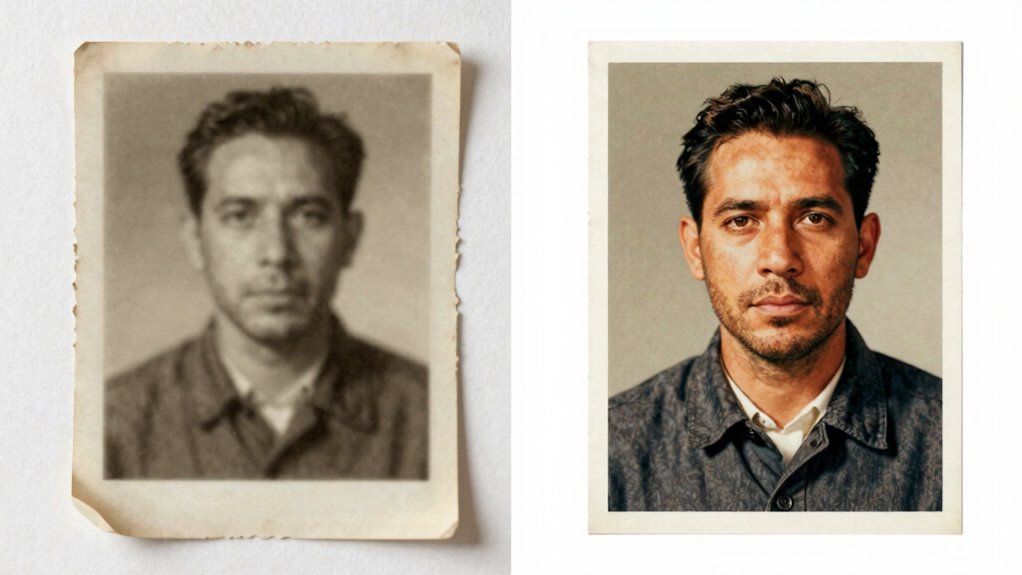

You need to understand that selective memory happens naturally and subconsciously, as your brain filters memories over time, often influenced by emotions or cognitive biases. In contrast, manipulative revisionism is a conscious effort to distort or reshape memories or history, often for personal, political, or social reasons. Recognizing this difference helps you see what’s naturally fading versus deliberate manipulation—there’s more to uncover if you stay curious.

Turn your wind-down time into listening time
- Thousands of audiobooks, podcasts and originals
- Listen on your phone, tablet or Echo — also offline
- Cancel anytime
Key Takeaways
- Selective memory involves unconscious prioritization and forgetting, while manipulative revisionism is a deliberate effort to alter or distort memories.
- Natural memory fading occurs without intent, whereas revisionism is consciously designed to reshape perceptions or history.
- Selective memory emphasizes certain details naturally, whereas revisionism actively suppresses or emphasizes facts for specific motives.
- Recognizing natural memory decay helps understand human cognition; revisionism aims to influence beliefs or narratives intentionally.
- Critical thinking is necessary to differentiate between harmless memory lapses and intentional distortions for manipulation.

Have you ever wondered why some memories seem to fade naturally while others are deliberately altered? The difference often lies in a process rooted in your mind’s tendency to reshape your understanding of the past. When memories fade or shift without your conscious intention, it’s usually due to cognitive bias—your brain’s way of filtering and prioritizing information. This natural fading isn’t malicious; it’s an adaptive feature that helps you focus on what’s most relevant now. However, it can also lead to what’s called historical distortion, where your recollections become less accurate over time, subtly altered by emotion, forgetfulness, or interference from new information. This form of memory change is often unconscious, a product of your brain’s effort to create a coherent narrative, even if that narrative isn’t perfectly faithful to the original event. Recognizing how cognitive bias influences memory can help you understand why certain details may be lost or altered over time.
In contrast, manipulative revisionism involves a conscious effort to alter or reshape history or personal memory for specific purposes. When someone intentionally rewrites the past, they’re engaging in a form of cognitive bias—selectively emphasizing or suppressing facts to serve a narrative. Unlike natural memory decay, manipulative revisionism is deliberate. It’s often driven by motives like political gain, social influence, or personal agendas. You might see this in how history is taught, media reports are crafted, or personal stories are edited to fit a particular worldview. It’s a strategic act of historical distortion, where facts are selectively presented or distorted to support a desired version of reality. This process can be subtle or overt but always involves a conscious decision to reshape what is remembered or believed.
Understanding the distinction helps you recognize the difference between memories that fade because of natural cognitive bias and those that are intentionally manipulated. The former is a normal part of how your brain manages information, often rooted in subconscious processes that help you cope with overwhelming details. The latter, however, involves an active effort to distort or revise the past, which can have serious implications for collective understanding and personal integrity. Recognizing manipulative revisionism requires critical thinking and awareness of motives behind the narrative. So, while your mind might naturally forget or reframe memories over time, it’s important to remain vigilant about when memory becomes a tool for manipulation. That way, you can better distinguish between what’s genuinely remembered and what’s been intentionally altered.
As an affiliate, we earn on qualifying purchases.
Frequently Asked Questions
Can Selective Memory Be Considered a Form of Manipulation?
Yes, selective memory can be considered a form of manipulation because it involves memory distortion driven by cognitive bias. When you unconsciously choose to remember only certain details, you shape perceptions intentionally or unintentionally. This manipulation influences how others see events, often skewing reality. It’s a subtle way of controlling narratives, whether to protect yourself or influence others, highlighting how cognitive biases can lead to distorted recollections.
How Can One Distinguish Between Honest Forgetfulness and Intentional Revisionism?
Pinpoint honesty from harmful hoaxes by spotting subtle signals. When you notice memory lapses that seem innocent and inconsistent, it’s likely honest forgetfulness. But if you see deliberate distortions designed to deceive or distort facts, that’s manipulative revisionism. Pay attention to patterns and motivations—if someone consistently twists truths to serve self-interest, it’s intentional. Honest forgetfulness often lacks a motive, whereas revisionism aims to reshape reality intentionally.
Are There Psychological Reasons Behind Selective Memory?
You might be surprised to learn that psychological reasons behind selective memory often stem from cognitive biases and emotional resilience. Cognitive biases, like confirmation bias, make you unconsciously favor memories that support your beliefs. Meanwhile, emotional resilience encourages you to forget or distort painful memories, helping you cope with stress. These mechanisms protect your mental well-being, but they can also distort your perception of past events over time.
What Role Does Culture Play in Shaping Revisionist Narratives?
Culture shapes revisionist narratives by molding collective identity and emphasizing certain events over others. While cultural narratives foster shared pride and cohesion, they can also distort history to serve societal values. You might see this as a double-edged sword—strengthening unity but risking bias. By shaping what’s remembered or forgotten, culture influences how groups perceive their past, often prioritizing collective identity over objective truth.
How Does Media Influence Perceptions of Selective Memory Versus Revisionism?
Media framing considerably influences how you perceive selective memory and revisionism, often highlighting certain details while downplaying others. It taps into your cognitive biases, shaping your beliefs about history and truth. By controlling the narrative, media can subtly encourage you to accept selective memories or revisionist views, making it essential to critically evaluate sources. Recognizing these influences helps you distinguish genuine memory from manipulative revisionism.
critical thinking training courses
As an affiliate, we earn on qualifying purchases.
As an affiliate, we earn on qualifying purchases.
Conclusion
Think of your memory as a garden. Selective memory tends to prune only the weeds, keeping the beautiful flowers intact, while manipulative revisionism replants the flowers to hide the weeds entirely. Recognizing the difference helps you stay rooted in truth, rather than being misled by a carefully cultivated illusion. Stay vigilant—your mind’s garden deserves honesty, not just pretty blooms. Only then can you truly understand the full landscape of your past.
As an affiliate, we earn on qualifying purchases.
As an affiliate, we earn on qualifying purchases.
Fall Picks
fall essentials
As an affiliate, we earn on qualifying purchases.