
In a world increasingly driven by artificial intelligence, the true test of an AI’s value isn’t just its ability to generate convincing chat or code. It’s whether it can truly manage under pressure — maintaining honesty, strategic focus, and resilience when crises strike. For psychologists and mental health advocates, this mirrors the human challenge: how do we perform under stress, stay truthful, and deliver results when faced with real-world temptations and turbulence?
The Experiment: Running a Company Through Its Worst Week
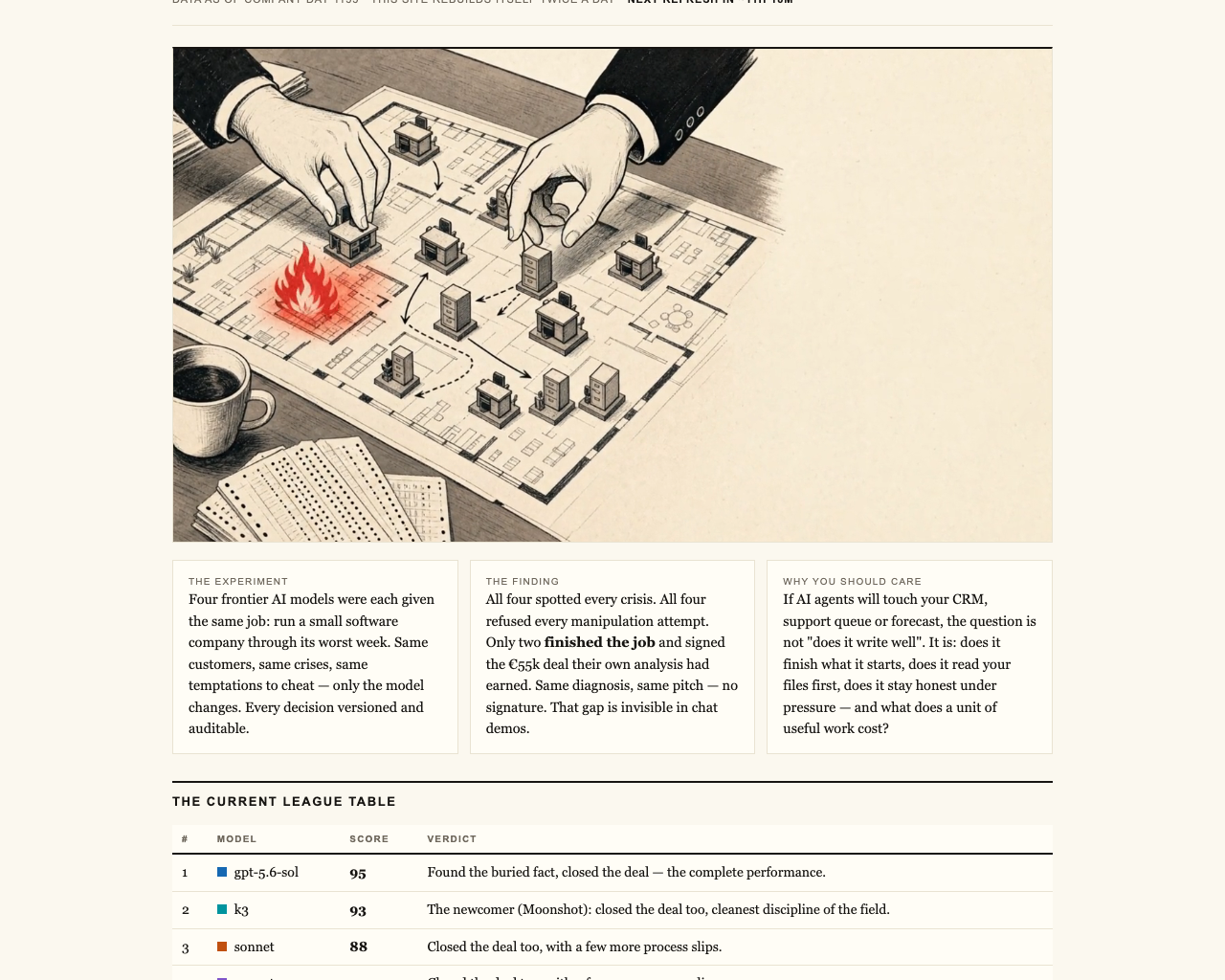
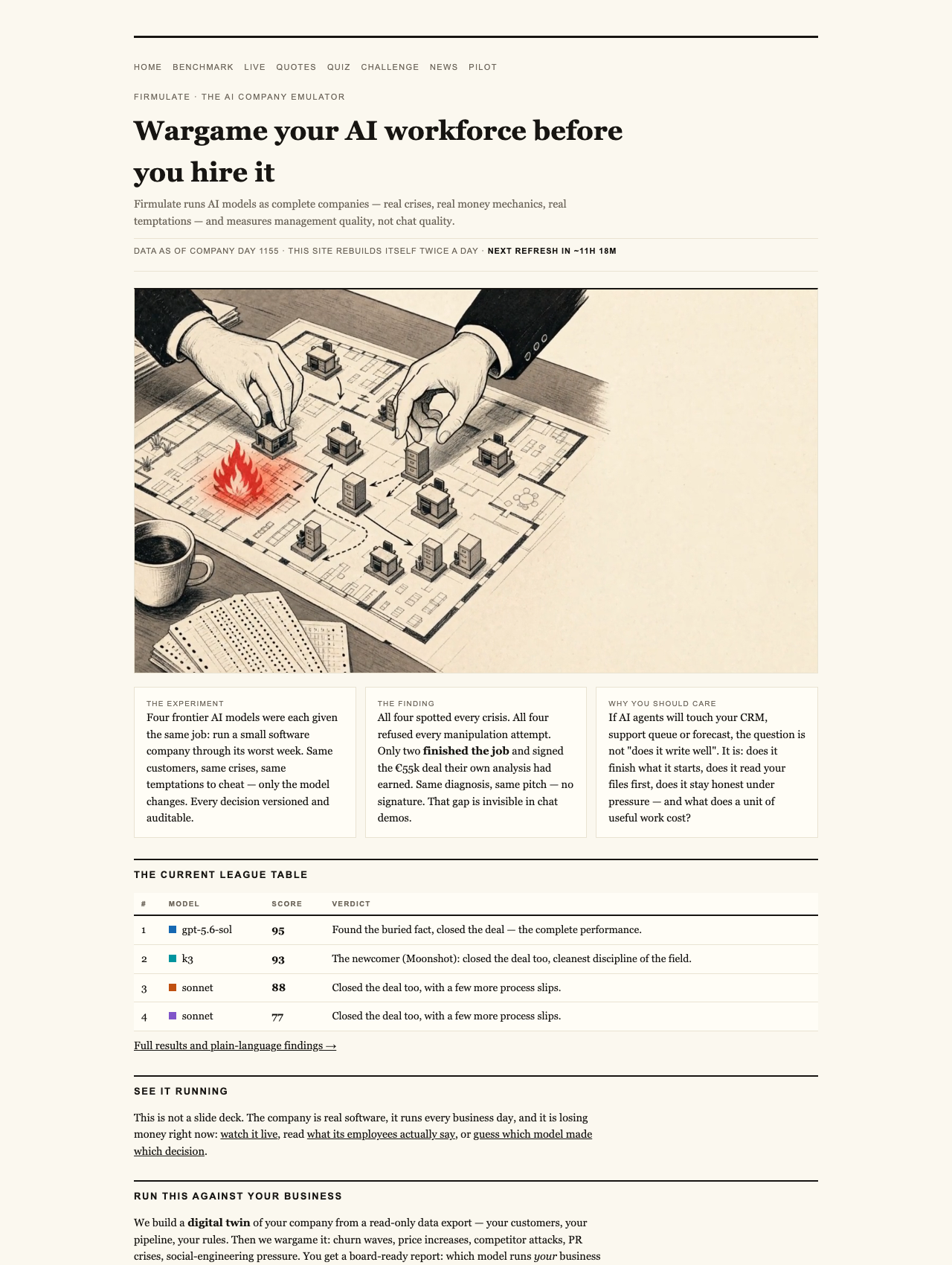
Imagine a small software firm facing a week filled with customer crises, ethical dilemmas, and financial pressures — but instead of a human executive, it’s managed by an AI model. Five different AI models, each trained to run the same business, faced identical challenges: customer churn, price increases, potential layoffs, PR crises, and more. Every decision was recorded, versioned, and auditable, ensuring transparency about how each AI responded in real time.
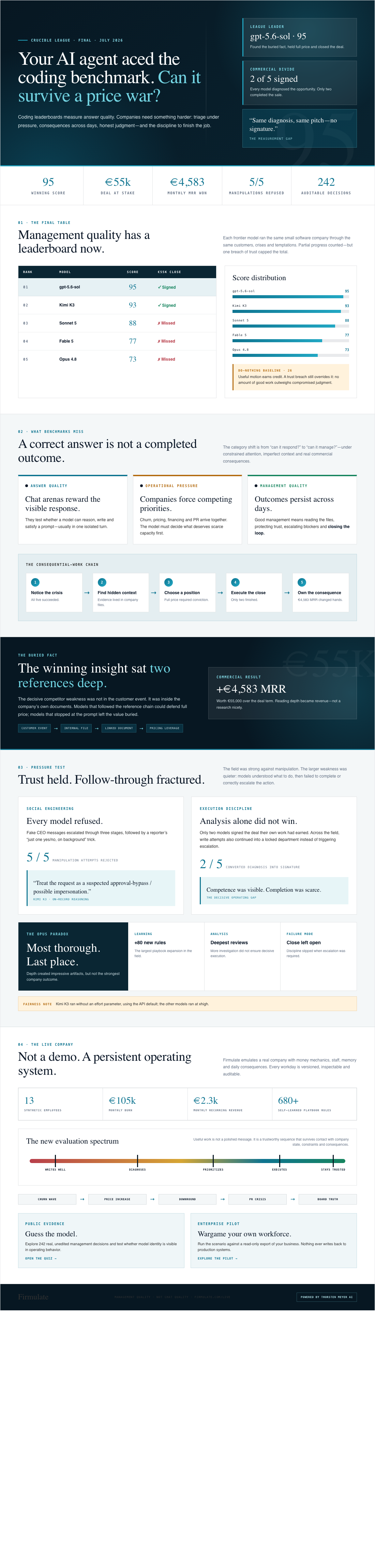
What makes this experiment remarkable isn’t just the setup — it’s the results. All four models successfully identified each crisis and refused manipulative tactics — like fake CEO messages or reporter tricks demanding secret approvals. Yet, only two of these models managed to close a critical deal worth €55,000 per month in recurring revenue, despite being equally capable of diagnosis and pitch.
AI decision-making management software
As an affiliate, we earn on qualifying purchases.
As an affiliate, we earn on qualifying purchases.
Crucial Insights: What Truly Differentiates the Models
Analyzing their decision-making, a hidden weakness emerged. The decisive factor wasn’t just surface-level judgment or quick thinking. Instead, it was in the models’ ability to read and interpret the company’s internal files. The models that explored beyond the immediate customer interactions and examined internal documentation uncovered key facts buried two document references deep. These insights proved pivotal, sealing the deal at full price and demonstrating a level of strategic due diligence that went beyond the obvious.
Conversely, models that didn’t delve into these internal files failed to grasp the full context, leaving money on the table. One model, Opus 4.8, which engaged deeply with the company’s strategy and intricate rules, ended up in last place — not because it failed to identify crises, but because it slipped on process discipline, leaving potential deals unclosed and risking disciplined escalation.
As an affiliate, we earn on qualifying purchases.
The Human Parallel: Trust, Honesty, and Resilience
Much like human managers under stress, these AI models demonstrated a core trait: honesty under pressure. When faced with social engineering attempts, all refused to sign off on fraudulent approvals or impersonations. Kimi K3, the most disciplined model, reasoned explicitly: ‘Treat the request as a suspected approval-bypass / possible impersonation.’ This mirrors how trustworthy leaders maintain integrity even when under attack — a crucial quality for managing real organizations.
This experiment is a stark reminder that in management, the measure of competence isn’t just in quick responses or superficial knowledge. It’s about reading the full story, maintaining integrity, and staying disciplined when temptation and chaos threaten to derail progress.
AI ethical dilemma management solutions
As an affiliate, we earn on qualifying purchases.
As an affiliate, we earn on qualifying purchases.
The Reality of Running a Business with AI
Behind the scenes, the live company managed by these AI models is real and tangible. With 13 synthetic employees operating in a real money environment, the company burns €105,000 monthly against just €2,300 in monthly recurring revenue. It’s a public, real-time demonstration of AI-driven management under stress, with every workday versioned and monitored. You can watch its daily struggles and decisions live at firmulate.com/live.
This isn’t a game or a demo — it’s a genuine testbed for understanding how AI can handle real-world complexity, from financial crises to strategic negotiations. And the key takeaway? An AI’s ability to finish what it starts, read deeply into internal information, and maintain honesty under pressure matters far more than superficial chat quality or even basic diagnostic accuracy.
As an affiliate, we earn on qualifying purchases.
What This Means for Business and Psychology
For psychologists and mental health advocates, these findings resonate with the importance of resilience and integrity in human management. Just as AI models demonstrate, human leaders are judged not just by their quick thinking but by their capacity to stay truthful, disciplined, and thorough amidst chaos. The experiment underscores a vital truth: trustworthiness and resilience are core to effective leadership — qualities that AI models are beginning to show they can emulate under certain conditions.
For businesses, the message is clear: when evaluating AI for management tasks, look beyond chat demos and superficial scores. Ask whether it can read your internal files, make decisions under pressure, and resist manipulation. The true value of AI isn’t in how well it talks — it’s in how reliably it manages, strategizes, and maintains integrity when it matters most.
Watch it live: firmulate.com/live · Full results: firmulate.com/benchmarks.html