Wearable anxiety relief devices range from simple breathing aids to tech focused on sensory cues, temperature, or sleep tracking. My best overall pick is the InterBreath Guided Breathing Device for its structured tactile breathing guidance and multiple modes. The Apollo Neuro stands out for wearable vibration patterns, while the Embr Wave 2 offers temperature sensations for people who prefer a physical cue over breathing prompts. The main tradeoffs are how much guidance you want, whether you will wear a device around your neck, wrist, or ears, and whether you need an app or membership. Read on for the full breakdown and a guide to choosing a device that fits your routine.

Turn your wind-down time into listening time
- Thousands of audiobooks, podcasts and originals
- Listen on your phone, tablet or Echo — also offline
- Cancel anytime
Key Takeaways
- Guided breathing sets the clearest routine. InterBreath pairs tactile cues with four modes, making it a more structured starting point than passive wearables.
- Apollo Neuro and Embr Wave 2 use different sensory approaches. Apollo offers vibration patterns, while Embr uses warming and cooling sensations; neither is a breathing coach.
- Simple breathing jewelry can keep the routine low-tech. The Mindful Breathing Necklace and Breathlace 2.0 rely on breath resistance, so buyers can avoid charging and app setup.
- Several handheld and wrist options have limited detail in their names. Compare fit, controls, and the exact pulse or vibration function before choosing among them.
- Muse S Athena serves a different priority. Its brain-sensing and sleep tracking focus is more relevant to buyers interested in sleep data than those seeking direct breathing guidance.
| In-Ear Clip Wellness Wearable for Relaxation and Sleep Support |  | Best for App-Free Adjustability | Fit: In-ear clip | Modes: 3 | Intensity levels: 9 | VIEW LATEST PRICE | See Our Full Breakdown |
| InterBreath Guided Breathing Device with 4 Modes, Tactile Guidance, and Wireless Charging – Purple |  | Best for Guided Breathing Beginners | Breathing modes: 4: 4-6 Basic, 4-4-6 Advanced, 4-7-8 Deep, and 2-4 Quick Adjustment | Guidance: Tactile pulses for inhale, hold, and exhale | Controls: One-button control | VIEW LATEST PRICE | See Our Full Breakdown |
| Apollo Neuro Wearable & 12-Month SmartVibes AI Membership (Glacier) |  | Best for Personalized App-Based Routines | Color: Glacier | Connectivity: Bluetooth | Battery life: Up to 8 hours | VIEW LATEST PRICE | See Our Full Breakdown |
| Pulsetto FIT X (Gen 3) Wellness Wearable for Calm and Sleep Support |  | Best for Longer Battery Life | Generation: 3 | Battery life: Up to 12 days | Charging: USB-C; full recharge in about 1 hour | VIEW LATEST PRICE | See Our Full Breakdown |
| Mindful Breathing Necklace for Stress and Anxiety Relief |  | Best Non-Electronic Pick | Material: Stainless steel | Width: 8 mm | Airflow design: Dual-flow internal air chambers | VIEW LATEST PRICE | See Our Full Breakdown |
| Embr Wave 2 Thermal Wristband, Warming and Cooling Bracelet, Gold |  | Best for Temperature-Based Relief | Product type: Thermal wristband | Model: Wave 2 | Color: Gold | VIEW LATEST PRICE | See Our Full Breakdown |
| Vestamore Portable Sleep Aid Device with LED Display and Adjustable Wrist Strap |  | Best for Simple Wrist-Worn Sleep Routines | Color: White | Materials: Plastic and textile | Device dimensions: 3.2 × 1.7 × 1.1 in (82 × 42 × 28 mm) | VIEW LATEST PRICE | See Our Full Breakdown |
| Glowco CalmCarry Handheld Microcurrent Relaxation Device, USB Rechargeable, Gray |  | Best for Shared, Supervised Use | Product type: Handheld microcurrent relaxation device | Model: CalmCarry | Color: Gray | VIEW LATEST PRICE | See Our Full Breakdown |
| Breathlace 2.0 Adjustable-Resistance Breathing Necklace with Cherry Blossom Design |  | Best for Breath-Paced Mindfulness | Product type: Breathing necklace | Model: Breathlace 2.0 | Maximum airflow resistance: 2 kPa | VIEW LATEST PRICE | See Our Full Breakdown |
| Model Fit Neck Wellness Wearable with 6 Modes |  | Best App-Free Neck Wearable | Modes: 6: Rest, Zen, Balance, Revive, Clarity, Ease | Intensity levels: 1–15 | Contact material: Soft silicone; metal-free contact design | VIEW LATEST PRICE | See Our Full Breakdown |
| Handheld Relaxation Device with Adjustable Vibrations |  | Best for Simple Tactile Relief | Material: Silicone | Vibration: Low-frequency | Intensity: Adjustable levels | VIEW LATEST PRICE | See Our Full Breakdown |
| Handheld Sleep Relaxation Wristband |  | Best for Wearable Sleep Routines | Design: Wristband with strap | Controls: Display and buttons | Charging: USB | VIEW LATEST PRICE | See Our Full Breakdown |
| Portable Handheld Relaxation Device with 8 Adjustable Gentle Pulse Levels, USB-C Rechargeable, Purple |  | Best for Adjustable, Screen-Free Use | Type: Handheld relaxation device | Pulse levels: 8 adjustable levels | Charging: USB-C rechargeable | VIEW LATEST PRICE | See Our Full Breakdown |
| Muse S Athena 3rd Gen Brain-Sensing Sleep Tracking Headband, Light Grey |  | Best Premium Biofeedback Headband | Model: Muse S Athena 3rd Gen | Color: Light Grey | Sensors: EEG and fNIRS | VIEW LATEST PRICE | See Our Full Breakdown |
More Details on Our Top Picks
In-Ear Clip Wellness Wearable for Relaxation and Sleep Support
Three modes, nine intensity levels, and physical controls give this ear-clip wearable more session adjustment than the simpler breathing cues of the InterBreath Guided Breathing Device. Its cordless, lightweight fit may suit someone who wants a small device for quiet breaks, evening routines, or post-workout wind-downs without wearing anything around the neck. No app or subscription is required, so operation stays straightforward and independent of a phone. That simplicity comes with limits: the device requires gel before use, and its listed noise control is none, so it does not block surrounding sound. The product data also lists both USB-C charging and an included AAA battery, so buyers should check the supplied instructions for the intended power setup. This is a better match for adjustable, private sessions than for guided breathing or sensory isolation.
Pros:- Three modes and nine intensity levels allow more adjustment than a single-pattern cueing device.
- Lightweight, cordless ear-clip design avoids a neck-worn form factor.
- Physical buttons allow operation without an app, Wi-Fi, or subscription.
- Portable for use at home, work, the gym, or while traveling.
Cons:- Instructions require applying gel before use, adding preparation to each session.
- No noise control is listed, so it will not reduce environmental sound.
- Power details list USB-C charging as well as an included AAA battery, which may require clarification.
Best for: People who want a compact ear-worn relaxation aid with adjustable intensity and physical controls, without app-based sessions.
Not ideal for: Buyers who want guided breathing cues, noise blocking, or a device that works without applying gel.
- Fit:In-ear clip
- Modes:3
- Intensity levels:9
- Timer:Adjustable
- Controls:Physical buttons
- Charging:USB-C listed; product data also lists 1 included AAA battery
- Noise control:None
- Warranty:2 years
Our verdict“Choose this if you want adjustable, app-free ear-worn sessions and are comfortable using gel and checking the power instructions.”
InterBreath Guided Breathing Device with 4 Modes, Tactile Guidance, and Wireless Charging – Purple
InterBreath turns breathing practice into tactile prompts: gentle pulses cue inhaling, holding, and exhaling, so you can follow a rhythm without watching a screen. Its four routines range from a quick adjustment pattern to a deeper 4-7-8 sequence, giving beginners a choice of pace without the setup of an app. Unlike the In-Ear Clip Wellness Wearable, it focuses on structured breathing rather than adjustable intensity, and it can be worn on the wrist or held in the hand. One-button control and wireless charging keep the interaction simple, while automatic shutoff after about 15 minutes provides a defined session. That time limit may feel restrictive for longer practices, and tactile cues are less visually explicit than an on-screen guide. It suits people who want a portable breathing prompt, not a broad relaxation device with several kinds of stimulation.
Pros:- Four breathing patterns offer options for different session paces.
- Tactile inhale, hold, and exhale cues let users practice without looking at a screen.
- No phone or app is required.
- Wireless charging and one-button control keep setup simple.
Cons:- Sessions stop automatically after approximately 15 minutes, limiting longer practice.
- Tactile guidance may be less clear than visual prompts for users who need to see each breathing phase.
Best for: New breathing-practice users who want wrist-worn or handheld tactile pacing without a phone, app, or screen.
Not ideal for: People who prefer visual breathing prompts or want sessions longer than approximately 15 minutes.
- Breathing modes:4: 4-6 Basic, 4-4-6 Advanced, 4-7-8 Deep, and 2-4 Quick Adjustment
- Guidance:Tactile pulses for inhale, hold, and exhale
- Controls:One-button control
- Charging:Wireless
- Session duration:Approximately 15 minutes; automatic shutoff
- Wear options:Wrist or handheld
- Phone or app required:No
- Color:Purple
Our verdict“Pick InterBreath if you want a screen-free, structured breathing guide, and skip it if you need longer or visual sessions.”
Apollo Neuro Wearable & 12-Month SmartVibes AI Membership (Glacier)
Apollo Neuro pairs gentle vibrations with app-based programs for users who want a wearable routine tailored around calm, focus, or sleep. Its strap or clothing clip offers more placement flexibility than the Pulsetto FIT X, which is designed around app-controlled sessions and included gel. The included 12-month SmartVibes AI membership and Oura Ring compatibility may appeal to buyers who already use connected wellness tools and want sleep-related insights alongside their routine. That connected approach adds upkeep: the device uses Bluetooth, supports iOS and Android through an app, and lasts up to eight hours per charge, so frequent users may need to charge it daily. It is water resistant, but the available details do not specify a rating. Compared with InterBreath’s fixed breathing cues, Apollo offers vibration-based programming, but it brings more app dependence and a shorter stated battery life.
Pros:- Can be worn on the wrist, ankle, or clipped to clothing.
- Includes a 12-month SmartVibes AI membership for personalized programs.
- Integrates with Oura Ring and supports iOS and Android through an app.
- Water-resistant design supports everyday wearable use.
Cons:- Up to 8 hours of battery life may mean daily charging for regular use.
- Bluetooth and an app are part of the connected experience.
- Full AI features depend on a membership, which adds an ongoing commitment after the included term.
Best for: Wearable-tech users who want app-guided vibration programs, flexible wrist, ankle, or clothing placement, and Oura Ring compatibility.
Not ideal for: Buyers who want a phone-free routine, long battery life between charges, or to avoid membership-dependent features.
- Color:Glacier
- Connectivity:Bluetooth
- Battery life:Up to 8 hours
- Battery type:Lithium-ion
- Water resistance:Water resistant
- Closure and wear options:Strap or clip; wrist, ankle, or clothing
- App compatibility:iOS and Android
- Compatibility:Oura Ring
Our verdict“Choose Apollo if personalized, app-guided vibration routines and flexible placement matter more than phone-free use or longer battery life.”
Pulsetto FIT X (Gen 3) Wellness Wearable for Calm and Sleep Support
Up to 12 days of battery life is the clearest practical advantage of the Pulsetto FIT X over Apollo Neuro, whose stated battery life is up to eight hours. That longer interval may suit people who want a device ready for recurring routines without frequent charging. Pulsetto offers 4–20 minute sessions through five core app programs, with contact sensing and adaptive technology intended to support placement and skin contact. Vibro-tactile feedback and a signal ring provide session cues, while offline mode means Wi-Fi is not needed after setup. The tradeoff is that a Bluetooth-enabled iOS or Android phone is still required to use the app and start sessions; this is not as phone-independent as InterBreath. Gel is included, but applying it adds a step. Buyers should also note the listed item weight of 15.1 ounces, which is less appealing for anyone prioritizing a featherweight wearable.
Pros:- Up to 12 days of battery life and a full recharge in about one hour.
- Contact sensing and adaptive technology support placement and skin contact.
- Session lengths range from 4 to 20 minutes across five core app programs.
- Includes gel and an applicator, with offline mode available without Wi-Fi.
Cons:- A Bluetooth-enabled iOS or Android phone is required to use the app and start sessions.
- Gel application adds preparation compared with InterBreath’s tactile breathing guidance.
- Listed item weight is 15.1 ounces, which may not suit buyers seeking a very light wearable.
Best for: People seeking repeat app-guided sessions with less frequent charging, who are comfortable using a smartphone and gel.
Not ideal for: Phone-free users or anyone who wants a lightweight, no-preparation wearable for spontaneous relaxation.
- Generation:3
- Battery life:Up to 12 days
- Charging:USB-C; full recharge in about 1 hour
- Session length:4–20 minutes
- Core app programs:5
- App compatibility:iOS 12.0+ and Android 6.0+
- Connectivity:Bluetooth; offline mode available
- Included accessories:USB-C cable, 1 fl oz gel, and gel applicator
- Item weight:15.1 ounces
Our verdict“Choose Pulsetto if longer battery life and app-based sessions outweigh the need for a phone, gel, and a lighter form factor.”
Mindful Breathing Necklace for Stress and Anxiety Relief
This stainless steel breathing pendant needs no battery, charging, app, or membership: its dual-flow chambers create airflow resistance to guide a controlled exhalation. That makes it the most mechanically simple option here, unlike Apollo Neuro and Pulsetto FIT X, which rely on electronic vibration and app-based routines. The adjustable box chain and lobster clasp make it wearable as jewelry, and the branded pouch gives it a ready-to-store presentation. Its simplicity also limits its guidance: there are no modes, intensity settings, session timers, or tactile prompts, so the user sets the pace. The product data describes the steel as hypoallergenic, waterproof, and tarnish-resistant, but does not give a chain length, making fit harder to judge before purchase. This pendant is best for someone who wants a discreet breathing reminder rather than a device that actively structures or tracks a session.
Pros:- Portable pendant uses airflow resistance to encourage controlled exhalations.
- Stainless steel construction is described as hypoallergenic, waterproof, and tarnish-resistant.
- Adjustable chain and lobster clasp provide a wearable format without charging.
- Includes a branded jewelry pouch.
Cons:- Provides no electronic or app-based prompts, modes, or session tracking.
- Chain length is not specified, making fit harder to assess.
- The user must set the breathing pace rather than follow timed guidance like InterBreath.
Best for: People who prefer a jewelry-like, battery-free breathing aid and are comfortable guiding their own pace through airflow resistance.
Not ideal for: Buyers who want electronic cues, adjustable session programs, tracking, or a specified chain length before ordering.
- Material:Stainless steel
- Width:8 mm
- Airflow design:Dual-flow internal air chambers
- Chain:Adjustable box chain
- Clasp:Lobster clasp
- Gemstone:None
- Packaging:Branded jewelry pouch
Our verdict“Pick this pendant if you want a simple, charge-free breathing reminder, but choose InterBreath for guided timing or an electronic wearable for programmed sessions.”
Embr Wave 2 Thermal Wristband, Warming and Cooling Bracelet, Gold
The Embr Wave 2 takes a different route from pulse or breathing wearables: it applies warming and cooling sensations at the wrist, giving it a clear fit for people whose discomfort is tied to feeling too hot or cold. Its app offers customizable sessions for relaxation, focus, and sleep, while the buttons provide quick access once programmed. Compared with the Model Fit Neck Wellness Wearable, which uses six rhythm modes at the neck, this wristband’s defining tool is temperature rather than rhythm. Sessions can run from one minute to nine hours, and recurring schedules may suit regular routines. The tradeoff is that meaningful customization depends on an app connection, and temperature sensations may not address anxiety for buyers who prefer guided breathing or tactile pulses.
Pros:- Provides both warming and cooling sensations
- App supports customizable sessions across six categories
- Programmable device buttons offer quick access
- Supports one-time and recurring schedules
Cons:- App connection is required for customization features
- Temperature-based feedback may not suit people seeking breathing or pulse guidance
Best for: People who find temperature sensations calming and want a wrist-worn option with scheduled, customizable sessions
Not ideal for: Buyers who want app-free operation or prefer breathing guidance and pulse-based feedback
- Product type:Thermal wristband
- Model:Wave 2
- Color:Gold
- Session duration:1 minute to 9 hours
- App features:Customize sessions, schedule use, adjust light brightness, and track usage patterns
- Device controls:Buttons with programmable quick access
Our verdict“Choose the Embr Wave 2 if adjustable warming and cooling feel more useful to you than the rhythm modes of a neck wearable.”
Vestamore Portable Sleep Aid Device with LED Display and Adjustable Wrist Strap
The Vestamore Portable Sleep Aid is aimed at people who want a compact wrist-worn device with visible settings and physical controls. Its three-button panel and LED display make mode adjustments more direct than the app-centered customization on the Embr Wave 2. Gentle pulses and adjustable modes are intended to support relaxation and sleep, though the product details do not explain how the modes differ or how pulse strength is set. The adjustable strap reaches up to 9.8 inches, which helps with fit, and Type-C charging is a familiar convenience. Its plastic and textile construction gives it a more utilitarian feel than a thermal bracelet. I’d treat the inconsistent listed dimensions as a drawback for buyers who need precise fit or portability information.
Pros:- Compact form is suited to portable use
- Three-button controls and an LED display provide on-device access
- Adjustable wrist strap reaches up to 9.8 inches
- Uses a Type-C charging interface
Cons:- Plastic and textile construction may feel less refined
- Product information gives differing device dimensions
- Mode differences and pulse details are not specified
Best for: People seeking a compact sleep-focused wrist device with on-device controls and an adjustable strap
Not ideal for: Buyers who need clearly documented dimensions, premium materials, or detailed explanations of pulse modes
- Color:White
- Materials:Plastic and textile
- Device dimensions:3.2 × 1.7 × 1.1 in (82 × 42 × 28 mm)
- Adjustable strap length:Up to 9.8 in (250 mm)
- Controls:3 buttons
- Display:LED
- Charging interface:Type-C
- Package includes:1 sleep aid device
Our verdict“Pick the Vestamore if you want a straightforward sleep aid with wrist fit adjustment and onboard controls, and can accept sparse product details.”
Glowco CalmCarry Handheld Microcurrent Relaxation Device, USB Rechargeable, Gray
The Glowco CalmCarry is the only handheld option in this group with an age recommendation that includes children aged three and older under adult supervision. Its adjustable microcurrent pulses and multiple intensity levels offer a way to tailor the sensation, while a compact shape makes it easier to keep nearby than the wrist-worn Vestamore Sleep Aid. Up to 30 sessions per charge may also suit occasional use without frequent charging. This is not a hands-free wearable, though: the pulses depend on proper hand contact, and the sensation can vary between users. The lack of an automatic 20-minute shut-off means a caregiver has to manage session timing. I’d choose it for supervised, shared routines rather than for someone who wants a device to guide them without active handling.
Pros:- Compact handheld design fits in a palm or pocket
- USB rechargeable with up to 30 sessions per charge
- Multiple intensity levels allow adjustment
- Age recommendation includes children aged 3+ with adult supervision
Cons:- Requires proper hand contact for the pulses to be felt
- Sensation may vary between users
- No automatic 20-minute shut-off
Best for: Caregivers looking for a rechargeable handheld relaxation aid for supervised use by adults or children aged three and older
Not ideal for: People seeking hands-free wearable support, consistent sensations without careful hand contact, or automatic session shut-off
- Product type:Handheld microcurrent relaxation device
- Model:CalmCarry
- Color:Gray
- Power source:USB rechargeable
- Sessions per charge:Up to 30
- Intensity levels:Multiple
- Age recommendation:Ages 3+ with adult supervision
- Automatic shut-off:No automatic 20-minute shut-off
Our verdict“Choose the CalmCarry for supervised handheld use and adjustable pulses, rather than a wearable you can leave in place.”
Breathlace 2.0 Adjustable-Resistance Breathing Necklace with Cherry Blossom Design
The Breathlace 2.0 makes breathing itself the activity: adjustable airflow resistance gives users a physical cue to slow and control each breath, without pulses or electronic modes. That sets it apart from the Glowco CalmCarry, which relies on handheld microcurrent sensations, and from the Embr Wave 2’s temperature feedback. Its necklace format is lightweight and discreet, so it can stay accessible during a commute or travel. Resistance reaches up to 2 kPa, but the product information does not describe how many adjustment steps are available, so buyers cannot judge the range from the listing alone. Aroma filters add another sensory element, with more than 65 flavors noted, though inclusion depends on the package and replacements may be needed. This is best for people who want an active breathing prompt, not automatic relaxation cues.
Pros:- Adjustable airflow resistance supports paced breathing
- Lightweight necklace can be carried discreetly
- Compatible with more than 65 natural essential-oil aroma filter flavors
- Non-nicotine design
Cons:- Aroma filters may need replacement
- Filter inclusion depends on the package
- Number of resistance settings is not specified
Best for: People who want a discreet, reusable breathing prompt for commutes or travel and like the option of aroma filters
Not ideal for: Buyers who prefer passive pulse feedback or need confirmation that aroma filters come with their package
- Product type:Breathing necklace
- Model:Breathlace 2.0
- Maximum airflow resistance:2 kPa
- Design:Soft pink cherry blossom
- Compatible filters:65+ natural essential-oil aroma flavors
- Use:Portable mindful breathing and aroma diffusion
- Certifications mentioned:MSDS, REACH, SVHC
Our verdict“Choose Breathlace 2.0 if actively pacing your breathing is appealing and you are comfortable checking whether filters are included.”
Model Fit Neck Wellness Wearable with 6 Modes
The Model Fit Neck Wellness Wearable suits buyers who want hands-free sessions with controls built into the device. Six modes and 15 intensity levels give more on-device adjustment than the Vestamore Sleep Aid, whose mode details are limited, while the clip-style design keeps the device at the neck rather than the wrist. Soft silicone contact and a metal-free design shape the fit; onboard buttons and a display mean no app or subscription is needed. Built-in session timers can help give routines a defined endpoint. The main tradeoffs are its neck-specific form and up to five hours of continuous operation per charge. Its listed weight is 10.2 ounces, so buyers who prioritize a very light wearable may prefer a smaller option.
Pros:- Six modes and 15 intensity levels offer a broad range of onboard adjustments
- Soft silicone and metal-free contact design
- Clip-style fit adapts to different neck sizes
- Buttons, display, and session timers work without an app or subscription
Cons:- Continuous operation is limited to up to 5 hours per charge
- Neck-worn format may not suit buyers seeking wrist or handheld use
- Listed weight is 10.2 ounces
Best for: People who want an app-free, hands-free neck wearable with several modes and adjustable intensity
Not ideal for: Buyers who dislike neck-worn devices, need longer continuous operation, or prioritize a lightweight feel
- Modes:6: Rest, Zen, Balance, Revive, Clarity, Ease
- Intensity levels:1–15
- Contact material:Soft silicone; metal-free contact design
- Design:Lightweight, ergonomic clip-style wearable
- Battery life:Up to 5 hours of operation or around 10 days of typical use per full charge
- Controls:Onboard buttons and display
- App or subscription required:No
- Automatic shutoff:Built-in session timers
- Item weight:10.2 ounces
Our verdict“Pick Model Fit if you want adjustable, app-free sessions worn at the neck and are comfortable with its weight and format.”
Handheld Relaxation Device with Adjustable Vibrations
This is the most straightforward handheld option in the group: smooth silicone, low-frequency vibrations, and adjustable intensity give you a tactile cue without a screen or app. Compared with the eight-level Portable Handheld Relaxation Device, it offers fewer specified details about how precisely you can tune the sensation, but its wrist strap may make it easier to keep hold of during a calming routine. The lightweight, pocket-sized shape suits brief use at home or while traveling. The tradeoff is limited product information: the description gives no battery runtime or charging method, and the required three-hour first charge means it is not ready for immediate use out of the box. I would choose it for simple vibration, not for guided breathing or sleep tracking.
Pros:- Adjustable vibration intensity lets users choose a comfortable level
- Smooth silicone and an ergonomic shape support a comfortable grip
- Pocket-sized design and included wrist strap suit portable use
Cons:- Requires a three-hour charge before first use
- Battery runtime and charging method are not specified
Best for: People who want a compact, screen-free handheld vibration cue for short relaxation breaks
Not ideal for: Buyers who need a stated battery runtime, clear charging details, or app-guided exercises
- Material:Silicone
- Vibration:Low-frequency
- Intensity:Adjustable levels
- Wrist strap:Included
- Design:Lightweight, ergonomic, pocket-sized
- First-use charging:3 hours
Our verdict“Choose this for a simple portable vibration cue if you can accept limited battery information and no guided features.”
Handheld Sleep Relaxation Wristband
The wristband format makes this a closer fit for people who want a wearable part of a bedtime routine than the handheld vibration models, including the Portable Handheld Relaxation Device with 8 Adjustable Gentle Pulse Levels. Its strap is described as helping it stay in place during sleep, while the display and buttons provide on-device setting control. That could suit someone who prefers adjusting a wearable directly instead of holding a device. The limitation is that the available settings and the way the device supports relaxation are not explained, so it is hard to know what the controls change. USB charging is convenient for home or travel, but no charge time or runtime is given. I would treat it as a basic wellness wearable, not a proven anxiety or sleep treatment.
Pros:- Strap is designed to help keep the wristband in place during sleep
- Display and buttons allow settings to be adjusted on the device
- USB charging and small size suit home, office, or travel
Cons:- The available settings and how the device works are not specified
- Battery life and charging time are not provided
Best for: People who want a wrist-worn device with on-device controls as part of a bedtime routine
Not ideal for: Buyers who need clearly explained modes, documented battery life, or evidence of a specific relaxation method
- Design:Wristband with strap
- Controls:Display and buttons
- Charging:USB
- Portability:Small and easy to carry
- Intended use:Relaxation and wellness
Our verdict“Pick this if a wearable bedtime format and direct controls matter more to you than detailed mode and battery information.”
Portable Handheld Relaxation Device with 8 Adjustable Gentle Pulse Levels, USB-C Rechargeable, Purple
Among the handheld picks, this one gives the clearest tuning range: eight gentle pulse levels let you adjust the sensation for a bedtime wind-down, travel, or an overwhelming moment. Unlike the Handheld Relaxation Device with Adjustable Vibrations, it also specifies USB-C charging and says a charge can cover days of nightly use, making its power story more useful for planning. The screen-free, palm-held format keeps the routine simple, though the suggested session is 15–20 minutes rather than a hands-free wearable experience like the Handheld Sleep Relaxation Wristband. Its age guidance includes children from age three only with adult supervision. The description also states that this is not a medical device, so I would view it as a wellness aid rather than a treatment for anxiety.
Pros:- Eight adjustable gentle pulse levels offer a defined range of sensations
- USB-C rechargeable with an indicator light
- Screen-free and portable for bedtime or travel
- Description says a charge lasts days of nightly use
Cons:- Suggested use requires holding it for 15–20 minutes
- Children require adult supervision
- Not intended to diagnose, treat, cure, or prevent disease
Best for: Adults who want a portable handheld relaxation aid with several pulse levels and USB-C charging
Not ideal for: People seeking a hands-free wearable or a medical treatment; caregivers should also skip unsupervised use by children
- Type:Handheld relaxation device
- Pulse levels:8 adjustable levels
- Charging:USB-C rechargeable
- Color:Purple
- Recommended age:Adults and children ages 3+ with adult supervision
- Suggested use:Hold in palm for 15–20 minutes
- Battery life:Days of nightly use per charge, according to the description
- Medical status:Not a medical device
Our verdict“Choose this handheld model if you want more defined pulse choices and USB-C charging, and do not need a wearable or medical device.”
Muse S Athena 3rd Gen Brain-Sensing Sleep Tracking Headband, Light Grey
The Muse S Athena takes a more data-oriented approach than the tactile devices in this batch. Its EEG and fNIRS sensors track brain activity, while the Muse app connects those signals to meditation, sleep, focus, and recovery experiences. That gives it a different role from the Portable Handheld Relaxation Device with 8 Adjustable Gentle Pulse Levels, which offers a simple sensation without app-based tracking. The soft, adjustable headband is designed to keep sensors against the skin, but fit and placement matter for use. Some of the more advanced features—AI Coach, deeper brain insights, and access to more than 500 meditations—require an optional Premium subscription. I would pick Muse for people who want app-guided tracking and are comfortable wearing a headband, while those seeking a discreet wrist or handheld cue may find it more involved than they need.
Pros:- EEG and fNIRS sensors track brain activity
- App experiences cover sleep, focus, meditation, and recovery
- Soft adjustable fit is designed to support sensor-to-skin contact
Cons:- Sensors need correct positioning against the skin
- AI Coach, deeper brain insights, and 500+ meditations require an optional Premium subscription
Best for: Sleep and meditation users who want brain-activity tracking alongside app-guided routines
Not ideal for: People who want a discreet, app-free wearable or who do not want to manage sensor placement and optional subscription features
- Model:Muse S Athena 3rd Gen
- Color:Light Grey
- Sensors:EEG and fNIRS
- Connectivity:Bluetooth
- App:Muse app
- Fit:Soft, adjustable headband
Our verdict“Choose Muse S Athena if you want app-connected brain sensing for sleep and meditation and are comfortable with a headband and optional subscription.”
How We Picked
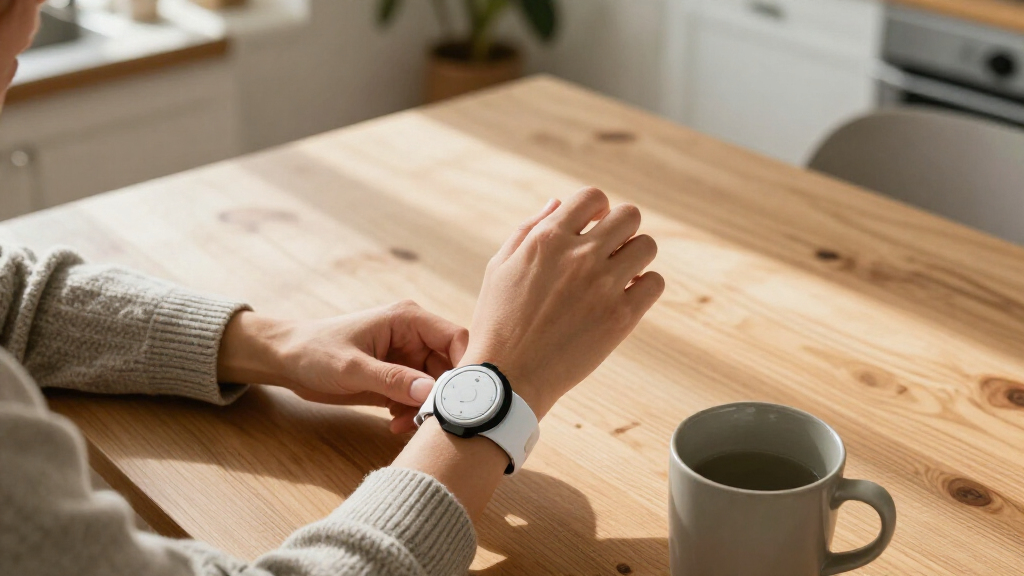
I compared the 14 devices by the kind of calming cue they provide, how directly they guide a routine, and how naturally they may fit into daily use. I also weighed portability, wearable placement, charging or membership requirements, and whether the product description gives buyers enough detail to understand its modes and controls. These factors matter because a device that is easy to use in a chosen setting may be more practical than one with more technology.
The ranking favors clear, repeatable anxiety-relief routines and distinct use cases. InterBreath leads for its tactile breathing guidance and four modes; Apollo Neuro and Embr Wave 2 follow as differentiated sensory options. Low-tech breathing necklaces rank well for simplicity, while sleep tracking, less-detailed handheld devices, and products with narrower use cases sit lower for this search intent. I treat wellness devices as routine aids, not as medical treatment, and avoid assuming that a product’s name proves a clinical effect.
Factors to Consider When Choosing Wearable Anxiety Relief Devices
Choose by the cue you are most likely to use when tension rises, then check whether the device fits the places and times you want to use it. A feature list matters less than a routine you can follow without friction.
Choose the cue you will actually follow
Breathing guidance, vibration, temperature, and biofeedback ask for different kinds of attention. A guided breathing device can give you a step-by-step rhythm, while a sensory wearable may provide a cue without asking you to count breaths. A breathing necklace depends on your willingness to use controlled exhalations. A common mistake is choosing the most feature-rich option before deciding which cue feels comfortable. Think about whether prompts help you focus or distract you. That answer can narrow the field more effectively than a long list of modes.
Match the device to where you need it
Necklaces are easy to carry and may be discreet, but they require deliberate use. Wrist wearables can stay on through daily tasks, though fit and skin comfort matter if you wear one for long stretches. Ear or head devices may suit focused sessions or sleep routines, but they can feel intrusive to people sensitive to pressure. Handheld devices are simple to put down between sessions, yet they do not offer hands-free use. Consider your usual setting, clothing, and activity before buying. A device that stays accessible in the moment you want it is more likely to become part of a routine.
Check setup and ongoing requirements
Some wearables rely on direct physical controls, while others may pair with a phone or include a membership. Extra software can add routines or tracking, but it also adds setup and account steps. Read the product details for charging method, battery expectations, app compatibility, and what functions work without a subscription. Do not assume wireless charging or a bundled membership means the device will suit your existing setup. For a first device, fewer dependencies can make trying a new routine easier. If you value data or guided programs, confirm exactly what access continues after any included period.
Separate calming cues from sleep tracking
A device designed around sleep data has a different job from one that gives a tactile breathing prompt during a stressful moment. Tracking may help you notice patterns, but data alone does not provide an immediate calming routine. Consider whether your main need happens during the day, before bed, or while asleep. Buyers can waste money by selecting a sleep-focused headband when they want a discreet daytime cue. The reverse can also happen: a simple breathing aid may not answer questions about sleep patterns. Start with the moment you most want support for.
Decide how much structure is useful
Multiple modes can help if you want to change session style, but they can make a device harder to learn. A fixed breathing pattern may be easier for someone building a habit, while adjustable settings may suit someone who already knows what feels comfortable. Check whether the controls are clear enough to use without studying instructions each time. Avoid treating the number of modes or intensity levels as a measure of quality. The better choice is the one whose settings you can understand and repeat. If product information leaves controls vague, seek clarification before purchasing.
Set realistic expectations for wellness devices
These products offer prompts, sensations, or tracking that may support a personal calming routine; their names do not establish that they treat an anxiety disorder. If you are choosing a device alongside professional care, think of it as a practical aid rather than a replacement. Check comfort and return terms before committing to a wearable you plan to use for extended sessions. Sensitive skin, discomfort from vibration, or dislike of breath resistance can change which category works for you. A modest, comfortable cue may be more useful than a complex device you avoid wearing. Pick based on usability and fit, and seek clinical advice for persistent or severe anxiety.
Frequently Asked Questions
Which type of wearable is best if I want help following a breathing rhythm?
Look for a device that gives clear, repeatable breathing cues rather than one focused mainly on tracking or temperature. The InterBreath is the most directly structured option in this lineup, with tactile guidance and four modes. A resistance breathing necklace offers a simpler, self-paced alternative, but it does not provide the same guided sequence. Consider whether you prefer prompts or control over your own pace. If prompts feel distracting, a low-tech breathing aid may suit you better.
Can I wear an anxiety relief device all day?
That depends on its fit, placement, and intended routine. Wrist devices may be easier to leave on during everyday activities, while necklaces and handheld tools often make more sense for short sessions. Comfort can change with clothing, movement, and skin sensitivity, so check the product’s wear guidance before planning continuous use. Start with brief sessions and stop if the device causes discomfort. All-day wear is not necessary for a device to be useful.
Should I choose a breathing device or a vibration wearable?
Choose a breathing device if you want an active routine that directs your attention to your breath. Choose a vibration wearable if a sensory cue without deliberate breath pacing sounds easier to follow. InterBreath represents the guided approach, while Apollo Neuro is the vibration-focused pick in this comparison. Neither method is universally preferable, and personal comfort matters. Consider which cue you would be willing to use repeatedly in the setting where you need it.
Is a sleep tracking headband a good choice for daytime anxiety?
A sleep tracking headband may be a better fit if your priority is sleep data or a bedtime routine. The Muse S Athena is positioned around brain sensing and sleep tracking, which differs from a device that gives immediate tactile breathing guidance. For daytime use, check whether the form factor and functions suit the moment you want support. Tracking can provide information but may not give you a direct calming prompt. Choose based on your primary need rather than assuming every wellness wearable serves the same purpose.
What should I check before buying a device with an app or membership?
Confirm which functions require the app, whether the device works without an account, and what membership access includes and how long it lasts. Also check phone compatibility, charging needs, and whether the routines or data are central to the product’s use. A bundled membership can be useful if you want guided content, but it may add steps to a simple routine. Compare those dependencies with a standalone option such as a breathing necklace. The right choice depends on whether connected features add enough value to your routine.
Conclusion
For a clear starting routine, I recommend InterBreath as best overall because its tactile guidance and four modes directly support paced breathing. Best for beginners is the Mindful Breathing Necklace if you want a simple, low-tech cue, while best value in function is Breathlace 2.0 for buyers who prefer adjustable breath resistance without app complexity. Choose Apollo Neuro as the premium sensory pick if vibration patterns and connected features appeal to you; the Embr Wave 2 is the more specific choice for people drawn to temperature sensations. For sleep data, consider Muse S Athena, and for a compact hands-on session, compare the portable handheld pulse options. Match the cue and wearing style to the moment you want support, then choose the device whose routine you are most likely to repeat.