TL;DR

Turn your wind-down time into listening time
- Thousands of audiobooks, podcasts and originals
- Listen on your phone, tablet or Echo — also offline
- Cancel anytime
Trainer Garett Reid recommends a simple full-body strength routine to help people with diabetes learn how exercise affects their blood sugar. The advice calls for modest starting volume and glucose checks before exercise, immediately afterward and two to four hours later; it is a trainer’s recommendation, not a guarantee that the workout is safe for everyone.
Trainer Garett Reid recommends that people with diabetes who are new to exercise begin with a low-intensity, full-body strength routine and track their blood sugar response. In an interview with Fit&Well, Reid said the early goal should be learning how the body responds to training, rather than focusing on muscle growth; the guidance does not establish that the routine is safe for every individual.
Reid, a trainer with wellness app BetterMe: Health Coaching, said he typically starts clients with a repeated routine of six exercises. The program described in the report uses two sets of eight to 12 repetitions per exercise, with about 90 seconds of rest between sets. The effort should remain moderate: the trainee should finish each set feeling able to complete three or four more repetitions.
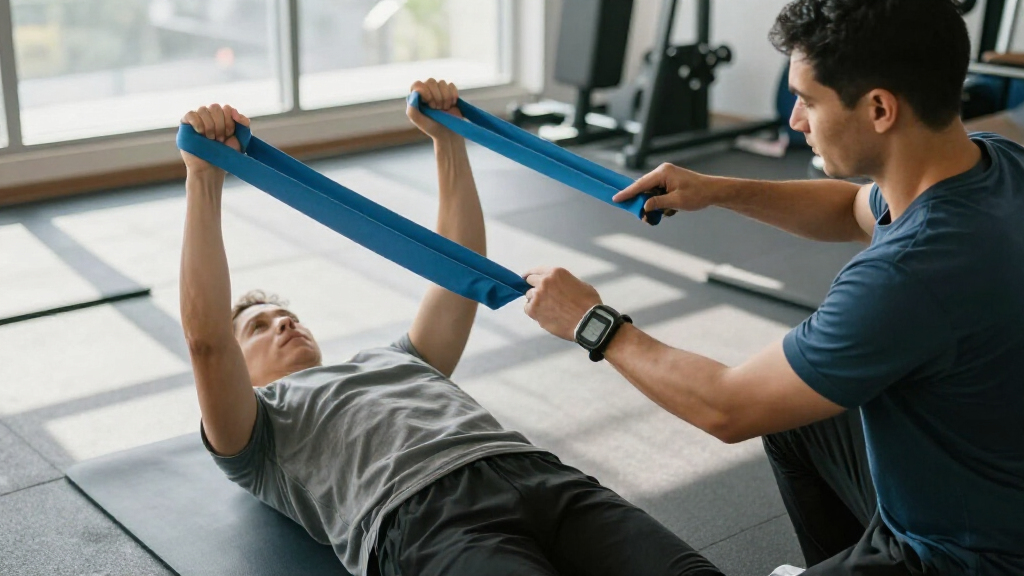
The plan is to repeat the routine two to three times a week for four weeks before adjusting it. Reid recommends keeping the number of sets and repetitions consistent from session to session at first. Once a person has observed their response, he says they can gradually increase the weight or intensity. The report includes squats, glute bridges, wall push-ups, a resistance-band bent-over row and a standing overhead press; it also describes a plank for core work, though the supplied article excerpt ends during the overhead-press instructions.
The report says BetterMe recently launched a series of workouts for people with diabetes in collaboration with Diabetes UK. The series emphasizes checking blood sugar before and immediately after a workout, and again two to four hours later. Fit&Well said its advice was reviewed by Neil Gibson, Diabetes UK’s senior physical activity adviser. The source presents this as guidance to monitor individual responses, not as evidence that every person should follow the same exercise plan.
Why Glucose Checks Shape the Plan
The recommendation puts monitoring and gradual adaptation ahead of performance goals. Exercise can affect blood sugar, and Reid’s proposed checks are intended to help a person see how their levels change around a workout and in the hours that follow. That information may help someone and their healthcare team make informed decisions about activity, but the article does not provide individualized targets or instructions for responding to particular readings.
For readers who have avoided exercise or are unsure how to begin, the routine offers a structured starting point with bodyweight movements and resistance bands. The report’s practical value is its emphasis on starting at a manageable effort and tracking responses, rather than promising a specific health outcome. The advice remains general: diabetes, medications and personal health circumstances vary, so a trainer’s template cannot establish what is appropriate for a specific person.
light resistance bands for beginner strength training
As an affiliate, we earn on qualifying purchases.
As an affiliate, we earn on qualifying purchases.
A Four-Week Starting Routine
Reid told Fit&Well that the first month should focus on learning how the body reacts to training. He said strength training can improve insulin sensitivity and that cardio can improve muscle function, but those are claims attributed to him in the report, not outcomes documented for every person who follows this particular routine. He also said increased muscle mass may help the body store glycogen.
His approach favors strength work because, in his experience, many people do not strength train and may have low muscle mass. The suggested exercises cover several major muscle groups, while the conservative starting volume is intended to keep effort low. Reid says the same sessions should be repeated initially, with more resistance or intensity added only after the individual has observed their response. Fit&Well’s report does not give a detailed progression schedule beyond that gradual approach.
“Your first month, don’t even worry about building muscle. In my opinion, you need to learn how your body reacts to the training.”
— Garett Reid, trainer with BetterMe: Health Coaching, speaking to Fit&Well
adjustable dumbbells for home strength workouts
As an affiliate, we earn on qualifying purchases.
As an affiliate, we earn on qualifying purchases.
Individual Safety and Missing Details
The report does not say that the workout has been tested in a clinical study or that it is suitable for everyone with diabetes. It provides no individual blood sugar thresholds, medication adjustments, or instructions for managing a reading that is outside someone’s expected range. Nor does the supplied excerpt include the complete overhead-press directions or all exercise instructions, so it cannot serve as a complete standalone workout manual.
It is also unclear how the routine should be modified for people with complications, mobility limits, other health conditions or different levels of fitness. The source advises monitoring blood sugar but does not detail how often to check beyond the specified times or what action to take based on the results. People considering a new exercise routine should discuss personal safety and monitoring needs with a qualified healthcare professional; this article is not medical advice.
blood glucose meter kit with test strips and lancets
As an affiliate, we earn on qualifying purchases.
As an affiliate, we earn on qualifying purchases.
Monitoring Before Increasing Effort
Under Reid’s suggested plan, a beginner would repeat the routine two to three times weekly for four weeks, recording blood sugar before exercise, immediately afterward and two to four hours later. Any increase in resistance or intensity would come gradually, after the person has observed how their body responds. The report does not set a specific date for further changes or describe a formal follow-up process.
Readers who want to use the routine should seek guidance from a healthcare professional familiar with their diabetes care, especially if they are uncertain about exercise or glucose monitoring. The reported advice offers a general starting framework; whether it is appropriate for an individual, and what adjustments may be needed, remains a personal clinical question.
exercise mat for floor workouts and glute bridges
As an affiliate, we earn on qualifying purchases.
As an affiliate, we earn on qualifying purchases.
Key Questions
What workout did the trainer recommend?
Garett Reid recommended a beginner full-body strength routine using exercises such as squats, glute bridges, wall push-ups and resistance-band movements. The Fit&Well report describes two sets of eight to 12 repetitions, with 90 seconds of rest, but its supplied excerpt does not include every complete exercise instruction.
How often does the suggested routine take place?
Reid’s recommendation is to repeat it two to three times a week for four weeks, keeping the sets and repetitions steady at first.
When does the report recommend checking blood sugar?
The report says to check before exercise, immediately afterward and again two to four hours later. It does not give individual glucose targets or instructions for responding to particular readings.
Is the workout guaranteed to be safe for everyone with diabetes?
No. The source reports a trainer’s general recommendation and does not establish that the routine suits every person or circumstance. Anyone considering a new exercise plan should discuss personal risks and monitoring with a qualified healthcare professional.
Source: rss
Fall Picks
fall essentials
As an affiliate, we earn on qualifying purchases.