TL;DR

Turn your wind-down time into listening time
- Thousands of audiobooks, podcasts and originals
- Listen on your phone, tablet or Echo — also offline
- Cancel anytime
A study in the Journal of the American Geriatrics Society examined Medicare beneficiaries aged 65 and older in North Carolina who used electricity-dependent medical equipment during Hurricanes Matthew and Florence. Researchers found sustained increases in hospitalizations and deaths over the year after Matthew, and stronger associations between flood exposure and adverse outcomes when using detailed flood maps; outcomes worsened for Black individuals as flood severity increased.
A study published in the Journal of the American Geriatrics Society found that older adults who rely on electricity-dependent medical equipment faced sustained health risks after Hurricane Matthew in North Carolina, with more consistent links to hospitalizations and deaths in areas with greater flooding. The research examined Medicare beneficiaries aged 65 and older and found that Black beneficiaries had worse short- and long-term outcomes as flood severity increased.
Researchers assessed hospitalizations and deaths among North Carolina Medicare beneficiaries who used devices such as ventilators, respirators and dialysis machines. They studied the effects of Hurricanes Matthew, which struck in 2016, and Florence, which followed in 2018, looking both at immediate outcomes and changes during the year after each storm.
Using county-level federal disaster declarations, the team found no significant immediate changes after either hurricane. It did find sustained increases in hospitalizations and deaths during the year following Matthew. The source report does not provide effect sizes or a comparable sustained finding for Florence using this measure.
When researchers used the North Carolina Flood Extent Archive, a more detailed measure of flood exposure, the associations between hurricane hazards and hospitalizations and deaths were stronger and more consistent. The study also reported that Black individuals experienced worse short- and long-term outcomes as flooding severity increased. These are reported associations; the findings do not establish that flooding alone caused the outcomes.
Flood Exposure and Unequal Health Outcomes
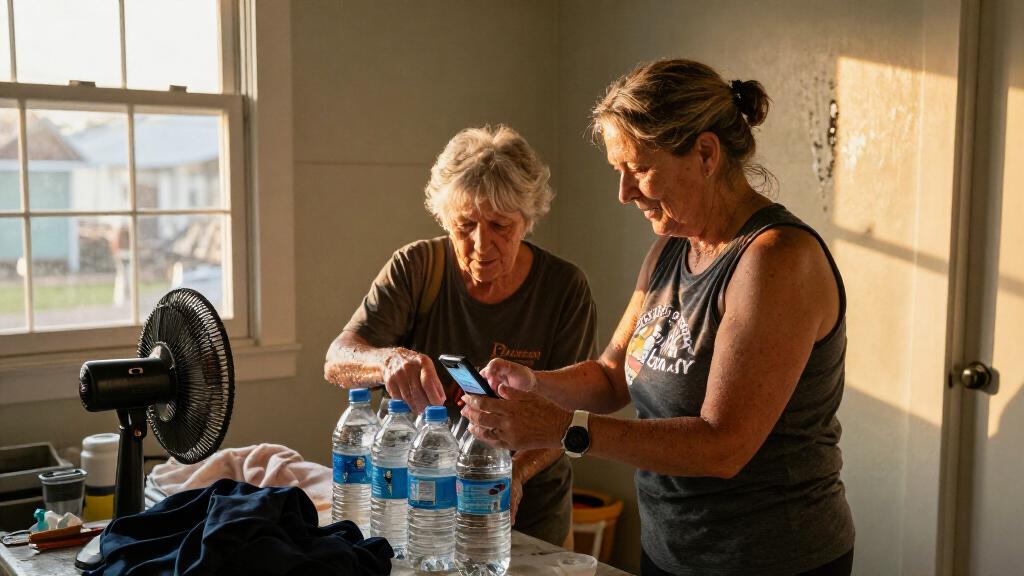
The findings point to a risk that can persist beyond a storm’s immediate passage. For people dependent on powered medical equipment, disruption to electricity, transportation, health care access or other support could complicate care during a disaster and its aftermath. The study examined health outcomes, however, and the supplied report does not identify which specific disruptions accounted for the observed associations.
The reported differences by race also matter for disaster planning. As flood severity increased, Black beneficiaries had worse outcomes in the study. That pattern identifies a disparity in the observed results, but the report does not establish its causes. More detailed work is needed to clarify how exposure, access to services and other factors may contribute.
The researchers say their work can support broader study of how hurricanes and floods affect medically vulnerable populations. It may also inform coordination among community organizations and local and state agencies working on preparedness for people whose health care depends on electricity.
electricity-dependent medical equipment for seniors
As an affiliate, we earn on qualifying purchases.
As an affiliate, we earn on qualifying purchases.
Two North Carolina Hurricanes Studied
The research focused on two major storms: Hurricane Matthew in 2016 and Hurricane Florence in 2018. Investigators compared health outcomes with hurricane exposure among older adults enrolled in Medicare who used electricity-dependent medical devices.
The study’s two approaches to measuring exposure produced different levels of detail. County-level Federal Emergency Management Agency presidential disaster declarations identify whether a county received a disaster declaration, while the North Carolina Flood Extent Archive provided a higher-resolution measure of flooding. The researchers reported stronger and more consistent associations with the flood archive approach.
The study was led by Brian E. Jackson and colleagues and published in 2026. Senior author Jennifer L. Lund is affiliated with the UNC Gillings School of Global Public Health. Lund said the team had spent two years linking hurricane hazard and health care utilization data in North Carolina while working with communities affected by the storms.
“Over the past two years, our team has linked hurricane hazard and healthcare utilization data in North Carolina while working with impacted communities to shape this research.”
— Jennifer L. Lund, PhD, senior author, UNC Gillings School of Global Public Health
As an affiliate, we earn on qualifying purchases.
Limits of the Available Findings
The supplied report does not give the number of beneficiaries, the size of the changes in hospitalizations or deaths, or detailed estimates by flood-severity level. It also does not spell out which outcomes followed Florence under each exposure measure. Those details are needed to judge the scale and scope of the reported risks.
The findings concern older North Carolina Medicare beneficiaries using electricity-dependent equipment and two hurricanes. They do not by themselves show that the same patterns apply to all older adults, people using other kinds of medical support, or communities elsewhere. The reported links between exposure and outcomes are observational associations, not proof of a direct cause.
The report also does not explain why Black beneficiaries had worse outcomes as flooding severity increased. The study identifies a difference in results but, based on the available material, does not establish the mechanisms behind it. It remains unclear which interventions could reduce the observed risks or how effective particular preparedness steps would be.
As an affiliate, we earn on qualifying purchases.
Expanding Disaster Health Research
The research team says the work provides a basis for studying hurricane and flood effects on medically vulnerable populations more broadly. Lund also described plans for continued partnership with community groups and local and state agencies on disaster preparedness and planning.
The source report does not announce a specific policy change, program or implementation timetable. Further research would need to clarify the scale of the risks, the factors behind the differences in outcomes and which practical measures could protect people who rely on powered medical equipment during and after a storm.
emergency power backup for medical devices
As an affiliate, we earn on qualifying purchases.
As an affiliate, we earn on qualifying purchases.
Key Questions
Who was included in the study?
The researchers examined North Carolina Medicare beneficiaries aged 65 and older who used electricity-dependent medical equipment, including ventilators, respirators or dialysis machines.
Which hurricanes did researchers study?
The study assessed health outcomes associated with Hurricane Matthew in 2016 and Hurricane Florence in 2018.
What health outcomes did the study report?
It examined hospitalizations and deaths. County-level disaster declarations showed no significant immediate changes after either storm, while sustained increases were reported during the year after Matthew. More detailed flood exposure measures showed stronger and more consistent associations with both outcomes.
Did the study prove that hurricanes caused the health outcomes?
No. The report describes associations between hurricane or flood exposure and health outcomes. It does not establish that the storms or flooding alone caused the hospitalizations or deaths.
What did the study find about racial differences?
The researchers reported that Black individuals experienced worse short- and long-term outcomes as flooding severity increased. The available report does not explain the reasons for this difference.
Source: rss
Halloween Picks
halloween
As an affiliate, we earn on qualifying purchases.