TL;DR

Turn your wind-down time into listening time
- Thousands of audiobooks, podcasts and originals
- Listen on your phone, tablet or Echo — also offline
- Cancel anytime
A ScienceDaily report published Oct. 13 reviews evidence that popular recovery methods may ease soreness without reliably restoring muscle function. It also says regular ice baths could blunt some training adaptations, while evidence for supplements and compression varies.
A ScienceDaily report published Oct. 13 says several popular workout recovery methods can reduce soreness or make people feel better without reliably restoring muscle function—and that regular ice-bath use may interfere with some training adaptations. The report reviews evidence on ice baths, compression garments, massage and supplements, emphasizing that effects vary by method and that short-term comfort is not the same as improved performance.
Ice baths, defined in the report as immersion in water below 15°C, may reduce inflammation and soreness and help athletes recover muscle function over a 24-hour period. But inflammation also contributes to adaptations that build muscle. The report says repeatedly dampening that response may limit some long-term training benefits, and suggests ice baths may be most useful when rapid recovery is a priority. The reported evidence does not establish that every ice bath or occasional use harms training gains.
Compression garments can affect circulation and blood flow, but whether those changes translate into meaningful performance improvement remains uncertain. The report describes a 2022 study in which one group wore compression garments and another received a placebo tablet they were told was equally effective. The garments improved circulation and muscle blood flow, while the placebo did not. The report says this points to a physiological effect, but not necessarily a substantial restoration of muscle function.
Massage has more consistent support for reducing soreness and improving perceived recovery, though objective changes in performance and muscle function are described as modest and inconsistent. Supplements also vary: whey protein has small-to-moderate reported benefits for muscle recovery, while evidence that it reduces soreness is inconsistent. The report says branched-chain amino acids (BCAAs) appear less effective than complete protein sources, which supply all essential amino acids.
Tart cherry juice and omega-3 supplements may offer modest benefits, but the report describes the evidence as emerging or inconsistent. It notes that these nutrients are available in a balanced diet and says whole foods provide additional nutrients. The supplied report excerpt ends while introducing basic recovery practices; it does not provide the details of those recommendations.
Relief Does Not Guarantee Recovery
The distinction between feeling less sore and regaining muscle function matters to recreational exercisers choosing recovery products. A method that reduces discomfort may help someone feel ready to train, but the report cautions that perceived recovery and measurable performance do not always move together. Users should not assume that a garment, massage or supplement has restored their capacity simply because they feel better.
There is also a potential trade-off with ice baths. If the report’s account of the evidence holds, frequent use to suppress inflammation could work against some adaptations that training is meant to produce. That does not make cold-water immersion universally harmful: the report frames the concern around regular use and long-term benefits, while recognizing possible value when quick turnaround is needed. The practical question is the goal—short-term relief or ongoing adaptation—rather than whether one recovery trick is best for everyone.
The review also gives readers reason to be cautious about marketing claims. Its account suggests that some products influence physiological measures without showing clear performance gains, and that supplement effects are often limited. That matters when people spend money or change training routines based on promises of faster recovery. The report does not offer individualized guidance, and the underlying evidence varies by intervention and outcome.
As an affiliate, we earn on qualifying purchases.
Evidence Behind Popular Recovery Tools
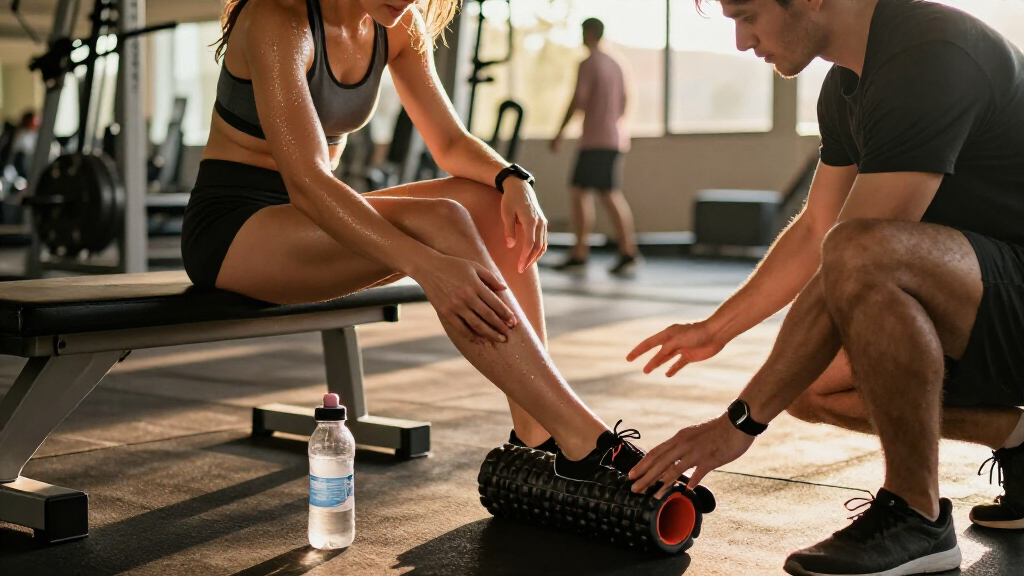
Recovery methods once associated mainly with elite sport have become more visible to recreational gym-goers, with social media and professional sports helping popularize ice baths, compression clothing, massage and supplements. The report notes that products often promise faster recovery, less soreness and better performance, but says the research is more nuanced than those claims suggest.
Delayed muscle soreness can appear hours after demanding exercise and persist for days, according to the report. That discomfort is one reason people seek recovery strategies. But studies can assess different outcomes—such as soreness, blood flow, muscle function or performance—and a positive result for one measure does not prove improvement in all the others. The report’s discussion repeatedly distinguishes subjective relief from objective recovery.
The supplement examples illustrate that distinction. Whey protein supplies amino acids and supports muscle protein synthesis, while BCAAs contain only leucine, isoleucine and valine; the report says muscle repair requires all essential amino acids. It also describes research on tart cherry polyphenols and omega-3 fatty acids as suggestive of limited benefits, not settled evidence of major recovery gains.
““When it comes to ice baths, side-stepping short-term pain may sacrifice long-term gains.””
— ScienceDaily report
As an affiliate, we earn on qualifying purchases.
Limits of the Available Evidence
The report is a secondary summary and the supplied material does not include the full citations, study methods, sample sizes or effect estimates for most interventions. That limits how precisely readers can judge the size and reliability of the reported effects. The 2022 compression study is described, but its participants and detailed outcomes are not specified in the excerpt.
It is also unclear from the supplied material how often or how long ice baths must be used to affect training adaptations, or how the effect differs across people, sports and training plans. The report says massage mechanisms remain uncertain and describes evidence for tart cherry juice and omega-3s as emerging or inconsistent. It does not identify specific brands, doses or supplement safety considerations. The excerpt stops before completing its discussion of basic recovery practices, so those recommendations cannot be detailed here.
As an affiliate, we earn on qualifying purchases.
More Research on Long-Term Effects
The next evidence needed is research that follows people over time and measures both immediate outcomes—such as soreness and muscle function—and longer-term changes in strength, muscle growth and performance. For ice baths, that would help clarify how frequency and timing shape any trade-off between short-term relief and adaptation. For compression, massage and supplements, studies that compare subjective recovery with objective performance could show which benefits matter in practice.
The ScienceDaily report does not announce a new trial, policy or upcoming research milestone. Its immediate takeaway is a summary of current evidence rather than a change in official guidance. Readers should treat product claims in light of the specific outcome studied and seek qualified advice for personal training or nutrition decisions where needed.
whey protein supplement for recovery
As an affiliate, we earn on qualifying purchases.
As an affiliate, we earn on qualifying purchases.
Key Questions
Can ice baths interfere with muscle growth?
The report says regular ice-bath use may dampen inflammation involved in training adaptations, potentially limiting some long-term benefits. It does not say that every use causes harm, and it describes possible value when rapid recovery is needed.
Do compression garments restore muscle function?
The report describes evidence that compression garments can improve circulation and muscle blood flow, but says it is less clear whether those changes meaningfully improve performance or restore muscle function.
Does massage improve workout performance?
According to the report, massage can reduce soreness and improve perceived recovery. Objective measures of performance and muscle function have shown modest and inconsistent effects.
Are recovery supplements necessary?
The report says evidence differs by supplement: whey protein may offer small-to-moderate muscle-recovery benefits, while findings for BCAAs, tart cherry juice and omega-3s vary. It also says these nutrients can be obtained through a balanced diet.
Source: rss
Halloween Picks
halloween
As an affiliate, we earn on qualifying purchases.